Introduction #
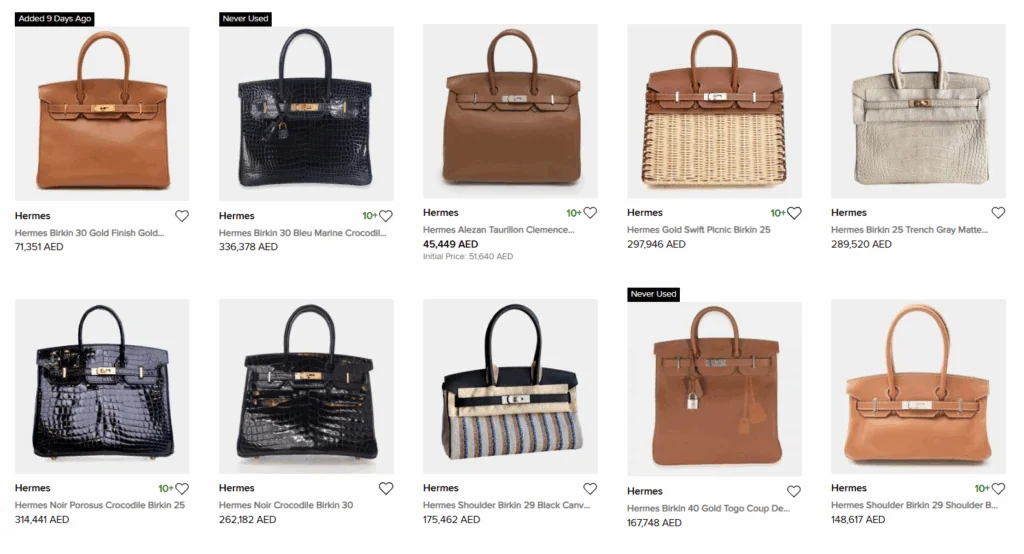
Buying a Birkin is rarely the hard part once you have the allocation, the funds, and the patience for the waitlist conversation. The hard part is standing in the boutique — or scrolling a resale listing — and realizing that “Birkin” isn’t one bag. It’s four very different tools wearing the same name.
A Birkin 25 and a Birkin 40 share a silhouette, a lock, and a lineage. Beyond that, they behave like different products entirely: different weight on your shoulder, different price trajectory on the resale market, different waitlist math, and a completely different answer to “will my laptop fit.”
This Hermès Birkin size guide is built around one goal: helping you match the size to your actual body, your actual bag habits, and your actual budget — not the size that looked best on someone else’s Instagram grid. We’ll cover exact measurements, what fits inside, how each size ages in resale value, and which one is easiest (or hardest) to actually get.
The Story Behind the Original Birkin Size #
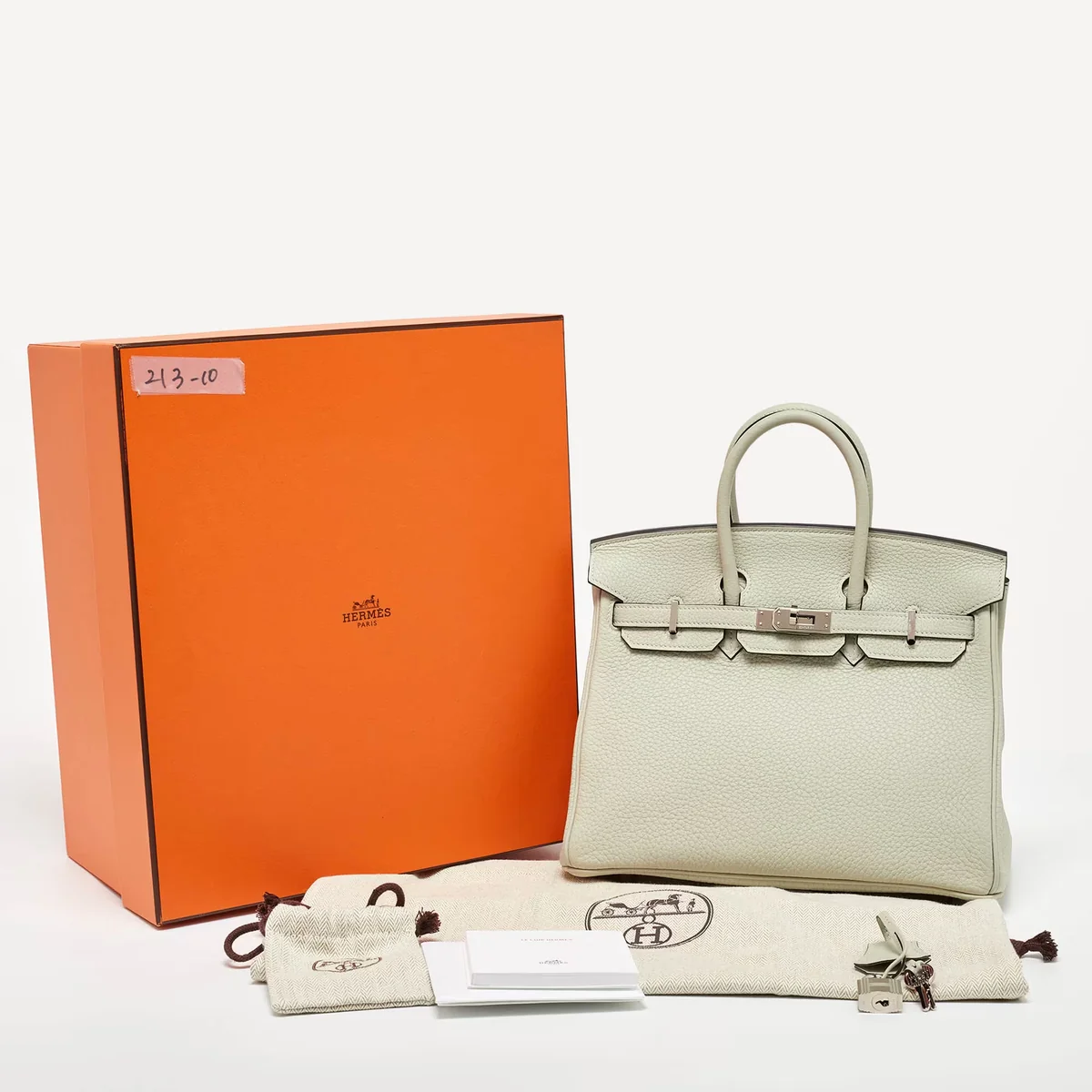
The Birkin wasn’t designed by a committee chasing exclusivity metrics. It came out of a genuinely annoyed conversation. In 1984, Jane Birkin ended up seated next to Hermès executive Jean-Louis Dumas on a flight, and the contents of her straw bag spilled everywhere. Her complaint wasn’t about status — it was about function. She wanted something that could actually hold a life: books, papers, baby items, the ordinary overflow of daily existence, sketched out on the back of an airplane sick bag.
What came out of that conversation was closest in proportion to what we now call the Birkin 35. That’s worth sitting with for a second: the “original” Birkin wasn’t a delicate accessory. It was a workhorse — structured enough to hold shape, roomy enough to be genuinely useful, and meant to be lived with rather than preserved under glass.
The smaller sizes came later, as the bag’s identity shifted from “practical carryall” to “the most photographed handbag in the world.” The 25 wasn’t designed for someone who needed to carry a diaper bag’s worth of gear. It was designed for a world where the Birkin itself had become the outfit’s focal point, not just its logistics solution.
That history matters when you’re choosing a size today. If you’re buying based on 1980s logic — I need this bag to carry my actual life — the 35 is closer to the brand’s founding intent. If you’re buying based on how the bag reads visually, on you, in a room, the smaller sizes are doing a job Jane Birkin’s original sketch never asked them to do.
Birkin 25, 30, 35, 40: Dimensions and What Each Size Actually Holds #
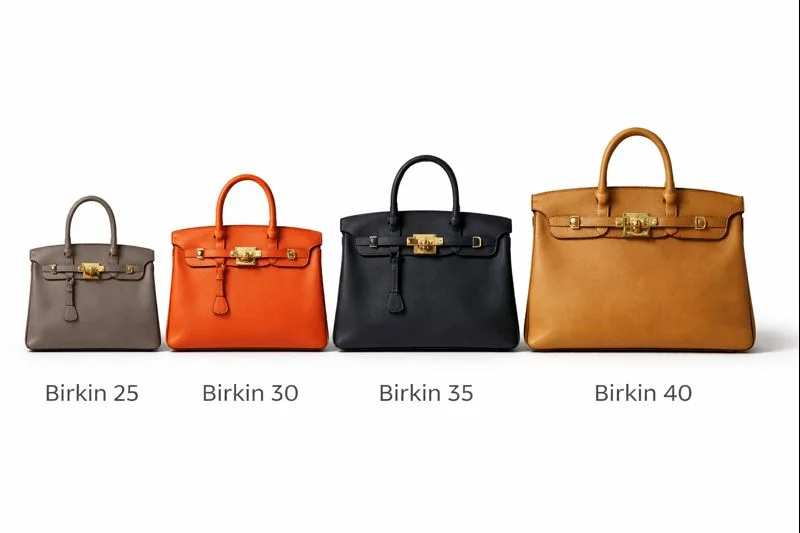
Dimensions vary slightly by leather (structured hides like Epsom hold their shape differently than soft Togo or Clemence), but the standard measurements and realistic capacity break down like this:
| Size | Dimensions (L x H x D) | Approx. Weight | What Actually Fits |
|---|---|---|---|
| Birkin 25 | 25 x 20 x 13 cm | 0.6–0.7 kg | Phone, cardholder, lipstick, keys — no wallet-and-phone-and-sunglasses combo comfortably |
| Birkin 30 | 30 x 22 x 16 cm | 0.9–1.0 kg | Phone, full wallet, sunglasses case, small makeup pouch — the realistic “everyday” threshold |
| Birkin 35 | 35 x 25 x 18 cm | 1.1–1.3 kg | Wallet, tablet (loose, not in a hard case), a light cardigan, water bottle, diaper essentials for a short outing |
| Birkin 40 | 40 x 29 x 21 cm | 1.4–1.6 kg | 13" laptop, a change of clothes for an overnight, full diaper bag load, documents flat rather than folded |
A few honest notes here. The 25 is genuinely small — it’s not a “compact everyday bag” in the way a [[[Chanel Classic Flap](/buying-guides/vintage-chanel-finds-top-picks/)](/buying-guides/classic-and-chic-handbags-style-icons/)](/buying-guides/chanel-flap-bag-buying-guide/) medium is. If your daily carry includes a phone, wallet, keys, and anything else, you will feel the squeeze. The 30 is the size most owners describe as the true daily-use sweet spot, since it clears the wallet-plus-phone-plus-extras bar without becoming bulky.
The 35 is where the bag starts doing real work — it’s the size that can plausibly replace a work tote. The 40 is rarely stocked at retail today; it exists mostly in the resale and vintage market, and it functions closer to a soft-structured travel bag than a handbag you’d carry to dinner.
Matching Birkin Size to Your Body Proportions #
Proportion is where a lot of first-time Birkin buyers get it wrong, usually because they’re choosing based on what looked good on a 5'9" influencer rather than their own frame.
The rule of thumb that actually holds up in practice: the bag’s handle drop and body width should sit in proportion to your torso, not dwarf it or disappear against it. A 25 on a taller, broader frame doesn’t look “delicate” — it looks like a clutch that wandered onto the wrong arm. A 35 or 40 on a petite frame doesn’t look “editorial” — it looks like the bag is wearing the person.
If you’re petite or narrow-framed, the 25 and 30 tend to sit in proportion without swallowing your silhouette. If you’re average height with a fuller frame, the 30 remains flattering, and the 35 works well hand-carried rather than on the crook of the elbow. If you’re tall or broad-shouldered, the 35 and 40 read as intentional rather than oversized — and a 25 can genuinely look like an afterthought.
Torso length matters as much as overall height. Someone who’s tall but short-waisted may still find the 25 or 30 sits better than the math would suggest, because handle drop relative to torso — not just overall height — determines how the bag actually sits.
Which Birkin Size Fits Your Lifestyle #
Forget the aspirational version of your life for a second and think about what’s actually in your bag on a Tuesday.
If your day involves commuting with a phone, wallet, and maybe a light lunch item, the 30 covers you without becoming a burden by hour six. If you’re going straight from a desk to dinner, the 25 works as a size-down statement piece for the evening leg of the day, but it will not survive a workday of loose papers and a water bottle.
If you’re traveling — carry-on logistics, a boarding pass, a passport, a paperback, maybe a light cardigan for the plane — the 35 is the size that was built for exactly this. If your daily reality includes a laptop, a change of clothes, or parenting gear that needs to travel with you (diapers, a bottle, a spare outfit), the 40 is the only one of the four that comfortably absorbs that load without you needing a second bag anyway.
The honest failure mode here is buying the 25 because it’s the “it” size and then carrying a second tote everywhere to hold what the Birkin can’t. If that’s your pattern, you didn’t buy the wrong Birkin — you bought the wrong size for your life.
Resale Value and Investment Potential by Size #
This is where size stops being about aesthetics and starts being about money, and the data is more dramatic than most buyers expect.
In one of the clearer real-world demonstrations of this, two white crocodile Birkins — seized assets from a high-profile Vietnamese fraud case — were auctioned by the Ho Chi Minh City Asset Auction Service Center in May 2026. Both bags shared the same leather and color. The Birkin 25, fitted with rhinestone hardware, sold for over $456,000 after 119 bids, roughly seven times its reserve price. The Birkin 30, in the same skin and colorway, sold for around $98,000. Same material, same house, same auction — and the smaller size closed at nearly five times the price.
That gap isn’t an anomaly; it’s a pattern collectors have watched play out for years. Smaller sizes, particularly the 25, consistently command a premium on the resale market relative to their retail price gap over larger sizes. The 30 holds value well and moves quickly on the resale market, but doesn’t see the same speculative premium. The 35 tends to sell closer to retail-plus-modest-markup, valued more for usability than scarcity. The 40 is the outlier on the low end — demand is thinner, resale turnaround is slower, and pricing can sit at or even below retail-equivalent, since fewer buyers want a bag that size.
If you’re buying with resale value as a genuine factor (not just a bag to use), the 25 and 30 in classic leathers and neutral colorways are the most liquid. The 35 is the most “use it and it still holds value” option. The 40 should be bought because you want to carry it, not because you expect it to appreciate.
Which Birkin Size Matches Your Height and Body Frame #
Beyond general proportion advice, here’s a more concrete pairing based on height and frame, drawn from how these bags actually sit on a range of bodies rather than a single reference model:
| Height / Frame | Recommended Size(s) | Why |
|---|---|---|
| Under 5'3", petite/narrow frame | 25 | Handle drop and body width stay proportional; 30 is still workable, 35+ tends to overwhelm |
| 5'3"–5'6", average frame | 30 | The most universally flattering size across builds; 25 for evening, 35 if you need more room |
| 5'6"–5'9", average to fuller frame | 30 or 35 | Both sit well; choose based on capacity need rather than proportion concerns |
| 5'9"+, tall or broad-shouldered | 35 or 40 | Reads as intentional rather than oversized; 25 can look disproportionately small |
This table addresses body type, not just height, because frame width and shoulder set change how a structured bag with a short handle drop actually sits. Two people at the same height with different builds can have opposite “correct” answers here — try the bag on before assuming the chart settles it.
Birkin 25 vs 30 vs 35 vs 40: Lifestyle Fit Breakdown #
Here’s the direct comparison, size by size, including where each one genuinely falls short.
Birkin 25 Best for: evening events, styled outfits where the bag is the statement, buyers prioritizing resale liquidity. Pros: highest resale premium, easiest to dress up, most photographed size. Cons: limited capacity, hardest to get on quota/waitlists due to demand, impractical as a sole daily bag for most people.
Birkin 30 Best for: everyday carry, commuting, buyers who want one Birkin that does almost everything. Pros: strong resale value, versatile proportion across body types, realistic daily capacity. Cons: still a tight fit if you carry more than phone/wallet/basics; also high-demand on waitlists.
Birkin 35 Best for: work, travel, anyone who wants the bag to function like an actual tote. Pros: genuine capacity for a tablet and daily essentials, closest to the bag’s original design intent, comparatively easier to source than the 25 or 30. Cons: heavier to carry all day, less “dressy” for evening use, slightly lower resale premium than smaller sizes.
Birkin 40 Best for: travel, laptop carry, parents who need one bag to hold everything. Pros: laptop- and overnight-ready capacity, generally easiest size to get due to lower demand. Cons: weakest resale performance of the four, least “elegant” for formal settings, genuinely heavy once loaded.
Waitlist reality check: demand runs inversely to size for most of the range. The 25 and 30 are the hardest to secure, especially in exotic skins or seasonal colors — expect longer waits and more relationship-building with your sales associate. The 35 is moderately easier. The 40 is, in most markets, the size you’re least likely to be told “not available right now.”
Frequently Asked Questions #
Is the Birkin 30 really the most practical size for daily use? For most people, yes. It clears the wallet-phone-sunglasses bar the 25 can’t, without the bulk of the 35, and it’s flattering across the widest range of body types.
Does size affect how easy it is to spot a counterfeit? Yes, indirectly. Counterfeiters overwhelmingly target the 25 and 30 because demand and resale value are highest there — meaning these two sizes require the most careful authentication of stitching, hardware weight, and blind stamps before purchase.
Will a Birkin 25 hold its value better than a 35? Historically, yes, especially in classic leathers and popular colors. But “better resale value” doesn’t mean “better bag for you” — a 25 you can’t actually use daily isn’t a better investment than a 35 you carry for years.
Is the Birkin 40 discontinued? It’s rarely offered through standard retail allocation today and is mostly found through resale or as a special/travel order, which is part of why it’s the easiest size to acquire relative to demand.
Related Articles #
- Hermès Retail vs. Resale: Which Should You Choose?
- Popular Handbag Brands: Which One Is Right for You?
- Louis Vuitton Alma Bag: The Ultimate Buying Guide
- Hermès Leathers Guide: Togo, Epsom, Exotic Skins Explained
- Hermès Leathers Guide: Togo, Epsom, Exotic Skins Explained
Related guides
- Online Bag Authentication: What Photos Can and Cannot Prove
- Private Bag Edit: Hermès Kelly Authentication Blog
- Hermès Date Codes & Stamps Explained: Full Guide
- Hermès Crocodile vs Alligator Bags: Buyer's Guide
- How to Buy an Authentic Luxury Bag from China Safely
- New vs Pre-Owned Luxury Bags: Which Route Is Right for You?
- Chanel Bag Guide: What to Know Before You Buy
- Luxury Bag Houses


Keyword index