Introduction #
Somewhere between the overstuffed tote you haul everywhere and the micro bag that holds a lipstick and nothing else, there’s the wallet — the piece that actually gets used every single day. It’s the accessory equivalent of a well-fitted blazer: less flashy than the bag on your arm, but doing far more of the daily work. And when that wallet carries a name like Hermès, Saint Laurent, or Valentino, it stops being a place to shove receipts and becomes a genuine entry point into a house’s craftsmanship.
This guide isn’t a scroll-through of pretty pictures. It’s built for someone actually comparing options — deciding between a compact card case and a long wallet, weighing pre-owned versus new, and trying to figure out whether that “deal” on a resale site is authentic or a very convincing problem waiting to happen. We’ll walk through the standout designs worth your money, how to judge quality and authenticity before you buy, and how to keep a leather wallet looking sharp for years rather than months.
Why a Designer Wallet Belongs in Your Collection #
A designer handbag from Hermès or Chanel can run into the five- or six-figure range once you’re talking rare leathers or waitlisted styles. A wallet from the same house is a fundamentally different financial conversation — often one-tenth the cost or less — while still delivering the stitching quality, hardware finish, and brand signatures that make the full-price bag desirable in the first place.
There’s also a practical case that gets overlooked in favor of the aspirational one. A well-made wallet is handled constantly: opened, closed, stuffed into pockets, dropped on counters. That abuse actually shows off the difference between a $40 fast-fashion wallet and one built with vegetable-tanned leather and reinforced corners. You feel the quality every time you pay for coffee, which is more than most bags can say.
Finally, wallets tend to hold resale value better, proportionally, than trend-driven handbags. A Kelly Classic wallet or a Rockstud zip-around doesn’t go out of style the way a seasonal shoulder bag might, which matters if you’re thinking about this as a long-term piece rather than a one-season purchase.
Iconic Silhouettes Reimagined: Hermès and Heritage-Inspired Wallets #
Some houses take their most recognizable bag architecture and shrink it down rather than inventing a wallet from scratch. The result is a piece that reads as unmistakably “that brand” even without an obvious logo.
Hermès Kelly Classic Wallet #
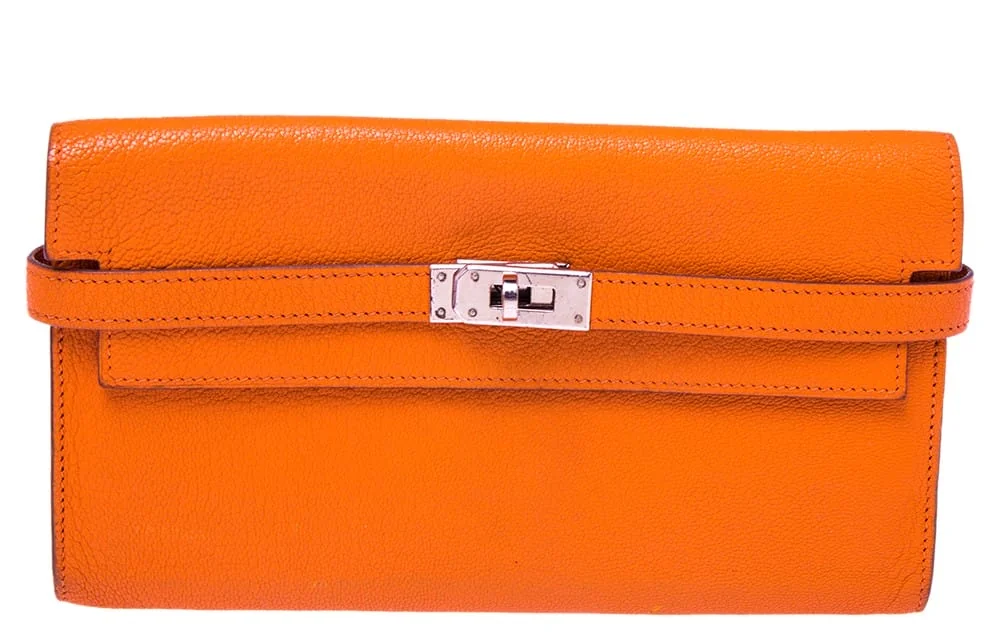
The Kelly bag’s turn-lock closure and structured flap translate almost one-to-one into wallet form. The Kelly Classic wallet, typically seen in Chèvre Mysore or Epsom leather with a palladium or gold-finish lock, keeps the bag’s DNA — the same hardware shape, the same disciplined proportions — in something that fits a jacket pocket.
Expect pre-owned prices roughly in the $1,200–$2,500 range depending on leather, hardware condition, and color rarity; exotic skins or discontinued colorways push higher. New retail runs above that. This is a wallet where the hardware is doing a lot of the authentication and value work, so lock alignment and stamp clarity matter more than on a logo-driven design.
Why heritage silhouettes hold value #
Because these designs are extensions of an already-iconic bag, they tend to be less trend-sensitive. A Kelly-inspired wallet purchased today will still look correct in a decade, which is a meaningful factor if resale is part of your decision.
Logo-Forward Classics: Monogram and Branding Statements #
Not every buyer wants subtlety, and there’s nothing wrong with that. Logo-forward wallets are the pieces that communicate brand instantly, and they tend to be the easiest entry point for a first designer purchase because the design language is so recognizable it’s hard to get “wrong.”
Saint Laurent Monogram Envelope Wallet #
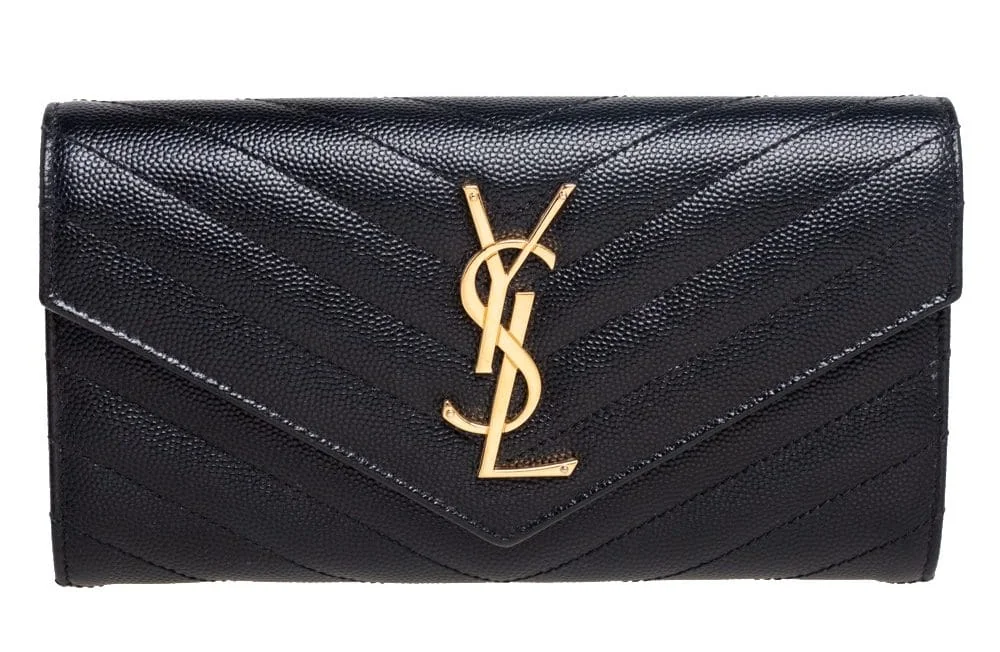
The cassandre YSL logo on the front flap, a matelassé quilted pattern, and a clean envelope silhouette make this one of the more photograph-friendly wallets in the category. It’s minimal in construction — one main flap, no excess hardware — which keeps it slim in a bag or coat pocket. Pre-owned prices generally land between $250–$500 depending on leather condition and hardware finish; new retail is meaningfully higher.
Gucci GG Marmont Wallet #
The GG Marmont line pairs the interlocking G hardware with a matelassé chevron stitch, and versions in denim or contrast leather add a vintage-inflected texture that’s distinct from the smooth leather norm. Pre-owned pricing typically sits in the $200–$450 range, with special materials at the top of that band.
Chanel CC Wallet on Chain #
Technically a hybrid — wallet function, mini-bag presence — the WOC’s interlocking CC clasp and quilted body make it one of the most requested pieces in the pre-owned market. Because it doubles as a crossbody, it commands handbag-adjacent pricing, often $1,800–$3,500 pre-owned depending on leather (caviar vs. lambskin) and hardware finish. If your budget is wallet-sized, this piece is closer to an entry handbag; go in aware of that gap.
Logo-forward pieces are also the most heavily counterfeited category, precisely because the branding is the whole point. Stitch spacing around the logo, font weight, and hardware engraving depth are where fakes most often fall apart.
Statement Hardware and Textural Details #
For buyers who want the wallet itself to be the design statement — not just a logo carrier — hardware and texture-driven pieces are the better fit.
[[Valentino Rockstud](/brands/valentino-glam-lock-bag-review-black-leather-beads/)](/buying-guides/valentino-glam-lock-bag-black-leather-beaded-review/) Wallet #
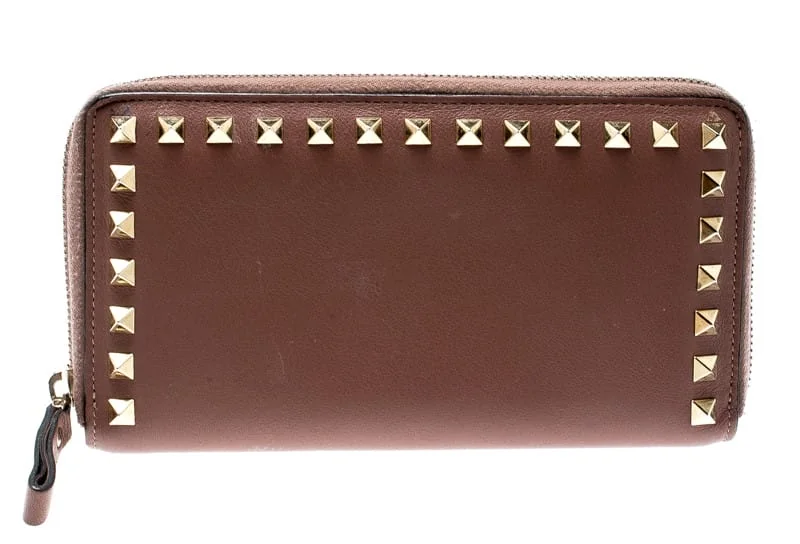
The pyramid studs that outline the wallet’s edges are Valentino’s most recognizable signature after the Rockstud shoe line, and they carry the same tactile, almost architectural quality here. The zip-around construction opens to a genuinely well-organized interior — multiple card slots, a zippered coin pocket, a bill compartment — making it one of the more functional pieces on this list, not just a pretty object. Pre-owned pricing typically runs $180–$400, with studded hardware condition (tarnishing, missing studs) being the single biggest value factor to inspect.
Bottega Veneta Intrecciato Wallet #
Bottega built a brand identity around having no visible logo at all, relying entirely on the woven [Intrecciato leather](/buying-guides/bottega-veneta-jodie-bag-review/) to signal the house. This makes authentication trickier for a first-time buyer — you’re judging weave consistency and leather quality rather than checking a stamped logo — but it also means the wallet ages beautifully, since the woven texture hides light creasing better than smooth leather. Pre-owned prices generally fall between $200–$450.
Statement-hardware wallets tend to need more physical inspection before buying than logo pieces: studs, weaves, and embossing are harder to fake convincingly at scale, which is actually good news for buyers who take the time to look closely.
How to Choose the Right Designer Wallet for You #
Before you buy — new or pre-owned — run through the same criteria a specialist would use to price and grade the piece.
Leather and material quality #
Full-grain and vegetable-tanned leathers (Hermès Chèvre, Epsom; Bottega’s Intrecciato-woven calf) develop patina and resist wear better than coated or bonded leather. Run a finger along the edge paint and interior seams — cracking or peeling here is the first sign of age or lower-grade material, even on an authentic piece.
Hardware finish #
Palladium, gold, and ruthenium finishes should feel weighted and show crisp, even engraving. Light hardware, uneven plating, or a magnet that doesn’t snap cleanly are red flags on both quality and authenticity.
Functionality over aesthetics #
Count the card slots you’ll actually use, check whether the bill compartment fits your local currency without folding, and open every zip and snap in person or ask a reseller for close-up video before buying online.
Authenticating a pre-owned wallet #
This is the step most buying guides skip, and it’s the one that protects your money most directly:
- Serial and date stamps: Hermès uses blind stamps (letter + year code); Chanel uses a serial sticker or hologram depending on production year; check that the format matches the claimed production date.
- Stitching: Authentic pieces use consistent, tight stitch spacing with no loose threads. Counterfeits often have visibly uneven stitch length, especially around logo edges.
- Hardware engraving: Logos stamped into zippers, clasps, and snaps should be crisp and centered — not shallow, blurry, or slightly off-axis.
- Smell and weight: Genuine leather has a distinct, non-chemical smell; a wallet that feels unusually light for its size often signals bonded leather or a hollow interior structure.
- Buy from vetted resellers: Platforms that authenticate before listing (in-house specialists, third-party services like Entrupy or Real Authentication) reduce risk significantly versus peer-to-peer marketplaces with no verification step.
If a seller won’t provide close-up photos of stamps, stitching, and hardware, treat that as a decline, not a negotiation point.
Resale value and sustainability #
Buying pre-owned isn’t just a budget move — it’s the lower-impact choice, keeping a well-made leather good in circulation instead of adding new production demand. Hermès and Chanel pieces historically hold or appreciate in resale value; logo-forward pieces from Gucci and Saint Laurent depreciate faster but recover value during logomania cycles. If resale matters to your decision, prioritize classic colorways (black, brown, neutral) over seasonal prints — they sell faster and at a smaller discount to original price.
How to Choose the Right Wallet Type for Your Lifestyle #
The format matters more than most buyers plan for. Here’s how the main types actually perform day to day:
Compact / card holder #
Best for anyone who’s shifted mostly to phone payments and a couple of cards. Slides into a jacket pocket or small bag, but limited cash storage and few or no coin pockets — Gucci GG Marmont’s compact version and Bottega’s card cases fall here.
Long / bifold wallet #
The most versatile option: fits bills unfolded, multiple card slots, often a zippered coin section. Bulkier in a small bag but the standard choice if you carry cash regularly. The Hermès Kelly Classic and Valentino Rockstud zip-around both sit in this category.
Wallet on chain (WOC) #
Functions as both wallet and mini bag via a removable strap. Best for anyone who wants to travel light without carrying a separate handbag — but it’s priced and sized closer to a small handbag than a traditional wallet, so budget accordingly.
Match the type to how you actually pay and carry, not to what looks best in a flat-lay photo — a beautiful long wallet that never fits your everyday bag is a drawer piece, not a daily one.
Materials Guide: Leather vs Vegan vs Canvas #
Full-grain and top-grain leather #
The standard for Hermès, Bottega Veneta, and most Chanel and Valentino pieces. Develops patina, resists daily wear well, and holds resale value best — but requires occasional conditioning and is vulnerable to water staining if untreated.
Coated canvas (monogram canvas, GG denim) #
Used in pieces like Gucci’s denim GG Marmont. More resistant to surface scratches and water than smooth leather, lighter weight, generally lower price point — but the coating can crack or peel at stress points (corners, fold lines) over years of heavy use, and repair options are limited.
Vegan / synthetic leather #
Increasingly used by some houses in capsule lines, and worth considering on ethical grounds if animal leather is a dealbreaker for you. Trade-off: durability and patina development are noticeably weaker than full-grain leather, and most vegan leather wallets don’t hold resale value the way leather counterparts do — treat them as a lower-cost, shorter-lifespan choice rather than a direct substitute.
Care basics across materials #
Keep leather wallets away from direct sun and prolonged moisture, condition smooth leathers every few months with a leather-specific (not multipurpose) product, and store them stuffed with tissue rather than flat-pressed to avoid crease lines. Canvas pieces need less conditioning but should be spot-cleaned promptly — coating stains set quickly. Never machine wash any of these materials, including canvas.
Frequently Asked Questions #
Are pre-owned designer wallets a good investment? Classic styles from Hermès and Chanel tend to hold value well; logo-driven pieces from other houses are better viewed as accessible luxury rather than an appreciating asset.
How can I tell if a Hermès wallet is authentic before buying online? Ask for close-up photos of the blind stamp, interior stitching, and hardware engraving. If a seller can’t or won’t provide these, don’t buy.
What’s the most durable material for daily use? Full-grain leather outperforms canvas and vegan leather in long-term durability, though canvas resists surface scratches better in the short term.
Is a wallet on chain worth it if I already own handbags? Yes, if you want a lighter option for errands or nights out — it functions as a genuine mini bag, not just a wallet, and gets used differently than a traditional bifold.
Related Articles #
- Saint Laurent Kate Bag Review: Style, Fit & Resale Value
- 5 Iconic Bags Named After Famous Women (Buying Guide)
- Replica vs Pre-Owned Bags: Which Is the Smarter Buy?
- Sell Designer Handbags in 2025: Get Paid More, Faster
- 5 Bottega Veneta Bags Worth Knowing Before You Buy
Related guides
- Online Bag Authentication: What Photos Can and Cannot Prove
- Inside a Million-Dollar Closet: Pre-Loved Hermès & More
- Meet Marwa Azzam Aldabbagh: Kelly Bag Authentication Expert
- Luxury Handbag Authentication Process Explained
- How to Buy an Authentic Luxury Bag from China Safely
- New vs Pre-Owned Luxury Bags: Which Route Is Right for You?
- Chanel Bag Guide: What to Know Before You Buy
- Luxury Bag Houses


Keyword index