Introduction: Why a Designer Coat Is Your Winter Wardrobe MVP #
By late November, the wardrobe math changes. A trench that worked in October stops cutting it, and the sweater-on-sweater approach only holds up for so long before you’re just cold and bulky. This is the point where a genuine outerwear investment starts paying dividends: one coat, worn over a slip dress for dinner, a hoodie on a Saturday errand run, or tailored trousers for work, can carry you through four months of dressing without repeating a look twice.
That versatility is exactly why designer winter coats for women hold their value better than almost any other category in a resale wardrobe. A cashmere overcoat or a well-made trench doesn’t chase a trend cycle the way a logo bag or a seasonal shoe does — it’s built on proportion, fabric weight, and construction, which is precisely why the pre-loved market for these pieces is so active. Whether you’re shopping new or hunting a pre-owned find, the coats below represent four distinct approaches to winter dressing: tailored structure, logo-forward statement, textured coziness, and heritage classicism. We’ll break down what each actually costs, how it fits, and what to check before you buy — new or secondhand.
Tailored Elegance: Structured Statement Coats #
Structured coats are the ones doing the most quiet work in a wardrobe. They’re not trying to be noticed through branding — the tailoring itself is the statement, and that’s exactly where the craftsmanship shows up (or fails to).
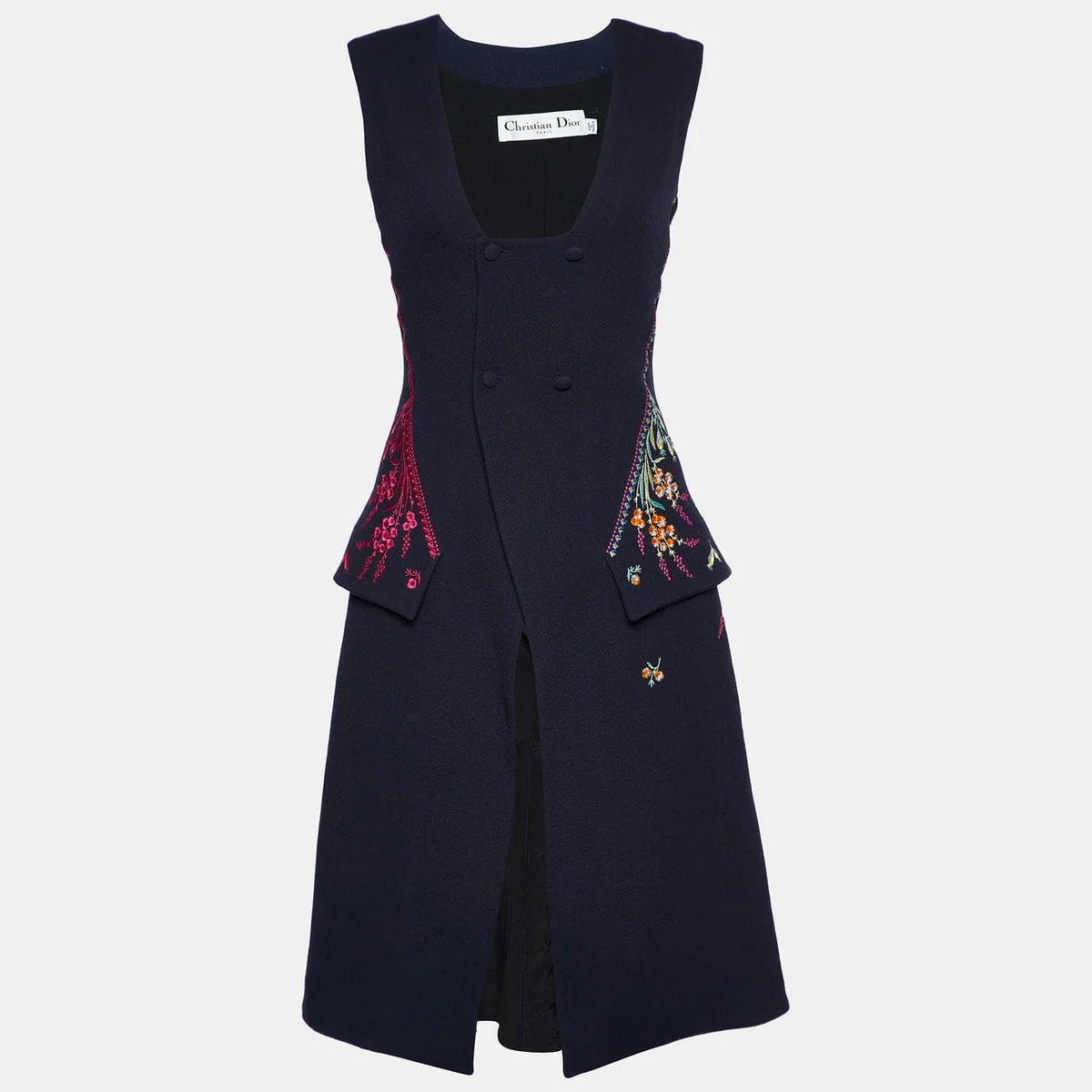
Christian Dior Embroidered Sleeveless Coat #
A sleeveless, double-breasted coat sounds like a contradiction for winter, but this is the kind of piece meant to be layered over a fitted knit or a long-sleeve blouse rather than worn alone in a snowstorm. What earns it a spot here is the tailoring: a deep neckline, a cinched waist, and a slight flare below it that does more shaping than most fully structured coats manage. The bloom embroidery adds the visual interest, but the actual value is in the cut.
Price tier: Pre-owned Dior coats in this category typically run $1,200–$2,800 depending on embroidery detail and condition; retail on comparable new pieces starts well above $4,000.
Fit note: Because it’s sleeveless, size for the layer underneath it, not for your usual coat size. Try it on with a fitted sweater, not a bulky one.
What to check if buying pre-owned: Embroidery threads that are fraying, loose, or missing beads are the first sign of wear that’s expensive to repair. Look at the lining seams and the interior label stitching — on an authentic Dior piece, the label is sewn flush with no loose thread ends, and the season/collection code on the care tag should match the era of the silhouette. Sloppy label placement is one of the more common tells on a piece that isn’t what it claims to be.
Bold and Logo-Forward: Statement Coats #
This category is for buyers who want the coat to do the talking. Logo-driven and utility-inspired pieces read younger and trend-conscious, and they tend to have the widest range in both price and long-term resale performance.
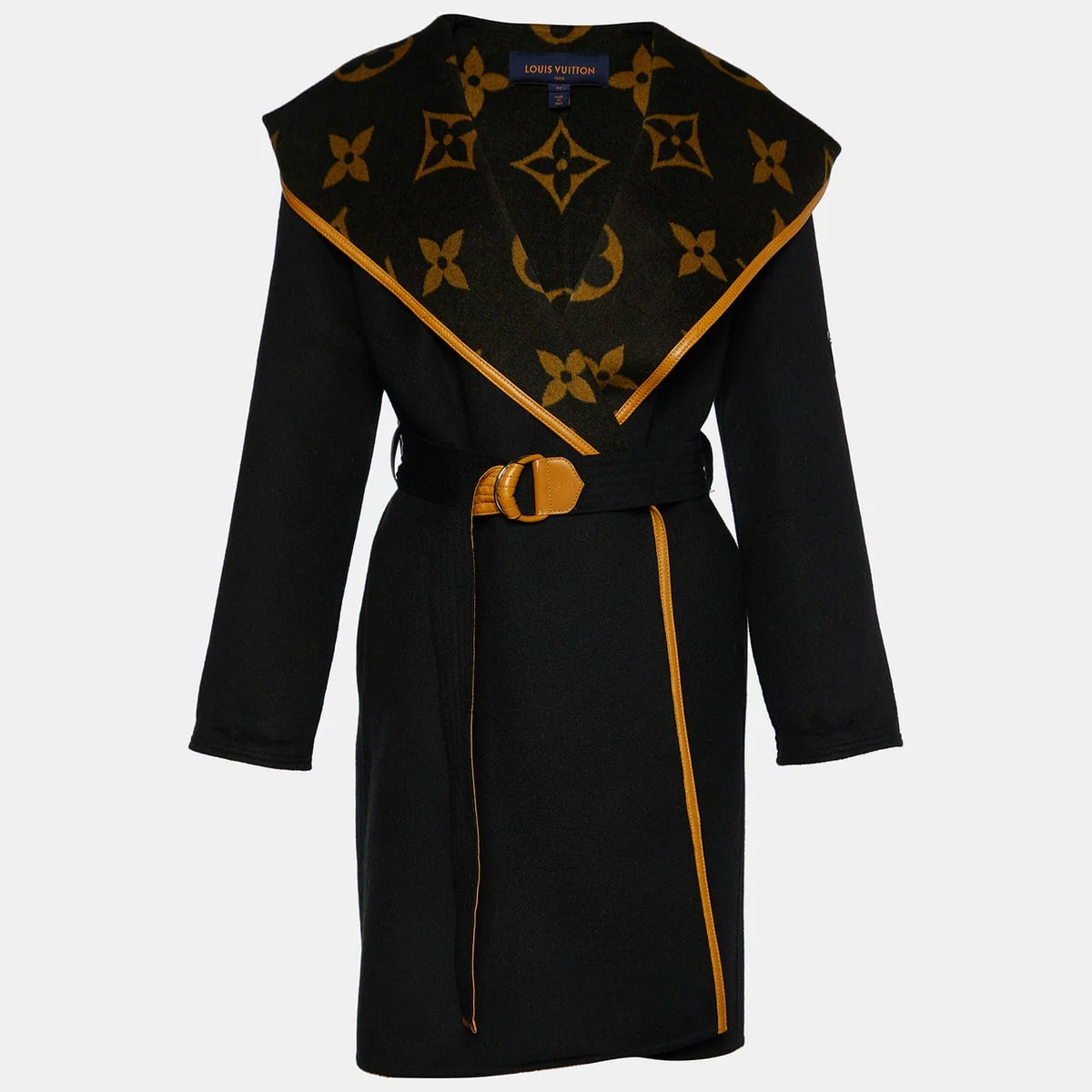
Louis Vuitton Monogram Wrap Coat #
A reversible coat earns its price by doubling as two coats: [[[[monogram canvas](/buying-guides/most-popular-louis-vuitton-bags-2026/)](/authentication/how-to-spot-a-fake-neverfull-authentication-guide/)](/authentication/how-to-spot-a-fake-louis-vuitton-bag/)](/buying-guides/louis-vuitton-neverfull-buying-guide/) on one side for the recognizable logo effect, a plain black face on the other for when you want the silhouette without the branding. A drawstring waist gives it shape, and the hood at the back adds a slightly utilitarian edge that keeps it from feeling too dressy.
Price tier: Pre-owned monogram wrap coats generally land between $2,000–$3,500; new pieces in this line retail significantly higher and sell out fast, which is part of why the resale market stays active.
Fit note: Reversible coats run generously to accommodate the double-layer construction — size down if you plan to wear it belted and fitted rather than oversized.
Honest downside: Heavy logo pieces are more exposed to trend fatigue than plain tailored coats. They also carry more counterfeit risk than any other category on this list, so authentication matters more here than anywhere else. Check the monogram alignment at the seams (it should be symmetrical and continuous, not cut off mid-pattern), the embossing depth on any hardware, and the date code inside a interior pocket — inconsistent font weight or a date code that doesn’t match the production era is the most common flag we see on misrepresented pieces.
Cozy Glam: Teddy and Textured Coats #
This is the comfort category, and there’s no pretending otherwise — a good teddy coat is closer to wearing a blanket than a traditional coat, and that’s the entire appeal.
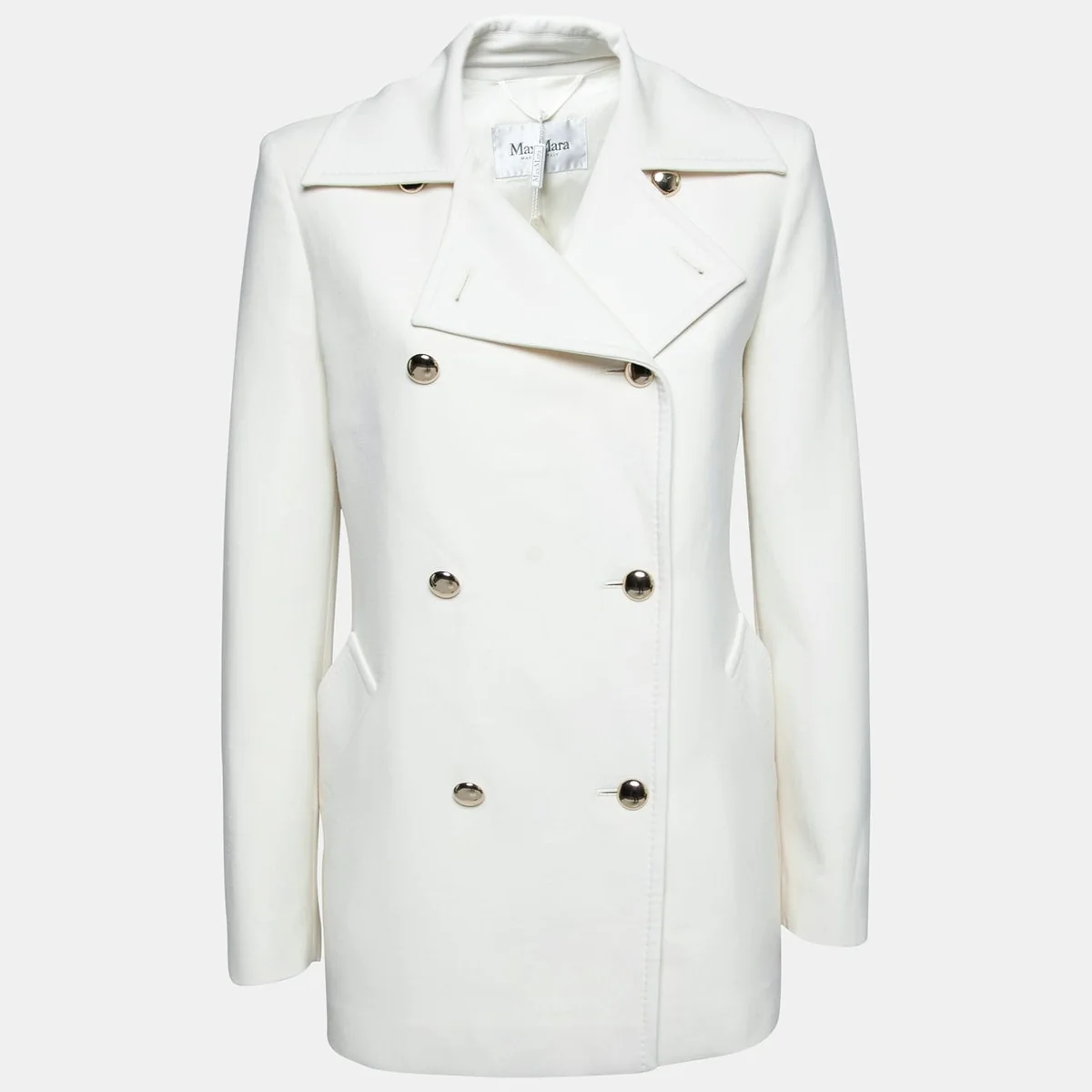
Max Mara Double-Breasted Rebus Coat #
Structured shoulders and classic lapels keep this from tipping into “loungewear” territory, even in a plush wool that reads soft and cozy. The double-breasted front and velvety texture make it one of the more dress-up-or-down flexible pieces in the lineup — it works over jeans just as easily as it works over tailored trousers.
Price tier: Pre-owned Max Mara wool coats in this style typically fall $900–$1,800; the brand’s signature Teddy Bear Icon coat in alpaca-wool blend retails new around $2,500–$3,000, and pre-owned examples in strong condition hold $1,200–$2,000.
Fit note: Textured and teddy coats add visual bulk. If you’re petite, size to your actual measurements rather than sizing up for extra coziness — the fabric already adds volume, and an oversized fit will overwhelm a smaller frame.
Honest downside: Plush and teddy textures mat and shed with wear, especially at friction points like the underarms and where a bag strap sits. Ask for close-up photos of these areas before buying pre-owned, and budget for a professional wool brush or a trip to a specialty cleaner once a season.
Timeless Icons: Tweed and Trench Classics #
If you only buy one designer coat in your life, it’s probably from this category. Tweed and trench silhouettes haven’t meaningfully changed in decades, which is exactly why they hold resale value better than almost anything else in outerwear.
Chanel Tweed Coat #
The boucle tweed jacket is the house’s signature for a reason — the fabric itself is often woven specifically for Chanel, in a way that’s genuinely difficult to replicate. Vintage pieces, including open-front and fringed styles, carry a different appeal from current-season tweed: less structured, more textural, and often priced more accessibly than a new-season equivalent.
Price tier: Vintage Chanel tweed coats in good condition run roughly $1,500–$4,000 depending on era and detailing; current-season pieces new can exceed $8,000.
Authentication note: Chanel buttons are a reliable checkpoint — engraving depth, the CC logo placement, and button backing material should be consistent across every button on the piece. Uneven engraving or plastic-feeling buttons on a coat marketed as vintage tweed is a red flag worth walking away from.
Burberry Prorsum Trench Coat #
The trench is the original transitional coat, and Burberry is still the reference point. This particular iteration adds a crochet overlay for a softer, more feminine take on the classic silhouette, but the core trench elements — storm flap, belt, gabardine weight — remain intact.
Price tier: Pre-owned Burberry trenches range $600–$1,500 depending on line (mainline Burberry vs. Prorsum runway pieces trend higher); new mainline trenches retail $2,000–$2,700.
Care reality: Gabardine cotton trenches need re-proofing every couple of seasons if you’re actually wearing them in rain, not just for the look. A trench that’s lost its water resistance isn’t doing its job, and that’s a maintenance cost worth factoring into the purchase price.
The Celine open-front wool coat belongs in this same conversation as a more minimalist alternative — notch lapels, a clean dark hue, and no logo in sight. It’s the coat that ages best precisely because it never depended on a trend to look current, which also makes it one of the stronger resale holds in a sustainable wardrobe.
How to Choose the Right Designer Coat for You #
Start with fabric weight, not brand. A coat’s warmth comes from wool density and lining, not the label. A midweight wool with a full lining will outperform a thinner luxury fabric in genuinely cold climates, regardless of price point.
Fit for your actual outerwear size, not your dress size. Most designer coats run true to size but are cut for a base layer underneath — try one on over what you’d actually wear it with, not a t-shirt. Shoulders should sit at your natural shoulder line; a structured coat that’s too big will droop at the shoulder seam in a way tailoring can’t fully fix.
Authenticity checks for pre-owned pieces:
- Interior labels: consistent font, straight stitching, no loose threads at the edges
- Hardware (buttons, zipper pulls, clasps): engraving depth and finish should be uniform piece to piece
- Care tags and date/season codes: should match the era of the silhouette — a “new” style paired with a decade-old production code is worth questioning
- Lining seams: luxury houses finish interior seams almost as cleanly as exterior ones; puckering or exposed raw edges inside a coat marketed as excellent condition is a discrepancy worth flagging to the seller
New vs. pre-loved, by budget tier:
- Under $1,000: pre-owned is close to the only path to a genuine designer coat at this price; expect mainline (not runway) pieces from Burberry, Max Mara, or older-season Celine
- $1,000–$2,500: strong pre-owned selection across all four categories above, plus entry into new Max Mara and mainline Burberry
- $2,500+: new-season access opens up across Dior, Louis Vuitton, and Chanel, though pre-owned at this tier still buys meaningfully more coat — a vintage tweed or a Prorsum runway trench, for instance
Buying pre-loved isn’t a compromise here — it’s often the more informed purchase, since a coat with a few seasons of wear already on it tells you exactly how the fabric and construction hold up, which a brand-new piece can’t.
How to Choose the Right Winter Coat for Your Climate #
Coat shopping by aesthetic first and climate second is how people end up with a beautiful coat they never actually wear.
Mild winters (35–50°F, occasional rain): A trench or a lighter wool coat is enough. Prioritize water resistance over insulation — the Burberry-style gabardine trench is built for exactly this climate.
Cold, dry winters (15–35°F): This is teddy coat and heavier wool territory. Look for a fuller lining (silk or wool blend, not just polyester) and a fabric weight you can feel — a coat that feels light in hand will feel light on the coldest days too.
Severe cold or wind exposure (below 15°F, wind chill factor): Structured wool coats, even heavy ones, start to lose to technical outerwear here. A wool coat over a genuine down layer, or a longer length that covers more of the leg, matters more than fabric luxury at this point.
Damp, variable climates: The sleeveless or open-front tailored styles are the weakest choice here since they depend on layering underneath to stay functional — a fully enclosed, structured coat performs more reliably when weather swings in a single day.
Matching coat to climate isn’t about giving up on style — it’s about not spending four figures on a coat you’ll only wear three times because it’s wrong for where you actually live.
Coat Styles Explained: Puffer, Parka, Wool, and Trench #
Trench: A belted, gabardine cotton coat with a storm flap and structured shoulders. Best for mild-to-moderate cold with rain exposure; not built for deep winter warmth on its own.
Wool coat (tailored/overcoat): Structured, often double-breasted, made from wool or wool-blend fabric. This covers most of the tailored and heritage-classic pieces above — Dior, Celine, Chanel tweed. Warmth depends entirely on wool weight and lining quality, so two “wool coats” can perform very differently in cold weather.
Teddy coat: A plush, high-pile faux-fur or shearling-style coat, epitomized by Max Mara’s Teddy Bear Icon. Genuinely warm and low-maintenance to wear, but higher-maintenance to keep looking good — texture flattens with regular wear.
Wrap coat: Closes with a tie or sash rather than buttons, often designed to be reversible (like the Louis Vuitton monogram piece). Fit is more adjustable than a structured coat, which makes it forgiving across body types, but it offers less wind resistance since it’s not a sealed closure.
Peacoat: A shorter, double-breasted wool coat with a wide collar, traditionally hip-length. Not covered in depth in this roundup, but worth knowing as the more casual, cropped counterpart to a full-length wool overcoat — better for layering over other jackets, less effective as standalone deep-winter protection.
Puffer and parka (technical outerwear): Insulated with down or synthetic fill, built for function over silhouette. These aren’t part of the designer-coat categories above, but they’re worth mentioning because in genuinely severe cold, a technical puffer will outperform any wool or tweed coat on pure warmth — the tradeoff is always going to be silhouette and versatility for styling.
The real decision isn’t “which is the best coat style” — it’s matching the style’s actual function to your climate and how often you’ll wear it, then letting fabric quality and construction (not the logo) determine whether a specific piece is worth the price being asked.
Related Articles #
- Replica vs Pre-Owned Bags: Which Is the Smarter Buy?
- Real vs Fake Chanel Tweed Jacket: How to Spot a Fake
- Popular Handbag Brands: Which One Is Right for You?
- Replica vs. Pre-Owned Bags: The Smarter Buy?
- How to Spot a Fake Burberry Bag: Full Guide
Related guides
- Online Bag Authentication: What Photos Can and Cannot Prove
- Inside a Million-Dollar Closet: Pre-Loved Hermès & More
- Meet Marwa Azzam Aldabbagh: Kelly Bag Authentication Expert
- Luxury Handbag Authentication Process Explained
- How to Buy an Authentic Luxury Bag from China Safely
- New vs Pre-Owned Luxury Bags: Which Route Is Right for You?
- Chanel Bag Guide: What to Know Before You Buy
- Luxury Bag Houses


Keyword index