Introduction#
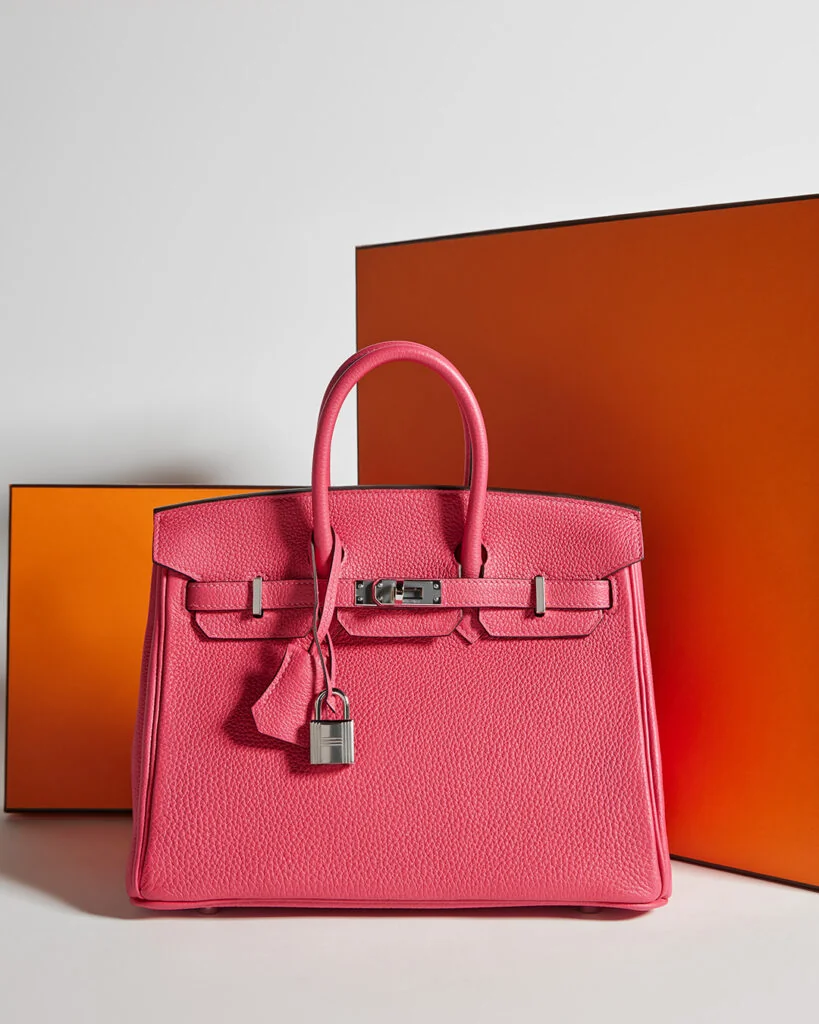
Type “affordable luxury handbags” into Reddit or Quora and you’ll fall into a rabbit hole fast. Threads asking where to find “1:1 mirror quality” bags. TikTok videos unboxing a “super fake” Louis Vuitton next to the real thing, daring viewers to spot the difference. The photos look sharp. The stitching looks even. The price looks like a steal.
I’ve handled thousands of designer bags over the years — authenticated them, resold them, watched their resale value climb or collapse depending on condition and provenance. And I’ll say this plainly: the replica-versus-pre-owned debate isn’t really about whether fakes have gotten better. They have. It’s about what you’re actually buying, what happens after you buy it, and whether you can ever get your money back out of it.
Spoiler: with a replica, you can’t. With a well-chosen pre-owned bag, you often can — and sometimes for more than you paid. This guide breaks down exactly why, without the moralizing and without pretending replicas don’t tempt smart, style-conscious people. They do. Let’s get into why, and why authentic pre-owned still wins.
The Replica Temptation: Why Fakes Feel So Appealing#
Let’s not pretend the appeal isn’t real. A “superfake” Dior Saddle or Gucci Marmont at a tenth of retail is genuinely tempting, especially when the alternative is saving for another year or settling for a smaller bag than the one you actually want.
And today’s high-grade replicas aren’t the crooked-logo, peeling-hardware knockoffs your aunt bought on a street corner in 2004. Sellers now source better hardware, hire people who’ve studied the real stitch patterns, and photograph their product against soft-focus backgrounds that hide a lot of sins. On a phone screen, at a glance, some of them do pass.
There’s also a psychological permission slip a lot of buyers give themselves: nobody in my circle will know. I’ll enjoy carrying it. What’s the harm? I understand the logic. I don’t think it holds up once you look past the first six months of ownership — and I’ll explain exactly why in the next few sections. But if you’re reading this because you’ve got a replica in your cart right now, you’re not naive. You’re just missing information the seller has no incentive to give you.
Replica, Dupe, or Superfake? Getting the Terms Straight#
The internet uses these words interchangeably, which causes real confusion about actual legal exposure. They are not the same thing.
- Counterfeit bag: A product that uses a brand’s trademarked logo, monogram, or design elements without authorization, intended to pass as (or be mistaken for) the genuine item. Illegal to manufacture, import, and sell in nearly every jurisdiction, including the US, UK, and EU.
- Replica / fake bag: Functionally the same thing as counterfeit. “Replica” is marketing language, not a legal category. If it copies a brand’s specific design and trademarks, it’s counterfeit under the law regardless of what the seller calls it.
- Superfake: A counterfeit made with better materials and tighter construction, close enough to fool casual inspection and sometimes even a rushed authenticator. Still a counterfeit. Still illegal to produce, import, and sell. The quality upgrade changes nothing about the legal or ethical status.
- Dupe (inspired-by design): A separate category — a bag that takes stylistic cues from a popular silhouette without using the brand’s logo, monogram, or trademarked design elements. This is legal. A boxy bag with a top handle “in the style of” a Chanel flap is a dupe. A bag with a stamped double-C clasp that isn’t from Chanel is counterfeit.
This distinction matters because most people searching “replica bags” are not looking at legal dupes — they’re looking at counterfeits, sometimes dressed up in nicer marketing copy. Knowing which one you’re actually being offered changes your risk exposure entirely, which is what the next section is about.
The Real Risks of Buying a Replica Bag#
Legal risk. Customs enforcement on counterfeit luxury goods has tightened, not loosened. In France and Italy in particular, knowingly purchasing counterfeit goods can expose the buyer — not just the seller — to fines. Packages get flagged and seized at customs regularly, and you don’t get a refund when that happens; you just lose the money and the bag.
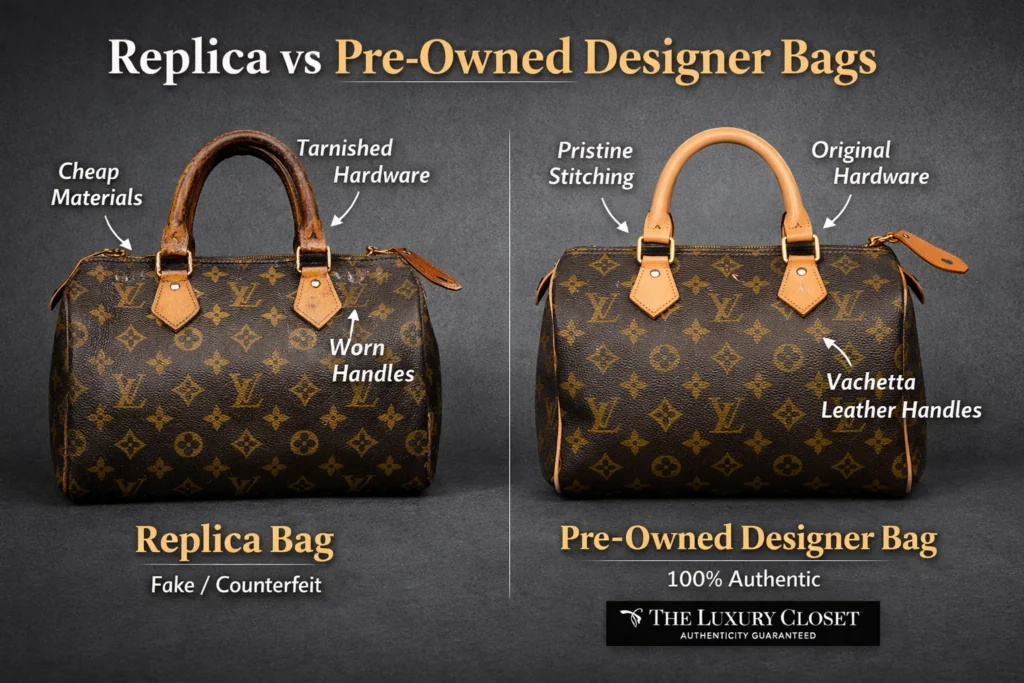
Quality that degrades fast. A counterfeit simulates the look of a luxury material, not its performance. The canvas, leather, hardware plating, and glue used in genuine houses are chosen and tested for decades of wear. Counterfeit workshops use cheaper substitutes that can look fine in a listing photo and start cracking, peeling, or fraying within months of regular use. I’ve seen “superfake” bags with handles that sag out of shape after a single humid summer.
Undisclosed health exposure. Counterfeit production sits entirely outside regulated supply chains, meaning the dyes, glues, and leather treatments used aren’t subject to the consumer safety testing that legitimate brands (and by extension, their pre-owned inventory) go through. Reports on seized counterfeit goods have repeatedly found unsafe levels of chemicals like lead and phthalates in coatings and hardware. That’s not a small detail for something worn against your body all day.
Labor and ethics. Counterfeit manufacturing operates in unregulated facilities with no labor oversight, often tied to broader black-market operations. Buying replicas isn’t a victimless workaround — it funds an industry with a documented history of exploitative labor practices.
Zero resale value. A counterfeit has no resale market. You cannot consign it, sell it, or trade it in. The money you spent is gone the moment you check out, full stop. Compare that to a well-maintained pre-owned bag, which typically retains a meaningful percentage of its value and can be resold again later.
Social risk. The embarrassment of being called out by someone who knows the real thing is real, and it happens more than sellers admit. Hardware weight, stitch count, interior stamping, and lining texture are all details that seasoned handbag people notice quickly.
Why Authentic Pre-Owned Bags Are the Smarter Alternative#
Here’s the alternative nobody’s TikTok-ing about with the same enthusiasm: the pre-owned luxury market has matured enormously. You can buy a genuine [Chanel Classic Flap](/buying-guides/vintage-chanel-finds-top-picks/), a Hermès Birkin, or a Louis Vuitton Neverfull secondhand — fully authenticated, often gently used — for meaningfully less than boutique retail, sometimes 20-40% less depending on the model, condition, and how in-demand it currently is.
What you’re actually getting:
- Real craftsmanship. The canvas, leather, and hardware are the ones the brand actually engineered and tested — not an approximation of them. A well-cared-for pre-owned Bottega Veneta intrecciato tote still has that supple, buttery hand-feel a counterfeit can only imitate on day one.
- Provenance and heritage. You’re carrying a piece that’s part of an actual design lineage, not a copy of one. That matters to plenty of buyers, and it matters to resale buyers too.
- A real exit strategy. Because it’s authentic, it holds a place in a functioning resale market. Certain models — discontinued colorways, limited editions, iconic shapes from Hermès and Chanel especially — have historically appreciated rather than depreciated.
- Buyer protections. Reputable resale platforms offer authentication guarantees, condition disclosures, and return policies. None of that exists when you’re buying from an anonymous counterfeit seller on Instagram DMs.
I’ll be honest about the downside too: pre-owned isn’t risk-free. Condition varies, prices for hyped models can be inflated, and the secondary market has its own bad actors selling counterfeit goods disguised as “pre-owned authentic.” The difference is that those risks are manageable with the right diligence — which is exactly what the buying section below covers.
Replica vs Pre-Owned: Comparing Cost, Quality, and Resale Value#
| Factor | Replica / Counterfeit Bags | Authentic [Pre-Owned Designer Bags](/buying-guides/replica-vs-pre-owned-bags/) |
|---|---|---|
| Authenticity | Counterfeit, illegal to sell | 100% authentic, verifiable |
| Upfront price | Very low | Below retail, varies by model/condition |
| Materials | Substitute leather, plastics, unregulated dyes | Original brand-grade materials |
| Craftsmanship consistency | Variable, even among “superfakes” | Consistent with original manufacturing standards |
| Durability | Often degrades within months to a couple years | Can last decades with care |
| Legal exposure | Real — customs seizure, buyer liability in some countries | None |
| Resale value | Zero | Often retains 40-90%+ of value depending on model |
| Buyer protection | None | Authentication guarantees, return policies on reputable platforms |
| Long-term cost | Cheap now, replace repeatedly | Higher entry cost, but retains and can return value |
The math that gets missed in “just buy the replica” advice: a $150 counterfeit bag that needs replacing every 18 months because the hardware tarnishes or the seams split isn’t actually cheaper over five years than a $2,000 pre-owned bag you can resell for $1,400 later. One is a sunk cost repeated on a loop. The other is closer to a depreciating asset with an exit.
How to Buy Pre-Owned Luxury Bags Safely#
The pre-owned market rewards buyers who do their homework and punishes the ones who don’t — same as any secondary market. Here’s what actually protects you:
- Buy from platforms with in-house authentication. Reputable resale sites employ trained authenticators who physically inspect stitching, hardware stamps, serial/date codes, and material weight before listing. Ask directly what their authentication process involves — a vague answer is a red flag.
- Check the return and authentication guarantee policy before purchase. A legitimate platform will offer a refund if a bag ever fails third-party authentication after delivery. If there’s no such guarantee, be cautious.
- Ask for close-up photos of stamped serial numbers, interior tags, and hardware engravings if they’re not already in the listing. Sellers with genuine inventory won’t hesitate.
- Compare price against current resale benchmarks. If a “pre-owned Birkin” is priced 60% below what similar condition/size/leather combinations are trading for elsewhere, that’s a signal to slow down, not speed up.
- Inspect condition grading carefully. Terms like “excellent,” “very good,” and “fair” should come with photos showing corners, base, hardware, and interior lining — not just an exterior glamour shot.
- Avoid private social media sellers with no return policy, no authentication paperwork, and pressure to pay via untraceable methods. This is where counterfeit bags most often get passed off as “authentic pre-owned.”
- Consider third-party authentication services (independent of the seller) for high-value purchases like Hermès or vintage Chanel, especially for private sales.
Frequently Asked Questions#
Is it illegal to buy a replica designer bag? It depends on the country, but the trend is toward stricter enforcement. In several countries, including France and Italy, knowingly purchasing counterfeit goods can expose the buyer to fines, not just the seller. Packages are also commonly seized at customs, meaning you lose both the money and the item with no recourse.
What’s the difference between a dupe and a counterfeit? A dupe is a legally distinct design inspired by a popular silhouette, with no branded logos or trademarked elements. A counterfeit uses the brand’s actual trademarks (logo, monogram, hardware stamping) without authorization, which makes it illegal regardless of how it’s marketed — “replica” and “superfake” both fall into this category.
Do pre-owned designer bags hold their value? Many do, particularly Hermès, Chanel, and select discontinued or limited-edition pieces from Louis Vuitton and Dior. Value retention depends heavily on model demand, condition, and rarity — a well-kept Birkin can hold or exceed its original price, while a heavily worn, common style will depreciate like most goods.
How can I tell if a pre-owned bag is actually authentic? Look for consistent stitching, correct font and spacing on stamped logos, appropriate hardware weight, accurate serial/date codes for the brand and era, and lining material consistent with that model’s production history. When in doubt, use a platform with in-house authentication or an independent third-party authenticator before finalizing a private sale.
Are superfakes really that hard to spot? Some are convincing in photos and even in person to an untrained eye. But construction quality, material behavior over time, and details authenticators check (stitch density, hardware engraving depth, interior stamping) reliably separate them from genuine pieces. The fact that a fake fools casual observation doesn’t change its legal status or its complete lack of resale value.
Is buying pre-owned considered acceptable in the luxury world? Yes, and increasingly so. The pre-owned luxury market has grown into a legitimate, high-volume segment of the industry, with brands themselves launching resale and certified pre-owned programs. It’s viewed as both a savvy financial choice and a sustainable one, not a compromise.
Related Articles#
- How Pre-Owned Luxury Fashion Is Reshaping the Industry
- Louis Vuitton Alma Bag: The Ultimate Buying Guide
- Sell Designer Handbags in 2025: Get Paid More, Faster
- Best It Bags to Buy This Year: A Definitive Guide
Related guides
- Online Bag Authentication: What Photos Can and Cannot Prove
- Fake Goyard Bag Guide: How to Spot Real vs Fake (2026)
- How to Spot a Fake Chanel Flap Bag: Authentication Guide
- How to Spot a Fake Hermès Birkin: Expert Checklist
- How to Buy an Authentic Luxury Bag from China Safely
- New vs Pre-Owned Luxury Bags: Which Route Is Right for You?
- Chanel Bag Guide: What to Know Before You Buy
- Luxury Bag Houses


Keyword index