Introduction #
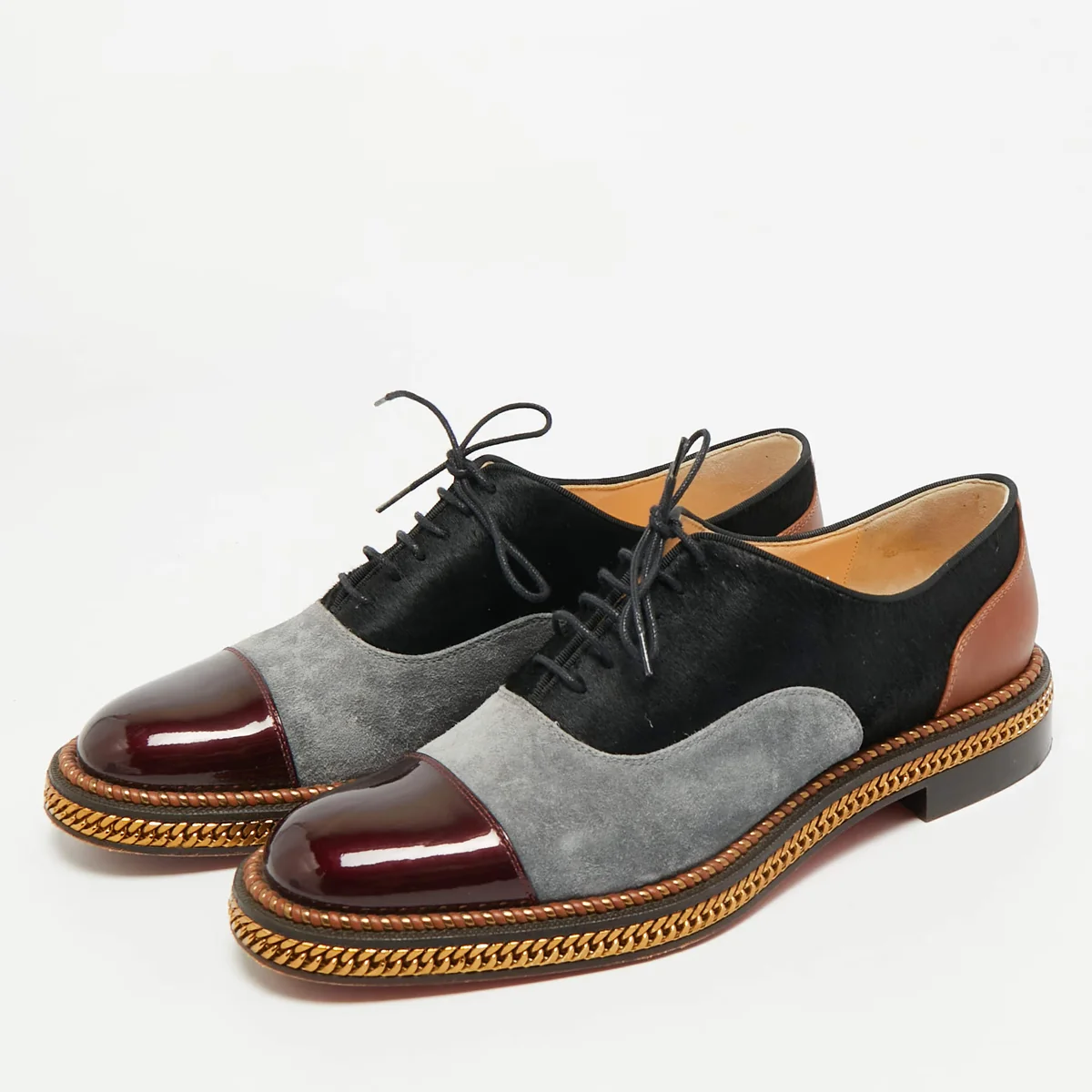
Buying a pair of dress shoes online used to mean gambling on fit, finish, and authenticity based on a handful of stock photos. That’s no longer the case. The infrastructure that transformed online handbag resale over the last decade — third-party verification teams, macro photography of hardware and stitching, condition grading, buyer protection guarantees — has fully migrated to men’s footwear. In 2026, a pair of John Lobb Oxfords or a limited Berluti loafer bought online goes through inspection protocols that rival, and in some cases exceed, what you’d get walking into a boutique.
We approach footwear the same way we approach a Kelly or a Birkin: assume nothing, verify everything. The stakes are different but the discipline is identical. Stitch density, sole construction, hardware stamping, and packaging all tell a story, and counterfeiters have gotten good at faking the obvious parts while missing the details that trained eyes catch immediately. This guide applies that authentication-first lens to men’s luxury footwear, covering the retailers actually worth your money, the verification science behind their guarantees, sizing quirks that trip up first-time buyers, and the price benchmarks that separate a fair deal from a bad one.
Types of Men’s Luxury Footwear: A Buyer’s Guide #
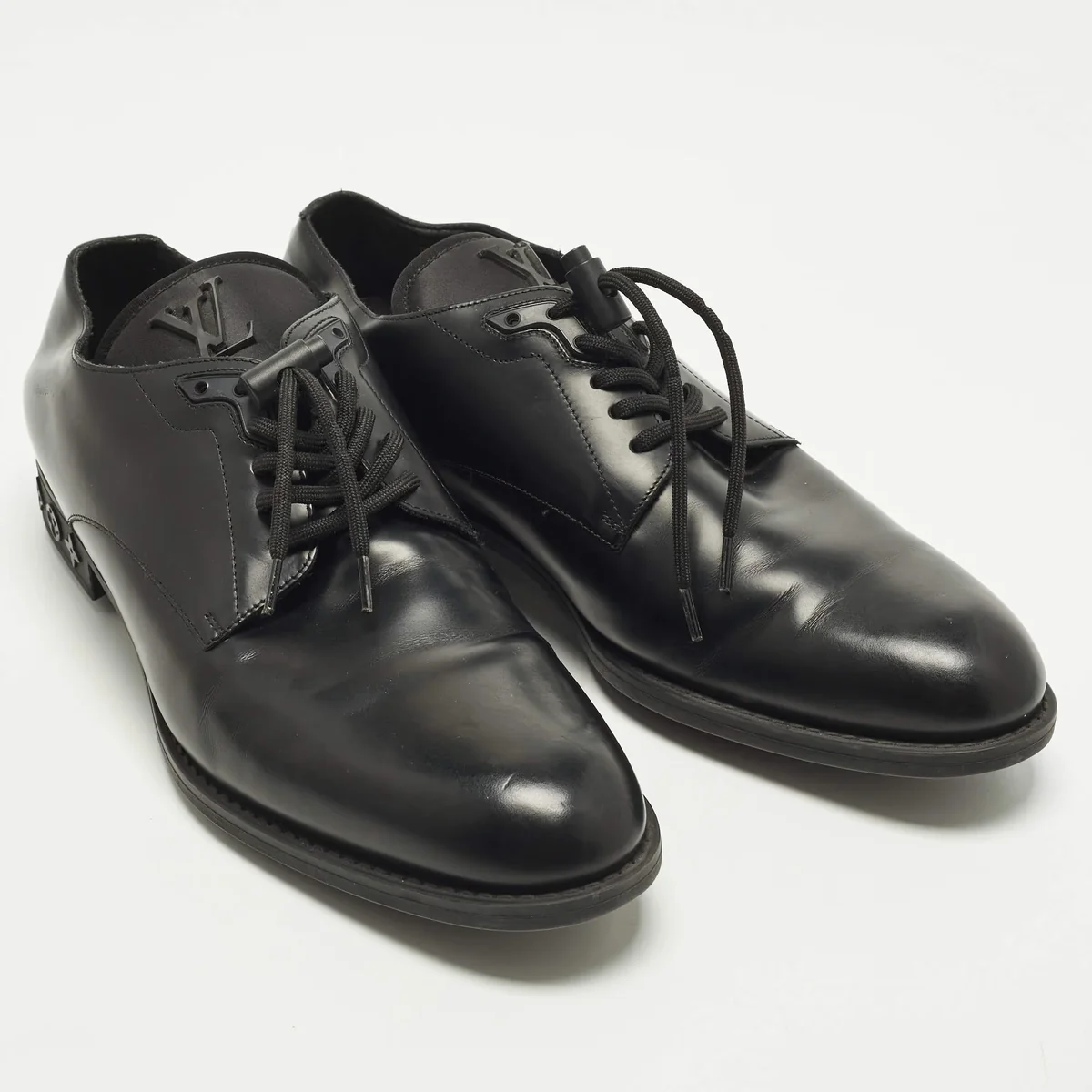
Construction determines both how a shoe wears and how easy it is to authenticate. Counterfeiters routinely nail the silhouette but fumble the underlying build — which is exactly why understanding these categories matters before you shop.
Oxfords #
The closed-lacing construction, where the quarters are stitched beneath the vamp, gives Oxfords their sleek, formal profile. This is the category for black-tie, courtroom, and boardroom wear. Houses like John Lobb, Edward Green, and Berluti dominate the upper tier, and their Oxfords are usually built on a Goodyear-welted or hand-welted sole — a construction detail worth checking closely, since it’s one of the hardest things for counterfeiters to replicate convincingly.
Derby Shoes #
Same general silhouette as the Oxford, but with an open-lacing system where the quarters sit on top of the vamp. That structural difference gives Derbies more room across the instep and a noticeably more forgiving fit, which is why they’ve become the default “smart” shoe as office dress codes loosen. Crockett & Jones and Carmina are consistently strong picks in this category and show up often on authenticated resale platforms at a meaningful discount to retail.
Loafers and Monk Straps #
Loafers are the category driving most of the current demand. Slip-on construction ranges from minimalist unlined suede (Brunello Cucinelli does this particularly well) to hardware-heavy statement pieces like Gucci’s Horsebit line, where the metal bit itself becomes a key authentication point — genuine hardware has weight, finish consistency, and stamping depth that cast replicas rarely match. Monk straps sit adjacent to loafers stylistically: single-strap versions read more formal, double-strap versions lean expressive. Tom Ford and Saint Laurent both produce monk straps that hold value well in the pre-owned market, provided the buckle hardware checks out.
Boots #
Service boots and Chelsea boots round out a luxury rotation, bridging formal and rugged wear. Viberg’s leather and shell cordovan builds are the reference point for construction quality, while Berluti and Common Projects cover the slimmer, dressier end. Sole wear pattern is the fastest authenticity tell here — genuine leather soles wear unevenly at the pressure points, while a counterfeit’s synthetic sole often shows suspiciously uniform wear or no wear at all despite listed use.
Sizing and Fit Across Brands #
Sizing is where most first-time luxury shoe buyers get burned, and it has nothing to do with authenticity. French and Italian lasts (Berluti, Bontoni, Carmina) tend to run narrow through the toe box compared to English lasts (John Lobb, Edward Green), which are typically cut fuller. Gucci and Saint Laurent loafers often size closer to true-to-size but vary by last within their own catalog. Practical approach: if you own even one pair from a given house, note the last name and your fit adjustment (up or down a half size), and carry that reference across purchases. Platforms with detailed measurement listings — insole length, width at the ball of the foot — are worth prioritizing over ones that list numeric size alone.
How Authentication Works for Luxury Footwear #
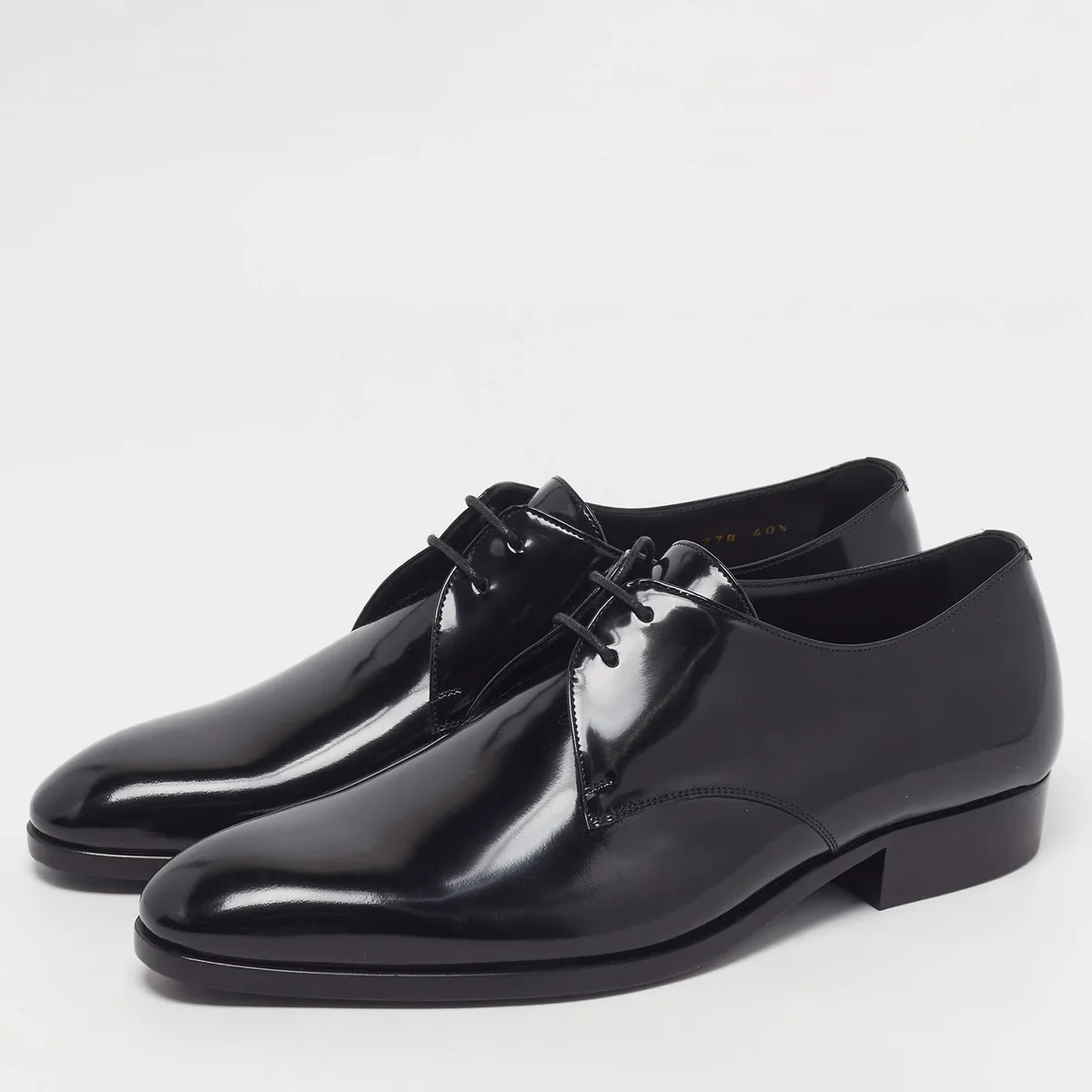
Authentication for shoes follows the same logic as handbag authentication: compare construction, materials, and branding against verified reference points, then look for the specific errors counterfeiters make at scale.
Stitching and welt construction. Genuine Goodyear-welted or hand-welted shoes show consistent stitch spacing around the welt, with visible but clean thread work. Cheap replicas often use glued or Blake-stitched construction dressed up to look welted — flex the shoe at the ball and check whether the sole separates from the upper in a way that matches the stated construction.
Hardware. Buckles, horsebit fittings, and metal eyelets on genuine pairs are weighted correctly and stamped with consistent depth and alignment. Counterfeit hardware frequently feels light, has blurred or shallow engraving, or shows a slightly wrong finish color (a too-yellow gold tone is a common tell on fake horsebit hardware).
Leather and exotic skins. Full-grain calfskin has natural, irregular grain; bonded or corrected leather looks unnaturally uniform. On exotic skins — crocodile, alligator, lizard — scale pattern consistency and edge finishing are the giveaways. Authenticators examine scale symmetry and whether the skin was cut and matched properly at seams, something mass counterfeiters skip because it’s labor-intensive.
Serial numbers and internal marks. Most luxury houses stamp size, factory codes, or date codes inside the shoe, often on the insole or tongue. Authentication teams cross-reference these against known formats for the brand and production era.
Technology in use. Top platforms now combine trained human authenticators with AI-assisted image comparison, cross-referencing hundreds of thousands of verified reference photos for stitch patterns, logo placement, and hardware detail. Some also issue digital certificates or NFC-tagged authentication cards tied to the specific pair, giving buyers a verifiable record independent of the original box.
Top Authenticated Retailers to Shop in 2026 #
Not every platform verifies to the same standard, and the differences matter more for footwear than most buyers expect, since construction details are easy to misjudge from photos alone.
| Platform | Best for | Authentication approach | Notable downside |
|---|---|---|---|
| TheRealReal | Broad pre-owned selection, dress shoes to sneakers | In-house trained authenticators, physical inspection before listing | Selection skews toward more mainstream designers over niche makers like Bontoni or Carmina |
| Mytheresa | New-season designer footwear, first access to drops | Direct-from-brand sourcing removes most counterfeit risk by default | Premium pricing, limited pre-owned options |
| END. | Contemporary and heritage boots, limited collabs | Brand-direct and authorized retail relationships | Less depth in classic dress shoes (Oxfords, Derbies) |
| SSENSE | Designer loafers and monk straps, seasonal markdowns | Authorized retailer model, no third-party resale authentication needed | Sizing guidance can be inconsistent across brands on the same page |
| Grailed | Rare, discontinued, or grail-tier pairs | Peer-to-peer with optional authentication service on higher-value listings | Authentication isn’t mandatory on every listing — buyer has to opt in or verify independently |
| The Luxury Closet | Curated pre-owned dress shoes and exotic-skin pieces | Every item authenticated and condition-graded before listing, with detailed photography | Smaller inventory than mass-market resale sites |
The practical takeaway: Mytheresa, END., and SSENSE reduce counterfeit risk mostly by controlling the supply chain (you’re buying new, direct-from-brand or authorized stock), while TheRealReal and The Luxury Closet earn trust through active authentication of pre-owned goods. Grailed sits in a different category entirely — the upside is finding pairs you won’t see anywhere else, the downside is that authentication rigor depends on the specific listing, not a platform-wide guarantee.
Return Policy, Warranty, and Buyer Protection #
Return windows on pre-owned luxury footwear are typically shorter than new retail — commonly 3 to 7 days for resale platforms versus 14 to 30 days for retailers selling new stock. Read the fine print on final sale items; heavily discounted or rare pairs are frequently sold as-is. Buyer protection matters more than the return window itself: platforms that issue an authenticity guarantee will refund in full if an item is later found to be counterfeit, even outside the standard return period, whereas peer-to-peer marketplaces often push that responsibility onto a separate buyer protection program (PayPal or platform escrow) rather than the seller. Before buying, confirm three things: who authenticates, what happens if authentication fails after purchase, and whether return shipping cost is covered.
Counterfeit Red Flags Specific to Luxury Shoes #
Footwear counterfeits fail in predictable places once you know where to look.
- Soles. Genuine leather soles show a slightly irregular, hand-finished edge and wear naturally at the heel strike and toe-off points. Fakes often have a sole that’s too glossy, too perfectly uniform, or made from a synthetic material that doesn’t flex the way leather does at the arch.
- Logo debossing and stamping. Depth and spacing matter. A shallow, slightly off-center, or inconsistently sized logo stamp on the insole or heel is one of the most reliable tells across nearly every brand.
- Packaging. Authentic luxury shoe boxes have consistent typography, correct dust bag material (often a specific weight of cotton or flannel unique to the house), and matching size stickers between the box and the shoe itself. Mismatched fonts or a dust bag that feels cheaper than the shoe inside it is a red flag.
- Hardware finish. As noted earlier, buckle and eyelet weight and finish color are hard to fake convincingly. If metal hardware feels light or the plating looks slightly wrong under natural light, treat that as a serious warning sign, not a minor quirk.
- Stitching at stress points. Check the vamp, the welt, and where the sole meets the upper. Loose threads, glue overflow, or stitch lines that don’t match photographed reference pairs from the brand’s official archive all point to a replica.
Price & Value: What to Expect When Buying Pre-Owned #
Pricing on pre-owned luxury footwear tracks three variables: brand heritage, condition, and rarity of the specific model. As a rough benchmark, well-maintained pairs from houses like John Lobb, Edward Green, and Berluti retain 40–60% of original retail in good condition with light wear, while limited or discontinued colorways (particularly exotic-skin loafers from Gucci or [Christian Louboutin](/brands/christian-louboutin-brand-history/)) can hold value closer to 65–75%, occasionally trading above original retail for genuinely rare sizes or collaborations. Mass-produced designer dress shoes without a strong resale following depreciate faster, often landing in the 25–35% range once worn.
Condition grading is where most of the price variation actually lives. A pair listed as “pristine” or “like new” with unworn soles commands a real premium over the same model in “good” condition with visible creasing or resoled repairs. Be skeptical of listings priced close to retail for a “gently worn” pair — that pricing gap usually signals either an inflated grade or, less often, a fake being priced to look legitimate through a high price point.
Caring for Leather and Exotic Skins #
Value retention starts with maintenance, not resale timing. Calfskin dress shoes should be conditioned every few wears with a quality cream polish and rested on cedar shoe trees to pull moisture and preserve shape between wears — never store them flat in a closed box without airflow. Exotic skins need lighter handling: crocodile and alligator leather should be treated with a specialized exotic-skin conditioner (standard shoe cream can dull or discolor the scales) and kept away from direct sunlight, which dries and cracks the skin at the seams first. Suede loafers benefit from a soft brush after each wear rather than any liquid treatment. Resoling matters too — a professional resole using materials matched to the original construction preserves resale value far better than a cheap generic repair, which authenticators and future buyers will spot immediately.
Red Flags: Spotting Counterfeit Luxury Footwear #
If you’re buying without in-person inspection, run through this checklist before finalizing any purchase:
- Does the listing include close-up photos of the insole stamp, sole stitching, and hardware, or only styled lifestyle shots? Sellers confident in authenticity show the details; sellers hiding a fake avoid them.
- Is the price meaningfully below market for the stated condition with no explanation (estate sale, sample sale, employee discount)? Unexplained steep discounts are the single most common thread across counterfeit listings.
- Does the platform offer a written authenticity guarantee with a refund path, or just a vague “authentic guaranteed” badge with no backing policy?
- Does the seller’s return policy conveniently exclude authenticity disputes, or exist only as store credit rather than a refund?
- Are the size markings, box labels, and any date/factory codes consistent with the brand’s known format for that era? A quick reference check against the brand’s official archive or a trusted authentication service resolves most doubts here.
When in doubt, a paid third-party authentication check (many services now cover footwear specifically, not just bags) costs far less than the shoes themselves and removes the guesswork entirely.
FAQ #
How can I tell if a luxury shoe listing photo shows a real or fake pair? Look past the overall silhouette and focus on insole stamping depth, sole stitch consistency, and hardware weight and finish. Genuine pairs show slight, natural irregularities in hand-finished details; counterfeits tend to be either suspiciously perfect or visibly sloppy at stress points.
Do authenticated resale platforms really check every pair, or just high-value items? It varies by platform. TheRealReal and The Luxury Closet authenticate before listing as standard practice. Peer-to-peer marketplaces like Grailed generally leave authentication optional unless the listing crosses a certain price threshold, so check the specific listing’s authentication status rather than assuming platform-wide coverage.
Why does sizing vary so much between brands even at the same numeric size? Different houses build on different lasts. English lasts (John Lobb, Edward Green) tend to run fuller through the toe box; French and Italian lasts (Berluti, Bontoni, Carmina) often run narrower. Always check brand-specific fit notes or measurements rather than relying on your usual shoe size alone.
Is it normal for pre-owned prices to sometimes exceed original retail? Yes, for discontinued models, rare exotic-skin colorways, or limited collaborations where demand outpaces remaining supply. It’s not the norm, but it does happen with genuinely scarce pieces — treat it as a rarity premium, not a red flag, as long as authentication and condition are verified.
What’s the fastest way to confirm a return policy protects against counterfeits? Read the policy for the specific phrase “authenticity guarantee” and check whether it applies beyond the standard return window. A platform that only offers returns for buyer’s remorse, with no separate authenticity protection, leaves you exposed if a problem surfaces after the return deadline passes.
Related Articles #
- Hermès Replica vs Pre-Owned: Which Is Worth It?
- Handbag Trends 2024: The Bags You’ll Actually Wear
- Black Friday 2025: Real Luxury Deals Without Fakes
- Luxury Handbag Authentication Process Explained
- How to Spot a Fake Burberry Bag: Full Guide
Related guides
- Online Bag Authentication: What Photos Can and Cannot Prove
- Blue Crocodile Lady Dior Tote: Buying Guide
- Chanel Vintage Flap Bag Buying Guide: Navy Lambskin
- Louis Vuitton Palm Spring Backpack: Complete Buyer's Guide
- How to Buy an Authentic Luxury Bag from China Safely
- New vs Pre-Owned Luxury Bags: Which Route Is Right for You?
- Chanel Bag Guide: What to Know Before You Buy
- Luxury Bag Houses


Keyword index