Introduction: The Woman Behind the Brand #
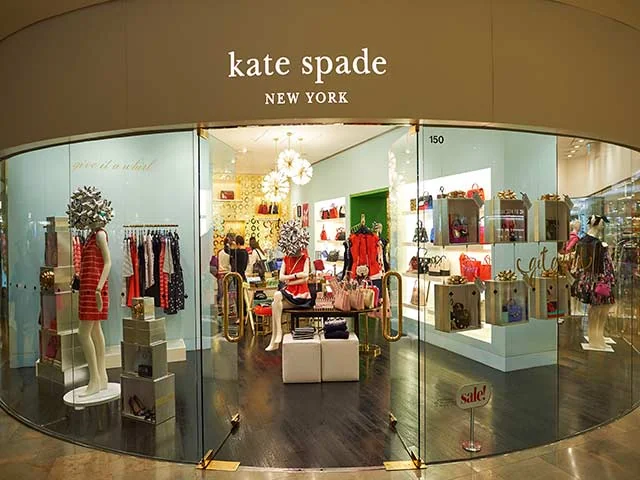
Before she was a household name on handbag hangtags, Katherine Noel Brosnahan was an accessories editor at Mademoiselle magazine, spending her days reviewing other people’s handbag collections rather than designing her own. That job put her in a strange position: she had more exposure to the accessories market than almost anyone outside a design studio, yet she had no formal training in pattern-making, leatherwork, or manufacturing.
By 1991, that editorial vantage point had curdled into frustration. Brosnahan found the handbag market split between two extremes — heavily branded European luxury bags on one end, and forgettable, disposable totes on the other. Nothing in between felt considered. She wanted a bag that looked put-together without shouting a logo, and when she couldn’t find one on the shelves she was reviewing professionally, she decided to make it herself. That decision, made by a magazine editor with zero design credentials, is the real starting point of Kate Spade history — not a runway show, but a gap she’d spotted from behind a desk.
From Scotch Tape to Store Shelves: The First Collection #
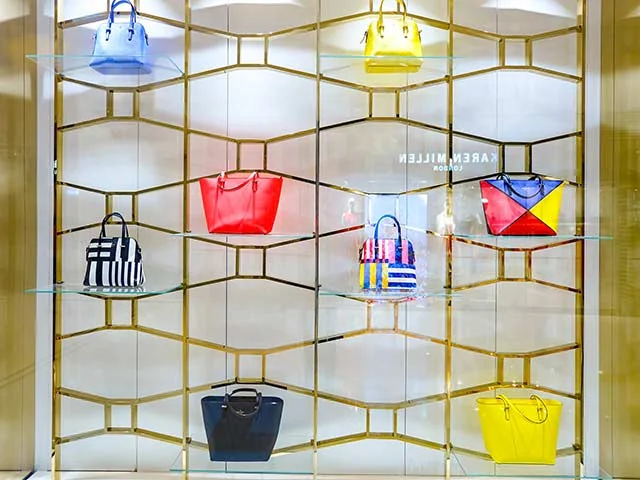
Brosnahan’s first prototypes weren’t sketches sent to a factory. She built them from paper and tape, physically mocking up shapes until the proportions felt right — an unconventional method for someone with no design background, but an effective one for someone who understood merchandising better than construction. Her boyfriend at the time, Andy Spade, worked in advertising and creative direction, and he pushed her to keep refining the samples rather than settle for the first version that held together.
The result was a small line of structured nylon bags, deliberately unfussy, priced between $100 and $400 — expensive enough to feel like an investment, cheap enough to feel attainable. The Washington Post later described the collection as “preppy with attitude,” a phrase that stuck because it captured something real: these bags were quiet on branding but confident in shape, a contrast to the logo-heavy luxury bags dominating department store counters at the time. That original nylon silhouette, more than any single design detail, is what launched the brand.
Rising to Recognition: Boutiques, Bloomingdale’s, and Vogue #
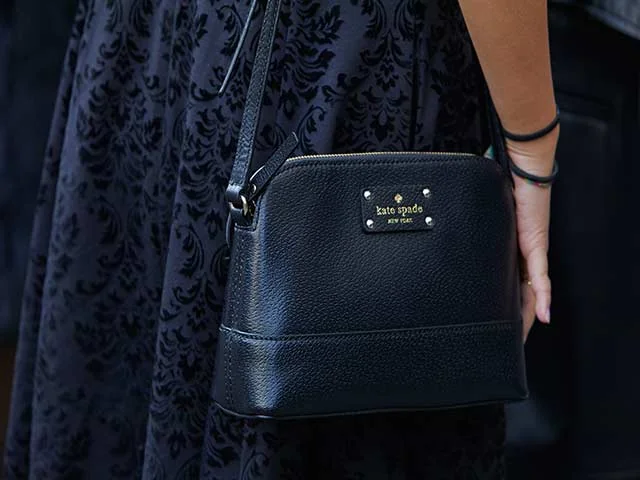
Retail interest didn’t arrive through a marketing campaign — it arrived through buyers. Independent boutiques started placing orders first, and within a short stretch, department stores followed, including Bloomingdale’s and Saks Fifth Avenue. For a brand with no outside investment and no advertising budget to speak of, landing shelf space next to established labels was a meaningful validation of the product itself.
Editorial coverage followed retail traction, not the other way around. When Vogue placed Kate Spade bags alongside established luxury names, it signaled that the industry saw something distinct in the work — a graphic, slightly ironic sensibility that felt different from the classic house codes of Chanel or Prada, and less corporate than Coach’s leather-forward catalog. The brand picked up recognition from the Council of Fashion Designers of America in the mid-1990s for accessory design, cementing what retail buyers already suspected: this wasn’t a passing boutique trend.
Beyond Handbags: Expanding the Kate Spade Universe #
Handbags were the entry point, but the label expanded fast once demand proved out. Within the decade, the business had grown into women’s clothing, jewelry, shoes, stationery, eyewear, and fragrance — categories that let the brand’s visual language (bold color, graphic prints, dry wit in naming) extend across a full lifestyle assortment rather than staying confined to one product type. By 1998, the company was reporting around $27 million in sales, a sharp climb for a business that started with paper mockups and no outside funding.
Kate Spade Home launched in 2004, the same year the brand opened its first store outside the U.S., in Tokyo — an early signal that the label’s appeal wasn’t limited to American shoppers. Ownership changed hands more than once during this growth phase: Neiman Marcus acquired a 56% stake in 1999 for $33.6 million, and by 2006, with the company’s turnover near $99 million, Neiman sold its position to Liz Claiborne for $124 million. Kate and Andy Spade sold their remaining shares in 2007 and stepped away from daily operations, citing family reasons. The brand they’d built by hand was now fully in the hands of a public company.
Over the following decade, collaborations became part of how Kate Spade stayed culturally relevant without the founders at the helm — partnerships with Keds on sneakers and capsule collections with Disney’s Minnie Mouse imagery brought the brand’s graphic identity into new categories, keeping the label visible to younger shoppers even as its ownership structure kept shifting underneath it.
Kate Spade’s Legacy in Luxury Fashion #
Current Ownership: Tapestry Inc. and Present-Day Positioning #
Liz Claiborne restructured and rebranded as Fifth & Pacific before spinning Kate Spade off as its own publicly traded company in 2014. In 2017, Coach Inc. acquired Kate Spade & Company for roughly $2.4 billion — and shortly after, Coach Inc. renamed itself Tapestry Inc. to reflect its multi-brand structure. Today, Kate Spade sits inside Tapestry alongside Coach and Stuart Weitzman, run as a distinct brand with its own design leadership (Nicola Glass took over as creative director in 2018) rather than as a founder-led label.
That’s a meaningful thing for buyers to understand: the woman whose name is on the bag hasn’t had operational control of the company since 2007. Design decisions, quality standards, and pricing strategy today are corporate decisions made within Tapestry’s portfolio, not choices made by Kate Spade herself.
Where Kate Spade Sits Against Coach, Michael Kors, and Tory Burch #
Within the accessible luxury tier, Kate Spade competes most directly with Coach, Michael Kors, and Tory Burch — and the positioning differences are worth knowing before you shop resale. Coach leans on leather heritage and a higher average price point, generally $300–600 for mainline bags. Michael Kors sits lower, often $150–400, with a jet-set, hardware-forward aesthetic and heavier reliance on outlet distribution. Tory Burch occupies a preppier, resort-driven lane closer to Kate Spade’s original DNA, typically $300–500.
Kate Spade’s mainline pricing generally runs $200–500, with its identity built on color and graphic playfulness rather than logo hardware or heritage leather codes. That’s both its strength and its risk as a resale category: the aesthetic is instantly recognizable, but it’s less rooted in the kind of leather craftsmanship that drives long-term value retention in brands like Hermès or Chanel.
A Legacy Interrupted: Kate Spade’s Death in 2018 #
In June 2018, Kate Spade died by suicide, a loss that shocked the fashion industry and prompted renewed public conversation about mental health, even among people who appeared successful and composed. It’s worth being direct about the complicated timeline here: Kate had no operational role in Kate Spade New York at the time of her death — she’d sold her stake in 2007 and had spent the following decade building a separate venture, Frances Valentine, under the name Kate Valentine.
Her death didn’t change who owned or ran Kate Spade New York, but it did change how the public related to the brand’s history. Her family has since directed attention and resources toward mental health advocacy, and many longtime customers now view the original nylon handbags of the 1990s with a different kind of sentimentality — less about the product, more about the woman who first noticed the gap in the market.
Sustainability and Brand Values Today #
As part of Tapestry, Kate Spade has been folded into corporate-level sustainability commitments covering recycled materials, responsible sourcing, and reduced packaging waste. That’s a real shift from the brand’s early years, when nylon construction and rapid outlet expansion weren’t evaluated through an environmental lens at all. Worth noting honestly: the brand’s heavy reliance on outlet and factory-store distribution has drawn criticism for prioritizing volume over longevity, which is a relevant consideration for anyone comparing a Kate Spade bag’s durability to more construction-focused competitors.
The Handbag Problem That Started It All #
It’s easy to reduce Kate Spade’s origin story to “she wanted a better handbag,” but the actual gap she identified was more specific. Mid-tier American shoppers in the early 1990s had two real options: mass-market bags that looked disposable within a season, or European luxury bags priced and branded for a different customer entirely. There was almost nothing designed for a woman who wanted a structured, well-proportioned bag that read as intentional — without either the flimsiness of a drugstore tote or the logo-forward signaling of a $1,000+ status bag.
Brosnahan’s editorial job had given her a front-row seat to how little innovation was happening in that middle tier. Brands were either coasting on heritage codes or racing to the bottom on price, and almost nobody was building bags around clean shape and color the way ready-to-wear designers were building around silhouette. That specific, narrow observation — not a generic love of fashion — is what she turned into six nylon bag styles and a business plan.
From Mademoiselle to Manhattan: Kate’s Pre-Brand Career #
Kate Spade’s editorial background deserves more attention than it usually gets, because it explains a lot about how the brand actually functioned in its first years. Born in Kansas City and educated at Arizona State University, she moved into magazine work and eventually into an accessories editor role at Mademoiselle — a job built around evaluating what other designers were shipping to stores each season, tracking price points, and understanding which categories retailers were hungry for.
That’s a fundamentally different skill set from pattern cutting or leather sourcing, and it shows in how the brand grew. Kate Spade wasn’t built by someone chasing a craft tradition; it was built by someone who understood retail buying patterns, editorial placement, and what made a product easy for a boutique owner to say yes to. Her time reviewing accessories professionally is arguably why the brand found retail traction so quickly relative to designers with formal training but no merchandising instinct.
How Kate and Andy Spade Built the Brand on a Shoestring #
There was no outside funding behind the first collection. Brosnahan sewed and assembled early samples herself, working through iterations by hand rather than through a design studio, and Andy Spade’s creative direction experience helped shape how the brand presented itself before it had a marketing budget to speak of. Their first trade show presence was built the way most bootstrapped labels start out — modest displays, direct conversations with buyers, and reliance on word of mouth within an industry where Brosnahan already had editorial contacts.
That scrappy, self-funded start matters for how you should think about the brand today. Kate Spade wasn’t incubated inside a fashion house with generations of leather-goods infrastructure behind it; it was built fast, cheaply, and cleverly by two people betting on a specific consumer gap. That origin explains both the brand’s early charm and some of its long-term limitations — it was built for speed and recognizability, not for the kind of generational construction standards that drive resale value in Hermès or Chanel.
FAQ: Buying and Authenticating Pre-Owned Kate Spade #
Is Kate Spade considered a luxury brand? It’s best described as accessible or [[[[contemporary luxury](/buying-guides/valentines-day-gifts-2026-every-budget-every-kind-of-love/)](/brands/saint-laurent-loulou-bag-review/)](/buying-guides/why-golden-goose-sneakers-so-expensive/)](/brands/top-tory-burch-handbags/), not the same tier as Hermès, Chanel, or even Coach’s higher leather lines. Pricing, materials, and construction reflect that positioning, and resale value tends to be modest compared to true luxury houses.
How can I tell if a Kate Spade bag is authentic? Check stitching consistency, the weight and finish of hardware (genuine pieces feel solid, not light or plasticky), the interior lining print and logo placement, and the fabric care tag details. Kate Spade doesn’t use a serial-number authentication system the way Hermès does, so authentication relies more heavily on construction quality and hardware detail than on a verifiable stamp.
What’s a realistic price range for pre-owned Kate Spade bags? Resale prices generally run well below retail — often $50–200 for common nylon and leather styles, with rarer collaboration pieces or discontinued designs commanding more. Outlet-exclusive bags typically resell for less than mainline pieces.
Where should I buy pre-owned Kate Spade bags? Reputable resale platforms and consignment sellers with authentication processes are safer than unmoderated marketplaces. Given the lack of a built-in serial verification system, buying from a seller who offers return protection or third-party authentication reduces risk considerably.
Why do Kate Spade bags hold less resale value than Hermès or Chanel? Construction materials, brand positioning, and production scale all play a role. Kate Spade produces at much higher volume and with less emphasis on leather craftsmanship than heritage European houses, which naturally limits long-term appreciation compared to bags like the Kelly or Birkin.
Related Articles #
- 5 Iconic Bags Named After Famous Women (Buying Guide)
- Kelly vs Birkin: Hermès Bags Compared
- Chanel Handbag Prices: Iconic Styles & What They Cost
- How Pre-Owned Luxury Fashion Is Reshaping the Industry
- Hermès History: The Origin Story of a Luxury Icon
Related guides
- Online Bag Authentication: What Photos Can and Cannot Prove
- Hermes Oran Sandals Guide: History, Sizing & Authenticity
- Gucci Bamboo Bag: History, Craft & Authentication Guide
- How to Spot a Fake Hermès Birkin: Expert Tips
- How to Buy an Authentic Luxury Bag from China Safely
- New vs Pre-Owned Luxury Bags: Which Route Is Right for You?
- Chanel Bag Guide: What to Know Before You Buy
- Luxury Bag Houses


Keyword index