Introduction #
Louis Vuitton didn’t invent the idea of fashion houses working with artists, but it’s the brand that turned collaboration into a category of its own. Since the early 2000s, the [[[monogram canvas](/buying-guides/louis-vuitton-neverfull-buying-guide/)](/authentication/how-to-spot-a-fake-neverfull-authentication-guide/)](/authentication/how-to-spot-a-fake-louis-vuitton-bag/) has been reimagined by street artists, minimalist painters, hip-hop icons, and streetwear labels, each time creating pieces that sell out in hours and resurface years later at multiples of their original price. For collectors and everyday buyers alike, these collaborations sit at an interesting intersection: they’re wearable art, but they’re also assets with real resale dynamics, real authentication risks, and real research required before you spend money on one secondhand.
This piece looks at five of the most consequential Louis Vuitton collaborations, from the artist-led reinventions of the 2000s to the streetwear crossovers that followed, then gets practical about what actually matters if you’re buying one today: what holds value, how to spot a fake, and where to shop with confidence.
Artistic Reinventions: Sprouse, Kusama & Murakami #
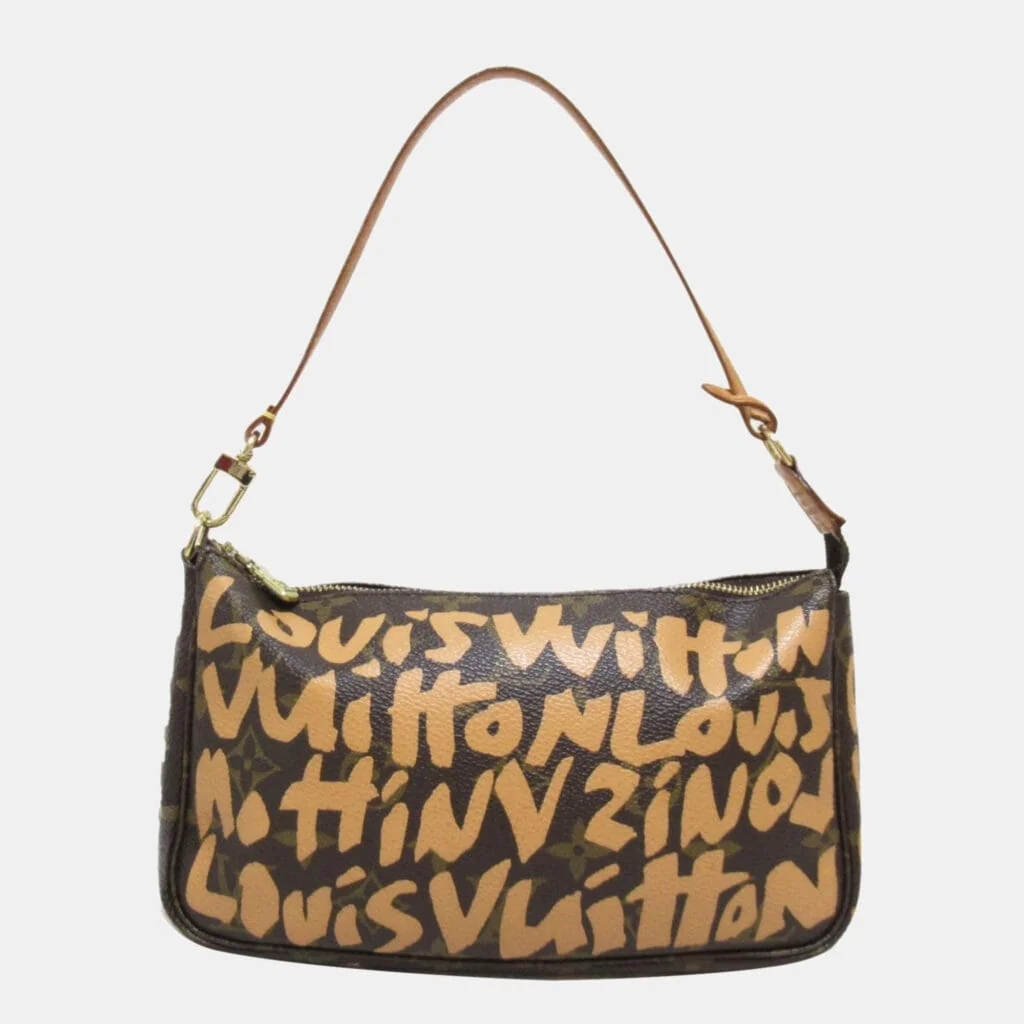
Stephen Sprouse (2001, reissued 2009) #
Before any of this became an industry playbook, Marc Jacobs handed Stephen Sprouse the monogram and asked him to vandalize it. Sprouse’s graffiti scrawl, sprayed directly over the LV canvas for Spring/Summer 2001, was the first time the House had altered its own logo since its creation. It read as rebellious at the time precisely because Louis Vuitton had never allowed anyone to touch the monogram before. The 2009 reissue leaned further into Sprouse’s aesthetic with bolder colorways and his signature rose print, released shortly after his death and treated by many collectors as a tribute edition.
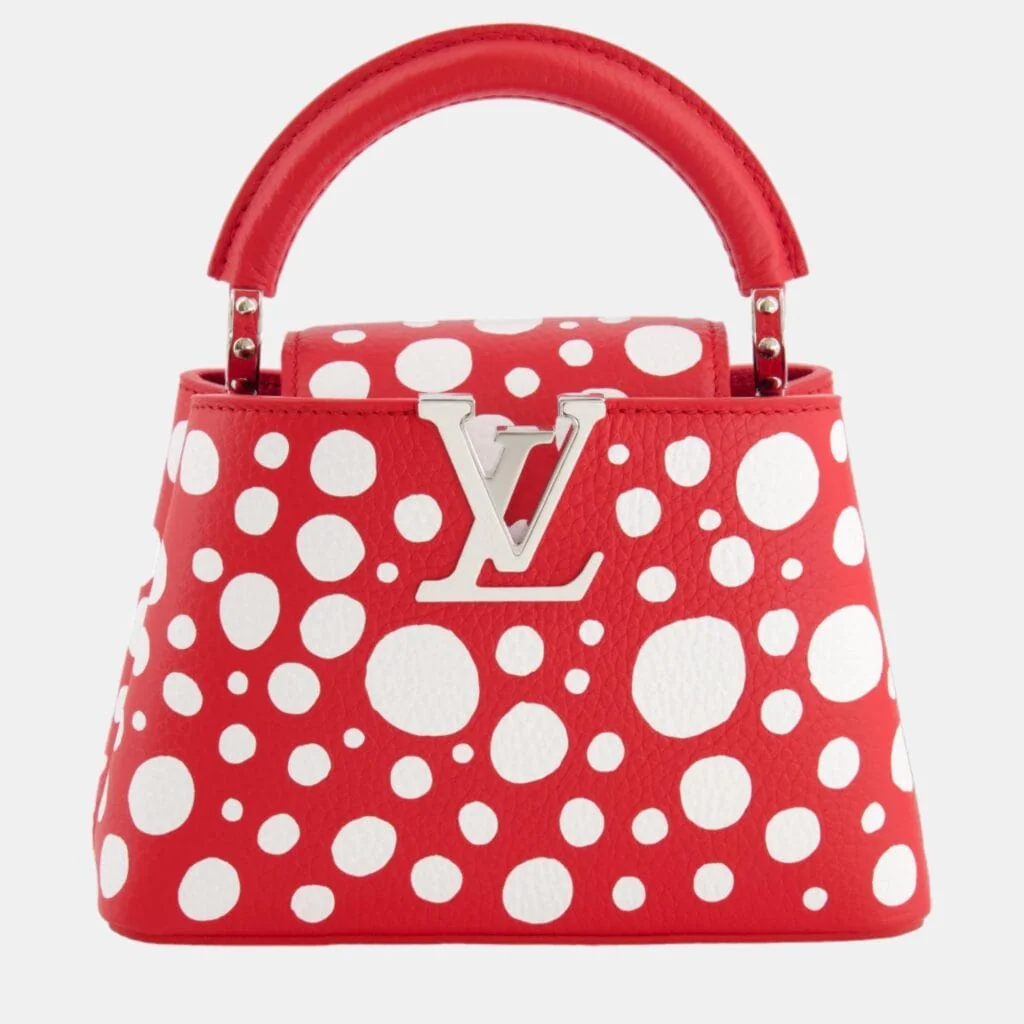
Yayoi Kusama (2012 and 2023) #
Kusama’s polka dots did something different: rather than defacing the monogram, they wrapped around it, covering bags, ready-to-wear, and even store windows in dots of varying scale. The first collaboration in 2012 introduced the concept; the 2023 follow-up expanded it considerably, with immersive in-store installations and a broader range of silhouettes and motifs pulled from Kusama’s Infinity Nets and pumpkin imagery. What’s notable from a collector’s standpoint is that the decade-long gap between the two drops means early 2012 pieces are now genuinely scarce, while 2023 pieces were produced in far greater volume and distributed globally, which affects how each is priced on the resale market.
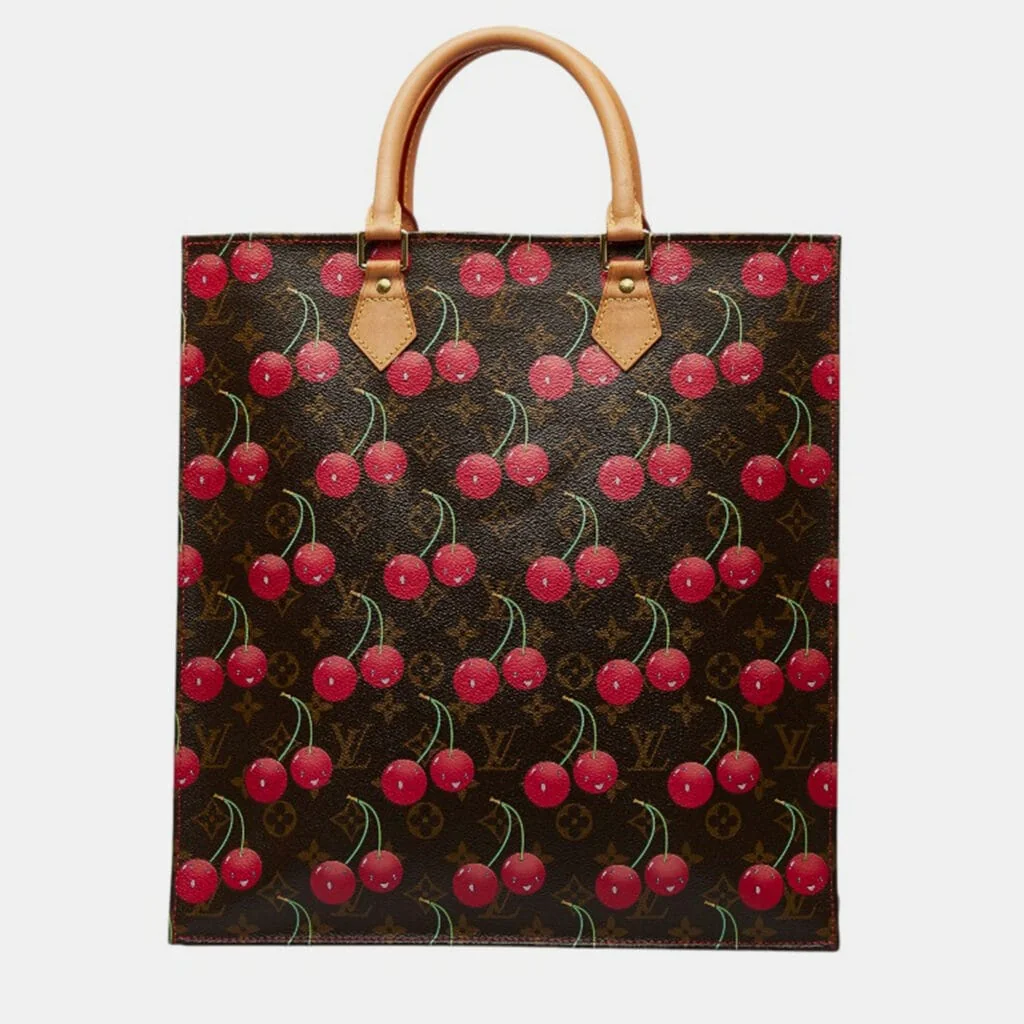
Takashi Murakami (2003 and beyond) #
Murakami’s Monogram Multicolore, launched for Spring/Summer 2003, is arguably the collaboration that proved luxury and pop art could sell at scale. His candy-colored take on the LV monogram became one of the most recognized handbag prints of the 2000s, driven partly by celebrity adoption. The partnership continued through Cherry Blossom, Monogramouflage, and the Character bags, which added painted eyes and cartoon faces to classic silhouettes. Murakami has spoken about wanting to make luxury “approachable and joyful” rather than austere, and that intent is visible in how playful these pieces still look next to Louis Vuitton’s core monogram line.
Streetwear and Contemporary Crossovers #
Richard Prince (2008) #
Marc Jacobs and Richard Prince built the “Louis Vuitton After Dark” concept for Spring/Summer 2008, producing the Aquarelle Monogram and the Joke bags, which printed one-liners and gag text directly onto the exterior. It was a deliberate departure from the reverence the brand usually applies to its own branding, using humor and appropriation art in a way that split opinion at the time but is now regarded as one of the more conceptually interesting collaborations in the archive.
Supreme (2017) #
The Supreme collaboration was less about reinterpreting art and more about merging two entirely different customer bases. Under Kim Jones, the 2017 capsule fused Supreme’s box logo and streetwear silhouettes with Louis Vuitton’s monogram and craftsmanship, referencing New York street culture from the 1970s through the 1990s. It sold out almost instantly and set off resale prices well above retail within days, a dynamic that’s since become standard for hype collaborations across the industry.
The recent wave: NBA, Fragment, Nigo, Tyler, the Creator #
Since Supreme, Louis Vuitton has kept a near-constant collaboration cycle running. The Louis Vuitton x NBA line, under Virgil Abloh, brought basketball-inspired ready-to-wear and accessories into the men’s collection. Fragment Design’s Hiroshi Fujiwara worked with the House on a capsule built around his lightning bolt motif and muted, technical aesthetic. Nigo, appointed men’s artistic director in 2020, has folded his own streetwear pedigree from BAPE and Human Made directly into Louis Vuitton collections rather than treating it as a separate capsule. Tyler, the Creator’s involvement has been smaller in scale but culturally loud, tied to his own design sensibility and connection to Pharrell’s era at the brand. None of these have yet reached the secondary-market intensity of Supreme or Murakami, but they’re worth tracking, since early pieces from a designer’s tenure often become more sought after retrospectively.
Why Collaboration Pieces Hold Their Value #
Three factors tend to determine whether a collaboration piece holds or gains value over time, and they apply across all five partnerships above.
- Scarcity of the original run. Sprouse 2001 and Kusama 2012 pieces are harder to find than their reissues, and price gaps between original and reissue pieces can be significant. A first-run Sprouse graffiti Keepall will typically command more than a comparable 2009 piece in the same condition.
- Cultural relevance of the artist or designer. Murakami and Kusama both have gallery careers independent of fashion, which gives their Louis Vuitton work crossover appeal to art collectors, not just handbag buyers. That dual audience props up demand in a way a purely fashion-driven collaboration doesn’t always achieve.
- Print condition matters more than usual. Painted, printed, or spray-treated exteriors (Sprouse graffiti, Prince’s Joke text, Murakami’s Multicolore) are more prone to fading, cracking, and surface wear than a standard monogram canvas. A collaboration piece in poor print condition loses value faster than an equivalent standard LV bag would.
The honest downside: not every collaboration appreciates. Contemporary drops like the NBA and Fragment lines haven’t shown the same resale premium as the artist-led pieces, and pieces from smaller, less iconic capsules can sit flat or even depreciate if the hype cycle around them fades quickly.
Spotting Authentic Collaboration Pieces #
Collaboration bags get counterfeited aggressively, partly because the unusual prints make it easier for fakes to disguise sloppy craftsmanship under “artistic” imperfection. A few checks matter more here than on standard monogram pieces.
- Print alignment and placement. On authentic Sprouse, Murakami, and Kusama pieces, the print (graffiti text, cherry blossoms, polka dots) is placed with deliberate symmetry relative to seams and hardware. Counterfeits often shift the print off-center or cut it awkwardly at panel edges.
- Date codes and heat stamps. Every genuine Louis Vuitton bag, including collaborations, carries a date code stamped into the leather, usually inside a pocket or under a flap. Cross-reference the format against the era of the collaboration; a 2001 Sprouse piece should carry an early-2000s code format, not a modern one.
- Hardware finish. Collaboration pieces still use Louis Vuitton’s standard gold-tone or palladium hardware underneath the artistic treatment. Look for crisp, evenly weighted zippers and clasps with the LV stamp clearly and consistently engraved, not shallow or blurry.
- Stitching count and thread color. Authentic LV stitching is dense and even, typically in a matching or deliberately contrasting tan thread. Loose stitching, uneven gaps, or thread that frays at the edges is a strong counterfeit signal.
- Provenance documentation. For high-value collaborations like Kusama 2012 or original Sprouse, ask sellers for original receipts, dust bags, or box packaging specific to that collection. Legitimate resellers and authentication services can also verify pieces against archival House records.
If you’re not confident authenticating on your own, use a third-party authentication service before buying, especially for higher-priced Kusama, Murakami, and Sprouse pieces where counterfeit quality has improved significantly in recent years.
Buying Advice for Collaboration Collectors #
Buying a collaboration piece secondhand is a different exercise than buying a standard monogram bag, mostly because condition and rarity swing the price so much more.
- Buy from platforms that authenticate. Established resale marketplaces and consignment houses that run in-house or third-party authentication reduce your risk considerably compared to open marketplaces or social media resale groups.
- Check the print, not just the leather. Inspect close-up photos of the printed or painted surface for cracking, fading, or touch-up work. A bag can have pristine leather trim and a heavily degraded print, which significantly affects both value and long-term wearability.
- Expect a premium for complete sets. Original box, dust bag, care booklet, and any collaboration-specific packaging (Kusama’s install materials, Supreme’s tags) can add a meaningful percentage to resale price versus a bag alone.
- Compare against recent sold listings, not asking prices. Collaboration pieces are hyped enough that asking prices are often inflated. Sold/completed listings on resale platforms give a far more accurate read on what buyers are actually paying.
- Set a ceiling before you shop. Hype pieces like Supreme move fast, and it’s easy to overpay in the moment. Decide your maximum price based on comparable sales, not on how quickly a listing seems to be moving.
Resale Value: What These Collabs Are Worth Today #
Resale performance varies widely by collaboration, print, and condition, but general patterns have held fairly consistent over the past few years.
| Collaboration | Original retail range | Typical resale range today | Value trend |
|---|---|---|---|
| Sprouse Graffiti (2001) | ~$1,000–$2,500 | $1,800–$4,000+ | Strong, original run scarce |
| Kusama (2012) | ~$1,200–$3,500 | $2,000–$6,000+ | Strong, early run premium |
| Kusama (2023) | ~$1,500–$4,000 | $1,500–$3,500 | Stable, higher supply softens premium |
| Murakami Multicolore | ~$1,000–$2,800 | $1,500–$4,500 | Strong, especially Cherry Blossom |
| Richard Prince Joke bags | ~$1,500–$3,000 | $2,000–$5,000+ | Strong, niche collector demand |
| Supreme x LV | ~$800–$3,000 | $1,500–$8,000+ | Highly variable, piece-dependent |
These figures are directional estimates drawn from recent resale marketplace activity, not fixed appraisals, and individual sale prices swing based on size, color, and condition. The clearest pattern: original, discontinued runs from artists with independent art-world reputations (Kusama, Murakami, Sprouse) have shown the most consistent appreciation. Supreme is the outlier, capable of extreme spikes for specific rare pieces but far less predictable overall than the artist collaborations.
FAQ #
Are Louis Vuitton collaboration bags a good investment? Some are. Original-run Sprouse, Kusama, and Murakami pieces in strong condition have generally appreciated, driven by scarcity and crossover appeal to art collectors. Reissues and mass-produced contemporary drops are far less reliable as investments and should be bought primarily because you want to wear them.
Which Louis Vuitton collaboration is the most valuable? Original 2012 Kusama pieces and first-run 2001 Sprouse graffiti items tend to command the highest resale premiums, largely because both runs were limited and neither has been fully reproduced since.
How can I tell if a Louis Vuitton collaboration bag is fake? Focus on print alignment, date code format consistency with the collaboration’s release year, hardware engraving sharpness, and stitching density. When in doubt, use a professional authentication service, particularly for high-value pieces.
Where’s the safest place to buy a collaboration piece secondhand? Consignment retailers and resale platforms with in-house or third-party authentication processes. Avoid unverified social media sellers for anything above entry-level prices, since collaboration pieces attract disproportionately sophisticated counterfeits.
Do newer collaborations like NBA, Fragment, or Nigo hold value the way Supreme or Murakami did? Not yet, at least not consistently. They’re culturally significant and worth watching, but they haven’t built the same track record of resale appreciation as the earlier artist-led collaborations. That could change as specific pieces become scarcer over time.
Related Articles #
- 7 Iconic Louis Vuitton Bag Styles Every Buyer Should Know
- Louis Vuitton After Marc Jacobs: What Comes Next?
- How to Buy & Authenticate Pre-Owned Louis Vuitton Bags
- 10 Most Iconic Louis Vuitton Bags to Buy in 2026
- Popular Handbag Brands: Which One Is Right for You?
Related guides
- Online Bag Authentication: What Photos Can and Cannot Prove
- How to Spot a Fake Designer Bag: Authentication Guide
- So Kate Pumps Authentication Guide: Spot Real vs Fake
- Blue Crocodile Lady Dior Tote: Buying Guide
- How to Buy an Authentic Luxury Bag from China Safely
- New vs Pre-Owned Luxury Bags: Which Route Is Right for You?
- Chanel Bag Guide: What to Know Before You Buy
- Luxury Bag Houses
Keyword index