Introduction #
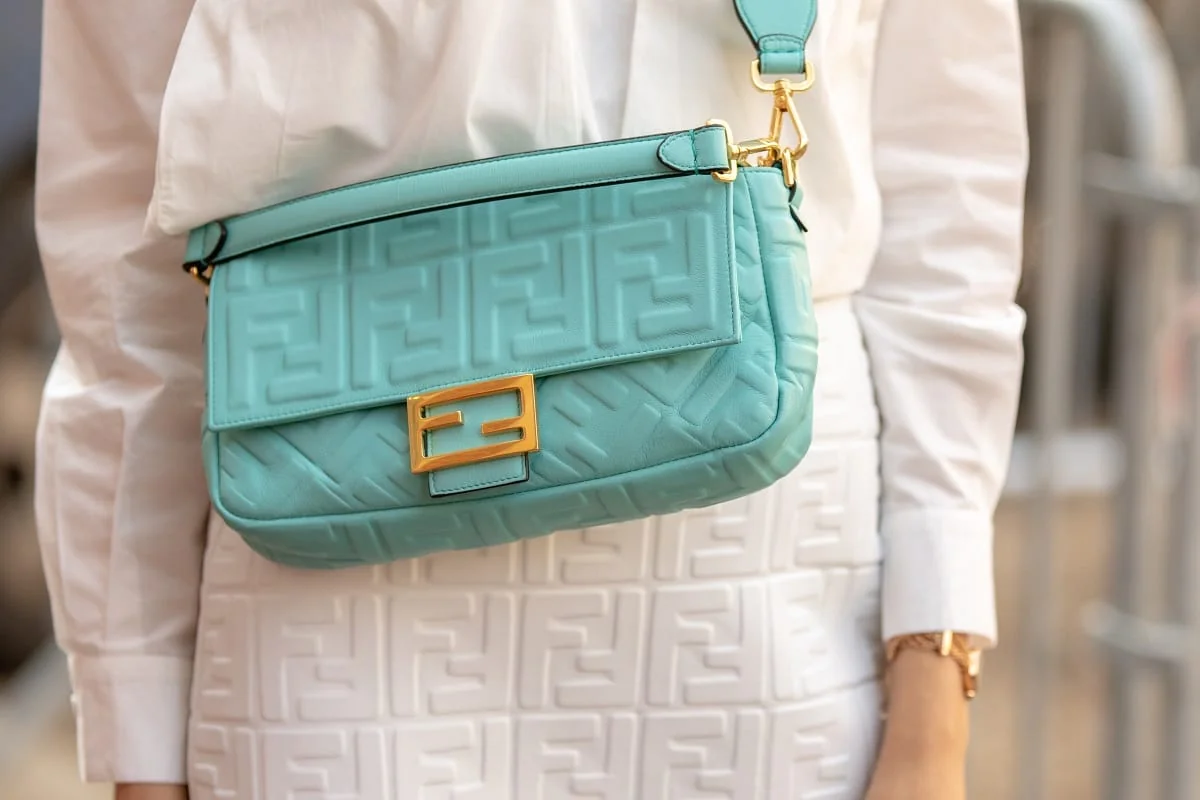
Every so often, a collaboration lands that feels less like a marketing exercise and more like two archives colliding. That’s the Fendi x Tiffany & Co. Baguette bag. Fendi brought the silhouette that arguably invented the “It bag” category; Tiffany & Co. brought a color so specific it has its own Pantone number and a century and a half of jewelry-house credibility. Put them together and you get a bag that isn’t just pretty — it’s a genuine crossover event for two houses that rarely need to borrow anyone else’s equity.
For the readers we usually talk to here — people who know their Kelly hardware stamps from their Birkin blind stamps, who’ve learned to spot a bad clochette the hard way — this piece matters for a different reason than most “cute collab” stories. It’s a limited-production, hype-driven bag that’s already moved almost entirely into the resale market, which means the authentication stakes and the pricing questions are exactly the kind of thing this platform exists to sort through.
The Baguette: A Forever Icon #
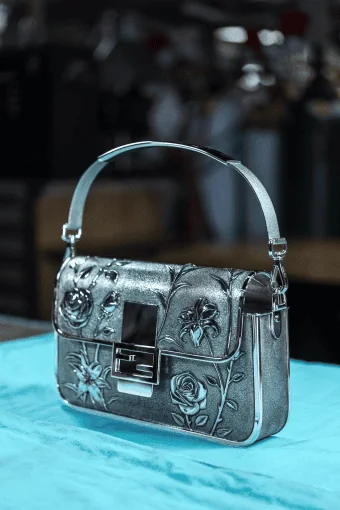
Before Tiffany ever touched it, the Baguette had already done the hard work of becoming a cultural fixture. Silvia Venturini Fendi designed it in 1997, naming it for the way it’s meant to be tucked under the arm, like bread on the walk home from a French bakery. It was small, it was structured, and it broke from the era’s obsession with oversized shoulder bags. That alone would have made it notable. What made it iconic was Sex and the City — specifically the episode where Carrie Bradshaw gets mugged and pleads with the thief to take everything except her Baguette. A prop bag turned into a four-decade fashion reference point almost overnight.
What’s kept the Baguette relevant since isn’t nostalgia alone. Fendi has treated it the way other houses treat their [[[monogram canvas](/authentication/how-to-spot-a-fake-louis-vuitton-bag/)](/buying-guides/louis-vuitton-neverfull-buying-guide/)](/authentication/how-to-spot-a-fake-neverfull-authentication-guide/): as a rotating canvas for artist collaborations, seasonal fabrications, and anniversary capsules. The bag has appeared in sequins, in FF jacquard, in exotic skins, and in one-off artist editions for over 25 years. That track record is exactly why Tiffany & Co. made sense as a partner — the Baguette has always been built to absorb someone else’s design language without losing its own shape.
Inside the Fendi x Tiffany & Co. Baguette: Design and Details #
The collection debuted at New York Fashion Week in September 2022, timed to the Baguette’s 25th anniversary. Rather than a single hero piece, Fendi and Tiffany released a genuine range — different sizes, different materials, and a clear hierarchy from everyday-wearable to showcase-only.
Materials and colorways #
The lineup spanned:
- Tiffany Blue nappa and smooth calfskin — the most recognizable version, using the house’s signature hue as the primary leather color rather than an accent
- FF jacquard canvas with Tiffany Blue trim and hardware — a more subdued, logo-forward option
- Satin and embellished evening styles — sequin and crystal-covered pieces built for red-carpet and event wear
- Exotic skins, including crocodile, dyed to match the Tiffany Blue palette or offered in black with blue-toned hardware accents
- A one-of-one diamond-encrusted piece, created as a showcase object rather than a retail product, reportedly set with well over a thousand diamonds — this one was never meant to sell to the general public, and treating it as a benchmark for “what the bag costs” is a common mistake
Hardware and construction #
The defining detail is the hardware crossover: Fendi’s double-F clasp reworked alongside Tiffany’s signature lock motif, executed in polished gold-tone and palladium finishes depending on the piece. Several styles carry Tiffany’s “T” hardware in place of, or alongside, the FF clasp — a detail worth knowing before you buy, since it’s one of the easiest authenticity tells (more on that below). Interiors follow standard Fendi Baguette construction: a single main compartment, a slip pocket, and a fabric or leather lining that, on the higher-tier pieces, is also finished in Tiffany Blue.
Availability, Pricing, and Resale Value #
This is where things get more useful for anyone actually shopping. The collaboration launched as a limited run — not a numbered edition in the way some artist capsules are, but production was capped and it sold through retail channels quickly, particularly in the smaller sizes.
Pricing by size #
Fendi structured the collection across its familiar Baguette size tiers — Pico, Nano, Mini, and the standard-proportioned Baguette — with pricing that climbed steeply based on both size and material:
| Size | Approx. original retail | Material driver |
|---|---|---|
| Pico | ~$2,900–$3,900 | Canvas/nappa leather |
| Nano | ~$3,900–$4,900 | Nappa leather, embellished options higher |
| Mini | ~$4,900–$6,500 | Nappa leather, satin, light embellishment |
| Standard | ~$6,500–$15,000+ | Exotic skins pushed this tier significantly higher |
These figures reflect launch-period retail pricing reported at the time and should be treated as approximate — Fendi didn’t publish a uniform global price list, and boutique pricing varied by market and by exact fabrication. If you’re pricing a specific piece today, treat these as a baseline, not gospel.
Where it stands now #
At this point, the collection is effectively sold out at retail. Fendi and Tiffany have not restocked or reissued pieces, and boutique availability is essentially nonexistent outside of the rare unsold archive piece. That pushes almost all current demand onto the resale market, and resale pricing tells its own story:
- Entry sizes (Pico, Nano) in leather are trading close to or modestly above original retail, depending on condition and colorway rarity
- Exotic-skin and embellished pieces are commanding real premiums — in some cases 30–60% over original retail, particularly for the Tiffany Blue crocodile pieces, which were produced in very limited numbers
- The diamond showcase piece isn’t in circulation and shouldn’t factor into anyone’s price expectations
Honest take: this isn’t the same kind of investment story as a Hermès Kelly or Birkin. Hermès scarcity is structural and ongoing — the quota system keeps demand permanently ahead of supply, year after year. A hype collaboration like this one gets an initial resale spike right after sellout, then tends to stabilize once the collector rush passes. If you’re buying this as a collectible rather than a bag you’ll actually carry, buy the rarer materials and colorways, and buy on condition, not just on the Tiffany name.
How to Spot an Authentic Fendi x Tiffany & Co. Baguette #
Limited-edition collaborations are a counterfeiter’s favorite category, precisely because there’s less public reference material and buyers are often less familiar with the specific hardware than they’d be with a core Baguette or a classic Hermès piece. A few things to check before you buy:
- Hardware stamps. Genuine pieces carry Fendi’s “FF” hardware engravings alongside the Tiffany lock or “T” motif, cleanly finished with no soft edges, pitting, or uneven plating. Counterfeits often nail the FF but get the Tiffany hardware proportions or finish noticeably wrong.
- Color consistency. Tiffany Blue is a controlled, specific shade. On authentic pieces it’s uniform across leather, hardware plating (where applicable), and lining. Off-brand versions often skew too green, too pale, or inconsistent between the exterior and interior.
- Interior serial/date code. As with standard Fendi bags, look for the leather tab with the serial number inside the main compartment. Compare the format against known authentic examples — spacing and font consistency matter more than people expect.
- Stitching and leather smell (especially exotics). On crocodile pieces, check scale alignment across seams and the leather’s natural, slightly oily scent. Synthetic “croc-print” leather passed off as exotic skin is a common shortcut on fakes.
- Original packaging. Because this was a retail-boutique release, most authentic pieces come with a Fendi box, dust bag, and often a care booklet referencing the collaboration specifically. Missing packaging isn’t disqualifying, but it removes a useful corroborating signal.
If you’re not confident after a visual check, get a third-party authentication before you commit — for a bag in this price range, it’s a small cost against a real risk.
Where and How to Buy #
Since retail stock is gone, resale is the realistic path for most buyers. A few practical rules:
- Buy from platforms with in-house or third-party authentication, not open marketplaces with no verification layer. For a collaboration piece like this, ask specifically whether the authenticator has reference material for this exact release, not just standard Fendi Baguettes.
- Request full hardware close-ups — the Tiffany lock, the FF clasp, and the interior serial tab — before purchase, not after.
- Check the return policy. Reputable resale platforms will offer a return window tied to authentication guarantees. If a seller refuses returns outright, treat that as a red flag regardless of how good the listing photos look.
- Compare listed price against recent comparable sales, not just the original retail price, since the gap between the two has widened for the rarer materials.
Price, Release Date, and Where to Buy #
Quick reference:
- Release date: September 2022, debuted at New York Fashion Week for the Baguette’s 25th anniversary
- Retail status: Sold out; no restocks or reissues confirmed by either house
- Original pricing: Roughly $2,900 (Pico, canvas/leather) up to $15,000+ (standard size, exotic skins); the diamond showcase piece was never sold to the public
- Current resale range: Near or modestly above retail for entry-size leather pieces; 30–60% premiums for exotic skins and embellished styles in strong condition
- Where to buy: Authenticated luxury resale platforms are currently the only realistic source; verify hardware, serial tag, and packaging before purchase
FAQ #
Is the Fendi x Tiffany & Co. Baguette still sold in stores? No. The collection sold out shortly after its September 2022 launch, and neither Fendi nor Tiffany has confirmed a restock. Resale is the primary market now.
What’s the price range across sizes? Original retail ran from roughly $2,900 for the smallest Pico canvas or leather pieces up to $15,000 or more for standard-size exotic-skin versions. Resale pricing now varies by condition and material, with exotics commanding the largest premiums.
How is this different from previous Fendi Baguette collaborations, like the Marc Jacobs capsule? Past designer collaborations on the Baguette, including Marc Jacobs’ take, generally leaned into bold prints and playful, maximalist reinterpretations true to the guest designer’s own aesthetic. The Tiffany collaboration takes the opposite approach — restrained color, jewelry-grade hardware, and a design brief built around one specific, instantly recognizable shade rather than a designer’s personal signature.
Is this bag a good investment compared to a Hermès Kelly or Birkin? Not in the same structural sense. Hermès scarcity is ongoing and quota-driven, which supports long-term value retention. This is a finite-production hype collaboration — resale premiums are real for rare materials, but the value curve is more front-loaded and less predictable over the long term.
What are the biggest authentication red flags to watch for? Off-shade “Tiffany Blue,” poorly finished or mismatched hardware between the FF clasp and Tiffany lock motif, printed (rather than genuine) exotic leather, and inconsistent serial tag formatting inside the bag.
What occasions actually suit this bag? The smaller sizes (Pico, Nano) work well as evening or event bags given their compact scale — think dinners, cocktail events, anything where you’re not carrying much. The standard size in leather is more versatile for daytime wear, though the embellished and exotic pieces are really built for statement moments rather than everyday rotation.
Related Articles #
- Hermès In and Out Birkin: Inside the Limited Edition
- Hermès Retail vs. Resale: Which Should You Choose?
- Louis Vuitton Alma Bag: The Ultimate Buying Guide
- Louis Vuitton Noe Rococo Review: Bag of the Week
- How to Spot a Fake Hermès Bag: Authentication Guide
Related guides
- Online Bag Authentication: What Photos Can and Cannot Prove
- Luxury Handbag Authentication Process Explained
- China TikTok Luxury Factory Claims: Fact vs Fiction
- Chanel 2.55 History, Details & How to Spot a Fake
- How to Buy an Authentic Luxury Bag from China Safely
- New vs Pre-Owned Luxury Bags: Which Route Is Right for You?
- Chanel Bag Guide: What to Know Before You Buy
- Luxury Bag Houses


Keyword index