Introduction #
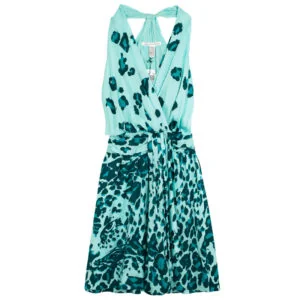
Diane von Furstenberg’s rise is the kind of story that sounds embellished until you check the dates and realize it isn’t. A young woman from Brussels, freshly separated from a prince, packed a suitcase of jersey dresses and knocked on the door of every fashion editor in New York who’d see her. Within two years she had a design that outsold everything else in American ready-to-wear. That design, the wrap dress, quietly turns fifty this decade, and its 40th and 50th anniversary milestones have both been treated as genuine industry events, not marketing exercises. For anyone who collects vintage designer pieces or just wants to understand why a single silhouette has survived five decades of trend cycles, the wrap dress is worth studying as a case history in design that actually works. This piece walks through her career, the dress’s cultural footprint, and the practical details collectors need before spending money on a vintage piece.
From Diane Halfin to Fashion Mogul: Her Early Life #
Diane Michelle Halfin was born in Brussels to a Romanian father and a Greek mother, a background that put her outside any single national fashion tradition from the start. She studied at the University of Madrid before finishing her degree at the University of Geneva, where she met Prince Egon von Furstenberg, a young Italian-German aristocrat. They married in 1969, and the marriage gave her the “von Furstenberg” name that would later sit above every dress she made, along with two children and an entry into New York’s social circles well before she had a fashion career.
The marriage lasted three years. What’s easy to miss in the shorthand version of her biography is that the divorce wasn’t a footnote to the design story, it was the trigger for it. Furstenberg has been direct in interviews about not wanting to be a woman defined by her husband’s title or income. Designing clothes was, in her own words, about becoming “the woman I wanted to be” rather than the woman a marriage had made her. That framing matters because it explains why the dress she eventually created was built around confidence and ease rather than formality or spectacle.
She later married media executive Barry Diller in 2001, after more than two decades together, reportedly presenting the wedding to him as a birthday gift. By then she’d already rebuilt a fashion business from near-collapse, which says more about her than either marriage does.
The Birth of an Icon: Designing the Wrap Dress #
Furstenberg began designing in 1970, working with a textile manufacturer in Italy before bringing samples to New York on her own. The wrap dress itself arrived in 1972, built from a single piece of printed jersey cotton, cut to wrap around the body and tie at the waist with no buttons, no zipper, and no fitting appointment required. She’s cited the toga as a reference point, a garment that drapes and adjusts rather than being engineered to one exact body shape.
The jersey fabric did the actual work. Unlike woven cotton or silk, jersey has stretch and recovery, so the dress could skim the body, hold its shape through a day of wear, and still pack into a suitcase without wrinkling. That last point sounds minor but it was a real selling argument in the 1970s, when air travel was expanding and women wanted clothes that survived a garment bag.
The sales numbers are the part that turns this from a nice design story into a genuine business phenomenon. By the mid-1970s, factories were producing around 15,000 wrap dresses a week, and total sales reached nearly 4 million units within a few years of launch. That volume, for a single silhouette from a designer with no prior industry backing, is still an outlier in fashion history. The dress also carried social weight beyond retail figures. It let a woman get dressed for the office in the morning and go straight to dinner at night without changing, at a moment when more women were entering the workforce and wanted clothing that matched that shift. It became shorthand for a specific kind of independence, not because Furstenberg marketed it that way, but because the garment’s practicality lined up with what was actually happening in women’s lives.
A Pop Culture Icon: Magazine Covers, Art, and Film #
By 1976, after roughly 5 million dresses sold, Furstenberg landed on the cover of Newsweek, a rare placement for a fashion designer at the time and a signal that the industry press had started treating her as a business story, not just a style story. Andy Warhol took notice too, producing pop-art portraits of her that placed her in the same visual language as the era’s musicians and film stars, cementing the sense that she’d become a cultural figure rather than a working designer.
The dress kept resurfacing in film and television long after the 1970s ended, most visibly in American Hustle, where the wardrobe department leaned on the wrap silhouette to signal 1970s confidence and status without resorting to costume-y excess. That’s a useful detail for collectors: costume designers still reach for the wrap dress specifically because it reads as authentic to its decade rather than as a generic throwback.
Four Decades of Relevance: The Wrap Dress Through the Years #
What kept the dress relevant through the 1980s recession years, the minimalism of the 90s, the logo-driven 2000s, and the current resale-and-archive moment is that it never depended on a specific silhouette trend to stay useful. Waistlines rose and fell, hemlines swung, but a wrap dress adjusts to the wearer rather than the wearer adjusting to it. That’s a structural advantage over most trend-driven cuts, which age out the moment proportions shift.
Styling it today #
A vintage or current wrap dress reads modern with the right pairing rather than as a costume piece:
- Swap the expected pumps for chunky boots or flat mules to pull it out of a strictly “office 1970s” register.
- Layer a structured blazer or a cropped leather jacket over it for cooler months instead of treating it as warm-weather-only.
- Belt it slightly looser than the original tie suggests if the jersey has any age-related stretch, which is common in pieces made before the mid-1980s.
- Choose bolder prints for daywear and solid jersey for anything you want to dress up, since the print scale reads very differently depending on the era it was cut in.
The most common styling mistake with vintage pieces is treating them as delicate archival objects. Furstenberg designed jersey specifically because it holds up to actual wear, and that’s still true of well-preserved pieces today.
Collecting Vintage DVF: What to Know Before You Buy #
This is where enthusiasm needs to meet some skepticism, because the vintage wrap dress market has grown enough to attract reproductions and mislabeled pieces alongside genuine ones.
What to check before buying #
- Fabric composition tag: original 1970s and early 80s wrap dresses were cotton jersey or a matte silk jersey blend. A dress marketed as “vintage DVF” in a synthetic polyester jersey with a shiny finish is more likely a later reissue or an unrelated piece with a DVF-style print.
- Label design: DVF’s labels have changed several times since the brand’s founding. Early labels are simple, often a clean script logo with minimal branding text. A label that looks overly polished, uses a modern sans-serif treatment, or includes a website URL is from a considerably later production run, not the original run.
- Construction details: original pieces have a single continuous wrap panel and internal ties, not a hidden zipper or snap closures added for a “wrap-look” dress. If a listing shows a zipper at the side seam, it’s not an original wrap-closure piece from the classic run.
- Print registration: early jersey prints were dyed in a way that shows slight variation at seams, since the fabric was cut from continuous printed yardage. Perfectly matched, crisp print repeats at every seam are more typical of newer manufacturing.
- Size labeling: sizing on original pieces runs noticeably smaller than modern DVF sizing. A vintage size 8 fits closer to a modern size 4-6. Buyers who size based on current DVF numbering routinely end up with a dress too big.
On pricing #
Resale prices for genuine 1970s originals in strong condition typically land in the low-to-mid hundreds of dollars for common prints, with rarer or documented pieces (verifiable early production, unusual prints, or pieces with magazine/editorial history) reaching several hundred more. Later-decade wrap dresses from the 1990s relaunch or 2000s collections generally sell for less than true 1970s originals, since supply is larger and the design history is less unique. If a listing prices a “1970s original” below what a common current-season DVF wrap dress costs new, treat that as a red flag rather than a bargain, since it usually means the piece is a later production run being marketed as vintage.
The honest downside: jersey degrades. Original pieces are now approaching or past fifty years old, and cotton jersey loses recovery over time, meaning the fabric can go slack at the waist tie and underarms even with careful storage. Buyers should expect to budget for a tailor’s assessment on anything bought sight-unseen, and factor that into what a listing price is actually worth.
Diane von Furstenberg’s Business and Cultural Milestones #
Furstenberg’s career didn’t stop at one dress, even though the dress carried her name into households that never bought [[[designer clothing](/brands/history-behind-gucci-flora-print/)](/brands/trussardi-brand-history/)](/brands/ralph-lauren-brand-history/) otherwise. Her business expanded into fragrance, cosmetics, a publishing arm, and a home shopping business, along with a fine jewelry line, a breadth of licensing that was unusual for a designer whose reputation rested on a single garment.
In 2006 she was elected President of the Council of Fashion Designers of America, a role that put her at the center of American fashion’s institutional decisions rather than just its runway output. She’s also built philanthropic commitments into the brand’s identity, pledging half her fortune to the Giving Pledge and establishing an award, through the Diller-Von Furstenberg Family Foundation, that gives $50,000 grants to women whose work has had a measurable impact on other women. She’s written a memoir, faced and survived oral cancer in the mid-1990s, and rebuilt the business after a near-collapse in the 1980s when overexpansion and licensing missteps nearly ended the company.
As for where the brand stands now: von Furstenberg remains chairwoman of the company and its most visible public face, but day-to-day design and business operations have shifted to a smaller in-house team, with the label leaning more heavily on its archive and licensing relationships than on rapid seasonal turnover. Recent collections have continued to circle back to the original jersey wrap silhouette as the brand’s anchor product, which tells you the company itself still treats the 1972 design as its core asset rather than a legacy piece to move past.
On sustainability, the brand hasn’t marketed itself as a leader in ethical manufacturing the way some newer labels have, and that’s worth saying plainly rather than glossing over. Where the wrap dress does align with sustainable fashion conversations is less about brand policy and more about the object itself: a well-made jersey dress from the 1970s that’s still wearable fifty years later is a more genuinely sustainable purchase than most fast-fashion “sustainable capsule” pieces sold today. Buying vintage, rather than new, is the more meaningful sustainability decision a shopper can make here.
Why the Wrap Dress Design Has Endured Since 1974 #
Strip away the celebrity portraits and the sales figures, and the endurance comes down to three design decisions that most competitor dresses didn’t make at the same time:
- No fixed closure point. A zipper or button placement locks a garment to one body’s proportions at the moment it was fitted. A wrap-and-tie closure adjusts continuously, which is why the dress has stayed wearable across weight fluctuation, pregnancy, and simply aging, without alteration.
- A fabric chosen for behavior, not just appearance. Jersey moves with the body and resists wrinkling, which made it functional rather than purely decorative from day one.
- A silhouette independent of trend cycles. Waist placement, sleeve shape, and hemline can all be adjusted season to season without touching the core wrap structure, which is why the design has been reissued and reinterpreted for fifty years without ever needing a fundamental redesign.
Compare that to other dresses treated as icons of their decade. Halston’s slip dresses depended on bias-cut precision that required real fitting expertise to reproduce well, which limited how widely they scaled. The Chanel little black dress is more a category than a single silhouette, and its authority rests on brand codes rather than one specific cut. Roland Mouret’s Galaxy dress, often cited as a 2000s equivalent success story, relied on structured seaming to sculpt the body, the opposite of the wrap dress’s adjustable, closure-free approach, and it never achieved anywhere near the same production scale. The wrap dress’s advantage was never about being more fashionable than these pieces. It was about being less dependent on a tailor, a trend, or a specific body type, which is a much harder thing to design well and a much easier thing to sell for fifty years.
FAQ #
How can I tell a real 1970s DVF wrap dress from a later reissue? Check the fabric (cotton jersey, matte finish, not shiny synthetic), the label design (simple script, no website text), and the closure (internal ties, no hidden zipper). Vintage sizing also runs smaller than current DVF numbering.
What’s a fair price for a genuine vintage wrap dress? Common prints in good condition generally sell in the low-to-mid hundreds of dollars. Rare prints or documented early-production pieces can go higher. A “1970s original” priced below a current-season DVF wrap dress is a warning sign, not a deal.
Is the wrap dress still relevant to wear today, or is it strictly vintage-coded? It still reads current, especially styled with boots, a structured jacket, or a looser belt than the original tie suggests. The design’s adjustability is what keeps it from looking dated.
Did Diane von Furstenberg design the wrap dress alone? She’s credited as the sole designer, developing it herself with a textile manufacturer in Italy before bringing it to New York, at a point when she had no formal fashion house behind her.
Related Articles #
- Which Chanel Bag to Buy? Style Guide by Body & Budget
- Why the Chanel Crossbody Bag Never Goes Out of Style
- Paris Fashion Week Men’s SS26: Everything You Need to Know
- Popular Handbag Brands: Which One Is Right for You?
- Hermès Retail vs. Resale: Which Should You Choose?
Related guides
- Online Bag Authentication: What Photos Can and Cannot Prove
- Inside a Million-Dollar Closet: Pre-Loved Hermès & More
- Meet Marwa Azzam Aldabbagh: Kelly Bag Authentication Expert
- Luxury Handbag Authentication Process Explained
- How to Buy an Authentic Luxury Bag from China Safely
- New vs Pre-Owned Luxury Bags: Which Route Is Right for You?
- Chanel Bag Guide: What to Know Before You Buy
- Luxury Bag Houses


Keyword index