Introduction#
I still have the silver rose choker I wore as a teenager, tucked away in a drawer I never quite get around to clearing out. I pulled it out again last spring, half as a joke, and wore it to dinner. Nobody blinked. If anything, a friend asked where I’d bought it “this season.” That’s the rosecore fashion trend in a nutshell: something nostalgic and slightly saccharine has quietly become one of the more persistent style stories of the past two years, and it’s not slowing down for spring-summer.
Rosecore isn’t a single silhouette or a single designer’s signature. It’s a motif that moves across categories: prints on silk dresses, embroidered roses on leather bags, rose-cut stones in fine jewelry, embellished heels that look like they’ve been dipped in a garden. What makes it worth writing about, rather than just another micro-trend roundup, is that the rose has actual fashion history behind it. It’s not a TikTok invention. It’s a motif that heritage houses have leaned on for over a century, which is part of why it keeps resurfacing instead of fading after one season.
In this guide, I’m tracing where the rose motif in fashion actually comes from, why it resurfaced so visibly on recent runways and at the Met Gala, and where it makes sense to spend real money on a rose-themed piece versus where it’s better treated as a low-stakes styling moment.
The Rose’s Fashion Legacy#
Rose prints, embroidery, and embellishment aren’t new. English couturier Charles Frederick Worth, generally credited as the father of haute couture, was working rose motifs into gowns in the 1800s, long before “trend cycles” existed as a concept. From there, the flower became something of a house code for several major names.
Yves [[Saint Laurent](/brands/saint-laurent-opyum-pumps-buying-guide/)](/brands/saint-laurent-kate-bag-review/)’s attachment to the rose is well documented. It was reportedly his favorite flower from his early years under Christian Dior in the 1950s through his own late-career collections in the ’80s and ’90s, and his rose-printed pieces have been revisited in fashion editorials for decades. Dior itself has kept florals, including roses, close to its identity, most visibly through the rose petal imagery associated with Miss Dior.
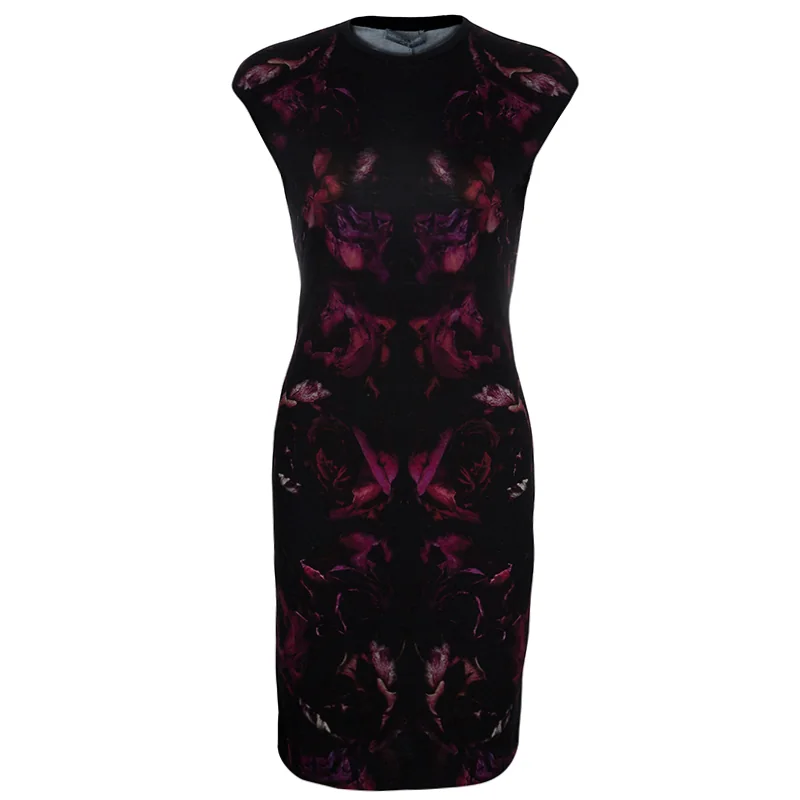
Alexander McQueen took the motif somewhere darker and more technical. Roses appeared cascading down dresses, formed into red rose sculptures over the shoulders of boleros, perforated through leather, and stitched into muslin. It wasn’t decorative in a soft way; it was often confrontational, tying the rose to themes of romance, decay, and mortality that ran through his work. After his death, Sarah Burton continued that thread, working lifelike roses into coats and eveningwear in a way that felt like a continuation rather than an homage.
Cristóbal Balenciaga referenced roses in his sculptural silhouettes, and Elsa Schiaparelli famously worked them into her millinery. Then there’s Dolce & Gabbana, whose “floral paradise” aesthetic is almost inseparable from roses at this point, whether printed on t-shirts and skirts or hand-beaded onto couture gowns. The Zendaya Vogue cover in a rose-shaped dress that read as an actual, oversized bloom is a fairly perfect recent example of how far the motif can be pushed while still reading as fashion rather than costume.
What I take from this history: the rose motif has survived because designers keep reinterpreting it rather than repeating it. A rosette on a McQueen bolero and a rose print on a Dolce & Gabbana slip dress are doing completely different emotional work, even though they’re technically the same flower.
Rosecore on the Runway and Red Carpet#
The current wave has a clear anchor point: this year’s Met Gala theme, “The Garden of Time,” which explored creation, decay, and nature’s cycles. Predictably, florals were everywhere on the carpet, and roses in particular showed up in some genuinely striking couture moments — blooming, oversized, occasionally slightly wilted-looking in a way that felt intentional rather than accidental. That’s the “decay” half of the theme doing its job.
Spring-summer collections have leaned into the same energy, with rose prints and dimensional rose embellishments appearing across ready-to-wear from multiple houses, not just the ones with historical ties to the motif. That’s worth noting as an honest observation: when a motif with a century-plus pedigree gets picked up by brands with no particular history with it, that’s usually a sign the trend has crossed from “house signature” into “seasonal must-have,” which cuts both ways. It’s more available, but it’s also more likely to be executed badly or cheaply by brands chasing the moment rather than working from real design intent.
I’d separate what’s happening now into two lanes: designers who are extending a genuine rose lineage (Dior, Saint Laurent’s archive influence, McQueen under Burton, Dolce & Gabbana) and brands treating rosecore as a trend to capitalize on for a season. The first group tends to produce pieces with more longevity, both stylistically and in resale value. The second group produces things that look great in a single Instagram cycle and dated a year later.
Rose Motifs in Bags, Shoes, and Jewelry#
This is where rosecore earns its “wearable trend” status, because it translates well beyond eveningwear into everyday accessories.
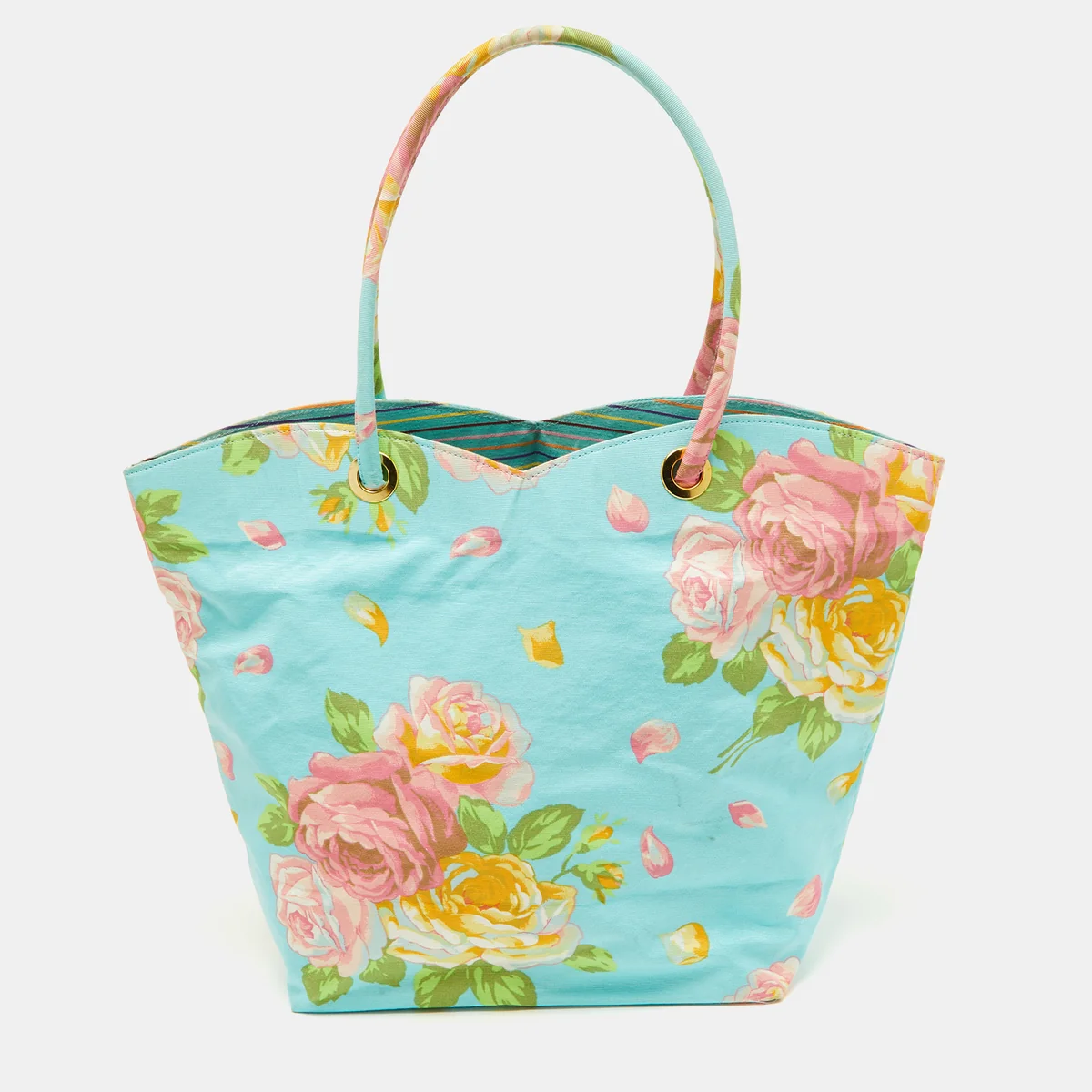
Bags are probably the easiest entry point. Kenzo’s floral print canvas totes are a good example of the motif done casually rather than precious — an open tote covered in a multicolor floral (rose-forward) print reads as a daytime bag, not a statement piece you have to build an outfit around. On the more elevated end, houses like Dior and Valentino have periodically released rose-embroidered or rose-hardware bags that lean into the romantic side of the trend rather than the print side.
Shoes tend to work best when the rose is a detail rather than the whole shoe. A rosette at the toe of a flat, a single embroidered bloom on a heel, or a rose-print insole feels considered. A shoe covered head to toe in roses can tip into costume territory fast, especially in daywear.
Jewelry is where I’d flag one distinction people conflate constantly: rose motif and rose gold are not the same thing, and it’s worth knowing the difference before you shop. Rose gold is a metal alloy and color story; a rose motif means an actual floral shape, whether it’s a rose-cut stone, a sculpted rose pendant, or rose engraving. Fine jewelry houses have long used rose-cut diamonds and sculpted rose details in both bridal and statement pieces, and that’s a genuinely different investment category from a trend-driven rose charm or fashion piece.
How to Style the Rosecore Trend#
Here’s my honest take after wearing this trend more than once: the line between “romantic” and “costume-y” with rosecore is thinner than with most florals, because a rose is such a recognizable, literal shape. A few things I’ve learned, sometimes the hard way.
One rose statement piece per outfit is the rule I actually follow. If your bag is covered in roses, your shoes and jewelry should be plain. Doubling up on rose motifs across multiple pieces reads as themed dressing rather than styled dressing, and there’s a real difference.
Texture and scale matter more than people expect. A small, delicate embroidered rose on a blouse cuff feels editorial. A large, saturated rose print covering an entire dress needs a very simple silhouette underneath it, or it starts to feel like it’s wearing you. This is the McQueen lesson, honestly: the cut carries the motif, not the other way around.
Mixing eras of the trend helps it feel current rather than nostalgic in the wrong way. Pair a vintage-feeling rose print piece with something sharply modern, like a structured blazer or minimal sneakers. That contrast is what keeps rosecore from reading like a costume party or, worse, like your childhood jewelry box.
And a genuine downside worth naming: rose prints in particular photograph beautifully but can look busy and dated in person faster than embellishment does. A rose-embroidered or rose-hardware piece tends to age better than an all-over rose print, in my experience, because the print is more clearly tied to a specific season’s aesthetic.
Shopping the Trend: What’s Worth Buying#
If you’re going to spend real money on this trend, I’d split purchases into two categories: pieces you buy because you love roses and plan to wear for years, and pieces you buy because the trend is hot right now. Be honest with yourself about which category you’re in before you check out.
For the first category, look at embellishment and embroidery over print. A rosette-applique dress, like Mikael Aghal’s embellished sheer-yoke pieces, or a rose-embroidered accessory, tends to have more longevity than an all-over rose print because the craftsmanship itself carries value independent of the trend cycle. These are also the pieces more likely to hold resale interest, since buyers are paying for construction, not just pattern.
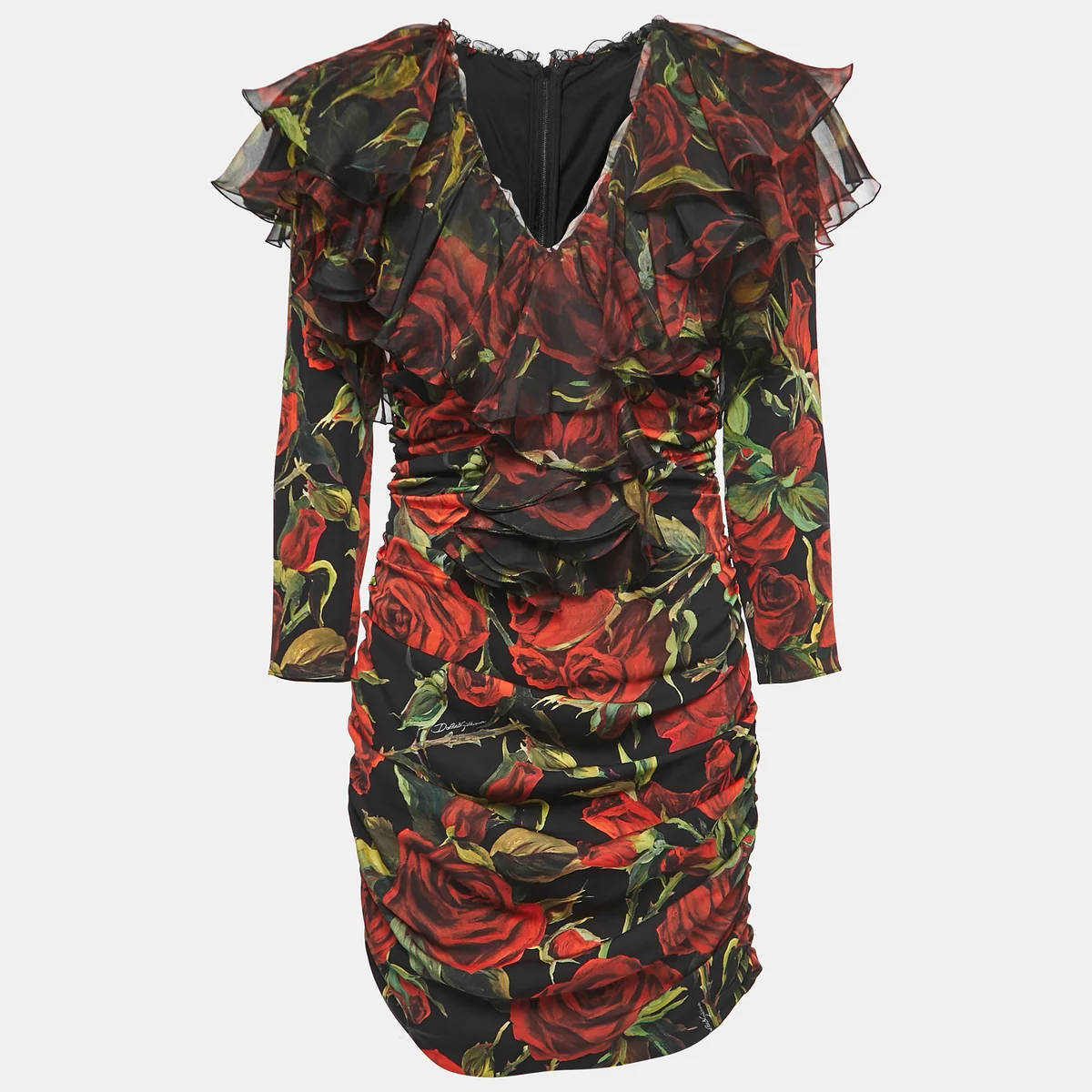
For pieces where the print carries the design, like Dolce & Gabbana’s rose-printed silk scarves or ruched mini dresses, or Zimmermann’s floral-printed pants, buy them because you genuinely like wearing florals, not as an investment. Scarves are actually a smart lower-risk entry: a Dolce & Gabbana roses print silk square scarf is versatile enough to style well past this specific trend cycle, since scarves get worn in so many ways that the “trend” framing matters less.
My honest opinion on investment value: rosecore as a named micro-trend will fade the way most named micro-trends do, probably within a season or two of overuse. But the rose motif itself, as a design element within established houses, isn’t going anywhere, because it’s been a house code for over a century at this point. So I’d separate the two when you’re shopping. Don’t buy a piece because “rosecore” is trending; buy it because the specific house’s use of the rose has actual design lineage, and the craftsmanship stands on its own once the trend name is forgotten.
FAQ#
Where did the rosecore fashion trend actually come from? It’s not a new invention. Rose prints and embellishments trace back to 19th-century couturier Charles Frederick Worth and have been used as house signatures by Saint Laurent, Alexander McQueen, Dior, and Dolce & Gabbana for decades. What’s “new” is the trend name and the recent visibility spike, partly driven by this year’s Met Gala “Garden of Time” theme.
Is rosecore just a passing micro-trend, or does it have staying power? Both, honestly. The named trend cycle will likely fade within a season or two, as most micro-trends do. But the underlying rose motif, especially in embellishment and fine jewelry, has been a recurring fashion element for over a century and will keep resurfacing regardless of what it’s called.
What’s the difference between rose motif and rose gold? Rose gold refers to a metal alloy and color tone. A rose motif means an actual floral shape or pattern, whether printed, embroidered, or sculpted. They’re often confused when shopping, but they’re separate design choices and can absolutely be combined or kept apart.
What rose-themed pieces are worth the investment? Embellished and embroidered pieces generally hold value and style relevance better than all-over rose prints, since the craftsmanship isn’t tied to a specific seasonal print. Fine jewelry with rose-cut stones or sculpted rose details also tends to have more lasting appeal than trend-driven fashion jewelry.
How do I wear rosecore without it looking costume-y? Limit yourself to one rose statement piece per outfit, keep everything else simple, and mix eras: pair a romantic rose piece with something modern and structured. Scale matters too; smaller, detailed rose elements tend to read as elegant, while large all-over prints need a very simple silhouette to work.
Related Articles#
- YSL Tribute Sandals: Why This Iconic Style Still Reigns
- Red Designer Pieces for Holidays: The Style Guide
- Why the Chanel Crossbody Bag Never Goes Out of Style
Related guides
- Online Bag Authentication: What Photos Can and Cannot Prove
- Fake Goyard Bag Guide: How to Spot Real vs Fake (2026)
- How to Spot a Fake Chanel Flap Bag: Authentication Guide
- How to Spot a Fake Hermès Birkin: Expert Checklist
- How to Buy an Authentic Luxury Bag from China Safely
- New vs Pre-Owned Luxury Bags: Which Route Is Right for You?
- Chanel Bag Guide: What to Know Before You Buy
- Luxury Bag Houses


Keyword index