Introduction #
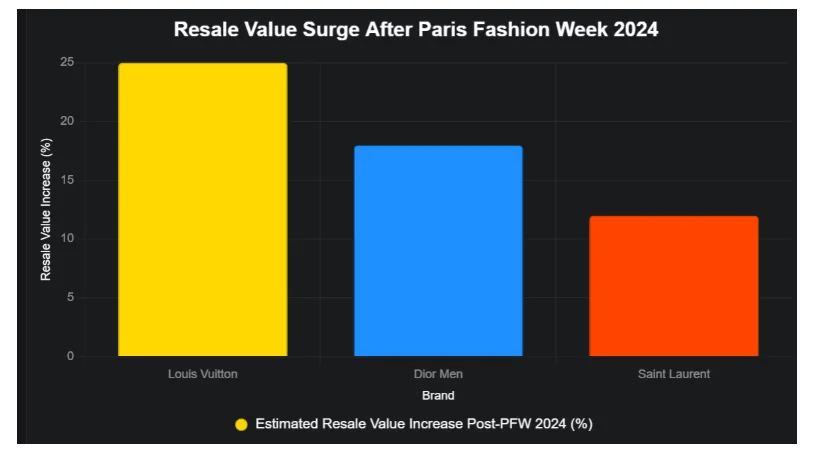
There’s a reason editors, buyers, and collectors block out the last week of June every year and simply don’t take other meetings. Paris Fashion Week Men’s has become the moment when the industry stops guessing and starts reacting. Sit in enough of these shows, as I have over the past several seasons, and you notice the difference between a fashion week and an event that actually moves markets. Paris does the latter.
The Spring/Summer 2026 men’s season, staged in Paris from June 24 to June 29, 2025, is shaping up to be one of the more consequential editions in recent memory. Not because of a single headline, though there’s a big one, but because of what it reveals about where luxury menswear is heading: looser tailoring, gender-neutral silhouettes, and a generational handover at some of the most storied maisons in fashion. For anyone shopping, collecting, or simply trying to understand why certain pieces hold or gain value after they leave the runway, this is the week to pay attention to.
Paris Homme: Why It Remains Menswear’s Crown Jewel #
London Fashion Week Men’s has effectively folded into the broader calendar after years of shrinking participation and weakening commercial returns, and its absence has only sharpened the spotlight on Paris. Milan still commands respect for craftsmanship, and Pitti Uomo has its niche charm, but neither carries the same weight of consequence. Paris Homme, organized by the Fédération de la Haute Couture et de la Mode (FHCM), is where a creative director’s debut can move a stock price and where a single silhouette can dictate what mid-tier brands are copying eighteen months later.
Running June 24–29, 2025, this season’s calendar features more than 40 runway presentations from roughly 70 brands, split across full runway shows, showroom appointments, and static presentations. The FHCM’s SPHERE showroom initiative continues to give newer names room to be seen alongside the legacy houses, and it’s backed by an increasingly commercial sponsor lineup: L’Oréal Paris handles beauty direction across the shows, Le Défi works behind the scenes supporting French manufacturing and emerging talent, and Accor has stepped in as a newer partner linking hospitality with haute couture. Satellite events, like GQ’s L’Avenue party sponsored by 24S, are a reminder that Paris Homme isn’t just runway shows anymore, it’s a full week of commerce, culture, and networking dressed up as fashion.
The dominant theme this season is genderless luxury paired with what’s being called next-gen tailoring, structured pieces reworked with softer construction and fewer rules about who’s supposed to wear them. It’s a theme Paris has been building toward for a decade, and this season it finally feels less like an experiment and more like the standard.
From Versailles to Global Vanguard: The Origins of Paris Fashion Week #
Paris Fashion Week’s modern identity was forged in 1973 at the Battle of Versailles, a fundraising showdown staged to help restore the palace. Five French couturiers went up against five American designers, and while the French houses had centuries of prestige behind them, it was the Americans’ ready-to-wear approach that stole the show and rattled the establishment. That night did more than raise money for Versailles’ upkeep, it forced Paris to reckon with the fact that fashion’s future wasn’t only about couture salons.
Later that same year, the FHCM formalized Paris Fashion Week into distinct categories: men’s fashion, women’s fashion, and haute couture. That structural decision is the reason menswear in Paris has its own dedicated week, its own calendar, and its own commercial identity rather than existing as a footnote to womenswear. It’s a detail worth knowing because it explains why Paris Homme, unlike some men’s fashion weeks elsewhere, was built with real institutional backing from the start rather than added on as an afterthought.
A Timeline of Menswear Evolution in Paris #
Paris menswear has never moved in a straight line, and that’s part of what keeps it interesting to follow season after season.
- 1980s–90s: Yohji Yamamoto and Comme des Garçons arrived from Japan and dismantled the assumption that menswear had to be structured and literal. Deconstructed tailoring, monochrome palettes, and asymmetry became a serious design language rather than a novelty.
- 2000s: Hedi Slimane’s tenure at Dior Homme narrowed silhouettes to a razor’s edge and, for better or worse, reset the industry’s idea of what a fashionable man’s body was supposed to look like. It’s a legacy that’s still debated, because the skinny-fit obsession it triggered wasn’t universally flattering or practical, but its influence on tailoring proportions is undeniable.
- 2010s–present: Virgil Abloh’s arrival at [[[[Louis Vuitton](/buying-guides/most-popular-louis-vuitton-bags-2026/)](/buying-guides/louis-vuitton-twist-bag-guide/)](/brands/working-at-louis-vuitton-mba-grad-wake-up-call/)](/brands/louis-vuitton-neverfull-insider-retail-story/) folded streetwear into luxury in a way that older houses had resisted for decades. That shift, combined with the broader industry’s move toward gender-fluid design and tech-driven fabrics, set the stage for the more fluid, less codified menswear we’re seeing at SS26.
Each of these eras built directly on the one before it. The genderless tailoring trending this season didn’t appear out of nowhere, it’s the logical next step after Slimane’s precision and Abloh’s boundary-blurring.
Spring/Summer 2026 Trends to Watch #
A few threads run consistently through the SS26 shows, and they’re worth knowing whether you’re dressing for the season or thinking about what to buy for the long term.
Genderless tailoring, done with more nuance than the term suggests. This isn’t about oversized fits for the sake of shock value. Houses are softening shoulders, dropping waistlines, and using fluid draping in fabrics that still hold structure. The result reads considered rather than androgynous-as-marketing.
Lightweight, technical fabrics with a handmade finish. Expect a lot of crepe, washed silks, and technical wools engineered to feel closer to cotton. It’s a practical response to warmer climates and a growing customer base buying luxury menswear for actual wear rather than pure display.
Tailoring loosened but not abandoned. The suit isn’t disappearing, but the rigid, body-conscious cut of the Slimane era is being replaced by roomier trousers and softer jacket construction. If you’ve been holding onto a slim-fit suit expecting it to stay relevant, this season suggests otherwise.
Craft signaling over logo signaling. More houses are leaning on visible stitching, unusual textile treatments, and unexpected material pairings rather than leading with branding. It’s a shift that rewards close inspection, which also happens to be good news for buyers tired of paying luxury prices for pieces that read as generic once the logo is removed.
None of this is revolutionary on its own, but taken together it signals a season more focused on wearability and craft than shock-value spectacle, which is a healthier direction for an industry that’s occasionally leaned too hard on stunt casting and viral moments.
Designers and Shows Defining the Season #
Legacy houses in transition. The story of the season is Jonathan Anderson’s debut at Dior Homme on June 27, arguably the most anticipated single show of the week. Anderson has a track record of turning heritage houses commercially relevant again, and his first Dior men’s collection will set the tone for how the house is perceived for the next several years, which matters enormously for anyone holding or considering Dior pieces as an investment. Elsewhere, Dries Van Noten is introducing Julian Klausner as its new creative director, another handover worth watching closely since these transitions tend to be volatile for resale value in the short term. Comme des Garçons Homme Plus, Junya Watanabe Man, Yohji Yamamoto, and Rick Owens continue to anchor the week with the kind of consistency that’s become their brand equity.
Disruptors earning their seats. Willy Chavarria returns after a widely praised debut, and his continued presence on the calendar says something about how quickly Paris is willing to reward designers who bring a genuinely different perspective, in his case a distinctly Chicano and working-class lens on tailoring. Bode brings its Americana-meets-heritage-textile sensibility, Sacai and Feng Chen Wang continue experimenting with hybrid construction, and newer names like Bluemarble, Steven Passaro, and Marine Serre round out a lineup that’s noticeably less predictable than it was five years ago.
Worth noting honestly: not every emerging name on this calendar will still be showing in Paris in three years. The SPHERE showroom gives visibility, but visibility isn’t the same as commercial staying power, and buyers chasing hype from a single strong debut should keep that distinction in mind.
What It Means for Luxury Shoppers and Investors #
If you’re buying for wear, the SS26 direction is genuinely good news. Softer tailoring and lighter fabrics mean more pieces that work outside a runway photo, which is not always the case with fashion week statements.
If you’re buying with resale or investment in mind, a few things matter more than the trend itself:
- Debut collections carry real but unpredictable value. Jonathan Anderson’s first Dior Homme pieces will likely command premiums quickly, but designer-transition pieces can also lose relevance fast if the new direction doesn’t land commercially. Buy because you want to wear it, not purely as a speculative bet.
- Craft-forward pieces tend to hold value better than logo-forward ones. Items built around unusual material work or visible construction detail have historically aged better in resale markets than pieces that lean on branding alone, since brand-driven hype cycles fade faster than genuine design merit.
- Watch the houses in leadership transition closely, not eagerly. Dries Van Noten under Klausner and Dior under Anderson are both worth tracking, but the first collection from a new creative director is rarely the strongest indicator of long-term value. Historically, it takes two to three seasons for a new direction to stabilize before resale markets fully price it in.
- Don’t confuse runway attention with commercial staying power. Several names generating buzz this season will not have the infrastructure or backing to sustain long-term collector interest. If you’re building a collection meant to hold value, prioritize houses with consistent runway presence over one strong season.
FAQ #
When is Paris Fashion Week Men’s Spring/Summer 2026? The SS26 menswear shows run from June 24 to June 29, 2025, in Paris. Men’s fashion weeks are traditionally staged about a year ahead of the season name, so SS26 collections are shown in mid-2025.
Why is it called SS26 if the shows happen in 2025? Fashion calendars name collections by the season they’ll actually be sold and worn in retail, which is roughly a year after they debut on the runway. It’s standard practice across men’s fashion weeks, not unique to Paris.
Is Paris Fashion Week Men’s open to the public? No. Runway shows and presentations are invite-only, reserved for press, buyers, and industry guests. Some satellite events and showroom appointments have limited access, but the core calendar is not open to walk-in attendance.
Why has Paris overtaken London as the leading men’s fashion week? London Fashion Week Men’s has struggled with declining brand participation and weaker commercial backing in recent seasons. Paris, by contrast, has institutional support through the FHCM, stronger sponsor investment, and a calendar dense enough with major houses that buyers and press have little reason to prioritize London instead.
Does what happens at Paris Fashion Week Men’s actually affect resale prices? Yes, often directly. Creative director debuts, standout collections, and shifts in silhouette or fabric direction regularly influence secondary market demand for both new and archival pieces from the houses involved, particularly in the months immediately following a strong or weak showing.
Related Articles #
- NYFW Spring Summer 2026: Trends, Data & Buying Guide
- Designer Handbag Trends 2025: What’s Actually Worth Buying
- Men’s Summer Fashion Trends 2017: What Actually Works
- How Pre-Owned Luxury Fashion Is Reshaping the Industry
- Party Season Bags: 4 Silhouettes You Actually Need


Keyword index