Introduction #
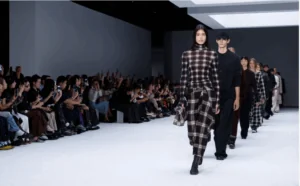
New York Fashion Week Spring/Summer 2026 ran September 11 through 16, 2025, spreading across the city in its usual patchwork way: the Historic West Edge at the High Line, Chelsea’s Terminal Warehouse, the Brant Foundation in the East Village, and a handful of smaller spaces that felt more like clubs than showrooms. I’ve covered enough of these weeks to know that the venue list alone tells you something about a season’s mood, and this one leaned industrial-meets-intimate rather than grand-and-gilded.
It’s worth pausing on why any of this matters if you’re not sitting front row. Fashion weeks are where the next 12 to 18 months of retail get decided. What walks the runway in September shows up in stores by spring, and by the time a trend has fully saturated Instagram, it’s usually already been absorbed into what designer handbags, shoes, and jewelry look like on the shelf. If you’re buying at the luxury level, and especially if you care about resale value, paying attention to New York Fashion Week Spring Summer 2026 isn’t optional style homework. It’s market research.
This report breaks down what actually happened on the NYFW SS26 runways, backs it up with the numbers, and translates it into something more useful than “pastels are back”: concrete guidance on what to buy, what to skip, and what’s likely to hold value.
Why NYFW Continues to Captivate #
New York has never tried to be Paris. Paris sells fantasy and heritage; Milan sells polish and craftsmanship. New York sells attitude, and it has done so since it had to. NYFW began in 1943 as “Press Week,” organized by publicist Eleanor Lambert to spotlight American designers at a moment when Paris, the industry’s usual center of gravity, was inaccessible because of World War II. It was a workaround that became an institution.
That scrappy, make-it-work origin still shapes the week’s identity. New York is where Ralph Lauren and Donna Karan built the vocabulary of American sportswear, where Marc Jacobs’ 1992 grunge collection scandalized and then defined a decade, and where designers like Telfar and LaQuan Smith have more recently pushed streetwear and body-conscious glamour into the luxury conversation. NYFW has always been faster and less precious than its European counterparts, which is exactly why trends born here tend to hit mainstream luxury retail so quickly.
The Bureau, which produces much of the official calendar, has also pushed the week toward being a B2C experience rather than a closed-door trade event, with shopping activations and public-facing programming alongside the shows. That’s a double-edged shift. It makes the week more accessible and more commercially relevant, but it also means the schedule is more crowded and more uneven in quality than it used to be. Not every show earns its slot.
Data-Driven Insights: The Numbers Behind the Runways #
Numbers don’t replace an editor’s eye, but they do confirm or challenge what you’re seeing on the ground. This season’s tally, drawn from runway data tracked across the official schedule:
| Category | Figure | What It Signals |
|---|---|---|
| Collections shown | 95 | A full, confident calendar with strong designer participation |
| Looks analyzed | 2,680 | Broad storytelling range across the week, not a single dominant narrative |
| Items identified | 4,181 | Accessories and detailing carried real design weight this season |
| Color shift | +3.4 percentage points for black | Black reasserted itself as a core neutral, alongside scarlet |
| Emerging palette | Rise of soft pastels (dubbed “Gelato Pastels” in trend circles, including shades like Lemon Curry and Burnished Lilac) | A counterpoint to the black/scarlet mood, used in smaller, considered doses |
The honest read here: the jump in black isn’t a dramatic pivot, it’s a correction. The past couple of seasons leaned hard into maximal color, and black’s return reads as designers recentering around wearability and margin-friendly basics after a few volatile retail years. The pastel uptick is smaller in raw numbers than social coverage suggests. It showed up as accents, linings, and accessory pops far more often than as full head-to-toe looks.
Key Trends Spotted on the SS2026 Runways #
Three throughlines emerged across the week, and none of them are entirely new ideas, which is worth saying plainly. What made them feel fresh was execution.
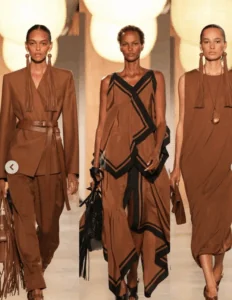
Optimism through escapism. Michael Kors opened the week with what he called “earthy elegance”: breezy kaftans, silk scarf dresses, and safari tailoring in browns, ecru, and sunset tones. He told CNN plainly that “escapism helps us tremendously,” which is a candid admission that luxury dressing right now is doing emotional labor for shoppers dealing with economic pressure. The silhouettes were loose, the fabrics light, the palette warm rather than saturated.
Rebellion via 90s minimalism. Calvin Klein’s Veronica Leoni, in her sophomore outing, went the opposite direction: sharp pinafore dresses, spaghetti straps, and trompe l’oeil leather coats that played with texture and illusion rather than volume. This is minimalism with an edge, not the soft, expensive-basics minimalism of a few years ago. It reads more confrontational, more precise.
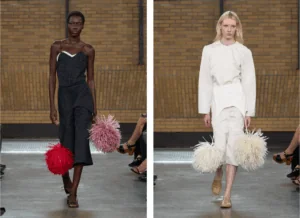
Reinvention in materials and color balance. The black-and-scarlet dominance paired against gelato pastels wasn’t a contradiction so much as two audiences being served at once: a buyer who wants dependable, resaleable neutrals, and one who wants a seasonal accent piece. Leather treatments (the trompe l’oeil effect especially) and fabric weight were doing more of the storytelling than print or embellishment this time around.
None of these trends is shocking on its own. What’s notable is how deliberately restrained the execution was. Fewer designers chased spectacle for its own sake, which, frankly, made for a more coherent week than some recent seasons.
Standout Designers and Moments #
Michael Kors’ 11:00 AM Terminal Warehouse show was the week’s clearest commercial and cultural moment. The front row, Gwyneth Paltrow, Olivia Wilde, Ariana DeBose, Suki Waterhouse, and a cross-generational mix that included Leni Klum and Ava Phillippe, generated the kind of viral coverage that actually moves product, not just impressions. The sand-toned set design reinforced the collection’s wanderlust framing without tipping into gimmick.
Calvin Klein’s show at the Brant Foundation was the more interesting editorial story, even if it made fewer headlines. Leoni is still building her voice at the brand, and this collection felt more assured than her debut, less about proving a point and more about refining one. That’s usually a good sign for a designer’s staying power.
CFDA estimates put attendance at venues like the Brant Foundation and Terminal Warehouse around 5,000 for opening-day programming, with CFDA/Vogue Fund activations adding early buzz to the week. It’s a reminder that NYFW’s public-facing shift is working commercially, even if it occasionally comes at the cost of the more insular, trade-focused atmosphere veteran editors remember.
What These Trends Mean for Luxury Shoppers and Collectors #
If you’re shopping designer handbags, shoes, jewelry, or watches with next spring in mind, here’s where I’d actually spend attention:
Neutrals with texture, not just color. The earthy palette from Kors (ecru, sunset brown, deep tan) translates directly into handbag territory: expect to see this reflected in leather goods from houses like Hermès and Chanel in warmer, sun-worn tones rather than stark black or bright color. If you’re buying for longevity, a well-made bag in this palette is a safer bet than it sounds, because these tones tend to resist looking dated the way trend colors do.
Black is not boring right now, it’s strategic. The data-backed rise in black across the runways supports what resale platforms have been showing for a while: classic black pieces in exotic or structured leather (think a black Birkin, a black [[[[Chanel Classic Flap](/buying-guides/chanel-flap-bag-buying-guide/)](/prices-and-value/chanel-classic-flap-bag-luxury-investment/)](/buying-guides/vintage-chanel-finds-top-picks/)](/buying-guides/designer-must-have-bags/)) continue to hold value better than seasonal colorways. This season reinforces black as a defensible investment choice rather than a safe-but-uninspired one.
Pastels as accent, not commitment. Gelato Pastels showing up as linings and small accessory pops is a useful signal for jewelry and watch buyers specifically. Think enamel dial accents, pastel gemstone settings, or a colored strap swap rather than an entire pastel timepiece. This is a lower-risk way to engage with a trend that may not have staying power.
Minimalist hardware over decoration. The Calvin Klein trompe l’oeil leather and sharp, unembellished silhouettes point toward accessories with clean lines and fewer logos or hardware flourishes. If you’re choosing between an ornate piece and a minimal one this season, minimal is the safer long-term hold, both stylistically and for resale.
One honest caveat: runway trends are directional, not prescriptive. A trend appearing on the SS26 runways doesn’t guarantee it translates one-to-one into what Hermès, Chanel, or Rolex actually release. Treat this as a read on mood and market sentiment, not a shopping list.
Final Thoughts #
NYFW SS26 didn’t reinvent the wheel, and I don’t think it was trying to. What stood out was a kind of editorial discipline: designers picking a mood, whether escapist warmth or sharp-edged minimalism, and committing to it rather than chasing every micro-trend at once. That restraint is good news for shoppers, because coherent trends age better and hold resale value more reliably than chaotic, everything-at-once seasons.
The one thing I’ll flag honestly: the week’s growing B2C orientation is making it louder and more crowded, and not every show earns the attention it gets on social media. Going into next season, I’d expect the black-and-neutral foundation to hold steady while pastels either mature into a real story or quietly fade, and I’d watch whether more houses follow Calvin Klein’s lead into sharper, less decorative minimalism.
FAQ #
When did New York Fashion Week Spring Summer 2026 take place? NYFW SS26 ran from September 11 to 16, 2025, across venues including the Historic West Edge at the High Line, Terminal Warehouse, and the Brant Foundation.
Why does a show called “Spring Summer 2026” happen in September 2025? Fashion weeks run roughly six months ahead of the retail season they preview, giving brands and buyers time to produce and place orders before the actual spring/summer selling period.
What were the biggest NYFW SS26 trends? Earthy, escapist neutrals (browns, ecru, sunset tones), a resurgence of black and scarlet as core colors, sharp 90s-inflected minimalism, and soft “Gelato Pastel” accents used sparingly rather than as full looks.
How does NYFW compare to Paris and Milan Fashion Week? NYFW is generally faster-moving and more commercially oriented, with roots in American sportswear and streetwear. Paris leans toward haute couture heritage, while Milan is known for tailoring and craftsmanship.
Do NYFW runway trends actually affect luxury handbag and watch resale value? Indirectly, yes. Runway color and material trends influence which new releases and colorways come to market, which in turn shapes demand and resale pricing for both new and secondary-market pieces, particularly for brands like Chanel and Hermès where classic colorways already command a premium.
Related Articles #
- Paris Fashion Week Men’s SS26: Everything You Need to Know
- Designer Handbag Trends 2025: What’s Actually Worth Buying
- Why the Chanel Crossbody Bag Never Goes Out of Style
- Luxury Designer Pieces to Buy Now: Editor’s Picks


Keyword index