Introduction: The Fashion Rebel #
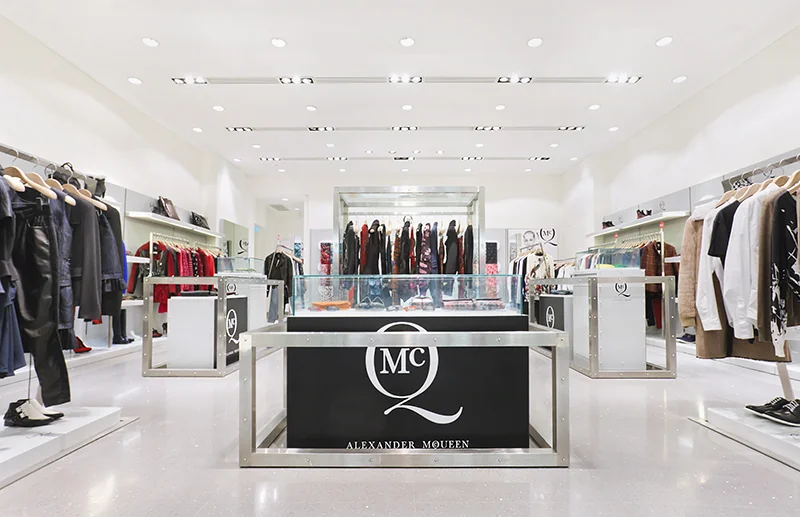
Some designers build a house on quiet good taste. Alexander McQueen built one on confrontation. Across a career that lasted barely two decades, he turned runway shows into theater, treated the body as a subject for debate rather than decoration, and made shock value a legitimate design tool rather than a stunt. Understanding Alexander McQueen brand history matters for anyone shopping the pre-owned market today, because the house’s identity was never just “British tailoring with an edge.” It was a specific, often dark, always technically rigorous point of view — and that point of view left behind design codes that counterfeiters chase constantly. If you’re buying secondhand McQueen, you’re buying into that history whether you realize it or not, and knowing it is half the authentication battle.
Early Life and the Making of a Designer #
Lee Alexander McQueen was born in 1969 in London, the youngest of six children in a working-class family — his father drove a taxi, his mother taught genealogy. He started making dresses for his sisters as a kid, which is the kind of detail that sounds like a tidy origin story but was, by most accounts, genuinely how he taught himself construction before he ever set foot in a design school.
His formal training came the hard way. He apprenticed on Savile Row with tailoring houses including Anderson & Sheppard and Gieves & Hawkes, learning bespoke construction from the inside — cutting, fitting, the discipline of a jacket that has to sit right on a real body. That grounding is easy to overlook when you’re looking at his more theatrical runway pieces, but it’s the reason his most dramatic garments still hold their shape properly. He later worked with Japanese designer Koji Tatsuno and spent time in Milan with Romeo Gigli before enrolling at Central Saint Martins for a master’s in fashion design, graduating in 1992.
The Big Break and Rise to Fame #
His graduate collection, inspired by Jack the Ripper’s Victims, is where the McQueen legend actually starts. It was bought in its entirety by Isabella Blow, the stylist and editor who became his most important early patron. Blow didn’t just buy the clothes — she pushed him to trade his childhood nickname “Lee” for his middle name, Alexander, for professional use. It’s a small biographical footnote that matters commercially: every hangtag, every stamped hardware piece, every authentication reference point on the market today exists because of that rebrand.
Blow’s mentorship opened doors fast. Within a few years McQueen had a reputation for shows that generated headlines rather than polite applause, and that reputation put him on the radar of major houses looking for a name that could reset their image.
Givenchy Years and Gucci Backing #
In 1996, with only about four years of professional experience, McQueen was named Chief Designer at Givenchy, then owned by LVMH. It’s worth pausing on how unusual that appointment was — a designer barely out of school running the ready-to-wear and couture direction of a storied Parisian house. He held the role until 2001, and by most contemporary accounts the fit was uneasy: McQueen chafed at Givenchy’s more conservative expectations, and the tension between his instincts and the house’s commercial needs was visible in the collections themselves.
The more consequential business event of this period happened outside Givenchy. In 2000, Gucci Group acquired a majority stake in McQueen’s own label — a deal that gave him capital and infrastructure to grow his namesake business independently while he was still fulfilling his Givenchy contract. That investment is the origin point of everything that follows in terms of ownership, and it’s a detail worth knowing if you’re trying to place a piece within a specific design era, since resourcing and production quality shifted noticeably once Gucci Group backing came in.
Signature Design Codes: Skulls and Beyond #
If you’re authenticating or shopping pre-owned McQueen, this is the section to study.
The skull motif #
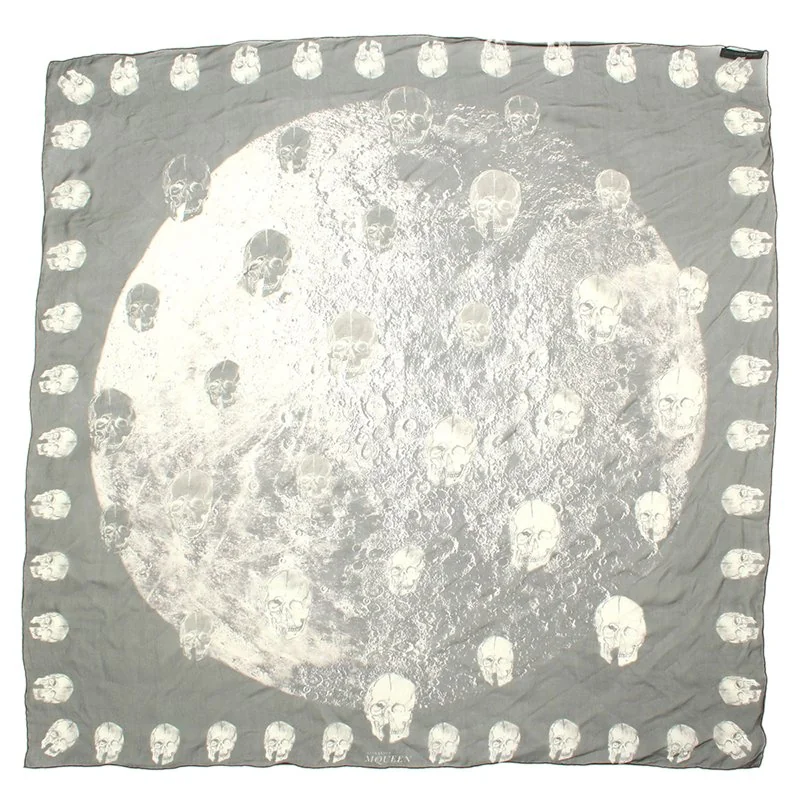
The skull print is the single most commercially significant design code McQueen produced. It appeared across scarves, T-shirts, clutches, and shoes, and it crossed over from runway to street in a way few fashion motifs do — worn by everyone from Johnny Depp to Lindsay Lohan in the mid-2000s. The skull silk scarf and the skull clutch remain two of the most searched, most resold, and unfortunately most counterfeited items connected to the brand. From a hands-on authentication standpoint: genuine skull silk scarves have a dense, tightly rolled hem (hand-rolled on earlier pieces), a print with clean symmetry and no color bleed at the jawline or eye sockets, and a woven or printed brand signature that sits consistently on the selvage edge across production runs. Counterfeit versions consistently get the skull’s proportions slightly wrong — jaws too narrow, eye sockets too round — because the original artwork isn’t something fakes are traced from directly.
Bumsters #
The “Bumster” trouser, introduced in 1996, is historically important even though it’s rarely the piece people are authenticating today. It was a deliberately extreme low-rise cut that pushed against the high-waist norms of the era and generated real critical backlash at the time. It established McQueen’s pattern of using tailoring itself as provocation, not just embellishment.
Runway spectacle as design language #
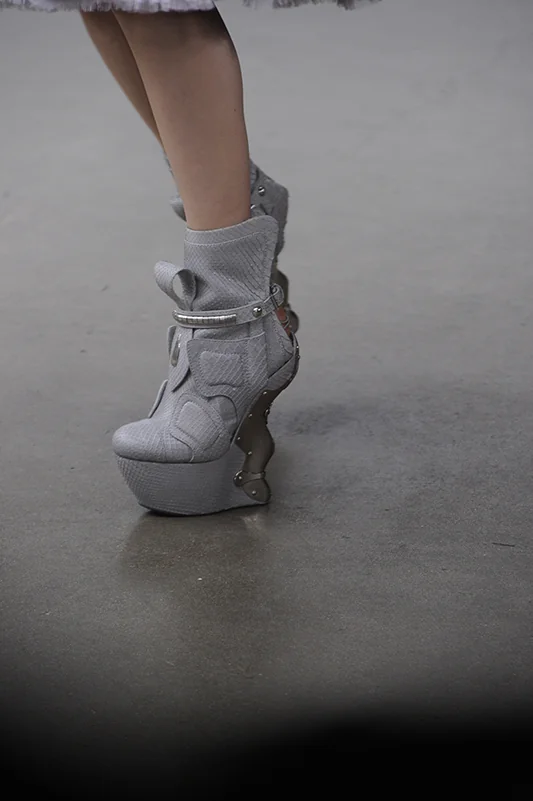
McQueen’s shows weren’t marketing events layered on top of the clothes — they were part of the design statement. Highland Rape (autumn/winter 1995) used torn tartan and aggressive styling to reference the historical oppression of Scotland, and was widely misread at the time as glorifying violence against women, a controversy that dogged him for years. No. 13 (spring/summer 1999) closed with model Shalom Harlow spray-painted live by two robotic arms. VOSS (spring/summer 2001) staged the audience facing a mirrored box that eventually revealed a reclining figure surrounded by live moths, a direct reference to a Joel-Peter Witkin photograph. The Widows of Culloden (autumn/winter 2006) ended with a hologram of Kate Moss rotating inside a glass pyramid, wrapped in fabric that billowed as if underwater. Plato’s Atlantis (spring/summer 2010), his final complete collection, streamed live online in an early and influential use of digital runway broadcasting, and introduced the now-iconic armadillo shoe — a sculptural, nearly hoof-like heel that Lady Gaga later wore in her “Bad Romance” video, cementing it as one of the most recognized shoe silhouettes in modern fashion.
Alongside the shows, specific garments recur in any serious account of his design vocabulary: feather-covered dresses built up in dense, sculptural layers, and skeleton-print or skeleton-embroidered pieces that echoed his recurring interest in anatomy and mortality. If you’re evaluating a pre-owned piece that claims a connection to one of these collections, cross-reference the season code on the internal label against the documented show date — this is one of the fastest ways to catch a garment misattributed to a more famous collection to inflate its price.
Legacy and the Brand Today #
McQueen won British Designer of the Year four times between 1996 and 2003, and picked up the CFDA’s International Designer of the Year award in 2003. That same year he was appointed CBE (Commander of the Order of the British Empire) for services to the fashion industry — a level of formal institutional recognition that few working designers achieve, let alone one whose reputation was built partly on controversy. By the end of 2007, his label had boutiques across major global markets and a client list stacked with celebrity patrons.
He died on February 11, 2010, by suicide, nine days after the death of his mother, to whom he was extremely close. He had spoken and been reported on previously regarding struggles with depression, and his death sent a genuine shock through the fashion industry — tributes appeared across runway shows that season, and the loss is still referenced as one of the defining moments in 21st-century fashion. The retrospective exhibition “Savage Beauty,” first at the Met in 2011 and later at the V&A in London in 2015, became one of the best-attended fashion exhibitions in either museum’s history, which says a lot about how his work was reassessed and elevated posthumously.
Sarah Burton, his longtime deputy and right hand, was named creative director shortly after his death and led the house for over a decade. She’s the one who designed Catherine, Princess of Wales’s wedding dress in 2011, a moment that put the brand in front of a global audience far beyond its usual fashion-press circle. Burton’s direction kept the technical rigor and romantic darkness of McQueen’s aesthetic but pulled it toward something more wearable and commercially sustainable. She departed the house in 2023 and moved to Givenchy; Seán McGirr, previously of JW Anderson, was appointed creative director later that year and is steering the current design direction. If you’re dating a piece as “vintage McQueen” versus “Burton-era” versus current collection, the silhouette and construction differences between these periods are usually distinguishable to a trained eye, and it materially affects resale value — Lee-era pieces from documented runway seasons command the strongest premiums in the pre-owned market.
From Founder to Corporate Ownership: The Gucci Group and Kering Era #
The ownership chain matters if you care about where your money goes and what “authentic McQueen” even means as a legal and manufacturing entity today. Gucci Group took its initial majority stake in McQueen’s label in 2000, providing the capital that let the brand scale internationally while McQueen was still finishing his Givenchy contract. Gucci Group itself was, at the time, controlled by Pinault-Printemps-Redoute (PPR), the French holding company. Over the following years, PPR increased its ownership across its luxury portfolio, and in 2013 the parent company rebranded entirely as Kering.
Today, Alexander McQueen operates as a wholly owned house within Kering’s portfolio, alongside brands like Gucci, Balenciaga, and [[Bottega Veneta](/buying-guides/party-season-bags-4-silhouettes-guide/)](/buying-guides/5-bottega-veneta-bags-worth-knowing-before-you-buy/). This matters practically for buyers: it means production standards, quality control, and hardware sourcing follow Kering group-level protocols, which is part of why post-2000s McQueen pieces tend to show more consistent construction quality than the earliest, scrappier independent-label years. It also means the brand’s commercial strategy — store count, licensing, accessories expansion — is set at a group level focused on long-term brand equity, not just seasonal fashion output.
FAQ #
How did Alexander McQueen die, and when? He died on February 11, 2010, in London, by suicide. It came nine days after the death of his mother, and followed a period of reported struggles with depression.
Who is the creative director of Alexander McQueen now? Seán McGirr, formerly of JW Anderson, was appointed creative director in 2023 following Sarah Burton’s departure to Givenchy. Burton had led the house since McQueen’s death in 2010.
Is Alexander McQueen owned by Gucci? Not directly. Gucci Group took a majority stake in the label in 2000, but Gucci Group’s parent company, PPR, later rebranded as Kering in 2013. Alexander McQueen is now a wholly owned house under Kering, the same parent as Gucci, but the two brands operate as separate entities within the group.
What was McQueen’s most famous or controversial runway show? There’s no single answer, but Highland Rape (1995) drew the most public backlash for its title and imagery, while VOSS (2001) and the hologram Kate Moss show from The Widows of Culloden (2006) are the most cited for pure theatrical ambition. Plato’s Atlantis (2010) is historically significant as his final full collection and the debut of the armadillo shoe.
How can I tell if a McQueen skull scarf is authentic? Check the hem rolling (should be tight and even, hand-finished on earlier pieces), the print symmetry on the skull’s jaw and eye sockets, and the placement and font consistency of the brand signature on the selvage. Vague or slightly warped skull proportions are the most common tell on counterfeits.
Are McQueen pieces from the Lee McQueen era more valuable than current collections? Generally, yes, especially anything traceable to a documented runway season during his lifetime. Provenance and season-matching drive resale value more than condition alone in this category, so verifying the internal label’s season code against actual show archives is worth the extra step before buying.
Related Articles #
- 5 Iconic Bags Named After Famous Women (Buying Guide)
- The History Behind Gucci’s Iconic Flora Print
- Ralph Lauren Brand History: The Story Behind the Icon
- Lady Dior Bag: The Story Behind Princess Diana’s Icon
- How Pre-Owned Luxury Fashion Is Reshaping the Industry
Related guides
- Online Bag Authentication: What Photos Can and Cannot Prove
- How to Spot a Fake Hermès Birkin: Expert Tips
- How to Authenticate a Chanel Bag: 10 Expert Checks
- Fake Goyard Bag Guide: How to Spot Real vs Fake (2026)
- How to Buy an Authentic Luxury Bag from China Safely
- New vs Pre-Owned Luxury Bags: Which Route Is Right for You?
- Chanel Bag Guide: What to Know Before You Buy
- Luxury Bag Houses


Keyword index