Introduction #
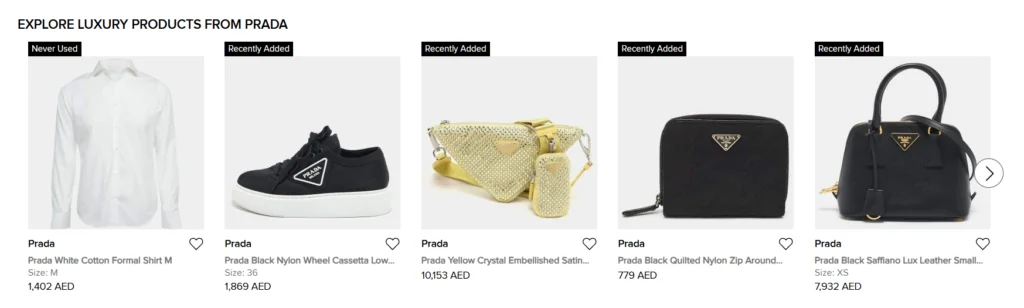
Prada buys Versace. Three words that would have sounded absurd a decade ago now describe the biggest shake-up in Italian fashion since Gucci and Yves Saint Laurent fell under the same roof. The Prada Group has completed its acquisition of Versace from Capri Holdings in a deal worth €1.25 billion ($1.375 billion), and I don’t think it’s an overstatement to call this a landmark moment for Italian luxury.
I’ve spent years watching Milan’s fashion houses circle each other at trade shows and shareholder meetings, and this is the deal insiders have quietly hoped for and doubted in equal measure. Versace, the house built on Gianni’s unapologetic maximalism, spent nearly a decade under American corporate ownership that never quite knew what to do with it. Now it’s back in Italian hands, sitting alongside Prada and Miu Miu under one group.
This isn’t just a transaction between two logos. It’s a bet that Italy’s fashion industry can build something large enough to go toe-to-toe with LVMH and Kering, the French conglomerates that have dominated the luxury conversation for two decades. Whether that bet pays off depends on execution, not headlines, and that’s what I want to unpack here: what the deal actually involves, what each brand brings to the table, and what it realistically means if you’re a shopper, a collector, or just someone tracking where your favorite handbag brand is headed next.
The Deal Breakdown: Numbers, Terms, and Timeline #
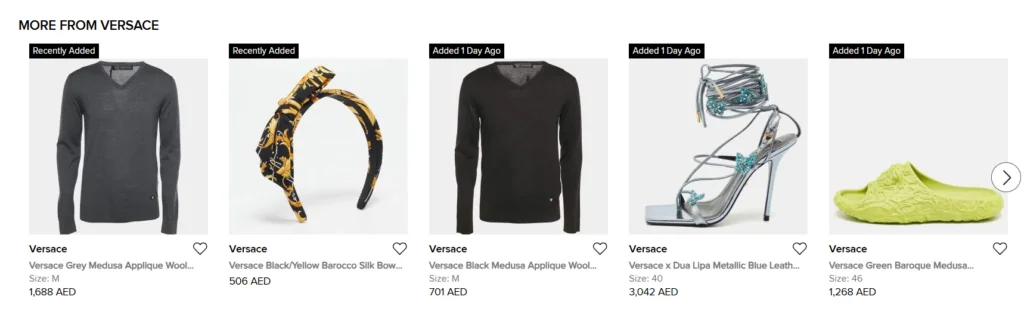
The mechanics of this deal matter more than the press release language suggests, so let’s get into them.
- Price: €1.25 billion (roughly $1.375–$1.4 billion depending on exchange rate at time of reporting), paid by Prada Group to Capri Holdings.
- Seller: Capri Holdings, the US-based group that also owns Michael Kors and Jimmy Choo. Capri bought Versace in 2018 for $2.1 billion, which means this sale represents a significant markdown on their original investment.
- Buyer: Prada S.p.A., the Milan-based group controlled by the Prada and Bertelli families, which already owns Miu Miu, Church’s, and Car Shoe.
- Structure: An outright acquisition rather than a merger of equals. Versace becomes a wholly owned subsidiary of Prada Group, joining the existing multi-brand portfolio rather than being folded into the Prada label itself.
- Timeline: Talks were reported in early 2025, with the deal formally agreed and closing later that year following regulatory approvals typical of cross-border luxury transactions.
A few things stand out to me here. First, Capri selling at a loss tells you everything about how the Versace integration went under Michael Kors Holdings-turned-Capri. Second, Prada isn’t merging brands together on the runway or in stores. Versace keeps its own design studio, its own ateliers, its own identity on paper. That distinction matters a lot for anyone worried this deal will “Pradify” Versace’s aesthetic overnight. Structurally, it won’t. Whether creative direction drifts over time is a separate question, and one worth watching rather than assuming either way.
Prada’s Legacy: Intellectual Minimalism Meets Business Ambition #
Prada was founded in 1913 in Milan by Mario Prada as a leather goods and luggage shop, the kind of quietly prestigious atelier that supplied Italian aristocracy long before “luxury brand” was a marketing category. It stayed a respectable, mid-tier name for decades.
Everything changed when Miuccia Prada took creative control starting in 1978. She turned a functional black nylon backpack into a status symbol, made “ugly chic” a genuine design philosophy, and built a brand around intellectual restraint rather than logomania. That’s the Prada DNA I think about every time I handle one of their pieces in person: the tension between rigor and irony, tradition and subversion. It’s not a brand that shouts. It makes you lean in.
A few things Prada does genuinely well:
- Design risk-taking. Prada has never been afraid of ugly-beautiful silhouettes or materials that shouldn’t work together but somehow do.
- Cultural weight. The Fondazione Prada, the Miu Miu literary award, the ongoing dialogue with art and architecture, this is a brand that positions itself as a cultural institution, not just a product line.
- Re-Nylon and sustainability commitments. Prada was early to regenerated nylon at meaningful scale, well before most luxury houses treated sustainability as more than a marketing line.
- Retail scale. Over 600 boutiques worldwide gives Prada Group serious distribution muscle, something Versace has historically lacked.
Its clientele skews toward people who want their luxury quietly confirmed rather than loudly announced: creatives, architects, the kind of collector who cares more about a bag’s construction than its logo placement. That’s a very different customer profile from the one Versace has spent 45 years cultivating, which is exactly why this acquisition is interesting rather than redundant.
Versace’s Legacy: Bold Glamour and Its Post-Gianni Journey #
Gianni Versace founded his house in Milan in 1978, and from day one it was built to be loud. Bright color, body-conscious cuts, Greco-Roman motifs, the Medusa head as a deliberately provocative logo. If Prada whispers, Versace has always shouted, and for a long stretch of the ’80s and ’90s that voice defined an entire era of celebrity dressing. Gianni essentially invented the modern red carpet partnership between designer and star, decades before Instagram made that strategy standard practice.
Gianni’s murder in 1997 could have ended the house. Instead, [Donatella Versace](/brands/versace-medusa-aevitas-platform-pumps-review/) took over creative direction and kept the brand’s spirit intact while modernizing it for new generations, no small feat given how tightly the brand’s identity was tied to her brother’s specific vision.
But glamour doesn’t pay for supply chains. Versace struggled financially through the 2000s and into the 2010s, undercapitalized and outpaced by better-funded French rivals. Blackstone took a 20% stake in 2014 to inject growth capital, but scaling profitably remained a persistent problem. In 2018, Michael Kors Holdings acquired Versace for $2.1 billion, rebranding itself Capri Holdings shortly after. That ownership period never quite clicked. Versace’s identity is maximalist and specifically Italian; Capri’s operating model, built around accessible luxury and licensing efficiency, didn’t consistently serve a house that depends on runway spectacle and Donatella’s specific creative instincts.
Selling to Prada is best understood as Versace returning home rather than starting over. The brand’s core identity, bold prints, body-conscious tailoring, Medusa branding, hasn’t changed. What’s changing is who’s paying the bills and setting long-term strategy.
Why This Merger Matters: Challenging LVMH and Kering #
Here’s the strategic logic, stripped of press-release language.
LVMH and Kering have spent twenty-plus years consolidating French and Italian houses into portfolios large enough to control supply chains, negotiate real estate on favorable terms, and absorb bad seasons without threatening the group’s survival. LVMH alone controls Louis Vuitton, Dior, Fendi, Celine, Loewe, and dozens more. Kering holds Gucci, Saint Laurent, [Bottega Veneta](/buying-guides/best-luxury-clutches-2026-pre-owned-uae/), and Balenciaga. Prada, despite its cultural cachet, has operated as a comparatively small independent group by revenue. Versace, despite its name recognition, never had the backing to scale globally on its own terms.
Combined, Prada Group’s portfolio, Prada, Miu Miu, Versace, plus Church’s and Car Shoe, starts to look like a real competitor in scale rather than just prestige. That matters for a few concrete reasons:
- Negotiating power with landlords and suppliers. Bigger groups get better terms on flagship real estate and raw materials, which affects margins directly.
- Marketing and celebrity budgets. Versace’s red-carpet strategy is expensive to run well. Prada’s balance sheet can support it more consistently than Capri’s could.
- A genuinely Italian counterweight. This is the part I find most compelling as an editor rather than an analyst: for years, “Italian luxury” has largely meant Italian ateliers producing for French-owned groups. This deal keeps two major houses under Italian control and ownership, which has real cultural and economic significance beyond the balance sheet.
I’d stop short of saying Prada Group instantly rivals LVMH’s scale, it doesn’t, not even close in revenue terms. But this is a meaningful step toward Italy fielding a group that can compete on strategy rather than just heritage.
What It Means for Shoppers and Collectors #
This is the part readers actually came here for, so let me be direct rather than diplomatic.
On pricing: Expect gradual increases, not dramatic overnight jumps. Luxury groups typically harmonize pricing strategy across their portfolios over several seasons, tightening discount practices and outlet distribution rather than slashing runway prices immediately. If Versace’s pricing has felt inconsistent compared to peers, expect more disciplined, LVMH-style pricing architecture over the next few years.
On design direction: I don’t expect Versace’s aesthetic to shift dramatically in the near term. Donatella remains creative director, and Prada Group has generally let acquired houses keep their own design leadership and studios, Miu Miu operates with real creative independence from mainline Prada, for instance. That said, ownership changes eventually shape creative decisions even when they don’t dictate them directly. Watch for subtler shifts: more disciplined collection sizes, tighter seasonal cadence, possibly a slightly more commercial hand on accessories, which tend to be a group’s most profitable and most closely managed category.
On resale and investment value, honestly: This is where collectors should pay real attention. Ownership stability tends to support resale confidence over time, buyers feel more comfortable investing in a brand they believe has secure, well-capitalized backing rather than one that might get sold again or gutted for short-term margin. Versace’s resale market has historically been softer and more inconsistent than Chanel, Hermès, or even Prada’s own leather goods, largely because the brand’s output has been uneven and its retail distribution less controlled. If Prada Group tightens Versace’s distribution and reduces discounting, that alone could firm up resale values on key pieces, particularly vintage Gianni-era archive pieces, which already command real collector interest independent of current ownership.
I’d caution against assuming an automatic value bump, though. Resale value follows design consistency, cultural relevance, and controlled supply, not ownership headlines. If you’re holding Versace pieces as an investment, the meaningful signal will be what happens over the next two to three collections, not the acquisition announcement itself. For new purchases, I’d treat this as a moment of relative stability rather than urgency. There’s no compelling reason to rush a purchase because of the ownership change alone.
Industry Reactions and What Comes Next #
Reaction from analysts and industry press has been cautiously optimistic rather than euphoric, which matches my own read. The general sentiment: this is a sensible, overdue consolidation rather than a flashy power move, and Capri offloading Versace at a loss from its 2018 price confirms that the previous ownership arrangement wasn’t working.
Skeptics point out the real risk: Prada Group now has to prove it can run a genuinely multi-brand operation at a larger scale, something it hasn’t had to do before at this size. Miu Miu’s success under Prada Group is a good sign, but Versace is a bigger, more complicated brand with a more volatile recent financial history.
What I’d watch over the coming seasons:
- Whether Donatella Versace’s creative role remains stable or transitions in the medium term.
- How Prada Group handles Versace’s licensing deals, particularly fragrance and homeware, which have historically been inconsistent in quality control.
- Retail footprint changes, store closures or openings signal how aggressively the group plans to reposition Versace.
- Whether pricing and discounting practices tighten, which will be the clearest early signal of integration strategy.
None of this resolves quickly. Luxury integrations typically take three to five years to reveal their real direction, and I’d treat any dramatic short-term claims, positive or negative, with skepticism.
FAQ #
When did Prada officially acquire Versace? The deal was reported and negotiated in early 2025, with Prada Group completing the €1.25 billion ($1.375 billion) acquisition from Capri Holdings later that year.
Does Versace still operate independently after the acquisition? Versace continues as a distinct brand with its own design studio and creative leadership under Donatella Versace, operating as a subsidiary within Prada Group rather than being absorbed into the Prada label.
Why did Capri Holdings sell Versace to Prada? Versace struggled to scale profitably under Capri, and the brand was sold at a loss relative to Capri’s 2018 purchase price of $2.1 billion, reflecting ongoing integration and performance challenges during that ownership period.
Will Versace prices increase because of the Prada acquisition? Some gradual price harmonization is likely over the coming seasons, consistent with how luxury groups typically manage acquired brands, but dramatic immediate increases are unlikely.
Does this acquisition affect the resale value of existing Versace pieces? Ownership stability can support collector confidence over time, particularly if Prada Group tightens distribution and discounting, but resale value ultimately depends more on design consistency and demand than on the ownership change itself.
How does this deal compare to LVMH and Kering’s brand portfolios? Prada Group’s combined portfolio, now including Versace, Miu Miu, and Prada, is a meaningful step toward competing with French conglomerates, though it remains smaller in overall revenue than LVMH or Kering.
Is now a good time to invest in Versace pieces for resale purposes? There’s no urgent reason tied to the acquisition itself. Collectors are better served watching design direction and distribution changes over the next few seasons before making investment-driven purchase decisions.
Related Articles #
- How Pre-Owned Luxury Fashion Is Reshaping the Industry
- Luxury Fashion Investment: Why Pre-Loved Pays Off
- Louis Vuitton Alma Bag: The Ultimate Buying Guide
- Best Designer Handbag Brands Worth the Investment 2025


Keyword index