Introduction#
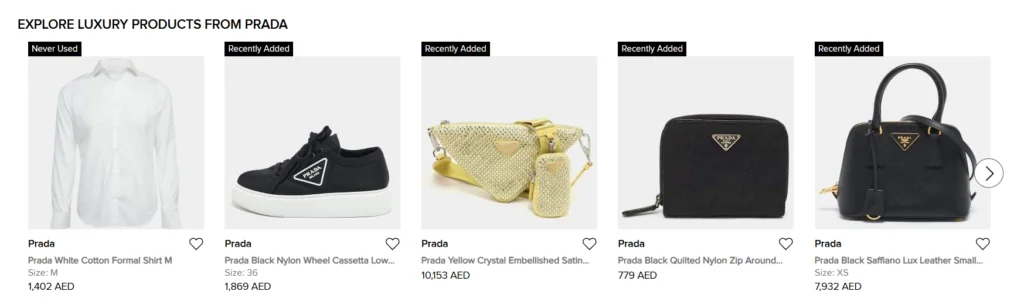
Prada has bought Versace. Let that sink in for a second, because if you’d told me five years ago that two of Milan’s most stylistically opposite houses would end up under one roof, I’d have asked what you were smoking.
The deal is real: Prada Group has acquired Versace from Capri Holdings for €1.25 billion (roughly $1.4 billion), a figure that’s notably lower than the $2.1 billion Michael Kors Holdings paid for the brand back in 2018. That gap alone tells you something about where Versace’s standalone value had drifted to under American ownership, and it’s worth sitting with before we get swept up in the “Italian powerhouse” headlines.
I’ve spent years watching how ownership changes ripple through resale prices, waitlists, and brand cachet, and this one is genuinely significant. It’s not just a corporate reshuffle. Prada buying Versace puts two of Italy’s most recognizable design languages, one whispered, one shouted, inside a single group for the first time. For collectors, shoppers, and anyone tracking where their handbag or watch might sit in five years’ value-wise, this is a story worth understanding properly, not just skimming the press release on.
Inside the Deal: Why This Merger Matters#
Strip away the romance and this is a straightforward scale play. The Prada-Versace acquisition exists because Italian luxury, for all its craftsmanship and heritage, has been consistently outgunned by the French conglomerates. LVMH and Kering built empires by acquiring house after house and pooling resources across manufacturing, real estate, marketing, and distribution. Prada Group, even with Miu Miu performing exceptionally well in recent years, has operated as a comparatively lean two-brand company.
Adding Versace changes that math. Combined, Prada Group’s revenue moves into territory that lets it negotiate better lease terms on flagship real estate, consolidate supply chains, and pool marketing budgets in ways that neither brand could alone. That’s the unglamorous but crucial part of this story: this is about balance sheets and bargaining power, not just design synergy.
There’s also a narrower, more specific rationale. Prada’s core strength is a narrow, disciplined aesthetic that appeals to an intellectual, design-literate customer. Versace’s strength is almost the opposite: maximalist, red-carpet-ready, instantly recognizable even to people who couldn’t name another luxury label. Put together, the group covers a wider stretch of the market than either house could reach on its own, without diluting either brand’s core identity, at least in theory. Whether that theory holds in execution is the part I’d watch closely, because portfolio expansion has killed as many brand identities as it’s saved.
Prada: The Epitome of Intellectual Minimalism#
Prada’s story starts in 1913 in Milan, when Mario Prada opened a leather goods and luggage shop under the name Fratelli Prada. For decades it was a well-regarded but relatively conventional purveyor of fine leather goods to Italy’s upper class.
The brand as we know it today is really the invention of one person: Miuccia Prada, who took creative control in 1978 and spent the next several decades systematically dismantling expectations of what luxury should look like. The 1985 nylon backpack is the clearest example, a genuinely unglamorous industrial fabric turned into a status object purely through confidence and context. That’s the through-line in everything Prada does: taking something plain, awkward, or even deliberately “ugly” and making it desirable through intellectual rigor rather than obvious opulence.
What I find most credible about Prada, having tracked the brand’s output for years, is that its design language rewards attention rather than demanding it. The tailoring is sharp but never shouty. The prints and materials often reference art, architecture, or cinema rather than pure decoration. Prada has also moved earlier than most houses on sustainability, with its Re-Nylon program converting ocean plastics and textile waste into the brand’s signature nylon, a genuine operational commitment rather than a marketing footnote.
With over 600 stores globally, Prada has real international reach, and its customer base skews toward people who want their luxury purchases to say something specific: taste, discernment, maybe a bit of irony. Dua Lipa, Emma Watson, Hunter Schafer, and Maya Hawke wearing the brand isn’t incidental, it reflects a deliberate cultivation of a creative, culturally engaged customer rather than pure red-carpet maximalism.
The honest caveat: Prada’s minimalism can read as cold or inaccessible to shoppers who want their luxury to feel more expressive. That’s precisely the gap Versace fills.
Versace: Loud, Proud, and Forever Bold#
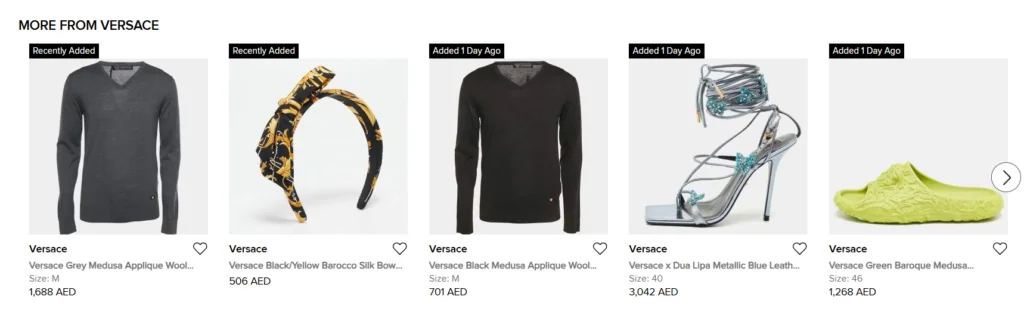
Where Prada is restraint, Versace is spectacle. Gianni Versace founded the house in Milan in 1978 and built it around bold color, body-conscious tailoring, and an unapologetic embrace of glamour that felt genuinely disruptive against the quieter Italian fashion establishment of the time. Baroque prints, gold hardware, the Medusa head logo, none of it was subtle, and that was entirely the point.
Gianni’s murder in 1997 could easily have ended the brand. Instead, his sister [Donatella Versace](/brands/versace-medusa-aevitas-platform-pumps-review/) stepped into the creative director role and kept the house’s DNA intact while modernizing it for each successive generation, no small feat given how quickly “loud” fashion can start to feel dated. Whether you love or find fault with specific Donatella-era collections, and there have been uneven stretches, her longevity in that role is genuinely rare in an industry that churns through creative directors.
Versace’s real innovation was arguably less about clothing and more about the relationship between fashion and fame. The brand more or less invented modern celebrity dressing decades before Instagram existed, dressing Elton John, Princess Diana, and Michael Jackson in ways that made the clothes inseparable from the cultural moment. That thread continues with Jennifer Lopez, whose 2000 Grammy dress remains one of the most referenced garments in fashion history, and younger names like Lil Nas X.
Versace also diversified further than Prada into home goods, hospitality, and fragrance, treating the Medusa logo as a lifestyle signifier rather than just a fashion house mark. That breadth is a strength, but it’s also part of why the brand’s core fashion business has felt financially strained at various points, spreading focus across too many categories without consistent investment in any one.
What the Merger Means for Italian Luxury’s Global Standing#
Here’s where I’ll push back a little on the more triumphant coverage of this deal. Yes, combining Prada and Versace creates a genuinely larger Italian group, and yes, it’s meaningful that an Italian house is buying back an Italian icon after seven years under American ownership through Capri Holdings. There’s real symbolic weight in that, and I don’t think it’s empty sentiment given how much national identity is baked into both brands’ storytelling.
But scale is relative. LVMH’s portfolio includes [[Louis Vuitton](/buying-guides/most-popular-louis-vuitton-bags-2026/)](/brands/louis-vuitton-neverfull-insider-retail-story/), Dior, Celine, Loewe, and dozens more, generating revenue many multiples larger than a combined Prada-Versace group. Kering, even after a difficult stretch with Gucci, still operates at a scale this new group won’t match anytime soon. Calling this a direct LVMH-Kering rival is more aspiration than current reality. It’s a meaningful step up in competitiveness, particularly in negotiating power with suppliers, landlords, and media, but it doesn’t instantly rewrite the hierarchy of global luxury.
What it does do is give Italian luxury a stronger second tier presence. For decades the narrative has been “France has conglomerates, Italy has standalone houses,” which left Italian brands more vulnerable to exactly the kind of foreign acquisition Versace went through in 2018. A stronger, more consolidated Prada Group makes that scenario less likely for other Italian houses down the line, and it gives Milan Fashion Week’s two biggest names a shared corporate interest in each other’s success, which could translate into more coordinated scheduling, shared production efficiencies, and stronger collective bargaining with department stores and landlords on flagship locations.
The risk worth naming honestly: integration is hard, and fashion history is full of acquisitions that flattened the acquired brand’s identity in pursuit of operational synergy. Versace’s maximalism only works if it stays maximalist. If Prada’s famously disciplined, minimalist management culture starts trimming Versace’s more theatrical instincts to fit cleaner spreadsheets, the brand could lose exactly what makes it valuable.
The Investment Angle: Will Versace’s Resale Value Hold?#
This is the question I get asked most by readers who collect rather than just shop, so let’s be direct about it.
Versace’s resale market has been soft compared to Chanel, Hermès, or even Prada’s own leather goods. Vintage Gianni-era pieces, especially from the 1990s, hold strong collector value because that period is treated almost as archival fashion history at this point. But contemporary Versace, the current-season handbags, ready-to-wear, and accessories under Donatella’s direction, generally depreciates faster on the secondary market than comparable pieces from Chanel or Hermès. A big part of that comes down to perceived scarcity and craft narrative: Hermès controls supply and leans hard into artisanal storytelling, while Versace’s broader licensing and diffusion lines have made the brand feel more accessible and, correspondingly, less exclusive in resale buyers’ eyes.
Does Prada ownership change that? Possibly, but not automatically. What could help: Prada Group has real discipline around brand positioning and has historically resisted the kind of overexposure that erodes resale value. If that same discipline gets applied to Versace’s distribution, limiting discounting, tightening retail placement, curbing excessive licensing deals, it could gradually strengthen perceived exclusivity and, over time, resale pricing.
What could hurt: if the acquisition leads to cost-cutting on materials or production quality in pursuit of margin improvement, that would show up in secondary market prices fairly quickly. Resale buyers are sensitive to quality shifts, and Versace doesn’t have the kind of blind brand loyalty that lets Chanel raise prices and cut nothing without immediate pushback.
My honest read: I wouldn’t buy current-season Versace purely as an investment play right now. Buy it because you love the design, the boldness, the specific piece. Vintage Gianni-era Versace remains the stronger collector bet and I expect that gap to persist, at least in the near term while the acquisition integration plays out. If Prada’s stewardship does succeed in tightening distribution and reinforcing exclusivity over the next few years, I’d expect contemporary Versace’s resale performance to improve gradually rather than jump immediately. Watch how the brand handles pricing and retail expansion over the next two seasons before making any assumptions about improved investment value.
Frequently Asked Questions#
How much did Prada pay for Versace? Prada Group acquired Versace from Capri Holdings for €1.25 billion (approximately $1.4 billion), a lower figure than the $2.1 billion Capri Holdings’ predecessor Michael Kors Holdings paid in 2018.
Why did Capri Holdings sell Versace? Versace struggled to deliver consistent profitability under Capri Holdings, with declining revenues and operational challenges cited repeatedly in the parent company’s earnings reports. Selling Versace allowed Capri to refocus resources on stabilizing its other holdings.
Will Versace’s designs change under Prada ownership? There’s no indication of an imminent creative overhaul, and Donatella Versace’s role has not been reported as changing as part of this deal. That said, ownership changes typically influence brand strategy over time, even when creative leadership stays in place, so it’s reasonable to expect gradual shifts in areas like retail distribution, licensing, and pricing discipline.
Does this make Prada Group as big as LVMH or Kering? No. The combined group is meaningfully larger and more competitive than Prada operating alone, but it remains smaller in revenue and brand count than either LVMH or Kering. It’s a step toward stronger positioning, not parity.
Will Versace prices increase because of the acquisition? Nothing has been officially announced regarding pricing strategy. Historically, brands under new ownership do see pricing adjustments as part of broader positioning strategy, so some increase over the coming seasons wouldn’t be surprising, though nothing is confirmed yet.
Is now a good time to buy Versace as an investment? Current-season Versace pieces remain a style purchase more than an investment one. Vintage Gianni-era Versace continues to be the stronger resale performer. If you’re buying with resale in mind, prioritize condition, iconic prints, and archival pieces over new releases for now.
Related Articles#
- How Pre-Owned Luxury Fashion Is Reshaping the Industry
- 10 Designer Handbags That Hold Their Value (2026)
- How to Spot a Fake Michael Kors Bag: Key Signs
- 10 Best Designer Handbags Worth the Investment (2026)
- Best Designer Handbag Brands Worth the Investment 2025


Keyword index