Introduction #
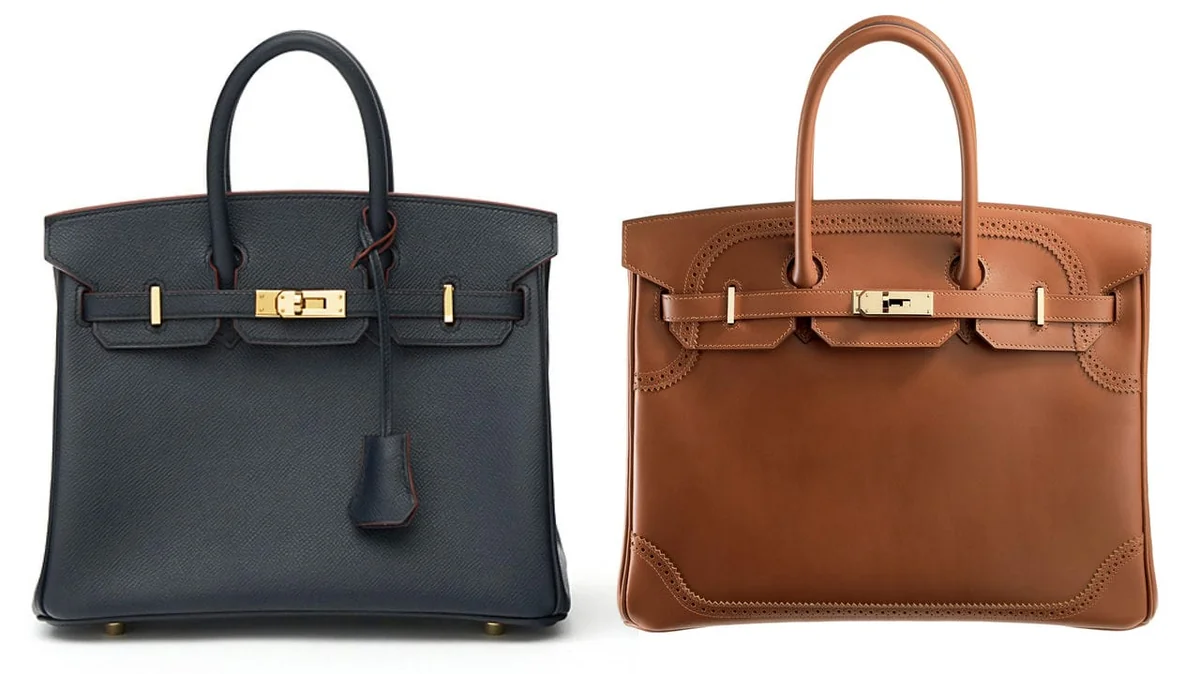
A Birkin is one of the only handbags that regularly outperforms the market it was bought in. That reputation is exactly why first-time buyers overthink it, and why so many end up with a bag that doesn’t match their body, their lifestyle, or their budget. The bag itself is straightforward: structured, spacious, built by hand. The decisions around it are not.
Before you commit five figures to a Birkin, you need clarity on five things: size, colour, leather, price, and authenticity. Get the first three wrong and you’ll own a bag you don’t reach for. Get the last one wrong and you’ll own a very expensive lesson. This guide walks through each decision in the order a buyer actually encounters them, then addresses the two questions almost every newcomer asks privately: what does this actually cost right now, and is the “spend requirement” story true.
Birkin vs Kelly: Why This Guide Focuses on the Birkin #
Buyers often shortlist a Kelly alongside a Birkin, and it’s worth knowing the difference before you decide which one deserves your budget. The Birkin has no front flap; it closes with two leather straps that loop through a turn-lock (the “tourniquet”) and a clochette that holds a tiny padlock. It’s rolled-handle only in most sizes, sits open-topped in silhouette, and slouches slightly when it’s not full. The Kelly, which predates the Birkin by decades and takes its name from Grace Kelly rather than Jane Birkin, closes with a single strap over a structured flap and can be carried by handle or a longer shoulder strap. It holds its shape more rigidly whether full or empty.
Both come in the same leathers and colour range, and both hold value well. In practice, the Birkin tends to carry the stronger resale premium and the longer waitlist reputation, which is why it’s the bag most first-time luxury buyers ask about specifically. If versatility as a crossbody matters more to you than the Birkin’s cachet, don’t rule out the Kelly — it’s not a lesser bag, just a different one.
Choosing the Right Birkin Size for Your Frame #
The Birkin launched in 1984 at 40cm, and that was the only size for two decades. The 25cm didn’t arrive until 2004, originally conceived as an evening bag rather than a daily carry. Today the range runs 25, 30, 35, 40, 45, 50 and 55cm, and each size has a job it was actually designed for, not just a look.
- 25cm — the smallest structured size, holds very little (phone, cards, lipstick), best as a statement piece rather than a workhorse.
- 30cm — the most balanced everyday size and the one most SAs and resellers see the highest demand for.
- 35cm — the original scale reference point for most people; fits a tablet, sunglasses case, and daily essentials without bulk.
- 40cm — closer to the original 1984 proportions; genuinely spacious, reads more mature and less “trend” than the 30 or 35.
- 45, 50, 55cm — built for travel, with longer straps and enough depth for a change of clothes; the 45cm is the most commonly seen of the three, the 50 and 55 are genuinely rare.
Fit your frame rather than your Pinterest board. Petite frames tend to get swallowed by a 35 or 40 and look more proportionate in a 25 or 30. Taller or fuller-figured buyers often find the 25 looks disconnected from their scale and get more wear out of a 35 or 40. If you’re buying primarily for travel or as a genuine daily workhorse rather than a special-occasion bag, the 45cm is worth serious consideration even though it’s less “Instagram.”
Popular Birkin Colours and How to Choose Yours #
Certain colourways come up again and again in demand lists: Black, Gold, Étoupe, Étain, Rouge H, Rouge Vif, Blue Sapphire, Blue Jean, Blue Électrique, Rose Tyrien, Vert Olive, and Orange H, Hermès’ signature house colour since the brand’s early packaging days.
The neutrals — Black, Gold, Étoupe, Étain — are the safest first purchase because they’re the easiest to resell and the least likely to feel dated in five years. They’re also, not coincidentally, the hardest to find in the pre-owned market at a reasonable premium, because everyone wants the same thing. Bolder colours like Rouge Vif, Blue Électrique, or Rose Tyrien make a stronger personal statement but narrow your resale pool later.
Beyond the popularity list, Hermès has produced far more unusual output than most buyers realise: bi-colour Birkins, tonal exotic skins, and genuinely rare pieces in pristine white or seasonal special-order colours. These pieces are exciting to own but sit in a smaller, slower-moving resale market — buy them because you love them, not as a value play.
Leather Types and Durability Compared #
Leather choice affects how the bag ages more than almost any other factor, and it’s the one buyers research least before purchasing.
| Leather | Texture | Durability | Notes |
|---|---|---|---|
| Togo | Grainy, textured | Very high | The most popular leather; scratch-resistant, holds shape well, forgiving of daily use |
| Clemence | Grainy, softer than Togo | High | Slouchier drape than Togo, still hides minor wear well |
| Swift | Smooth (formerly called Gulliver) | Moderate | More affordable, softer hand-feel, but marks and scratches more easily and loses structure faster |
| Fjord | Textured, matte | High | Sturdy and weather-resistant, still in production, less common than Togo/Clemence |
| Ardennes | Grainy, vintage | Moderate | Discontinued around 1999; genuinely rare now, mainly seen on older bags |
| Box Calf | Smooth, glossy | Low | The oldest leather used on Hermès bags; scratches easily and does not tolerate moisture well |
If this is your first Birkin and you want a bag you’ll actually use, Togo or Clemence is the practical choice. If you want something for occasional wear and a smoother, dressier look, Swift or Box Calf can work — just budget for visible wear sooner. Fjord is worth a serious look if you travel with your bag often, since it handles knocks better than the smooth leathers.
Authenticating Your Birkin: What to Check Before You Buy #
This is where most first-time buyers get nervous, and rightly so — the counterfeit market for Birkins is sophisticated. A few checks separate a genuine bag from a very good fake.
Stitching. Hermès uses saddle stitching, done by hand with a single needle passed through the same holes from both sides, using waxed linen thread. Genuine stitching is tight, evenly spaced, and has a subtle diagonal lean from the hand-stitch technique — it should never look laser-perfect or machine-uniform. Uneven spacing, loose thread, or stitching that’s too mechanically flawless are both red flags in different directions.
Hardware stamps. Genuine hardware is engraved, not printed or stamped shallow — run a fingernail over the lettering and you should feel it. Look for “Hermès Paris Made in France” with the correct font weight and spacing; counterfeits frequently get the kerning or font slightly wrong. Hardware should also have real weight to it; lightweight, tinny hardware is a common tell.
Blind stamps. Inside the bag, usually near where the strap attaches, you’ll find a craftsman’s stamp and a date stamp — a letter inside a shape (square, circle, or other symbol depending on the era) that indicates the production year. This system changed over the decades, so the date stamp should be consistent with the bag’s claimed age and with other design details like hardware style. A mismatch here — a date stamp that doesn’t correspond to a feature only introduced later — is one of the more reliable ways to catch a fake or a bag with an altered history.
Turn-lock and clochette action. The tourniquet should turn smoothly with no grinding, and the clochette and lock should function properly, not just look decorative.
If you’re buying pre-owned rather than from a boutique, insist on close-up photos of all four of these areas before you pay, and buy from a seller or platform that offers an authentication guarantee. No single check is foolproof on its own — it’s the combination that tells the real story.
Birkin Price Ranges and Flexible Payment Options #
Pre-owned Birkin prices generally run from roughly $6,000 for smaller sizes in more common leathers and older condition, up to $20,000+ for larger sizes, rarer leathers, or exceptional colourways with gold hardware. Exotic skins (crocodile, ostrich, lizard) sit well above this range entirely, often starting where the top of the classic-leather range ends.
Hardware Choices and Their Price Impact #
Hardware isn’t just cosmetic — it affects both retail cost and [[[resale value](/brands/celine-luggage-tote-guide-sizes-history-resale-value/)](/prices-and-value/luxury-price-hikes-2026-resale-impact/)](/buying-guides/best-time-to-buy-a-luxury-handbag-1/).
- Gold hardware (GHW) — the classic, warmest-toned option, generally the most universally in-demand and often the easiest to resell.
- Palladium hardware (PHW) — a cooler, silver-toned finish, equally popular and priced comparably to gold at retail; personal preference and jewellery tone usually drives the choice.
- Brushed/Matte palladium hardware — a subtler, non-reflective finish that’s less common in circulation, which tends to add a modest premium in the resale market simply due to scarcity.
- Diamond-set hardware — real diamonds set into the hardware, produced in extremely limited numbers and priced tens of thousands of dollars above a standard bag. This is a collector-tier purchase, not something a first-time buyer typically needs to weigh.
For a first Birkin, gold or palladium is the practical choice; both are simple to authenticate, easy to match to jewellery, and easy to sell on later.
Condition Grading and How It Affects Price #
Pre-owned pricing hinges heavily on condition grading, typically bucketed as:
- New/unworn — full set, protective plastic still on hardware, commands the highest price within its leather and colour.
- Pristine — carried lightly, no visible wear, corners and edges crisp.
- Very good/gently used — minor corner wear or slight handle colour transfer, still structurally excellent.
- Good/fair — visible wear, leather patina, hardware tarnish; priced noticeably below the same bag in better condition.
Togo and Clemence hide wear better than Box Calf or Swift, so two bags in identical “gently used” condition can look quite different depending on leather. Always ask for close-up photos of corners, handles, and hardware rather than relying on the condition label alone.
Resale Value: Is a Birkin Really an Investment? #
Classic combinations — neutral colours, Togo or Clemence leather, gold or palladium hardware, in 25/30/35cm — have historically held or appreciated in value better than almost any other handbag category, and exotic skins in particular can appreciate significantly over time. That said, “investment” is a loaded word here. It’s not a liquid asset: reselling takes time, consignment or platform fees eat into your return, and less popular colour or leather combinations may simply hold value rather than grow it. Retail production volume has also increased over the years, which has softened appreciation on some common SKUs in the last couple of years. Buy a Birkin because you’ll use and enjoy it — treat any appreciation as a bonus, not a guarantee.
Instalment Payment Options #
Many reputable pre-owned platforms now offer instalment plans rather than requiring one lump payment, which makes a first Birkin far more approachable. A typical structure involves paying a deposit of around 25% of the price to reserve the bag, then settling the remainder over an agreed period, often 30 days. That can bring your upfront outlay down to a few thousand dollars rather than the full price at once — worth asking about explicitly before you assume a Birkin is out of reach.
How Much Does a Birkin Actually Cost in 2025 #
Prices vary by size, leather, hardware, and condition, but here’s a realistic range for classic (non-exotic) leathers in gold or palladium hardware, gently used to pristine condition:
| Size | Typical pre-owned price range |
|---|---|
| 25cm | $8,000 – $14,000 |
| 30cm | $9,500 – $16,000 |
| 35cm | $10,500 – $18,000 |
| 40cm | $11,000 – $19,000 |
| 45cm | $12,000 – $20,000+ |
Rarer leathers (Ardennes, Fjord), unusual colourways, brushed hardware, and near-new condition push toward the top of these ranges or above them. Exotic skins — crocodile in particular — routinely start above $30,000 and can go substantially higher depending on colour and condition. If a listing price looks dramatically below these ranges for the stated leather and condition, treat it as a signal to authenticate more carefully, not as a bargain.
The Truth About the ‘Spend Requirement’ and Building an SA Relationship #
Here’s the part most buying guides soften: Hermès does not officially operate a waitlist or a public “spend requirement” for the Birkin. What it does have, by widespread and consistent buyer report, is a system where boutiques allocate Birkins to clients based on purchase history and relationship with a specific sales associate, rather than by request or list order. Hermès doesn’t confirm this policy publicly, but the pattern is well documented enough that it’s become an open secret in the resale and enthusiast community.
In practice, this means a first-time visitor to a boutique asking for a Birkin by name will very often be told none are available, while a client with an established purchase history and a relationship with an SA may eventually be offered one unprompted. Building that relationship takes real spending over real time on other categories — ready-to-wear, scarves, smaller leather goods — with no guarantee of a Birkin at the end of it.
Retail Quota System vs Buying Pre-Owned #
This is exactly why the pre-owned market exists for this bag specifically. Buying pre-owned removes the relationship requirement entirely: no spend history, no waiting period, no uncertainty about whether an SA will ever offer you the bag. You also get to inspect the actual leather grain, colour, and condition before buying, rather than accepting whatever a boutique happens to allocate you. The trade-off is price — pre-owned classic combinations often sit at or above original retail once you account for the difficulty of retail access — but for most first-time buyers, that premium buys certainty that the retail path simply doesn’t offer.
Common Questions First-Time Buyers Ask #
Is it worth trying to build an SA relationship instead of buying pre-owned? Only if you already shop Hermès regularly for other reasons. Spending purely to chase a Birkin allocation is a poor use of money if you don’t otherwise want those purchases.
Does gold or palladium hardware resell better? Both resell well. Choice should come down to personal preference and what you wear day to day, not resale speculation.
Can I trust a bag with no box or dust bag? Missing accessories lower price but don’t indicate fakery on their own. Authenticity comes down to the bag’s construction details, not what it arrived in.
Is Togo or Clemence the better first leather? Togo edges it for structure and scratch resistance; Clemence has a softer drape. Either is a safe, practical first choice over Swift or Box Calf.
Related Articles #
- Hermès Retail vs. Resale: Which Should You Choose?
- Best Hermès Birkin Bags to Invest in Right Now
- Handbag Trends 2024: The Bags You’ll Actually Wear
- Hermès Leathers Guide: Togo, Epsom, Exotic Skins Explained
- Hermès Leathers Guide: Togo, Epsom, Exotic Skins Explained
Related guides
- Online Bag Authentication: What Photos Can and Cannot Prove
- Inside a Million-Dollar Closet: Pre-Loved Hermès & More
- Meet Marwa Azzam Aldabbagh: Kelly Bag Authentication Expert
- Luxury Handbag Authentication Process Explained
- How to Buy an Authentic Luxury Bag from China Safely
- New vs Pre-Owned Luxury Bags: Which Route Is Right for You?
- Chanel Bag Guide: What to Know Before You Buy
- Luxury Bag Houses


Keyword index