Introduction #
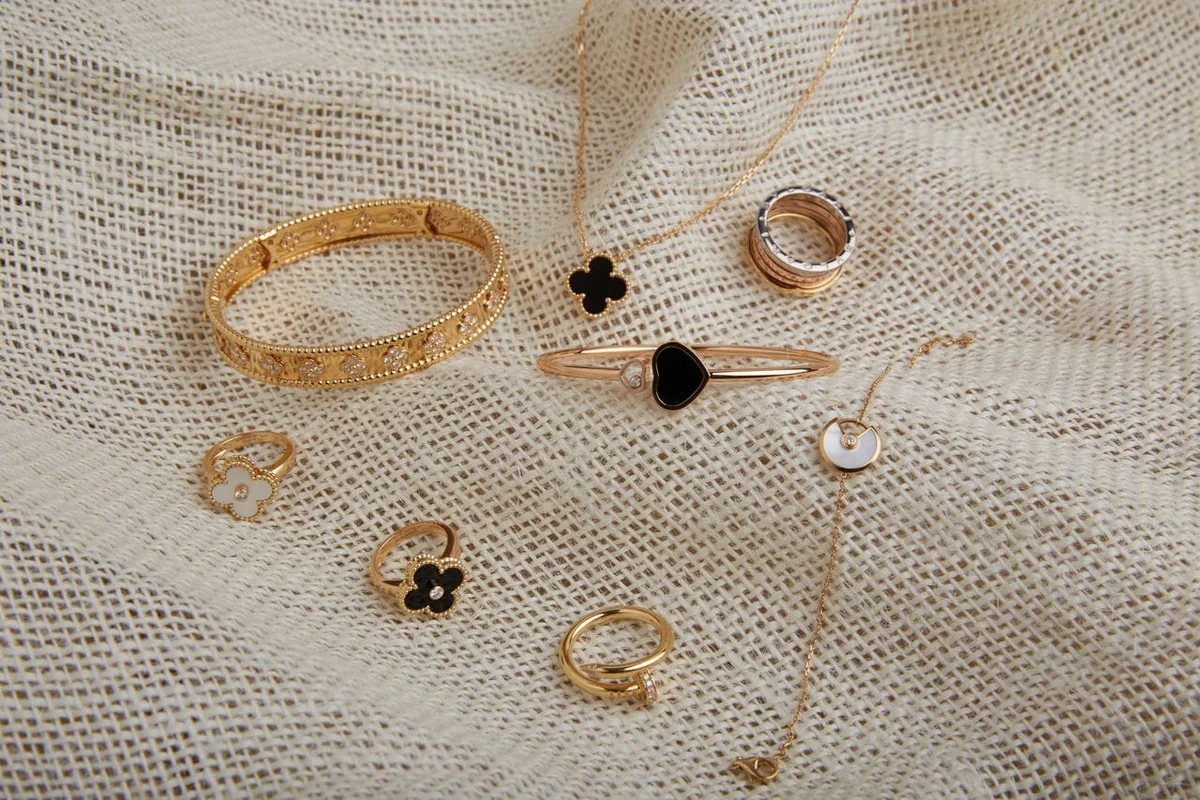
Fine jewelry occupies a strange middle ground in the luxury world. A handbag is obviously a fashion object; a stock certificate is obviously an investment. A well-chosen diamond eternity band or a vintage Van Cleef & Arpels clip does both jobs at once, which is exactly why buying it thoughtfully matters more than buying it quickly.
Unlike a handbag, jewelry rarely announces its authenticity or its quality at a glance. Hallmarks are tiny, gemstone grading is technical, and the resale market runs on details most first-time buyers never think to check. I’ve spent years around authentication benches looking at hardware stamps and stitching under loupes for handbags, and the same discipline applies here: know the materials, know the maker, know what actually holds value before you hand over the money. This guide walks through sizing, style, the essentials worth owning, the material science that determines resale value, and the authentication checks that separate a genuine investment piece from an expensive mistake.
Know Your Size and Fit #
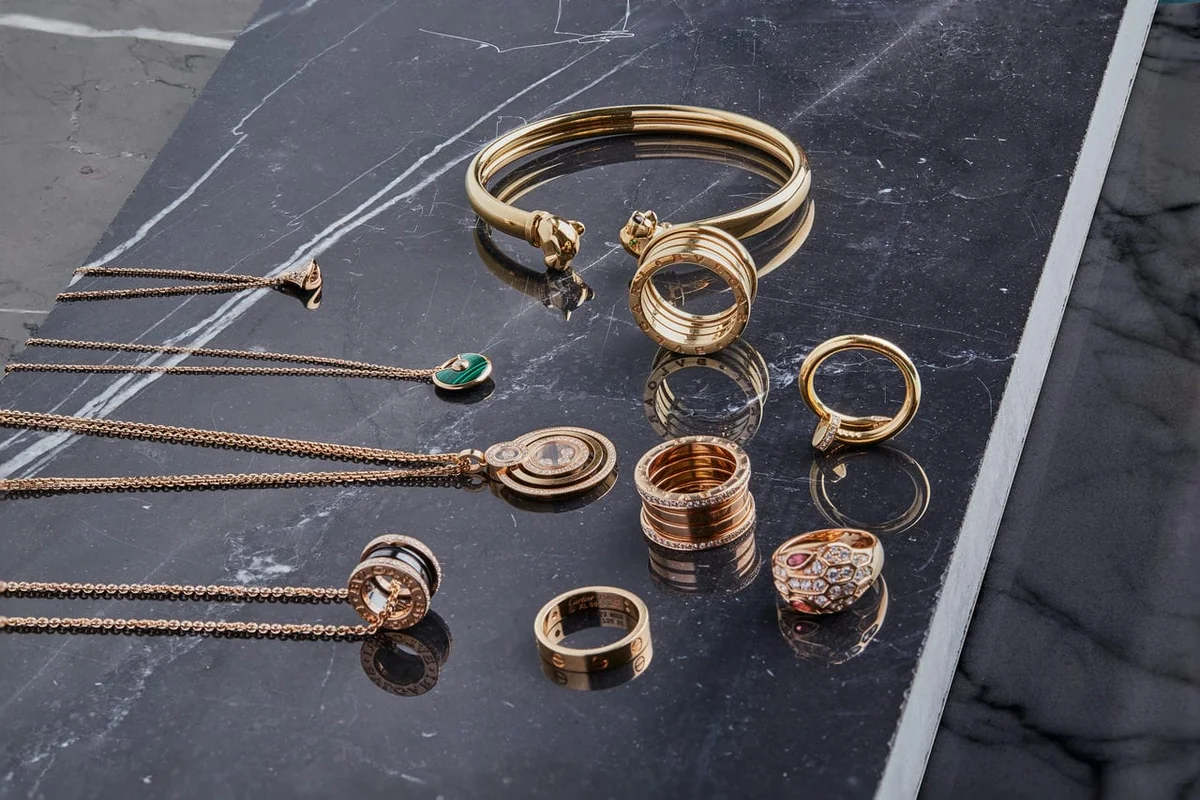
Jewelry that doesn’t fit doesn’t get worn, and jewelry that doesn’t get worn doesn’t build the kind of personal attachment that makes a piece worth keeping — or the wear pattern that supports resale value later.
Rings are the most obvious case. Finger size fluctuates with temperature, time of day, and even sodium intake, so a ring bought online without a proper sizing reference is a coin flip. Most fine jewelry houses size in half or quarter increments, and resizing a ring that contains pavé stones, an eternity band, or a fixed-shank design like a Cartier LOVE ring can be expensive, sometimes impossible without disturbing the setting. Always get measured in person if you can, and if buying pre-owned, ask for the exact size stamped inside the band rather than a generic “medium.”
Bracelets carry a similar risk, particularly bangles and cuffs, which don’t adjust at all. Measure wrist circumference and compare it against the brand’s published sizing chart rather than relying on “one size fits most” listings. Necklaces are more forgiving, but chain length still changes how a pendant sits relative to a neckline, which matters if you’re buying with a specific styling intent in mind.
The financial angle here is simple: a piece sized correctly for you gets worn for decades and ages with a story attached. A piece that sits in a box because it never fit is dead capital.
Define Your Personal Style #
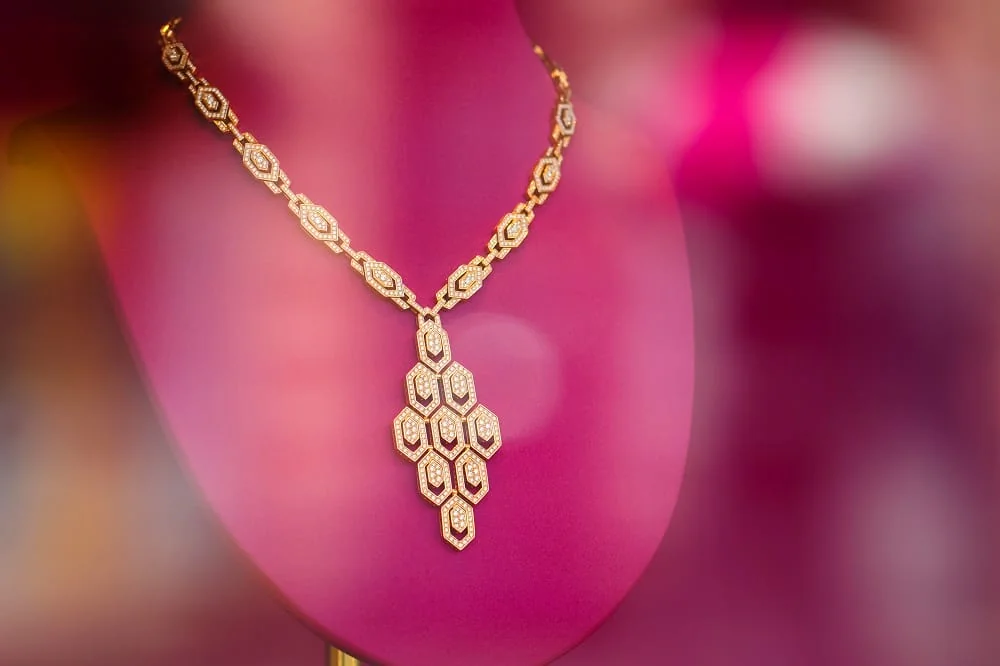
The best-performing piece in a jewelry collection is the one that gets worn constantly, and constant wear only happens when a piece fits your existing wardrobe and habits, not an aspirational version of them.
Before buying, look honestly at what’s already in your closet and jewelry box. If you live in tailored, minimal clothing, a maximalist Bulgari Serpenti with colored gemstones might sit unworn next to a plain diamond line bracelet that goes with everything. If your wardrobe leans warm and earthy, yellow gold and cognac or citrine stones will integrate faster than platinum and sapphires. This isn’t about limiting taste, it’s about being deliberate: a piece bought because it photographed well on someone else rarely earns its keep.
It’s also worth being honest about metal tone preference — some people simply look better in warm gold, others in cool platinum or white gold, and mixing metals unintentionally is one of the fastest ways to make an otherwise expensive piece look inexpensive. Buy toward your existing metal palette unless you’re deliberately building a two-tone wardrobe.
Build a Timeless Jewelry Collection #
Before chasing statement pieces, build the foundation. A handful of versatile essentials will get more wear over a decade than any single showpiece, and they resell more predictably because demand for them never really goes away.
- A pendant necklace in a simple setting — a single diamond, a small gemstone, or a signed motif like a Van Cleef & Arpels Alhambra clover — layers under other pieces or stands alone.
- Hoop earrings in a mid-size diameter (roughly 15-25mm) work with both casual and formal outfits and don’t date the way trend-driven earring shapes do.
- A band ring, whether a plain gold band, a diamond eternity band, or a signed piece like the Cartier LOVE ring, stacks with other rings and wears well daily because there are no protruding settings to catch on clothing or knock loose.
- A tennis bracelet or simple line bracelet in diamonds or gold rounds out the set and is one of the most liquid resale categories in fine jewelry because the format barely changes across decades.
These four categories share a trait worth noting for the investment-minded buyer: they’re recognizable without needing to be a specific brand, which means they hold buyer interest even outside the resale market for major houses. A statement piece from a hot collection can go in and out of fashion; a well-made gold hoop rarely does.
Understand Precious Metals, Stones, and Diamond Cuts #
This is the section that actually determines whether a piece is a financial asset or just a nice object, and it’s the one most buyers skip.
Gold purity. Gold is measured in karats, with 24k being pure gold — too soft for most jewelry — down to 18k (75% gold), 14k (58.3%), and 10k (41.7%). Fine jewelry houses almost exclusively use 18k because it balances durability with gold content, and it’s the purity that best preserves melt value if the market ever needs to be the fallback. Lower karat pieces are more scratch-resistant but contain proportionally less of the metal that actually holds value, so a 14k piece will generally command less resale interest than an 18k piece of similar design, even from the same maker.
Precious stone grading. Colored gemstones — sapphire, emerald, ruby — are graded on color saturation, clarity, and origin, with certain sources commanding steep premiums: Kashmir sapphires, Burmese rubies, and Colombian emeralds trade at multiples of stones with identical appearance but different provenance. Treatment matters just as much as origin — heat-treated or clarity-enhanced stones sell for a fraction of untreated equivalents of the same visual quality, so any colored stone purchase above a few thousand dollars should come with a gem lab report (GIA, GRS, or SSEF) confirming origin and treatment.
Diamond basics — the 4Cs. Cut, color, clarity, and carat weight determine a diamond’s value, and cut is the one buyers underweight most. A well-cut diamond in a lower color or clarity grade often looks better and holds value better than a poorly cut diamond with “perfect” paper stats, because cut is what controls light performance. For investment purposes, a GIA or AGS-certified diamond in the G-H color range and VS1-VS2 clarity range, well cut, typically offers the best balance of price and resale liquidity — the market for these grades is deep, while ultra-rare grades (D flawless, fancy colored diamonds) are valuable but far more niche and harder to sell quickly.
The practical takeaway: metal purity and stone paperwork are not fine print, they’re the two biggest levers on what a piece is actually worth five or ten years from now.
How to Verify Authenticity Before You Buy #
Counterfeiting in fine jewelry is less visually obvious than in handbags, but it’s just as common, and the financial stakes are often higher because gold and diamonds carry intrinsic value that fakes simply don’t.
Start with the hallmark. Legitimate fine jewelry carries a maker’s mark and a metal purity stamp — look for “750” or “18K” for 18-karat gold, “PT950” for platinum, along with the house’s own stamp (a Cartier piece is stamped “Cartier,” often with a serial number; Van Cleef & Arpels stamps its pieces with a serial and sometimes a hidden maker’s mark inside the setting). A missing, blurry, or inconsistently placed hallmark is the first red flag.
Weight is a second, easily missed check. Cast replicas are frequently hollow or underweight compared to an authentic piece of the same design, because real gold and platinum are heavier than most buyers expect. If you can compare the weight of a listing against published specs for that model, do it.
For stones, ask for gemological lab paperwork on anything beyond a small accent diamond — GIA reports are the industry standard and are traceable by report number on GIA’s own site, which makes them very hard to fake convincingly. If a seller can’t produce paperwork for a stone described as investment-grade, treat that as a pricing problem, not just a trust problem.
Buying pre-owned or vintage adds a layer of reassurance rather than risk, provided the seller does the authentication work for you. A reputable pre-owned platform authenticates hallmarks, weighs metal, verifies stone certification, and checks clasp and setting construction against the maker’s known techniques before listing — this is the same rigor applied to authenticating a Kelly bag’s hardware and stitching, just aimed at solder joints and prong settings instead. Ask any seller directly what their authentication process involves and who performs it; a vague answer is itself information.
Tax and Estate Planning Considerations for Jewelry Investors #
This gets skipped in almost every jewelry [buying guide](/buying-guides/bvlgari-resale-value-best-pre-owned-pieces-to-invest-in/), and it shouldn’t be, because it changes the real return on a “fine jewelry investment.”
Sales tax and duty. Fine jewelry purchases are subject to standard sales tax in most US states, and buying internationally can trigger import duty on top of any VAT already paid abroad — a piece that looks like a bargain in Europe can lose most of that discount once duty and tax are added at the border. Factor this in before comparing prices across countries.
Insurance, not an afterthought. Homeowner’s or renter’s policies typically cap jewelry coverage far below the value of a serious piece, so anything purchased as an investment needs a standalone rider or a specialist policy, appraised and re-appraised periodically as market prices for gold and diamonds move. An unappraised or underinsured piece isn’t really protected capital, it’s a liability waiting for a bad day.
Capital gains on resale. In the US, jewelry is treated as a collectible for tax purposes, and long-term gains on collectibles are taxed at a higher federal rate (up to 28%) than standard long-term capital gains. Keep purchase receipts and appraisals — without documented cost basis, the IRS can treat the full sale price as taxable gain.
Estate transfer. High-value pieces should be itemized by name, appraisal value, and location in an estate plan rather than lumped into “personal effects,” which is a common source of family disputes and undervaluation during probate. A current appraisal on file also makes gifting pieces during your lifetime (subject to annual gift tax exclusion limits) more straightforward than resolving value after the fact.
None of this makes jewelry a bad investment — it makes it an investment with carrying costs, the same as real estate or a wine collection, and pretending otherwise is how buyers overestimate their actual returns.
FAQ #
How do I know my ring size without going to a jeweler? Wrap a strip of paper or string around the base of the finger, mark where it overlaps, and measure the length in millimeters against a standard ring size chart. It’s a reasonable stopgap, but for anything with a fixed setting or a significant investment value, get measured professionally before buying — resizing can be costly or impossible on certain designs.
Which brands hold resale value best — is it just Cartier and Bulgari? No. Cartier (especially LOVE and Trinity) and Van Cleef & Arpels (Alhambra) are consistently the strongest resale performers because demand is broad and designs barely change year to year. Tiffany & Co. holds value well in signature lines like the Tiffany Setting engagement ring and T collection, though its fashion jewelry depreciates faster. Bulgari performs strongly in Serpenti and B.zero1. Chopard’s Happy Diamonds line has a loyal following but a thinner resale market than the others, so pieces can take longer to sell even if they eventually fetch a fair price. In general, recognizable signature designs from major houses outperform one-off fashion pieces from the same brands.
Is pre-owned or vintage fine jewelry actually safe to buy? Yes, provided the seller authenticates hallmarks, verifies metal weight, and confirms gemstone certification before listing. Vintage pieces can actually be a better value than new — older 18k and platinum designs sometimes use more metal by weight than modern equivalents — but only buy from sellers who can show their authentication process, not just a certificate of authenticity with no explanation behind it.
What’s a reasonable entry-level budget versus a serious investment budget? Entry-level investment pieces — a well-made 18k gold band, a small diamond pendant with GIA paperwork, a signed but simple Tiffany or Cartier piece — generally start around $1,500-$5,000 pre-owned. Serious investment territory, meaning pieces with strong resale liquidity and recognizable design equity (a [[Cartier LOVE bracelet](/prices-and-value/does-cartier-jewelry-hold-its-value/)](/buying-guides/how-to-buy-authentic-pre-owned-cartier-jewelry-2026/), a Van Cleef Alhambra necklace, a certified 1-carat-plus diamond solitaire), typically starts around $8,000-$15,000 and scales up from there based on carat weight, metal weight, and brand.
Do gold purity and diamond certification really affect resale price that much? Yes, significantly. An uncertified diamond or a 14k piece marketed as investment-grade will consistently sell for less than a certified diamond or 18k piece of comparable appearance, because buyers and dealers price in the documentation gap. Always ask for the karat stamp and any available gemological reports before finalizing a purchase.
Related Articles #
- Sell Designer Handbags in 2025: Get Paid More, Faster
- Luxury Handbags at Dubai World Cup: Style Stakes Guide
- Handbag Trends 2024: The Bags You’ll Actually Wear
- Pre-Owned Luxury Gold Jewelry: Smarter Than Bullion?
- Dior Granville Bag Review: Honest Take After Years
Related guides
- Online Bag Authentication: What Photos Can and Cannot Prove
- Inside a Million-Dollar Closet: Pre-Loved Hermès & More
- Meet Marwa Azzam Aldabbagh: Kelly Bag Authentication Expert
- Luxury Handbag Authentication Process Explained
- How to Buy an Authentic Luxury Bag from China Safely
- New vs Pre-Owned Luxury Bags: Which Route Is Right for You?
- Chanel Bag Guide: What to Know Before You Buy
- Luxury Bag Houses

Keyword index