Introduction #
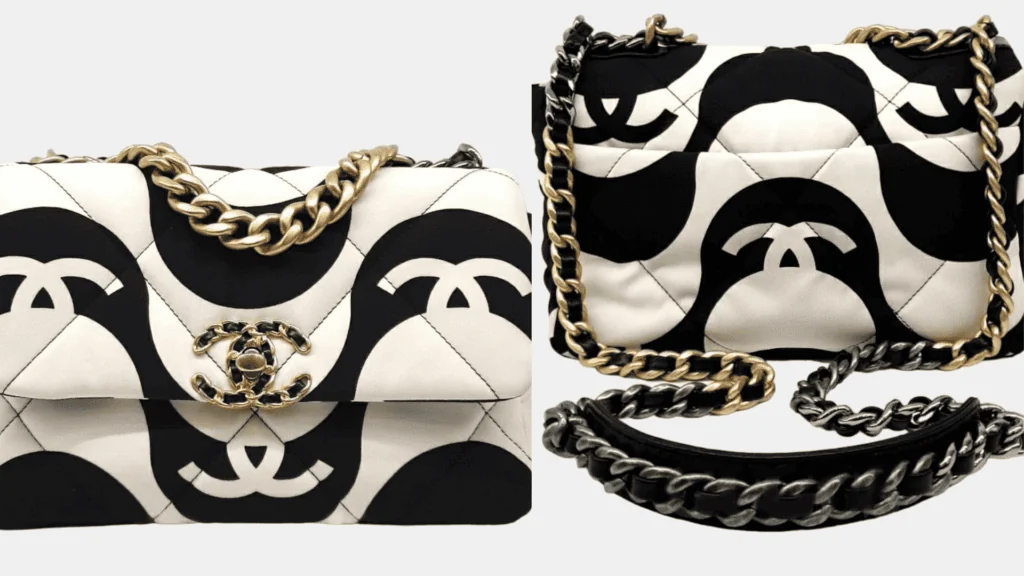
Chanel’s handbag lineage reads like a timeline of the house’s own evolution: the 2.55 that started it all, the Classic Flap that refined it, the Boy that toughened it up, and the Gabrielle that let it off the leash. The Chanel 19 sits at an interesting junction in that story. It borrows the bones of the 2.55, wears the quilting language of the Classic Flap, but moves like a bag designed for someone who actually runs for a train. That combination is why it became an instant favorite with a generation of buyers who wanted heritage Chanel without the stiffness that sometimes comes with it.
This spotlight looks at where the Chanel 19 came from, how it’s built, what sizes and configurations exist, and the practical questions serious buyers ask before they commit real money: what it costs across sizes and leathers, how it holds value against the Classic Flap, how to spot a convincing fake, and how it stacks up against the Boy bag and 2.55 Reissue. We’ll also walk through a specific piece worth knowing, a black and white Small 19 Flap Shoulder Bag, as a real-world example of what to look for on the pre-owned market.
The Story Behind the Chanel 19 Bag #
The Chanel 19 arrived with the Fall/Winter 2019 collection, which is also where its name comes from — Chanel has increasingly named bags after their release year rather than giving them standalone titles, a pattern also seen with the Chanel 22. It carries particular weight in the house’s history because it was one of the last designs Karl Lagerfeld worked on before his death, developed alongside Virginie Viard, who succeeded him as creative director and has continued to steer the silhouette’s presence in later collections.
Structurally, the 19 leans on the 2.55’s DNA: the same era of quilting logic, a similar sense of slouch, and a chain-and-leather strap treatment that nods to Coco Chanel’s original 1955 design. But it was built for a different customer than the one shopping in the 1950s or even the 2000s. The proportions are roomier, the leather softer, and the overall attitude less formal — a bag meant to be worn crossbody at the airport as easily as it’s carried into a dinner. The house leaned into that duality with its campaign, casting actresses like Margaret Qualley, Taylor Russell, and Marine Vacth, and the bag has since shown up on Cardi B and Katie Holmes, among others, reinforcing its cross-generational pull.
Design Details and Available Sizes #
The Chanel 19’s defining features are its oversized, uneven quilting and its hardware. Where the Classic Flap uses tight, uniform diamond quilting, the 19 has a looser, puffier pattern that gives the bag its slouchy, lived-in look straight out of the box. The CC turn-lock is large and woven, made to look almost like braided metal rather than a flat plaque, and most versions mix gold, silver, and ruthenium (dark gunmetal) hardware together rather than committing to one tone. The chain strap is also a mix: leather-threaded chain on one side and plain metal chain on the other, letting you shorten or adjust the carry depending on how you’re wearing it.
The line comes in four main sizes:
- Small — compact, best for evening or light daily use
- Medium — the most commonly seen size, practical for everyday essentials
- Large — closer to a work bag, fits more without looking oversized
- Maxi — the largest flap version, roomy enough for daily carry with room to spare
Beyond the flap bag itself, Chanel extended the 19 into a Wallet on Chain (WOC), a clutch, and a standalone wallet, all carrying the same quilting and hardware language. That range matters for buyers: the WOC in particular has become a popular entry point into the line because it’s significantly cheaper than the flap while still carrying the recognizable CC lock and quilting.
Spotlight: Chanel Black/White Small 19 Flap Shoulder Bag #
This particular piece is a good illustration of what makes the 19 line distinct from the rest of Chanel’s catalogue. It’s done in a black-on-white pattern rather than a solid colorway, which gives the exterior a graphic, contemporary edge that reads less traditional than a plain black caviar Classic Flap. The leather is soft and supple rather than structured, and the edges are rounded rather than boxy, both of which reinforce that slouchy, worn-in silhouette the 19 is known for.
The hardware follows the line’s signature dual-tone treatment, and the large woven CC lock sits front and center as the bag’s visual anchor against the oversized quilting. Inside, the bag is sized for essentials rather than overpacking — think phone, cards, keys, a compact — and a sliding pocket on the back exterior adds a bit of quick-access storage without disrupting the front silhouette.
Where this size earns its keep is versatility. It’s small enough to wear crossbody with jeans and a blazer during the day, but the pattern and hardware give it enough presence to work as an evening bag too. If you’re deciding between the Small and Medium 19, this piece is a useful benchmark: the Small comfortably handles a night out or a light errands day, but if you carry a wallet, sunglasses case, and anything beyond the basics daily, you’ll likely find yourself wishing for the Medium’s extra depth.
What to Check Before Buying: Authenticity and Hardware Cues #
The Chanel 19’s distinctive hardware is both its biggest style draw and its biggest vulnerability to counterfeiting, because it’s a more complex shape to replicate convincingly than a flat CC plaque. A few things worth checking before you buy pre-owned:
The CC lock. On an authentic bag, the woven texture of the lock is crisp and three-dimensional, with clean separation between the metal “strands.” On fakes, this detail is often flattened, blurry, or cast as a single solid piece rather than a woven effect. The lock should also feel substantial — noticeably heavier than a standard flap turn-lock.
Hardware tone consistency. The mixed gold/silver/ruthenium hardware is intentional, but the finish should be even and consistent across all pieces of the same tone. Uneven plating, hardware that scratches to reveal a different base metal, or a strap chain that doesn’t match the lock’s tone are red flags.
Quilting shape and stitching. The 19’s quilting is irregular by design, but it isn’t sloppy. Stitches should be uniform in length and tension, and the puffiness should look intentional rather than lopsided or underfilled.
The chain strap construction. The leather-threaded half of the chain should have leather that sits flush and doesn’t fray or peel at the edges where it loops through the metal links.
Authentication codes. Chanel phased out the sewn-in hologram sticker in late 2021 in favor of a unique identification code system, so the presence (or absence) of a hologram alone doesn’t confirm age or authenticity — cross-check the code style against the bag’s stated production year, and be wary of sellers who can’t produce a matching authenticity card, box, or receipt.
If you’re buying somewhere that isn’t inspecting bags in person, prioritize platforms that authenticate every item before listing rather than relying on seller photos alone. A few blurry stock images and a too-good price on a bag with this much hardware detail is a common combination in counterfeit listings.
Value and Where to Buy #
Pricing on the Chanel 19 varies by size and leather, and Chanel’s frequent global price increases mean it’s worth checking current retail before assuming older figures still apply. As a general range at retail:
- Small: roughly $5,000–5,500
- Medium: roughly $5,700–6,200
- Large: roughly $6,200–6,800
- Maxi: roughly $6,800–7,500
- Wallet on Chain: roughly $2,800–3,200
By comparison, the Classic Flap runs noticeably higher at the same sizes — a Small Classic Flap in caviar typically starts around $8,000–9,000 at retail, with Medium pushing past $10,000. That gap is the single biggest thing buyers underestimate: the 19 was positioned as a slightly more accessible entry into Chanel’s flap category, not a direct price match to the Classic Flap.
On the resale market, this pricing gap flips into a value gap. The Classic Flap has decades of scarcity and brand mythology behind it, so it typically retains somewhere in the 70–90% range of retail depending on condition, size, and leather, with rare colorways and hardware holding even stronger. The Chanel 19, being a newer and more widely produced line, tends to resell in the 50–65% range of retail. It’s not a poor investment by any means, but buyers expecting Classic Flap-level appreciation should recalibrate expectations — the 19 is a design you buy to wear and enjoy more than one you buy purely to hold value.
Lambskin versions (soft, buttery finish) are more prone to visible wear — corner rubbing, surface scratches — than caviar leather, which affects resale condition grading and price more than most first-time buyers anticipate. If [[[resale value](/buying-guides/best-time-to-buy-a-luxury-handbag-1/)](/brands/celine-luggage-tote-guide-sizes-history-resale-value-1/)](/brands/celine-luggage-tote-guide-sizes-history-resale-value/) matters to your decision, a caviar 19 in a neutral tone like black will consistently outperform a lambskin bag in a trend color.
For pre-owned purchases, buy from platforms that authenticate in-house and offer condition grading, return policies, and clear photos of hardware, interior tags, and any codes. That protects you both from counterfeits and from bags with undisclosed damage — a real concern given how visibly the 19’s puffy quilting shows wear compared to more structured flap styles.
Chanel 19 vs Classic Flap vs Boy Bag #
Buyers comparing the Chanel 19 to the Classic Flap and Boy bag (and often the 2.55 Reissue, its closest structural relative) are usually trying to solve for the same three variables: cost, everyday practicality, and long-term value. Here’s how the four compare:
| Chanel 19 | Classic Flap | Boy Bag | 2.55 Reissue | |
|---|---|---|---|---|
| Silhouette | Slouchy, soft, oversized quilting | Structured, tight diamond quilting | Rigid, boxy, angular | Structured but slightly softer than Classic Flap |
| Hardware | Mixed-tone, large woven CC lock | Classic CC turn-lock, single tone | Rectangular push-lock, edgy hardware | Mademoiselle turn-lock (twist closure) |
| Retail price (Medium, approx.) | $5,700–6,200 | $10,000+ | $6,000–6,500 | $8,500–9,500 |
| Resale value retention | Moderate (~50–65%) | Strongest (~70–90%) | Moderate (~55–65%) | Strong (~65–80%) |
| Everyday practicality | High — casual, crossbody-friendly | Moderate — more formal, delicate quilting shows wear | High — sturdy structure resists shape loss | Moderate — softer than Classic Flap, holds shape well |
| Best for | Buyers wanting flap styling with a relaxed feel | Buyers prioritizing resale value and heritage prestige | Buyers wanting durability and an edgier look | Buyers wanting vintage-inspired detailing with modern comfort |
The short version: the Classic Flap wins on prestige and resale, the Boy wins on durability for daily knocks, the 2.55 Reissue splits the difference with vintage character, and the Chanel 19 wins on comfort and everyday wearability at a comparatively lower entry price. None of them is objectively “better” — it depends on whether you’re buying for investment, longevity, or how the bag actually feels to live with day to day.
FAQs About the Chanel 19 Bag #
Is the Chanel 19 a good first Chanel bag? It’s a reasonable choice if you want flap-bag styling without the stiffness or the higher price tag of the Classic Flap. It’s more forgiving to wear casually, though the softer leather and puffy quilting will show wear faster than a caviar Classic Flap.
Which size should I buy for everyday use? Medium is the most versatile for daily carry — Small tends to run tight once you add a wallet and sunglasses, while Large and Maxi lean toward work-bag territory.
Does the Chanel 19 hold its value? It holds value reasonably well but not at the level of the Classic Flap or 2.55 Reissue. Expect resale in the 50–65% of retail range for well-kept bags in caviar leather, less for lambskin or heavily worn pieces.
How do I clean or maintain the leather and hardware? Store the bag stuffed with tissue or a shaper to hold its shape, keep it away from direct sunlight and moisture, and wipe hardware with a soft, dry cloth rather than any metal polish, which can strip the intentional mixed-tone finish. For lambskin, use a leather protectant spray before first wear and avoid overloading the bag, since the soft leather stretches and creases under weight. Have visible scuffs or color transfer addressed by a professional leather specialist rather than attempting DIY cleaning.
What’s the easiest way to spot a fake Chanel 19? Check the CC lock closely — the woven texture should be crisp and dimensional, not flat or blurry — and check that the hardware tones are consistent and don’t chip to reveal a different metal underneath. Combine that with checking authenticity codes and buying from a seller or platform that authenticates before listing.
Can I wear the Chanel 19 crossbody? Yes, and it’s one of the bag’s strongest selling points. The adjustable chain-and-leather strap can typically be shortened, making the Small and Medium sizes comfortable to wear crossbody for daytime use, unlike more formal Classic Flap styles that are usually worn on the shoulder.
Related Articles #
- Chanel Flap Bag Buying Guide: Sizes, Prices & Deals
- Chanel Handbag Prices: Iconic Styles & What They Cost
- Why the Chanel Crossbody Bag Never Goes Out of Style
- How to Style a Chanel Classic Flap Bag for Any Outfit
- Replica vs Pre-Owned Bags: Which Is the Smarter Buy?
Related guides
- Online Bag Authentication: What Photos Can and Cannot Prove
- Inside a Million-Dollar Closet: Pre-Loved Hermès & More
- Meet Marwa Azzam Aldabbagh: Kelly Bag Authentication Expert
- Luxury Handbag Authentication Process Explained
- How to Buy an Authentic Luxury Bag from China Safely
- New vs Pre-Owned Luxury Bags: Which Route Is Right for You?
- Chanel Bag Guide: What to Know Before You Buy
- Luxury Bag Houses


Keyword index