Introduction #
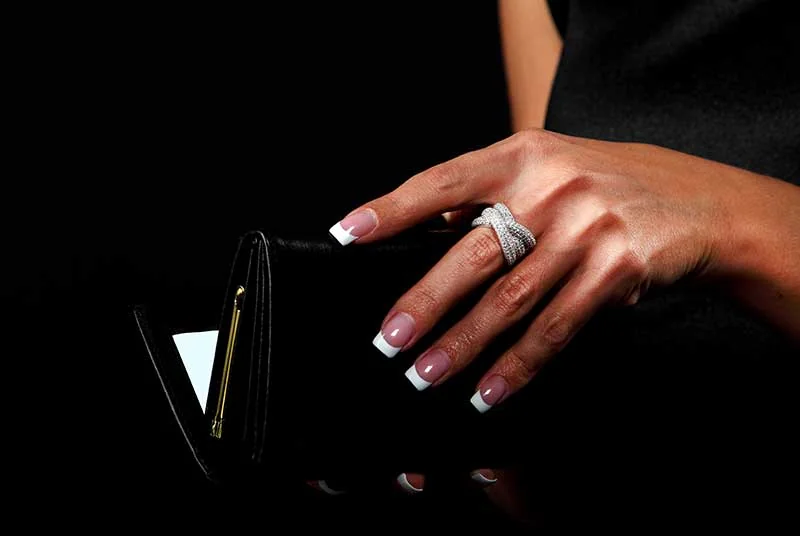
A handbag collection is only half the story. The wallet you tuck inside it gets touched more often than almost any other accessory you own, pulled out at checkout counters, valet stands, and dinner tables, which means the leather, hardware, and stitching get judged up close in a way your bag rarely does. A worn-out zip pull or peeling coating on a wallet undercuts even a mint-condition Kelly hanging on your arm.
This guide walks through seven wallets worth the investment, grouped by how you actually carry: roomy zip-around and continental styles for women who want everything organized in one place, and slim cardholders for those who’ve moved to a phone-case-plus-cards lifestyle. Because so much of the pre-owned wallet market runs through resale platforms and private sellers, we’re also covering what separates an authentic piece from a convincing fake, since the same authentication instincts that protect you when buying a Kelly apply directly here.
What Makes a Wallet Worth Investing In #
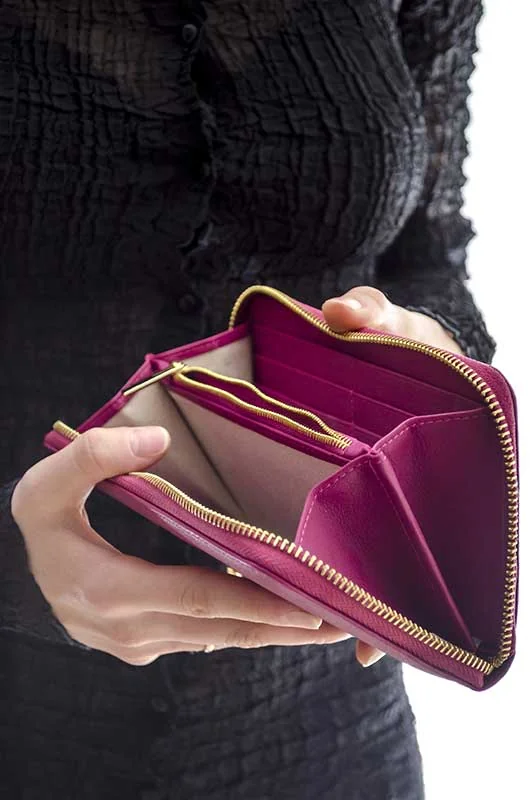
Before comparing individual pieces, it helps to know what you’re actually paying for. Four things separate a wallet that holds its value from one that looks tired within a year:
Leather type. Saffiano leather (Prada’s signature cross-hatch finish) resists scratches and water spotting better than smooth calfskin, which is why it shows up so often in continental wallets meant for daily abuse. Pebbled leather, like Gucci uses on the Soho line, hides fine scuffs naturally. Smooth or textured lambskin looks more luxurious out of the box but marks faster and needs more careful handling.
Hardware finish. Look at how the metal is plated, not just how it looks in a photo. Solid brass or gold-plated hardware with a heavier weight will hold its color for years; thin gold-tone coating on lightweight zinc alloy will brassy-out or chip at the edges within a season of regular use, especially on zip pulls that get gripped constantly.
Stitching consistency. Count the stitches per inch on a seam if you can. Authentic luxury houses keep stitch length uniform and tight, usually with no visible glue overflow at the edges. Uneven stitch spacing is one of the first things I check on any pre-owned wallet, and it’s a giveaway that shows up before you even get to logos or serial numbers.
Compartment design. A wallet’s card slots should sit flush without gaping, and zip compartments should glide without catching fabric or leather. Cheap construction shows up here first, since lining fabric bunches and slots stretch out of shape within months.
Top Picks: Zip-Around and Continental Wallets #
These three are built for women who carry more, cards, cash, coins, sometimes a phone, and want one compartment that closes fully around everything.
Gucci Soho Zip-Around Wallet #
The Soho line uses pebbled calfskin, which is genuinely one of the more forgiving leathers for everyday carry since it doesn’t show fine scratches the way smooth leather does. The front carries the brand’s interlocking GG logo embossed rather than printed, with leather tassels on the zip pull, a detail that’s become a quiet authentication marker since counterfeits often use flat, unembossed logos. Inside you get a full billfold and a bank of card slots.
- Price range: roughly $350–$550 new; pre-owned examples in good condition typically run $180–$320
- Best for: everyday carry, women who want a single wallet for cards, cash, and receipts without digging
- Downside: pebbled leather resists scratches but the embossed logo can flatten with years of friction against a bag’s interior lining
Prada Saffiano Continental Wallet #
Saffiano leather is arguably the most durable leather Prada produces, engineered specifically to resist water and scuffing, which is part of why it dominates their accessories line rather than being a marketing gimmick. The gold-embossed brand name sits on a front flap that opens into a compartmentalized interior with a zip pocket, billfold, and generous card slots. Prada also makes a quilted leather version of this wallet for buyers who want a softer look, though the quilting is more delicate than saffiano and shows dents from a wallet’s contents over time.
- Price range: roughly $450–$650 new; pre-owned $220–$400 depending on color and condition
- Best for: buyers who want one durable wallet in a standout color, since Prada offers this in an unusually wide palette
- Downside: the quilted variant, while beautiful, doesn’t hold its shape as well as the saffiano version under daily load
Balenciaga Classic Continental Wallet #
This is the wallet for someone who genuinely carries a lot. The full zip opens to an accordion-style expandable interior split into flat pockets, plus three billfold sections and twelve card slots, an unusually high capacity for a wallet this size. A smaller front pouch handles coins you need fast, without unzipping the whole thing. The contrasting hardware, stud embellishments and corner buckle details, gives it an edgier finish than Gucci or Prada’s cleaner lines. A flap-closure version exists for buyers who find full zip-arounds bulky.
- Price range: roughly $400–$600 new; pre-owned $190–$350
- Best for: heavy carriers, loyalty cards, multiple currencies, coins, all in one place
- Downside: the accordion structure adds bulk, this is not a wallet that disappears into a small bag
Top Picks: Compact and Cardholder Styles #
For readers who’ve simplified their carry, or who want a slim piece specifically to pair with a structured bag like a Kelly or Constance where interior space is limited, these four prioritize a low profile over capacity.
Saint Laurent Paris Continental Wallet #
Saint Laurent’s textured leather holds up better against surface wear than smooth calfskin, which matters since this wallet’s whole appeal is a flat, no-bulk profile that slides into a bag pocket without adding weight. It’s intentionally simple, no loud hardware, no oversized logo, which is exactly why it pairs with nearly any bag or outfit rather than competing with them.
- Price range: roughly $300–$450 new; pre-owned $150–$260
- Best for: minimalists who still want a full-size wallet rather than a cardholder
- Downside: fewer dedicated compartments than the zip-around styles, so cash organization is looser
Hermès Béarn Compact Wallet #
Hermès wallets are where authentication matters most, given how much a genuine piece costs versus a convincing fake. The Béarn is built in the same leathers used across Hermès bags, Togo, Epsom, or Swift, with a snap or gusset closure and the brand’s blind-stamp inside marking the leather and year of manufacture. The craftsmanship mirrors what you’d find on a Kelly’s edges: tight, even saddle stitching and a hand-finished edge coat.
- Price range: roughly $1,200–$2,200 new depending on leather; pre-owned authenticated pieces run $700–$1,400
- Best for: buyers building a wallet to match an existing Hermès bag in the same leather and color family
- Downside: limited card capacity relative to price, this is a style purchase more than a practical one
Chanel Timeless Cardholder #
Built in quilted lambskin or caviar leather with the CC turnlock or a simple snap closure, this is the cardholder version of Chanel’s classic flap DNA. Caviar leather is the more durable of the two, its grain hides scratches far better than lambskin, which matters since a cardholder gets pulled in and out of pockets constantly.
- Price range: roughly $450–$650 new; pre-owned $280–$420
- Best for: pairing with a Chanel bag, or anyone who wants brand recognition in the smallest possible footprint
- Downside: lambskin versions show fingernail marks and corner wear faster than most buyers expect
[Louis Vuitton](/buying-guides/replica-vs-pre-owned-bags/) Victorine Wallet #
Made in coated canvas (Monogram or Damier) with a leather trim, the Victorine is a compact snap-closure wallet with a coin compartment and card slots. The coated canvas is genuinely low-maintenance compared to smooth leather, it resists water and doesn’t need conditioning, which is part of why LV’s canvas pieces have such a strong resale market.
- Price range: roughly $500–$650 new; pre-owned $280–$420
- Best for: everyday durability with minimal upkeep
- Downside: the leather trim and piping wear and darken faster than the canvas body itself
How to Authenticate a Designer Wallet Before You Buy #
Wallet counterfeits are made in higher volume than bag counterfeits because they’re cheaper to produce convincingly, so a careful check matters even more here than it does with a handbag. This is the same checklist I run through before authenticating any pre-owned Hermès piece, scaled down for wallets:
Stitching. Genuine luxury stitching is straight, evenly spaced, and tight against the leather with no thread fraying. Counterfeits often get logos and hardware close to right but skip on stitch quality, since it’s labor-intensive to replicate.
Hardware stamps. Zippers should carry the correct brand-specific pull marking (Lampo or Riri for many European houses, or the brand’s own stamped zipper for Hermès, Chanel, and Louis Vuitton). A generic unbranded zipper on a “designer” wallet is an immediate red flag.
Serial numbers and date codes. Chanel uses a hologram sticker with a matching authenticity card and serial number engraved on the leather. Louis Vuitton stamps a date code inside indicating factory and manufacturing period. Hermès uses a blind stamp indicating the year and craftsman. Cross-check these against the seller’s photos, not just their word.
Leather grain and smell. Genuine leather has irregular, natural grain and a distinct smell; bonded or coated synthetic substitutes look uniform and often have a faint chemical odor straight out of packaging. This is hard to judge from photos alone, which is why in-person inspection or a professional authentication service matters for higher-value pieces.
Interior lining. Check the material lining the compartments. Cheap fakes often use flimsy, loosely glued fabric where the authentic version uses a tightly bonded microfiber or leather lining.
Price as a signal. If a “brand new” Hermès Béarn is listed at $400, it isn’t real. Counterfeiters rely on buyers wanting a deal badly enough to override common sense.
If you’re buying pre-owned through a resale marketplace, prioritize platforms that offer in-house authentication with a written guarantee. It costs more than buying blind from a private seller, but it’s the difference between owning the wallet and owning a liability.
Caring for Your Designer Wallet #
A wallet lives in tighter, more frequent contact with your hands, pockets, and bag interiors than almost anything else you own, so upkeep matters more here than people expect.
- Keep it dry and conditioned. Smooth leathers like lambskin and calfskin benefit from a leather conditioner every few months, applied sparingly. Saffiano and coated canvas don’t need conditioning, just wipe with a dry or slightly damp cloth.
- Don’t overstuff it. Cramming too many cards or receipts stretches card slots permanently and strains stitching at the seams, this is the single fastest way to age a wallet prematurely.
- Store it stuffed, not flat, when not in use. Tissue paper or a dust bag insert helps a wallet hold its shape in storage rather than collapsing flat.
- Watch metal hardware. Avoid letting zippers and clasps rub directly against keys or coins loose in a bag pocket, this is the most common cause of scratched or dulled hardware.
- Rotate if you own more than one. Giving a wallet rest between uses reduces the wear concentrated at high-friction points like the zip pull and corner edges, which also protects resale value if you plan to sell later.
Materials and Craftsmanship Explained #
The price gap between a $250 wallet and a $1,500 wallet isn’t marketing, it comes down to material sourcing and construction time. Saffiano leather is treated and cross-hatched specifically for durability, which is a slower and costlier process than finishing smooth calfskin. Hermès leathers like Togo and Epsom are selected from hides graded for minimal blemishes, then hand-cut and hand-stitched using saddle stitching, a technique where two needles pass through the same hole from opposite sides, producing a seam that won’t unravel even if one thread breaks. Machine lockstitching, common in mass-market wallets, unravels from a single point of failure.
Coated canvas, as Louis Vuitton uses, trades some of that tactile luxury for practicality, it’s genuinely more resistant to water and daily wear than most leathers, which is why it remains a strong choice for buyers who prioritize longevity over leather’s softness. Hardware plating thickness is the other quiet cost driver: gold-plated brass holds color for years, while thin gold-tone coatings on base metal fade or chip within a season. None of this is visible at a glance, but it’s exactly what you’re paying for when a wallet costs several times more than a look-alike.
FAQ #
What’s a reasonable budget for a first designer wallet? For a well-made zip-around or continental wallet from a brand like Gucci or Prada, expect $300–$650 new, or $150–$400 pre-owned in good condition. Compact cardholders from the same brands run slightly less. Hermès sits well above this range given its leather sourcing and hand-stitching.
Should I buy new or pre-owned? Pre-owned gets you a higher-tier brand for the same budget, but only if you authenticate carefully or buy from a platform offering guaranteed authentication. New removes that risk entirely but costs more.
What size wallet fits inside a Kelly or similar structured bag? Compact wallets and cardholders, generally under 4.5 inches tall and 1 inch thick, fit best inside structured bags with defined interior pockets. Full zip-around continentals, often 7–8 inches wide, work better in totes or shoulder bags with more open interior room.
What are the biggest authenticity red flags on a wallet specifically? Uneven stitching, an unbranded zipper pull, missing or mismatched date codes and serial numbers, and a price that’s noticeably below market for that brand and condition. Smell and grain texture are also reliable tells, but require an in-person check.
Does the wallet need to match the handbag exactly? No, matching leather color family or hardware tone (gold with gold, silver with silver) reads more intentional than matching brand for brand. A neutral saffiano or caviar leather wallet works across most of a rotating bag collection.
Are these wallets good gifting options? Compact cardholders and slim continentals are the safer gift choice since sizing risk is lower than with bags. Consider the recipient’s existing hardware tone and whether they carry a structured or slouchy bag, since that affects which wallet shape actually fits their daily carry.
Related Articles #
- Popular Handbag Brands: Which One Is Right for You?
- Hermès Leathers Guide: Togo, Epsom, Exotic Skins Explained
- Hermès Leathers Guide: Togo, Epsom, Exotic Skins Explained
- 7 Iconic Louis Vuitton Bag Styles Every Buyer Should Know
- Affordable Designer Brands: The Real Guide to Luxe for Less
Related guides
- Online Bag Authentication: What Photos Can and Cannot Prove
- So Kate Pumps Authentication Guide: Spot Real vs Fake
- Blue Crocodile Lady Dior Tote: Buying Guide
- Chanel Vintage Flap Bag Buying Guide: Navy Lambskin
- How to Buy an Authentic Luxury Bag from China Safely
- New vs Pre-Owned Luxury Bags: Which Route Is Right for You?
- Chanel Bag Guide: What to Know Before You Buy
- Luxury Bag Houses


Keyword index