Introduction #
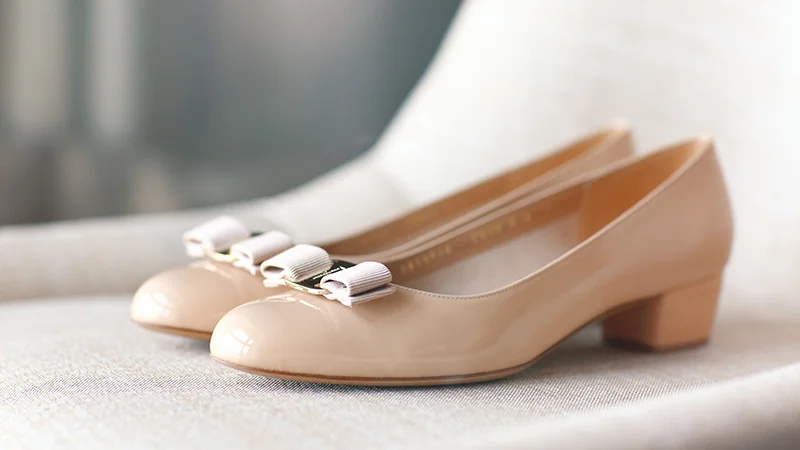
Ask someone to name a single accessory that defines old Hollywood glamour, and there’s a decent chance they’ll land on a pair of Ferragamo heels before they think of anything else. That reflex says a lot about how deeply this house has embedded itself in the cultural memory of luxury, long before “luxury empire” became the standard shorthand for what Salvatore Ferragamo built.
The Gancini hook, the buttery calfskin, the precision stitching on a Vara pump — these details didn’t appear overnight. They’re the result of a century-long evolution from a one-man cobbler’s shop in a small Italian town to a publicly traded fashion house with footwear, leather goods, ready-to-wear, eyewear, fragrance, and watches under one roof. Understanding that arc matters for more than trivia. If you’re shopping the pre-owned market for a Ferragamo bag or a pair of vintage pumps, knowing how the brand’s construction methods, materials, and hardware changed over the decades is often the difference between spotting a genuine piece and getting burned by a convincing fake.
This is the story of how Salvatore Ferragamo became Ferragamo — the man, the house, and the identity it built one shoe at a time.
From Apprentice to Hollywood Shoemaker #
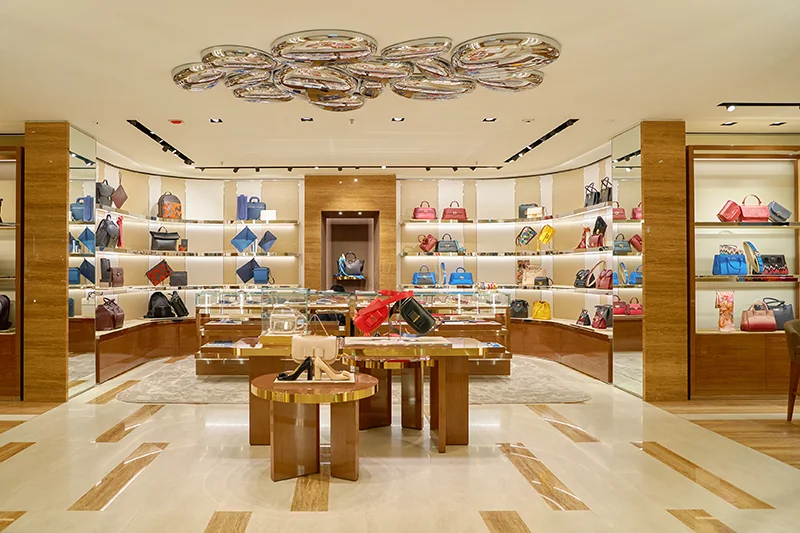
Salvatore Ferragamo came from a family with shoemaking already in its hands. Born in Bonito, a small town in southern Italy, he apprenticed under local cobblers as a boy and opened his first shoe shop there before he was even a teenager — a made-to-measure and repair operation that gave him his first real education in fit, proportion, and the mechanics of a well-built shoe.
He emigrated to the United States in the early 1910s, eventually settling on the West Coast, where his timing lined up with the explosive growth of the American film industry. Santa Barbara and then Los Angeles were producing Westerns and epics by the dozen, and someone needed to make boots, sandals, and character footwear fast and well. Ferragamo took formal anatomy courses to understand how weight distributes across the foot — a detail that separated him from ordinary cobblers and became a lifelong obsession he’d later patent around arch support and shoe lasts.
That expertise led him to open the Hollywood Boot Shop on Hollywood Boulevard in 1923. It wasn’t just a shop for film costume departments; it became a fitting room for the era’s biggest names, from silent-film stars to studio executives, who wanted shoes as flattering off-screen as the character boots were on it. Thirteen years in the U.S. gave Ferragamo something invaluable: proximity to wealth, exposure to celebrity culture, and hands-on manufacturing experience at a scale his hometown workshop never offered.
Founding the House in Florence #
Ferragamo returned to Italy in 1927, and the choice of Florence over his native Bonito was deliberate. Florence had generations of leatherworking and tanning expertise concentrated in one city, which meant he could build a workshop staffed with genuinely skilled artisans rather than train novices from scratch. The company he founded that year was narrowly focused: women’s footwear, built and studied with the same anatomical rigor he’d developed in California.
The futurist artist Lucio Venna designed the brand’s earliest advertising and its first logo, giving Ferragamo a visual identity years before “branding” was a term anyone used in fashion. It wasn’t a smooth ride, though. By the early 1930s, rapid expansion collided with the global Depression, and the business came close to collapse — a detail that rarely makes the highlight reel of brand-history retrospectives but is worth knowing. Ferragamo pulled back, restructured around a leaner production model, and rebuilt.
That rebuild paid off. In 1938 the company opened its first directly-operated stores in Rome and Florence, followed shortly by London — a meaningful shift from wholesale and made-to-order work toward controlling its own retail experience, which is standard luxury strategy today but was still relatively novel then.
Building an Iconic Identity #
The postwar years are where “Salvatore Ferragamo” stopped being just a well-regarded Italian shoemaker and started becoming a name with real cultural weight. In 1947, he won the Neiman Marcus Award — often described as the fashion industry’s equivalent of an Oscar at the time — for his “invisible” sandal, a shoe with an almost transparent nylon upper that looked like it was defying gravity around the foot. It was technically clever and visually arresting, exactly the kind of piece that gets photographed and talked about.
A year later, the brand opened its first store in New York, putting it in front of the American clientele that would come to define its celebrity association. In 1949, Ferragamo designed his first handbag, a modest but pivotal step that eventually made the house as relevant to bag collectors as it already was to shoe collectors. Silk scarves followed in 1955, designed by Florentine painters, adding a textile category that still shows up regularly in the pre-owned market today.
The single most consequential design decision of this period came in 1958: the debut of the Gancini, a stylized double-hook clasp that first appeared on a handbag. It’s now the most reliable visual shorthand for the brand, and — practically speaking — it’s also one of the first things any experienced authenticator checks on a Ferragamo bag, because counterfeiters consistently get its weight, engraving depth, and hinge action wrong.
Salvatore Ferragamo died in 1960. His wife, Wanda Ferragamo, took over leadership of the company at a moment when many would have expected the business to shrink around its founder’s absence. Instead, under her direction, it expanded into an entirely different scale of operation.
Expanding into Leather Goods and Accessories #
This is the phase of the brand’s history that matters most if you’re specifically shopping handbags rather than shoes. In 1965, Giovanna Gentile Ferragamo — one of Salvatore and Wanda’s daughters — launched the house’s first ready-to-wear and leather goods collection for women. Around the same time, handbag production was placed under the direction of another daughter, Fiamma di San Giuliano Ferragamo, who won her own Neiman Marcus Award in 1967 for her footwear design work.
The 1970s brought menswear and men’s footwear into the fold, broadening the house well beyond its original women’s-shoe identity. By the 1990s, the brand had opened stores in Japan and South Korea, tapping into markets that would go on to become some of the most significant for luxury leather goods globally.
From an authentication standpoint, this expansion era is exactly why “know your decade” matters. A Ferragamo bag from the 1970s will have different hardware finishing, stitching density, and leather treatment than one from the 2000s. Genuine vintage pieces tend to show consistent, tight stitching (roughly even spacing, no visible thread fraying at stress points), a Gancini clasp with real heft and a smooth, tight-tension spring action, and a “Made in Italy” stamp with clean, evenly pressed lettering — never a shallow or smudged imprint. Counterfeits from this era usually give themselves away through lightweight hardware, glue residue along edges, and stitching that’s just slightly too uniform, machine-perfect in a way hand-finished Florentine leather goods rarely are.
Ferragamo Today: A Luxury Empire #
The modern Ferragamo Group looks very different from Salvatore’s original one-category workshop, and this is where a lot of brand-history write-ups stop short. A few things worth knowing if you’re evaluating the brand today, not just its past:
Ownership and structure. Ferragamo has been listed on the Borsa Italiana (Milan stock exchange) since 2011, but the Ferragamo family — through the holding company Ferragamo Finanziaria — has retained majority control. It’s not part of a conglomerate like LVMH or Kering; it remains one of the few sizable European luxury houses still substantially family-governed. Marco Gobbetti took over as CEO in 2022, arriving from Burberry, and brought a notably different strategic direction with him.
Creative direction. Paul Andrew led women’s collections and footwear design from 2016 to 2019, sharpening the brand’s shoe-first identity for a new generation. Maximilian Davis was appointed Creative Director in 2022, and his arrival came with a rebrand: the house dropped “Salvatore” from its runway and retail identity, presenting simply as “Ferragamo” — a deliberate signal that the brand wanted to be read as contemporary rather than purely archival. His collections have leaned into a more overtly sensual, body-conscious silhouette while still referencing Gancini hardware and the house’s Florentine leatherworking roots.
Sustainability. Ferragamo has published sustainability reporting around traceable leather sourcing and has experimented with bio-based and recycled materials in select capsule releases. It’s a more measured, less headline-grabbing approach than some competitors, and honestly, it’s an area where the brand has room to be more transparent about supply-chain specifics compared to houses that publish detailed material breakdowns.
Price positioning. Roughly speaking, current retail ready-to-wear runs from around $900 for simpler pieces up past $3,000 for outerwear and eveningwear. Footwear typically sits between $600 and $1,200 depending on construction and materials. Handbags span a wider range, from around $1,500 for smaller leather goods to $4,000+ for structured top-handle bags. On the pre-owned market, well-kept vintage pieces — especially 1990s and early-2000s Gancini bags — often trade at 40-60% below current retail equivalents, which is part of why the brand has a strong resale following.
Beyond Marilyn Monroe. Monroe’s fondness for Ferragamo heels is the most-repeated anecdote, but the client list ran much wider. Audrey Hepburn wore Ferragamo flats off-screen for years. Judy Garland, Greta Garbo, and Sophia Loren were all documented clients during the brand’s Hollywood-adjacent decades. That celebrity through-line has continued into the Davis era, with the rebranded house showing up regularly on red carpets and in editorial campaigns aimed at repositioning it for a younger luxury customer.
Founding the Company in Florence #
It’s worth returning to the Florence founding specifically, because the operational details matter more than the date alone. When Ferragamo established the company in 1927, he wasn’t just renting a storefront — he was building a production model around the city’s existing network of skilled leatherworkers, tanners, and cutters, many of whom had generational experience in exactly the kind of fine leatherwork the house still relies on.
In 1938, the same year the first directly-operated stores opened, Ferragamo purchased Palazzo Spini Feroni in Florence, a 13th-century building that remains the company’s headquarters today and later became home to the Ferragamo Museum. That building is a useful anchor point for anyone trying to date vintage pieces: earlier company materials and packaging reference the original Florence ateliers, while later 20th-century pieces increasingly reference Palazzo Spini Feroni directly in their documentation and hangtags. If you’re evaluating a vintage piece’s provenance paperwork, that shift is a small but genuine clue about production era.
FAQ #
Who founded Salvatore Ferragamo, and when? Salvatore Ferragamo founded the company in Florence, Italy, in 1927, after 13 years working as a shoemaker in the United States, including running the Hollywood Boot Shop from 1923.
Who owns Ferragamo now? The Ferragamo family retains majority control through the holding company Ferragamo Finanziaria, even though the group has been publicly listed on the Milan stock exchange since 2011. Marco Gobbetti has served as CEO since 2022.
Why did the brand drop “Salvatore” from its name? Under Creative Director Maximilian Davis, appointed in 2022, the house rebranded to simply “Ferragamo” to signal a more contemporary identity while keeping its Florentine heritage and Gancini hardware as core references.
What’s the easiest way to spot a fake Ferragamo bag? Start with the Gancini hardware: genuine hooks have real weight, a smooth spring-loaded hinge action, and crisp, evenly cut engraving. Check stitching for consistent spacing without fraying, inspect the leather grain for natural, slightly irregular texture rather than a printed pattern, and look closely at the “Made in Italy” stamp — it should be cleanly and evenly pressed, never shallow or off-center. When in doubt on a higher-value piece, get a professional authentication before buying.
Are vintage Ferragamo bags a good investment? Well-maintained pieces from the 1990s through early 2000s, especially structured Gancini-hardware bags, tend to hold value well and often sell for 40-60% below current retail. Condition of the hardware and leather matters more than age alone, so inspect corners, handles, and clasps carefully before buying.
How is a Ferragamo bag different from Ferragamo shoes in terms of pricing? Footwear generally runs $600-$1,200 at retail, while handbags span roughly $1,500 to $4,000+ depending on size and construction. Ready-to-wear sits in a comparable or slightly higher range to bags, particularly for outerwear.
Related Articles #
- Trussardi Brand History: Italy’s Underrated Leather House
- Ralph Lauren Brand History: The Story Behind the Icon
- 5 Iconic Bags Named After Famous Women (Buying Guide)
- TOD’S Brand Guide: Heritage, Gommino Loafers & D-Bag
- How Pre-Owned Luxury Fashion Is Reshaping the Industry
Related guides
- Online Bag Authentication: What Photos Can and Cannot Prove
- How to Spot a Fake Hermès Birkin: Expert Tips
- How to Authenticate a Chanel Bag: 10 Expert Checks
- Fake Goyard Bag Guide: How to Spot Real vs Fake (2026)
- How to Buy an Authentic Luxury Bag from China Safely
- New vs Pre-Owned Luxury Bags: Which Route Is Right for You?
- Chanel Bag Guide: What to Know Before You Buy
- Luxury Bag Houses


Keyword index