#BagThursday: The oh so famous Fendi Baguette!
Introduction #
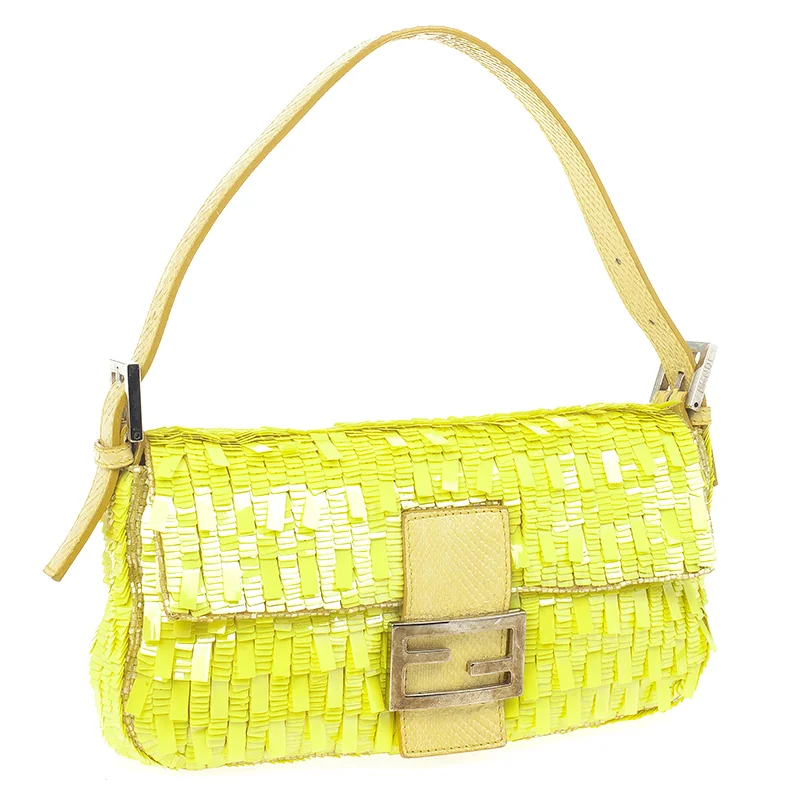
Long before “it” bag became a marketing term, there was one bag that earned the label by accident: the Fendi Baguette. It didn’t need a hashtag or a waitlist manufactured by a brand’s PR team. It got famous because women who could afford almost anything chose to carry this one, and because a fictional New York columnist tucked it under her arm on primetime television until it became shorthand for a certain kind of style confidence.
At The Private Bag Edit, we see a lot of “it” bags come and go. Few have the staying power of the Baguette, and even fewer have the layered history that makes it genuinely interesting to collectors rather than just recognizable to casual shoppers. This piece walks through where the bag came from, how it’s evolved, what separates a smart purchase from a costly mistake, and how to tell a real one from the flood of counterfeits that have followed it for two and a half decades.
The Birth of an ‘It’ Bag: Fendi Baguette History #
Fendi introduced the Baguette in 1997, designed by Silvia Venturini Fendi, the house’s accessories director and granddaughter of the founders. It debuted on the runway that season and, within a year or two, had done something very few handbags manage: it crossed from fashion editorial into everyday cultural vocabulary.
The name is literal. The bag is short, rectangular, and meant to be carried tucked snugly under the arm the way a French baguette is carried home from the bakery, not swung from the shoulder or clutched by the handle. That silhouette and carrying method were unusual for the late ’90s, when shoulder bags and structured totes dominated, and it’s part of why the Baguette stood out immediately.
Its real cultural launchpad, though, was Sex and the City. Carrie Bradshaw carried a Baguette in one of the show’s most quoted moments, when she’s mugged and, rather than plead for her money, corrects her attacker: “It’s a Baguette.” The line worked precisely because audiences already understood the bag was a status object, not just an accessory. That single scene did more for the bag’s mythology than any ad campaign could have, and it’s the reason “the Carrie bag” is still shorthand many buyers use when searching for this style today.
Design Evolution: Materials, Silhouettes & Artist Collaborations #
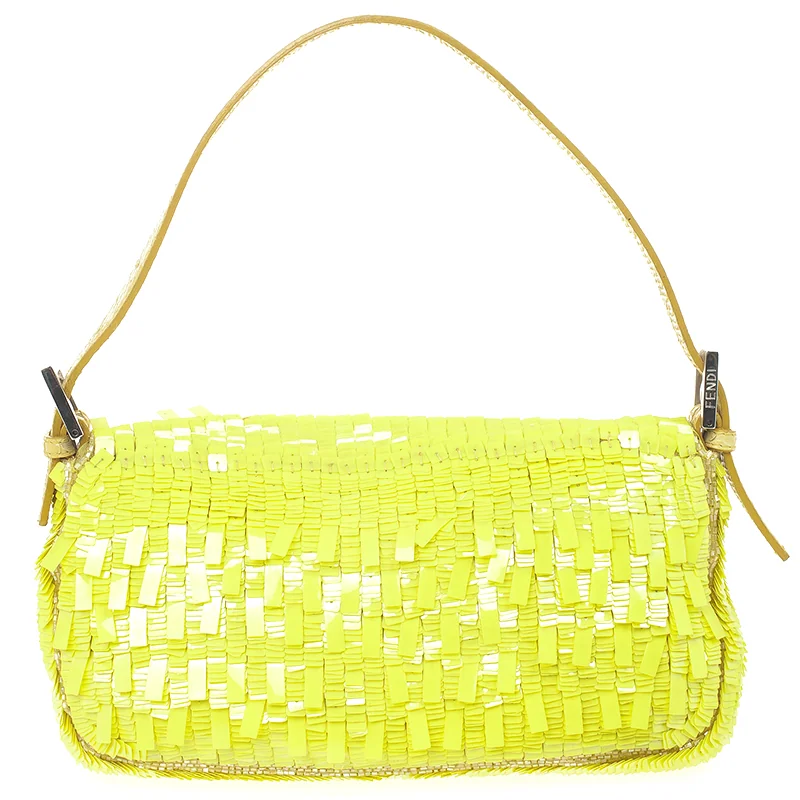
The Baguette’s core shape has stayed remarkably consistent, but Fendi has never treated it as a static design. Over the years it’s been produced in the house’s signature Zucca canvas (the FF monogram jacquard), smooth calfskin, quilted nappa, and, at the higher end, exotic skins like python and crocodile. The example most people picture when they hear “Fendi Baguette” is the FF logo canvas version, but the leather and exotic iterations have historically carried it into more serious collector territory.
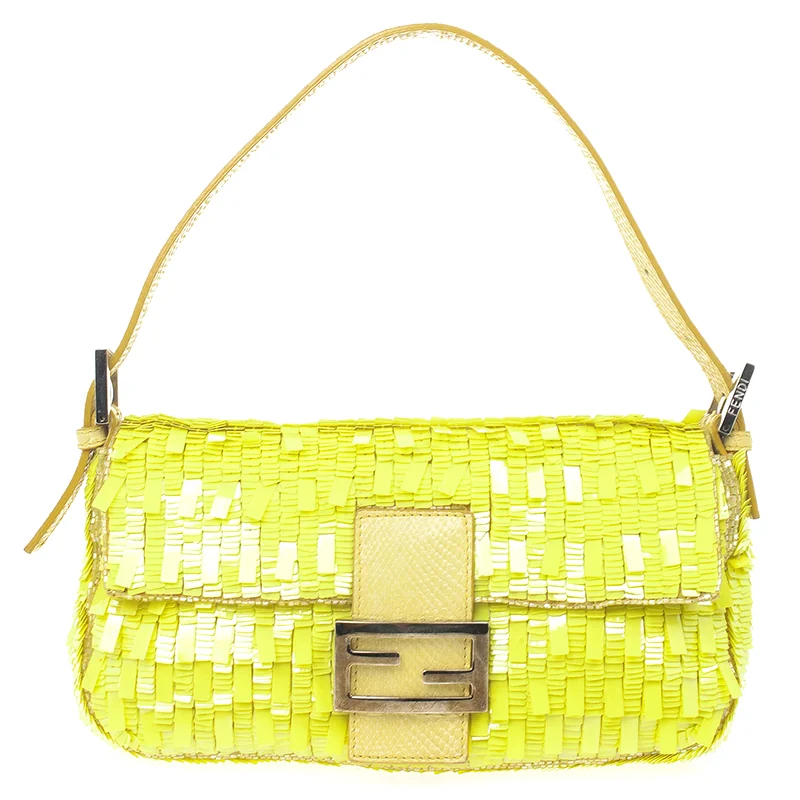
Embellishment has been a recurring theme rather than a one-off gimmick. Sequined Baguettes, like the yellow sequin-and-python version pictured with this piece, show how far Fendi has pushed the silhouette away from a basic day bag and into eveningwear. Beading, embroidery, fur trim, and mixed exotic panels have all made appearances across different seasons, which is part of why no two vintage Baguettes are quite alike.
Fendi has also used the bag as a canvas, literally, for outside collaborators. Rather than keeping the design locked to in-house teams, the brand has periodically invited designers and artists to reinterpret the Baguette in their own visual language, producing limited editions that read more like wearable art pieces than standard retail stock. For collectors, these collaboration pieces tend to be the ones worth tracking down first, since production runs were smaller and the design details are harder to replicate convincingly.
A quick note on condition across materials #
Exotic skins and heavily embellished Baguettes are beautiful, but they’re also the versions most likely to show real wear. Python and crocodile can dry out and crack if stored without conditioning, sequins loosen and drop off with repeated handling, and beaded panels are prone to thread fatigue at stress points like the strap attachments. If you’re buying secondhand, factor restoration cost into your offer, because rebeading or re-sequining a bag properly is not cheap and not something every leather specialist can do well.
Cultural Impact: From the Anniversary Book to the myBaguette App #
Fendi marked the Baguette’s 15th anniversary in 2012 with a dedicated book chronicling its design history and its place in fashion culture, a rare move for an accessory rather than a couture line, and a clear signal that the house considered the bag a piece of design history worth documenting formally.
More recently, Fendi extended that legacy into a digital format with the myBaguette app, which lets users design and customize their own virtual version of the bag, choosing materials, colors, and embellishments the way they might spec a real order. It’s a small thing, but it says a lot: nearly three decades after launch, Fendi is still actively building engagement around this specific bag rather than letting it coast on nostalgia.
That longevity is also visible in resale and collector markets. Unlike a lot of 2000s “it” bags that have faded into vintage-bin territory, the Baguette has held cultural relevance through several Fendi relaunches and reissues, including a widely covered 2019 revival that brought the silhouette back to a new generation of buyers while reintroducing collectors to the original.
Buying Guide: What to Look for in a Fendi Baguette #
Buying a Baguette, especially secondhand, means paying attention to a few things beyond “does it look cute.”
Size and function first. The classic Baguette is genuinely small, generally running around 9-10 inches wide and 5-6 inches tall, with a narrow depth that keeps the silhouette flat under the arm. Interior space is limited to essentials, think phone, cards, keys, lipstick, not a bag built for daily overpacking. If you need a functional everyday carry, know that going in rather than being disappointed after purchase.
Rare editions carry a premium for a reason. Zucca canvas versions are the most common and most affordable entry point. Exotic skin, fully beaded, sequined, or artist-collaboration Baguettes are scarcer and command significantly higher resale prices, sometimes multiples of a standard canvas bag in comparable condition. If a “rare” exotic or embellished piece is priced close to a basic canvas bag, that’s a red flag rather than a bargain.
Check hardware quality closely. Genuine Baguette hardware has real heft and a clean, cool-to-the-touch metal finish. The FF clasp and any buckles should sit flush against the leather with no glue residue or uneven gaps. Loose, tarnishing, or oddly lightweight hardware is one of the most common tells on a lower-quality reproduction.
Condition drives resale value more than age does. A well-kept 2000s canvas Baguette will often outsell a newer bag with dry leather, faded print, or a sagging silhouette. Buyers researching resale value should look at completed sales for the exact material and embellishment type, not just “Fendi Baguette” broadly, since price spread between a basic canvas bag and a rare exotic piece can be enormous.
Care determines how long that value holds. Zucca canvas can generally be spot cleaned carefully, but exotic skins need conditioning to prevent cracking, and sequined or beaded bags should be stored flat, away from friction, ideally in their own dust bag rather than stacked with other pieces. Skipping this is the single most common way owners quietly destroy resale value over a few years of casual storage.
[[[[Authentication Tips](/buying-guides/celine-triomphe-bag-guide-sizes-price-real-vs-fake/)](/buying-guides/dior-book-tote-guide-history-styles-fakes/)](/brands/burberry-monogram-tb-bag/)](/bag-care/exotic-skin-handbags-what-youre-really-paying-for/): Spotting a Real vs Fake Fendi Baguette #
The Baguette’s fame has made it one of the more heavily counterfeited Fendi styles, so a careful check matters whether you’re buying from a reseller, an auction site, or even a boutique consignment shop.
Zucca print alignment. On an authentic bag, the FF monogram print is symmetrical and centered on each panel, with the pattern matching up cleanly at seams. Off-center, blurry, or oddly spaced logos are a strong sign of a counterfeit.
Stitching consistency. Genuine Fendi stitching is tight, even, and consistent in thread color and spacing along every edge. Loose threads, visible glue at seams, or stitching that changes tension partway down a seam usually points to a fake.
Hardware stamps. Authentic hardware, clasps, zipper pulls, and feet, is typically stamped with “FENDI” cleanly and legibly, with sharp lettering rather than shallow or smudged engraving. Weight matters too: real hardware feels substantial, not hollow or tinny.
Interior serial and date details. Look for the leather interior tag with a serial number, and check that the font, spacing, and tag placement match verified authentic examples from the same era. Fendi has changed tag formats over the decades, so the details should be appropriate to when that specific bag was produced, not a mismatched modern tag on a supposedly vintage bag.
Dust bag and packaging. Authentic Fendi dust bags use consistent branding, stitched (not printed-on cheap fabric) logos, and a drawstring closure that feels sturdy. A flimsy, thin, or oddly colored dust bag paired with an otherwise “vintage” bag is worth questioning.
When in doubt, get a professional opinion. Photos alone can’t always catch a well-made fake, particularly on rare exotic or embellished pieces where counterfeiters put in extra effort because the resale upside is higher. A physical authentication service or an experienced specialist is worth the fee before you commit real money.
Why It’s Called the ‘Baguette’: The Story Behind the Name #
The Fendi Baguette gets its name from the way it’s meant to be carried, tucked under the arm against the body, the same way a French baguette is carried home from a bakery rather than swung on the shoulder or held by a top handle. Silvia Venturini Fendi designed the shape specifically around that gesture, which is why the proportions are long, narrow, and flat rather than boxy. It was a deliberate departure from the shoulder bags dominant at the time, and that under-arm carry became as much a part of the bag’s identity as the FF logo itself.
FAQ #
When did Fendi release the Baguette bag? Fendi launched the Baguette in 1997, designed by Silvia Venturini Fendi.
Why is it called the Fendi Baguette? Because it’s designed to be carried tucked under the arm, the way you’d carry a loaf of French bread, rather than worn on the shoulder.
Is the Fendi Baguette linked to Sex and the City? Yes. Carrie Bradshaw carried one in a widely quoted scene, and the show is a major reason the bag became a mainstream cultural reference point beyond fashion circles.
Are exotic skin or sequined Baguettes worth more than canvas versions? Generally yes. Python, crocodile, beaded, and sequined editions are produced in smaller numbers and typically command higher resale prices than the standard Zucca canvas version, assuming comparable condition.
How can I tell if a Fendi Baguette is authentic? Check Zucca print alignment, stitching consistency, hardware weight and stamping, the interior serial tag, and dust bag quality. If any of these feel off, or you’re buying a high-value exotic or collaboration piece, get a professional authentication before purchasing.
Does the Fendi Baguette hold its value? Well-maintained pieces, particularly rare materials and collaboration editions, have generally held or increased in value over time, while heavily worn canvas versions in common colorways tend to trade closer to entry-level prices.
Related Articles #
- 5 Iconic Bags Named After Famous Women (Buying Guide)
- Fendi First Bag Guide: History, Design & Resale Value
- Fendi Baguette: History, Value & Buying Guide
- 5 Fendi Baguette Bags Worth Buying Secondhand
- Why the Chanel Crossbody Bag Never Goes Out of Style
Related guides
- Online Bag Authentication: What Photos Can and Cannot Prove
- Saint Laurent Envelope Bag: Real vs Fake Guide
- Inside a Million-Dollar Closet: Pre-Loved Hermès & More
- Meet Marwa Azzam Aldabbagh: Kelly Bag Authentication Expert
- How to Buy an Authentic Luxury Bag from China Safely
- New vs Pre-Owned Luxury Bags: Which Route Is Right for You?
- Chanel Bag Guide: What to Know Before You Buy
- Luxury Bag Houses


Keyword index