Introduction #
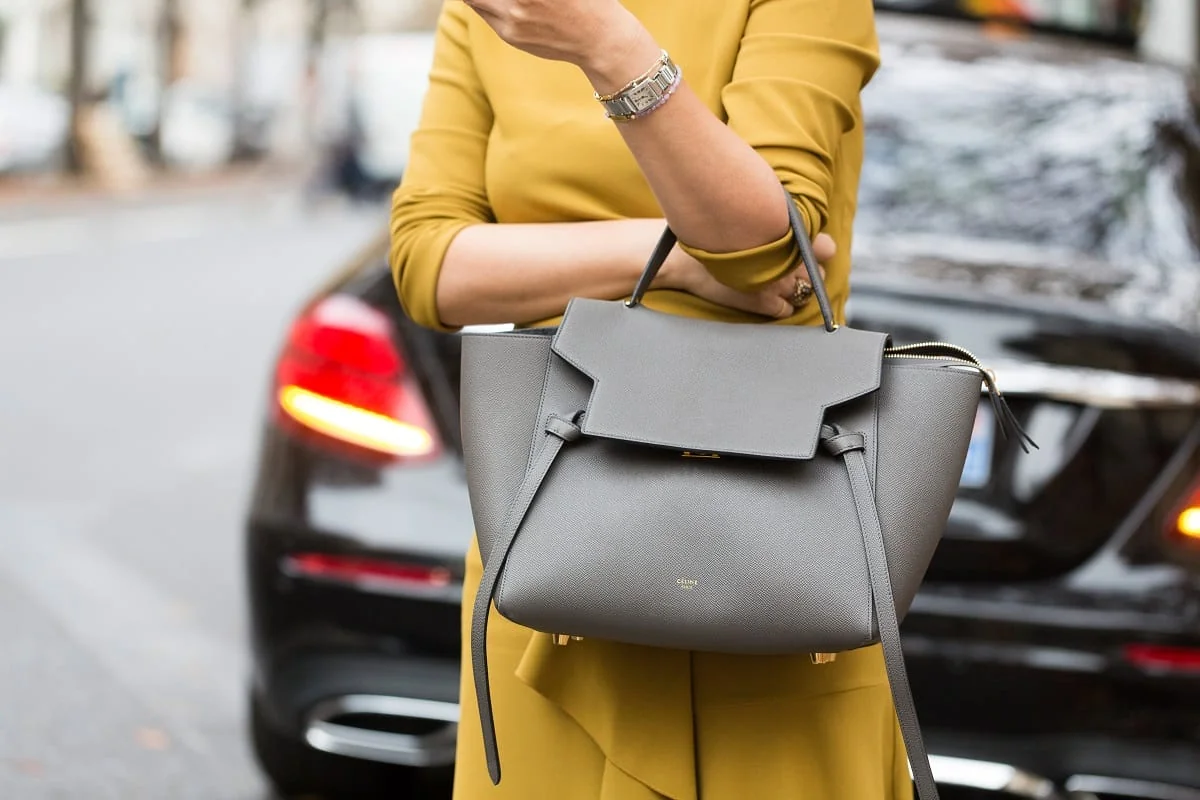
Every so often a bag comes along that doesn’t need a logo to be recognized across a room. The Celine Belt bag is one of those. This week we’re spotlighting it as our Bag of the Week, not because it’s new or trending on a hype cycle, but because it has quietly stayed relevant for over a decade, which in handbag years is a lifetime.
The Belt bag belongs to the Phoebe Philo era of Celine, a period fashion insiders still reference as a benchmark for minimalist luxury. Philo built a wardrobe of bags that prioritized architecture over ornamentation, and the Belt was one of her most wearable ideas: a structured, trapezoidal tote closed with what looks like a leather belt wrapped around it. No obvious branding, no shouting for attention, just a shape that photographs well and holds up in daily use. That combination is exactly why it still shows up on resale platforms, in street-style galleries, and on the wish lists of buyers who want a Celine bag that doesn’t scream “logo bag.”
The Design Story Behind the Celine Belt Bag #
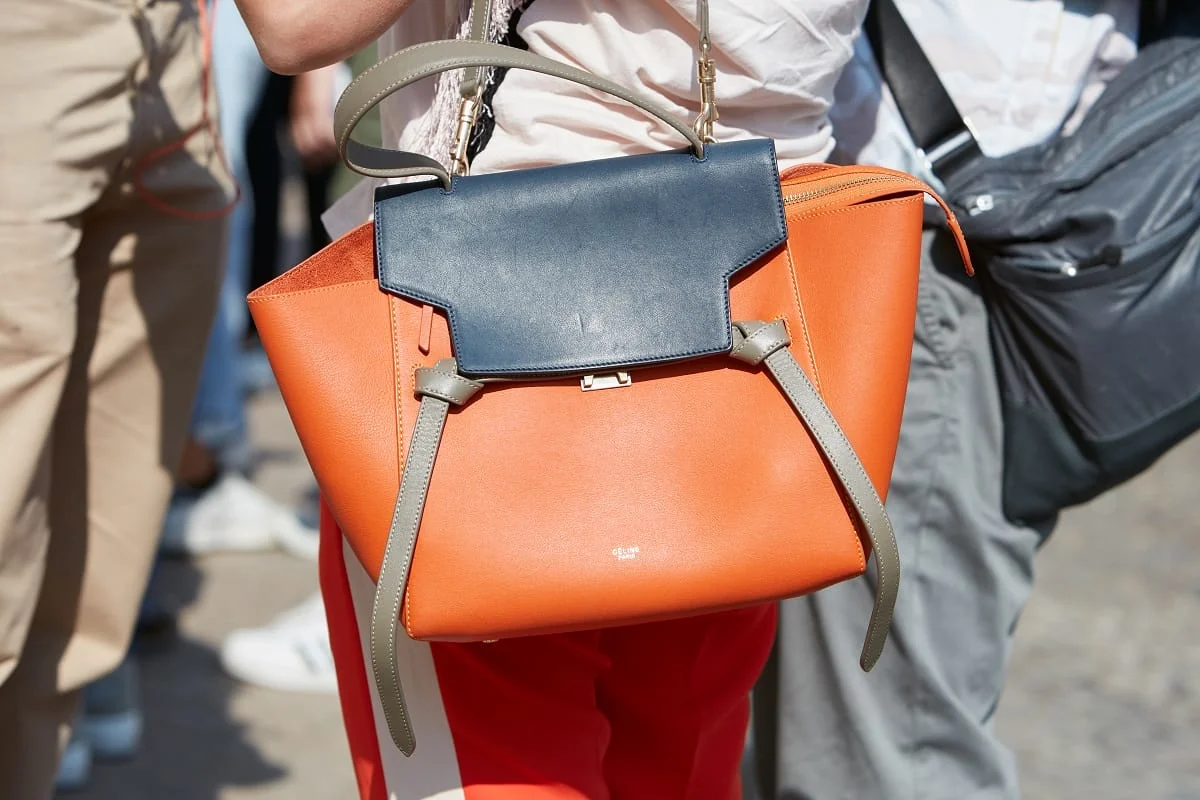
The Celine Belt bag debuted as part of the Pre-Fall 2014 collection, arriving during Philo’s tenure as creative director, the same stretch that produced the Luggage tote and the Trapeze bag. Those three bags form a kind of unofficial trilogy that defined Celine’s identity in the early 2010s: sculptural, deliberately unfussy, and built around a single strong visual gesture rather than layered detailing.
Where the Luggage tote made its statement through boxy proportions and winged side panels, and the Trapeze leaned on its geometric silhouette and contrast paneling, the Belt bag’s signature move is literal: a belt-like strap wraps around the body of the bag and knots at the front, doing double duty as both closure and decoration. It’s a design that reads as almost utilitarian at first glance, which was very much the point. Philo’s Celine was never about maximalism. The Belt bag’s appeal comes from restraint executed with obsessive attention to proportion, stitching, and leather quality.
What’s kept the design relevant after Philo’s departure and Hedi Slimane’s subsequent overhaul of the brand (including a shortened name, “Celine” without the accent-driven “CÉLINE” branding and a very different aesthetic direction) is that the Belt bag was never dependent on a logo or a trend cycle to sell. It’s a shape-first bag, and shapes age better than branding does.
Materials, Colors, and Sizes #
Celine has produced the Belt bag across a genuinely wide material range, which is part of why no two examples on the resale market look quite alike. You’ll find it in smooth calfskin, grained calfskin, suede, and exotic options including crocodile-embossed and genuine crocodile leather. Colorways run from Celine’s signature neutrals (black, tan, camel, ecru) to bolder seasonal releases, plus tricolor and colorblocked versions that play with the trapezoidal panels as a canvas.
The bag comes in four sizes, and picking the right one matters more with this style than with most totes because the proportions shift noticeably between them:
- Mini: 28 x 23 x 17 cm — the most practical size for daily use, fits a tablet, wallet, and everyday essentials
- Micro: 24 x 20 x 13 cm — a slightly more compact everyday option, still functional but leaner
- Nano: 20 x 20 x 10 cm — closer to a going-out bag, holds phone, cards, keys, and little else
- Pico: 15 x 13 x 9 cm — essentially a micro-bag or bag charm-adjacent size, more statement piece than workhorse
If you’re buying your first Belt bag, size is the decision that will determine whether it becomes a daily companion or a bag that sits in the closet looking nice. The mini is the size most people should default to unless they specifically want a smaller silhouette.
Signature Details Up Close #
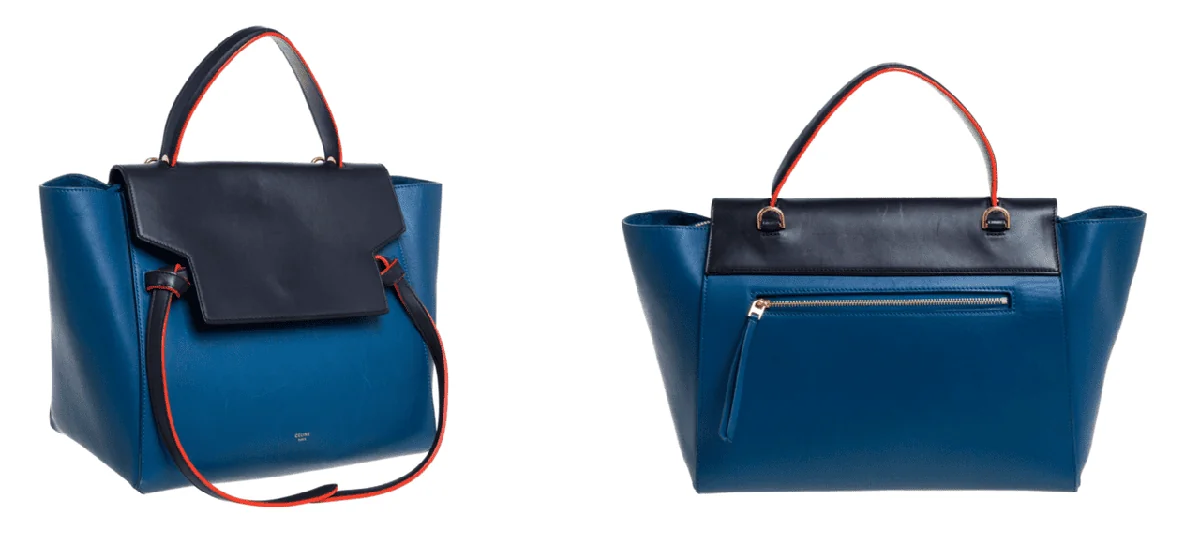
The example we’re using to illustrate this feature is a tricolor mini Belt Top Handle, and it’s a good reference point for the construction details that separate a genuine Celine Belt bag from the countless lookalikes on the market.
The trapezoidal shape is the first thing to check. Genuine Belt bags have a structured, wider-at-the-top silhouette with a flat bottom reinforced by metal studs, not a soft or slouchy base. The bottom studs aren’t decorative, they’re functional, protecting the leather from wear when the bag is set down.
The knotted belt closure is the bag’s defining feature and the easiest place to judge build quality. On an authentic piece, the belt wraps around the front flap, knots at the sides with clean, symmetrical loose ends, and the flap itself slides under the belt before latching onto a metal clasp hidden beneath. The tension in the knot should feel intentional, not floppy, and the leather used for the belt strap should match the weight and grain of the rest of the bag.
Underneath the flap, there’s a secondary zip closure protecting the main compartment, which is lined in suede on most versions. This double-layer security (belt closure plus zip) is a practical detail that a lot of buyers overlook until they’ve actually used the bag on a commute.
Around the back, look for a zip pocket and dual D-rings, which allow a detachable shoulder strap to be attached for hands-free wear. On top, a single carry handle rounds out the silhouette. Hardware is understated gold-tone on most pieces, and the only branding is a small embossed logo stamp, no plaques, no oversized lettering. If a bag you’re considering has loud, shiny hardware or an oversized printed logo, that’s already a red flag worth investigating further.
Why the Celine Belt Bag Endures #
The Belt bag’s longevity isn’t accidental. It hit the market at a moment when minimalist “quiet luxury” bags were becoming a serious counterpoint to logo-heavy It-bags, and it’s stayed relevant through several full swings of that pendulum since. Street-style photographers have consistently caught it on fashion editors and bloggers over the past decade, and it remains one of the more requested archive Celine pieces on resale platforms.
Part of the appeal is versatility. The trapezoidal shape works with tailoring as easily as it works with denim, and the range of sizes means it can function as a work bag or an evening piece depending on which one you own. Part of it is scarcity dynamics: because it’s a discontinued-era Philo design rather than a current production style, well-kept examples in desirable colors or exotic leathers have become genuinely harder to source, which supports resale demand.
That said, “collectible” doesn’t automatically mean “appreciating asset.” Most Belt bags trade below their original retail price on the resale market, the exceptions being rare exotics, limited colorways, or pristine examples of harder-to-find sizes. Buyers going in expecting guaranteed investment returns should recalibrate. The realistic case for buying one is that you get a well-made, design-relevant bag that holds value better than most current-season releases, not that it will necessarily appreciate.
Buying Tips: Choosing and Authenticating Your Celine Belt Bag #
Choosing size and color. If this will be a daily bag, go mini. If you already own a workhorse tote and want something for lighter days, micro or nano make more sense. Pico is a fun third or fourth bag but impractical as a primary piece. On color, black and tan hold [resale value](/brands/celine-luggage-tote-guide-sizes-history-resale-value/) best because they’re the most universally wearable; tricolor and exotic pieces are more collectible but narrower in appeal, which can mean a longer resale wait.
Authentication checkpoints. The Belt bag’s minimalist design is unfortunately also what makes it a frequent counterfeit target, since there’s less obvious branding for buyers to scrutinize. When buying pre-owned, check:
- Leather quality and smell. Genuine calfskin has a distinct grain and supple feel. Stiff, plasticky leather or a strong chemical smell are warning signs.
- Stitching. Celine’s stitching is tight, even, and free of loose threads, particularly around the belt attachment points and the base studs.
- Hardware weight and finish. Authentic hardware has heft and a consistent gold-tone finish that doesn’t flake or tarnish quickly. Lightweight, overly shiny hardware is a common tell on fakes.
- Logo stamp. The embossed logo should be crisp, evenly spaced, and correctly proportioned. Blurry, too-deep, or misaligned stamping is a red flag.
- Interior lining and hardware stamps. Check the suede lining quality and look for a date/serial stamp consistent with genuine Celine production for that era.
- Seller documentation. Ask for original receipts, dust bags, or authenticity cards where available, and buy from platforms that offer in-house authentication rather than unverified marketplace listings.
If you’re not confident authenticating a piece yourself, buying through a reseller that authenticates inventory before listing (as opposed to a peer-to-peer marketplace) removes most of the risk, even if it costs slightly more.
Current Market Value and Resale Trends #
Original retail pricing for the Belt bag varied by size and material, roughly landing in the $1,900 to $2,600 range for calfskin mini and micro sizes when they were in current production, with exotic leathers like crocodile pushing well past $10,000. Those figures moved over the bag’s production run, so treat them as a general reference rather than a fixed number.
On the resale market today, condition and material do most of the work in determining price. As a rough guide:
- Calfskin mini/micro in good condition: roughly $900–$1,800
- Nano and pico in good condition: roughly $700–$1,400
- Rare colorways, tricolor, or limited editions: often $1,500–$2,500+
- Exotic leathers (crocodile, python): highly variable, frequently $3,000–$8,000+ depending on condition and species
These ranges shift with the broader resale market and should be checked against current listings before you buy or sell, since luxury resale pricing moves with demand cycles the same way sneakers or watches do. The reliable pattern is that well-kept mini and micro sizes in neutral leather colors are the most liquid, meaning they sell fastest and hold value most predictably, while niche sizes or bold exotics take longer to move but can command a premium when the right buyer shows up.
How the Belt bag compares to Celine’s other Philo-era icons:
| Bag | Debut | Signature Feature | Typical Retail (new) | Resale Range | Best For |
|---|---|---|---|---|---|
| Belt bag | Pre-Fall 2014 | Knotted belt closure, trapezoidal shape | ~$1,900–$2,600 (calfskin) | ~$700–$2,500+ | Daily minimalist tote, versatile sizing |
| Luggage tote | 2010 | Boxy structure, winged side panels | ~$2,200–$3,200 | ~$900–$2,200 | Structured work tote, bold silhouette |
| Trapeze | 2011 | Geometric shape, contrast paneling | ~$3,000–$3,900 | ~$1,200–$2,800 | Statement piece, color-blocking fans |
| Box | 2011 | Compact rigid box shape, top handle | ~$2,300–$3,000 | ~$900–$2,000 | Evening/occasion bag, smaller capacity |
The Belt bag sits in the middle of this lineup on price but arguably has the broadest everyday utility, which is a big part of why it’s remained the most consistently worn of the four rather than the most Instagrammed.
FAQ #
Is the Celine Belt bag still in production? No. It debuted under Phoebe Philo in 2014 and was discontinued after her departure and Celine’s rebrand under Hedi Slimane. Every Belt bag on the market now is either archive retail stock or pre-owned.
What’s a fair price to pay for a pre-owned Celine Belt bag? For a calfskin mini or micro in good condition with no major flaws, expect to pay somewhere between $900 and $1,800. Prices climb for rare colorways or exotic leathers and drop for visible wear, missing hardware, or damaged interiors.
How can I tell a real Celine Belt bag from a fake? Focus on leather quality, stitching precision, hardware weight, and the crispness of the embossed logo stamp. The bag’s minimal branding makes it a common counterfeit target, so buying from a platform with in-house authentication is the safest route if you’re not experienced with Celine specifically.
Which size Belt bag should I buy for everyday use? The mini (28 x 23 x 17 cm) is the most practical for daily carry. Micro works if you prefer a smaller profile but still want functional capacity. Nano and pico are better suited to evenings or as secondary bags.
Does the Celine Belt bag hold its value? Reasonably well for a discontinued design, especially in neutral colors and calfskin, but most examples resell below original retail. Rare colorways and exotic leathers are the exception and can command a premium over time.
What materials should I look for if I want the most durable option? Grained calfskin tends to hide minor scuffs and wear better than smooth calfskin, making it a more forgiving daily-use choice. Suede and exotic leathers require more careful handling and are better suited to occasional wear.
Related Articles #
- Celine Triomphe Bag Guide: Sizes, Price & Real vs Fake
- Fendi First Bag Guide: History, Design & Resale Value
- Why the Chanel Crossbody Bag Never Goes Out of Style
- Handbag Trends 2024: The Bags You’ll Actually Wear
- Celine Micro Luggage Tote: Tricolor Guide & Value
Related guides
- Online Bag Authentication: What Photos Can and Cannot Prove
- Inside a Million-Dollar Closet: Pre-Loved Hermès & More
- Meet Marwa Azzam Aldabbagh: Kelly Bag Authentication Expert
- Luxury Handbag Authentication Process Explained
- How to Buy an Authentic Luxury Bag from China Safely
- New vs Pre-Owned Luxury Bags: Which Route Is Right for You?
- Chanel Bag Guide: What to Know Before You Buy
- Luxury Bag Houses


Keyword index