Introduction #
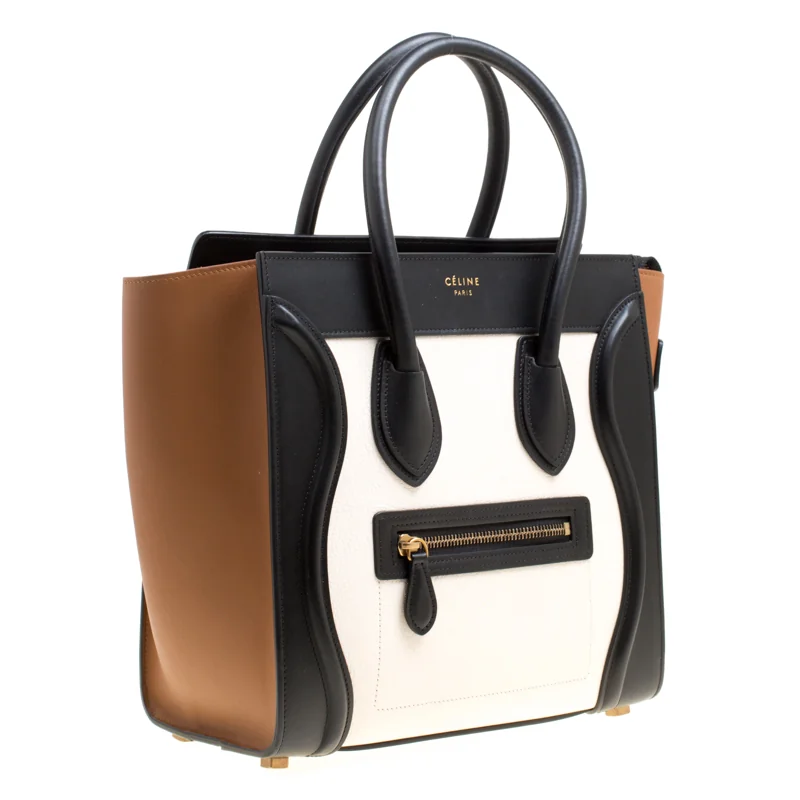
A handbag can do two jobs at once: signal your taste in a single glance, and quietly hold value while everything else in a wardrobe depreciates. Not many pieces manage both convincingly, which is exactly why certain designs keep resurfacing on resale platforms years after they first shipped. This week’s spotlight is one of them: the Celine Micro Luggage Tote in a tricolor leather combination, a bag that built its reputation on proportion and restraint rather than logos, and has held its footing in the secondhand market long after the hype cycle that launched it faded.
This guide looks at where the Luggage Tote came from, what actually makes the Micro size worth the asking price, and — because this is a bag that gets counterfeited often enough to matter — how to check condition and authenticity before you commit to a pre-owned purchase.
The Celine Luggage Tote’s Origins and Legacy #
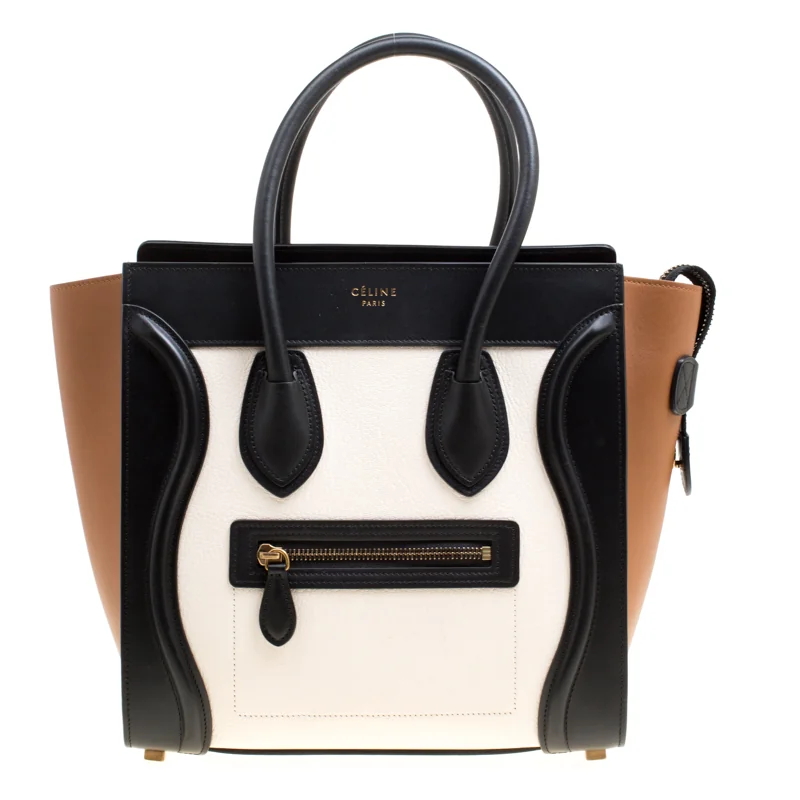
Phoebe Philo introduced the Luggage Tote for Celine’s Spring 2010 collection, and it landed at a moment when the fashion press was tired of monogram-heavy It bags. The silhouette did the opposite of what logo-driven bags were doing: a structured trapeze shape, winged sides that folded rather than snapped shut, and color-blocked leather panels that let the construction speak for itself. Within two seasons it had “IT bag” status, the kind that gets tracked by waitlists and street-style blogs rather than ad campaigns.
Celine expanded the line into three sizes — Nano, Mini, and Micro — largely in response to demand for a more manageable everyday version of the original Luggage Tote, which ran large and heavy. Here’s roughly how they compare:
| Size | Best for | General feel |
|---|---|---|
| Nano | Evening or minimal daily carry | Compact, closer to a handheld clutch-tote hybrid |
| Micro | Daily use, phone/wallet/light essentials | The most balanced proportions of the three; still reads as a “real” tote |
| Mini | Work bag, more capacity needed | Noticeably roomier, takes an A5 notebook or light tablet comfortably |
The Micro is the size most collectors point to as the sweet spot. It’s large enough to avoid looking like a novelty bag but small enough to wear cross-body-adjacent on the arm without the strain that the Mini and full-size versions can bring on. If you’re buying your first Luggage Tote and unsure which size, Micro is the safer bet for versatility.
On dimensions: expect roughly 11 inches wide, 9 inches tall, and 5.5 inches deep at the base, with an empty weight around 1.5 to 2 pounds depending on leather weight and hardware. These numbers vary slightly across production years since Celine adjusted panel thickness and lining over the model’s run, so always cross-check the exact measurements listed on the specific pre-owned bag you’re considering rather than assuming every Micro is identical.
Design and Craftsmanship Up Close #
What separates the Luggage Tote from other structured totes of its era is how many small design decisions work together without any single one shouting for attention.
The tricolor treatment is the obvious hook — Celine paired leathers in contrasting tones across the front panel, sides, and base, and the color blocking was engineered around the bag’s construction lines rather than applied decoratively. On the front, a wave-shaped piped seam breaks up the panel, sitting just above a sans-serif embossed “CELINE” logo stamp and a small functional zip pocket, which is one of the few practical exterior storage spots on the bag.
The wings are the signature detail. Rather than a top zip or magnetic closure running the full width, the sides fold inward and get cinched by the dual rolled top handles, which is what gives the silhouette its slightly slouched, sculptural stance when the bag isn’t overstuffed. Those handles are hand-rolled leather, thick enough to hold shape without a metal frame insert, which is worth noting because handle sag or cracking is one of the more common condition issues you’ll encounter on the resale market.
Inside, the bag is fully leather-lined rather than fabric, which was a deliberate quality signal from Philo’s design team — most totes at this price point used canvas or microfiber linings even in the early 2010s. The base is protected by four small metal feet, a detail that matters more than it sounds: bags without feet develop base wear and discoloration far faster, and feet condition is one of the first things an authenticator or grader checks on a used Luggage Tote.
Celebrity Appeal and Material Variations #
The Luggage Tote’s early momentum owed a lot to how fast it moved through celebrity street-style coverage — the Kardashian-Jenner family and the Olsen twins were photographed with it repeatedly through 2011 and 2012, at a point when the bag was still relatively hard to find in stores. That kind of organic, repeated visibility (rather than a single paid campaign) is part of why the design has aged into a recognizable classic instead of a one-season trend piece.
Beyond the standard tricolor calfskin, Celine produced the Luggage Tote in exotic and textured variations: python and lizard skins for a higher-tier price point, plus calf hair versions for a more tactile, seasonal option. These material variants matter for buyers thinking about resale, since exotic skins generally hold value better than standard calfskin but also carry more specific authentication and condition risks — python scales, lizard grain, and calf hair are all harder to convincingly fake well, but also show wear (scale lifting, hair shedding, dryness) differently than smooth leather does.
Is the Celine Micro Luggage Tote Worth the Investment? #
At original retail, the Micro Luggage Tote generally sat in the $2,300–$3,000 range depending on leather and year, with exotic skins priced well above that. On the pre-owned market today, tricolor calfskin Micros in good to excellent condition typically trade somewhere between $1,200 and $2,200, while python or lizard versions can run from $2,500 to $4,000+ depending on skin quality and condition. Treat these as general market ranges rather than fixed prices — actual resale value swings with color combination (rarer or discontinued color pairings command a premium), hardware condition, and overall wear.
Resale strength here comes down to three things. First, the design hasn’t been reissued or heavily modified since launch, so early tricolor pairings are effectively a closed set — no new supply is coming. Second, Celine under Hedi Slimane (starting 2018) moved away from the Philo-era silhouettes entirely, which paradoxically boosted demand for original Luggage Totes among buyers who specifically want the Philo design language and can no longer get it new. Third, structured leather totes in this size range tend to depreciate more slowly than trend-driven bags because they don’t rely on a logo or a single “moment” to stay desirable.
The honest downside: this isn’t a bag that appreciates the way a handful of Hermès styles do. It’s a hold-value purchase, not a flip-for-profit one. If you’re buying pre-owned expecting the price to climb meaningfully in a few years, temper that expectation — the more realistic case is that a well-kept Micro in a desirable colorway will resell close to what you paid for it, which is still a strong outcome relative to most designer bags in this price tier.
Buying Pre-Owned: What to Check Before You Purchase #
Buying secondhand is where you actually capture the value case above, but it’s also where due diligence matters most. A few things worth checking before you commit:
- Ask for condition grading, not just photos. Reputable resale platforms grade bags on a scale (commonly Pristine, Excellent, Very Good, Good, Fair) based on corner wear, handle condition, interior staining, and hardware tarnish. Get the specific grade and read what it covers — “Excellent” on one platform can mean something different than on another.
- Request close-up shots of the base feet, handle rolls, and zip pull. These are the first areas to show honest wear and the first areas a seller might crop out of listing photos.
- Confirm the leather type matches the listing. Tricolor calfskin, python, and calf hair have very different care needs and different resale ceilings — don’t pay exotic-skin adjacent prices for a calfskin bag based on vague photos.
- Ask about the interior. Leather-lined interiors on the original Luggage Tote should show minimal cracking if cared for; heavy interior wear on a bag marketed as lightly used is a red flag worth questioning directly.
- Buy from a platform or seller that offers an authentication guarantee. This matters more than almost anything else on this particular model, for reasons covered next.
Authenticity Check: Spotting a Real vs Fake #
The Luggage Tote’s popularity made it one of Celine’s most counterfeited silhouettes through the early-to-mid 2010s, and counterfeit quality on this specific bag improved fast, so relying on “it looks fine in photos” isn’t enough.
Logo and stamping. The embossed “CELINE” logo on genuine bags uses a clean, evenly spaced sans-serif stamp with consistent depth. Shallow, uneven, or slightly misaligned embossing is one of the most common tells on counterfeits.
Stitching. Authentic Luggage Totes have tight, even stitching with no loose threads, particularly along the wave piping on the front panel — this seam is one of the harder details for counterfeiters to replicate cleanly because it requires precise leather cutting before stitching, not just decorative topstitching.
Hardware and feet. Genuine metal feet are evenly set, matched in tone to the other hardware, and don’t wobble. Fakes often use lighter, cheaper metal that discolors faster or feet that are slightly misaligned.
Interior lining and date stamp. Real bags are leather-lined throughout, not partially lined with fabric panels to cut cost. Check for the interior date/production stamp — Celine used a code system tied to production batches, and genuine bags have this cleanly embossed rather than printed or stamped shallowly.
Leather smell and hand-feel. This sounds unscientific, but it’s one of the more reliable checks in person: genuine calfskin has a distinct, rich leather scent and a supple but structured hand-feel. Cheap PU or bonded leather used in fakes tends to smell faintly chemical and feels stiffer or plasticky at the edges.
Proportions. Counterfeiters frequently get the wing shape and handle roll thickness slightly wrong because these are hand-finished details. If the wings look flat or the handles look uniformly machine-rolled with no natural variation, treat that as a warning sign.
If you’re not confident doing this evaluation yourself, this is exactly the situation third-party authentication services and reputable resale platforms with in-house authentication teams exist for — the cost of a professional check is small relative to the risk of paying full pre-owned price for a counterfeit.
FAQ #
What’s the difference between the Nano, Mini, and Micro Luggage Tote? Size and capacity. Nano is the smallest and most compact, Micro sits in the middle and is the most versatile for daily wear, and Mini offers the most interior space for work or travel use.
How much does a Celine Micro Luggage Tote cost pre-owned? Standard tricolor calfskin versions generally trade between $1,200 and $2,200 depending on condition and colorway, while exotic skins like python or lizard can run $2,500 to $4,000+. Always confirm current pricing against active listings, since colorway rarity moves the number significantly.
Does the Celine Micro Luggage Tote hold its value? It holds value better than most non-monogram designer totes because the Philo-era design is discontinued and demand has stayed steady, but it’s not a strong appreciation asset. Expect it to hold close to purchase price rather than climb significantly.
What materials was it made in besides tricolor calfskin? Celine produced the Luggage Tote in python, lizard, and calf hair, in addition to smooth tricolor and solid calfskin combinations.
How do I know if a Celine Luggage Tote is authentic? Check the embossed logo depth and spacing, stitching quality along the wave piping, metal feet finish, interior leather lining and date stamp, and overall proportions of the wings and handles. When in doubt, use a professional authentication service before purchasing.
Related Articles #
- Celine Triomphe Bag Guide: Sizes, Price & Real vs Fake
- Céline Luggage Tote Guide: Sizes, History & Resale Value
- Handbag Trends 2024: The Bags You’ll Actually Wear
- 5 Luxury Handbag Accessories Every Collector Should Know
- Céline Luggage Tote: History & Size Guide
Related guides
- Online Bag Authentication: What Photos Can and Cannot Prove
- Inside a Million-Dollar Closet: Pre-Loved Hermès & More
- Meet Marwa Azzam Aldabbagh: Kelly Bag Authentication Expert
- Luxury Handbag Authentication Process Explained
- How to Buy an Authentic Luxury Bag from China Safely
- New vs Pre-Owned Luxury Bags: Which Route Is Right for You?
- Chanel Bag Guide: What to Know Before You Buy
- Luxury Bag Houses


Keyword index