Introduction#
Jimmy Choo built its name on party-ready heels and it-bags that photograph as well on a red carpet as they do on a subway platform. That combination of visibility and desirability makes it one of the more heavily counterfeited British luxury brands on the resale market, right alongside the usual suspects like Chanel and [[[[Louis Vuitton](/buying-guides/best-white-designer-dresses-2025/)](/authentication/how-to-spot-a-fake-louis-vuitton-bag/)](/buying-guides/most-popular-louis-vuitton-bags-2026/)](/brands/louis-vuitton-neverfull-insider-retail-story/). I’ve handled enough Jimmy Choo bags over the years, real and fake, to know that the differences are rarely obvious at a glance. They live in the details: the weight of a clasp, the angle of a letterform, the smell of the lining.
The good news is that Jimmy Choo’s construction standards are consistent enough that a trained eye can catch a fake within a few minutes of close inspection. You don’t need to be a professional authenticator. You need to know exactly where to look, and what “right” is supposed to look like before you’re standing in front of a bag deciding whether to hand over several thousand dollars. This guide walks through the checkpoints I actually use, in the order I use them.
Know the Iconic Styles Before You Shop#
Before you even get to logos and stitching, spend time learning the silhouettes Jimmy Choo is actually known for. Counterfeiters tend to work from photos, not from the original patterns, so proportions and hardware placement often drift from the real thing in ways that are easy to spot once you know what the genuine design looks like.
A few reference points worth studying:
- Lohla tote – A soft, slouchy tote body with a deliberately generous silhouette. The hardware is understated relative to the size of the bag, and the leather (often embossed) has an intentionally relaxed drape rather than a stiff, boxy shape.
- The round hobo – Recognizable by its curved body and the metal “JIMMY CHOO” lettering set into the base of the bag rather than on a hangtag. On fakes, this base lettering is frequently misaligned, too shiny, or simply missing.
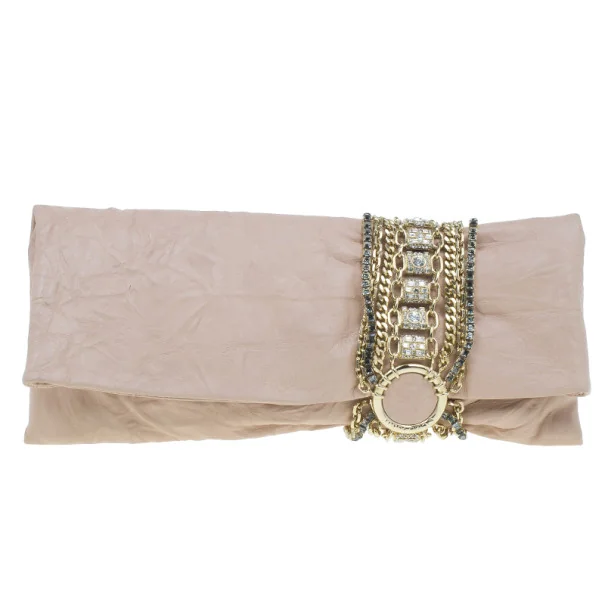
- Chandra clutch – A smaller, embellishment-heavy piece that pairs crystal or stud detailing with the brand’s signature hardware finish. Fakes tend to overdo the embellishment or use noticeably lighter-weight crystals that catch light differently.
The point isn’t to memorize every style Jimmy Choo has ever released. It’s to have at least one or two authentic references in your head (or better, in photos on your phone) so that when you’re looking at a listing or a bag in person, anything “off” about the proportions, hardware size, or leather texture registers immediately.
Check the Logo, Hardware and Colour Details#
The logo is where most counterfeits fall apart, because it’s genuinely difficult to reproduce well and most factories don’t bother trying.
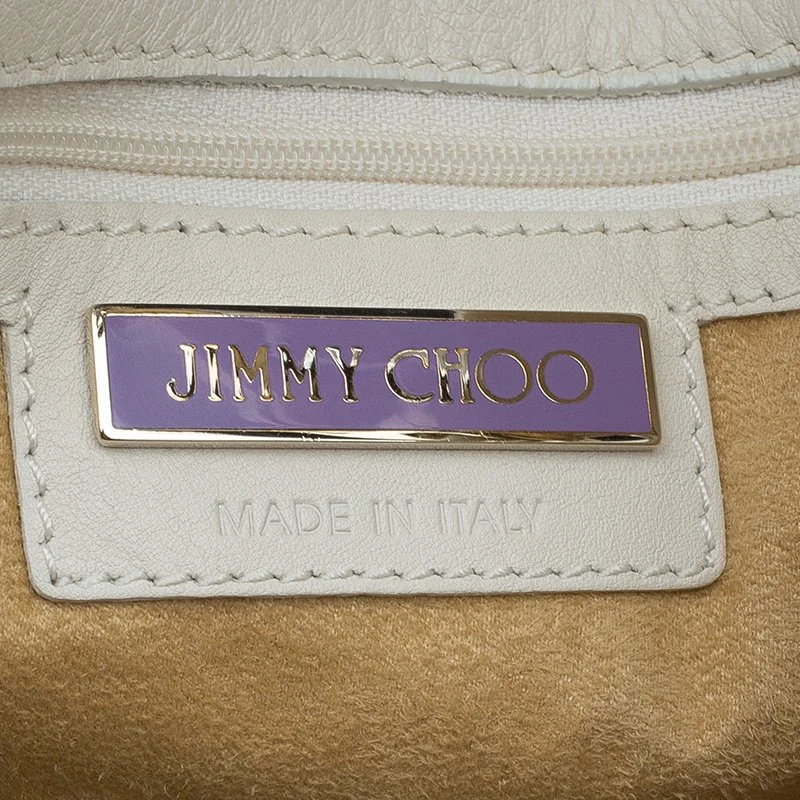
Start with the enamel plate. On an authentic bag, the Jimmy Choo logo sits on an enamel plate in a shade of purple, mounted on a leather tab that matches the bag’s exterior leather. Directly below the plate, “MADE IN ITALY” is stamped in capital letters. If the plate is glossy plastic instead of enamel, the wrong shade of purple, or the leather tab doesn’t match the bag, stop there.
Then look closely at the letterforms themselves, because this is where fakes consistently get sloppy:
- In “Jimmy,” the two vertical strokes of the “MM” are not identical. The left stroke is noticeably thinner than the right.
- In “Choo,” the crossbar on the “H” is not centered. It sits high, roughly 75-80% of the way up the letter, not in the middle the way most fonts default to.
- The two “O"s in “Choo” aren’t perfect circles. They have a slight dent, giving them a subtly oval, almost squeezed look rather than a clean round shape.
These are small details, but they’re consistent across genuine production, and counterfeiters almost never bother replicating font-level nuance like this. If the logo looks “close enough,” that’s usually the tell.
On hardware, feel the weight before you look at the finish. Genuine Jimmy Choo hardware has real heft and a cool, dense feel. Fakes are frequently lighter and have a plated look that wears through faster. Zipper pulls should carry the Jimmy Choo trademark stamped into a gold rectangular tab, not a generic pull. I’ve seen a fair number of fakes fitted with YKK zippers, which is a well-regarded zipper brand on its own but is not what appears on an authentic Jimmy Choo bag, and it’s a favorite shortcut for counterfeiters banking on buyers not knowing the difference. Close the zipper and look at the spine: genuine construction shows a fine, evenly spaced diamond-pattern texture running down the center. Cheap zippers on fakes usually skip this detail entirely.
Inspect Stitching, Leather and Craftsmanship#
Move inside the bag next. Jimmy Choo lines the interior of most handbags, including hobos and clutches, in a genuine mole-skin material paired with woven cotton. It has a distinct soft, slightly textured hand-feel that’s hard to fake convincingly. If the interior is satin, suede, canvas, or a slick synthetic instead, you’re not looking at an authentic bag, regardless of how good the exterior looks.
On the outside, run your fingers along every seam. Stitching should be even, tight, and straight, with no skipped stitches or visible glue residue at the seam edges. Leather should feel substantial without being stiff, and any embossing or texture should be consistent across panels rather than looking flatter in some areas than others, which usually signals a cheaper hide or a rushed tanning process.
Hardware closures deserve a separate check. If the bag has a metal clasp, look at the lettering engraved between the screw heads: it should be crisp and legible, not blurred or shallow. Press the clasp shut and listen. A genuine clasp closes with a dense, solid sound. Fakes frequently sound hollow because the metal underneath the plating is thinner. One detail I always check and rarely see discussed: every screw on an authentic Jimmy Choo bag has a flat head. If you spot a Phillips-head screw anywhere on the hardware, that’s a fake, full stop.
Verify Serial Numbers, Authentication Cards and Packaging#
Packaging alone won’t prove authenticity since boxes and cards can be replicated too, but missing or wrong packaging is a fast way to rule a bag out.
Check the interior tag for a serial or date code stamped cleanly into the leather or a fabric label, not printed on a loose paper insert. The stamping should be even and legible, not smudged or off-center. Any authentication or care card included should use the correct typeface and be printed on quality card stock; cheap, glossy paper or noticeably wrong fonts are red flags.
The dust bag is worth a close look too. Authentic Jimmy Choo dust bags read “JIMMY CHOO” and “LONDON,” in a substantial, not-flimsy fabric. Counterfeit dust bags tend to use a thinner material and a font that’s subtly, but detectably, wrong once you compare it side by side with a verified authentic one.
None of these packaging elements should be your only checkpoint. Treat them as supporting evidence that should agree with everything you’ve already found on the bag itself, not as standalone proof.
Watch for Price and Seller Red Flags#
A steep discount on a Jimmy Choo bag is possible, but it should come with a clear explanation, not just a low number. If a “brand new” bag is priced at a fraction of retail with no visible flaws mentioned and no return policy, be skeptical. Authentic secondhand pricing tends to track fairly closely with condition, style demand, and current resale trends. Prices that seem too good relative to the model’s typical resale range are usually too good for a reason.
Be equally wary of sellers who can’t or won’t answer basic provenance questions: where the bag was purchased, whether they have the original receipt, and why they’re selling. Marketplace listings with stock photos instead of real images of the actual item, sellers with no verifiable transaction history, and shops with generic or newly registered domains are all worth extra scrutiny. I’ve walked away from otherwise convincing listings simply because the seller got vague when I asked for a close-up of the interior tag or the enamel plate. A legitimate seller of a genuine bag has no reason to avoid those photos.
Where to Buy Authentic Jimmy Choo Handbags#
The safest option is always buying directly from Jimmy Choo boutiques or the brand’s official website, where authenticity isn’t a question. For preowned pieces, buy from resale platforms that authenticate every item before listing rather than marketplaces where anyone can post a listing unchecked. Established luxury consignment sites and dedicated pre-owned specialists typically have in-house or third-party experts physically inspect bags against the checkpoints covered above before they ever go up for sale, and they’ll usually provide detailed photos of the interior tag, hardware, and stitching on request.
If you’re buying peer-to-peer, insist on high-resolution photos of the enamel plate, the interior lining, the base stamping, and the zipper spine before you commit, and ask for a paid third-party authentication service before finalizing the sale if the seller won’t provide enough documentation on their own. It costs a small fee, but it’s a fraction of the risk you’re otherwise carrying.
FAQ#
How can I tell if a Jimmy Choo bag is real just from the logo? Look at the enamel plate color (a true purple, not plastic-looking), the “MM” in Jimmy (left stroke thinner than the right), the high-set crossbar on the “H” in Choo, and the slightly oval, dented shape of the two “O"s. Fakes rarely get all of these details correct at once.
Does Jimmy Choo use serial numbers on handbags? Yes, genuine bags carry a serial or date code stamped cleanly into an interior leather or fabric tag. It should be crisp and evenly stamped, not printed on a loose paper tag or smudged.
Are YKK zippers a sign of a fake Jimmy Choo bag? Generally, yes. Authentic Jimmy Choo bags use zippers stamped with the Jimmy Choo trademark on a gold rectangular pull, and the closed zipper spine shows a fine diamond pattern. A YKK-branded zipper on a bag sold as Jimmy Choo is a strong red flag.
What material is used inside authentic Jimmy Choo bags? Most Jimmy Choo handbags, including hobos and clutches, are lined in genuine mole-skin paired with woven cotton. A satin, suede, or canvas interior is inconsistent with authentic production.
Is it safe to buy a preowned Jimmy Choo bag online? It can be, provided you buy from a platform that authenticates items before sale or you arrange third-party authentication yourself. Avoid unverified peer-to-peer listings with vague provenance, stock photos, or prices well below typical resale value for that model and condition.
Related Articles#
- Designer Handbag Trends 2025: What’s Actually Worth Buying
- How to Spot a Fake Burberry Bag: Full Guide
- Sell Designer Handbags in 2025: Maximize Your Payout
- How Pre-Owned Luxury Fashion Is Reshaping the Industry


Keyword index