Introduction#
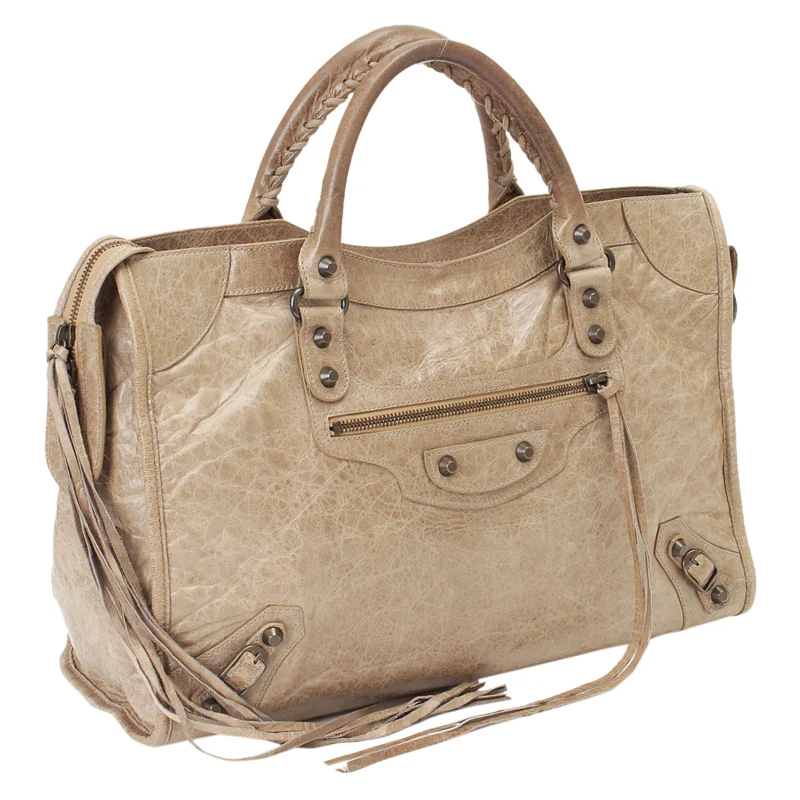
A Balenciaga Motorcycle bag—officially the City bag, though nobody in the industry calls it that—is one of the most copied handbags of the last two decades. That popularity is exactly the problem. Counterfeiters have had over twenty years to study this silhouette, which means the fakes circulating today are noticeably better than the ones I saw when the bag first hit its stride in the mid-2000s. A rigid, shiny reproduction that fools nobody is becoming rarer; a soft, distressed one that fools even a moderately experienced buyer is becoming more common.
This matters for two reasons beyond simple pride of ownership. First, resale value: an unauthenticated Balenciaga is worth a fraction of a verified one, and buyers on the secondary market will discount aggressively if you can’t prove provenance. Second, confidence—you should be able to carry the bag without wondering if a friend who owns three of them is going to spot something off.
I’ve handled genuine Motorcycle bags from nearly every era, from the early 2000s “First” family through later City and Mini City reissues, and I’ve also handled a fair number of convincing fakes sent to me for opinions. The tells are consistent, even as counterfeiters improve. Leather feel, hardware finish, tassel construction, stitching precision, and the interior tag all tell a story—and none of them lie on their own, but together they build a reliable picture. Below is how I actually check a bag, in the order I check it.
Leather Quality and Feel#
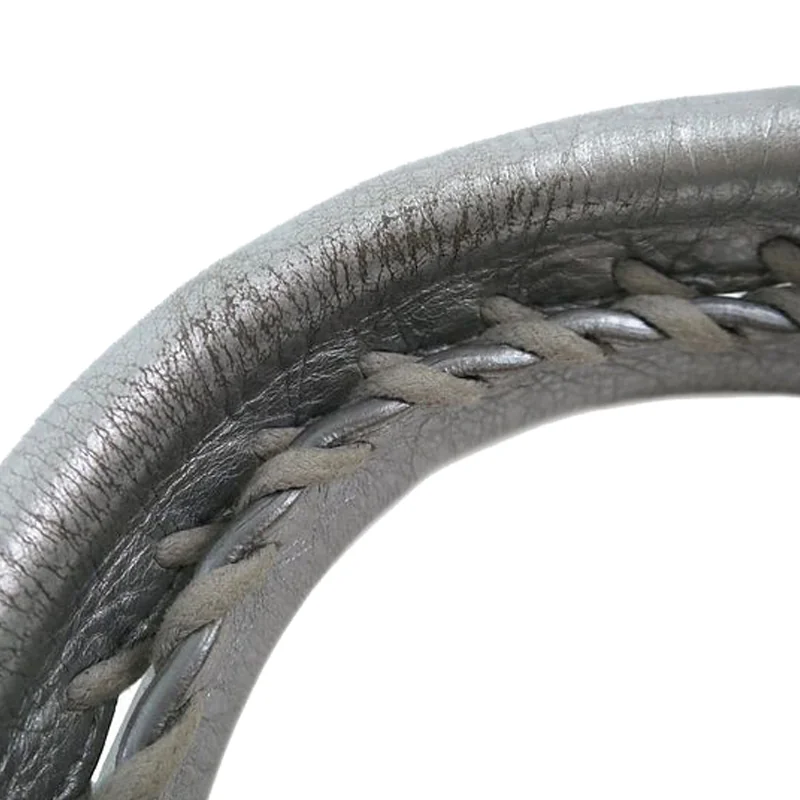
Start here, because leather is the hardest thing to fake convincingly and the easiest thing to assess with your hands rather than your eyes.
Genuine Balenciaga Motorcycle bags are made from lambskin that’s been distressed—waxed, buffed, or treated to create a naturally creased, slightly irregular surface. It’s thin for a bag this structurally demanding, which is part of the design ethos: lightweight, soft, almost fragile-feeling leather that still holds up. Every authentic bag I’ve handled has its own topography of wrinkles and folds, and no two look identical even within the same colorway and season. That inconsistency is a feature, not a flaw.
Counterfeit leather tends to fall into one of two camps. Cheaper fakes use a stiff, shiny hide that looks plasticky under direct light and creases in sharp, unnatural lines rather than soft folds. Better fakes use a genuine leather that’s been artificially distressed, and this is where it gets trickier—the wrinkles look almost right, but they’re often too uniform, repeating in a pattern instead of appearing random.
The test I rely on most: pick the bag up empty and let it hang. Authentic lambskin collapses. It goes soft and slouchy, folding in on itself with no internal support. A fake, even a good one, tends to hold more of its shape because the leather is thicker or has an internal stiffener the original doesn’t. If a bag stands up on its own when unstuffed, be suspicious.
Honest downside of the real thing: this leather scratches and marks easily. Keys, sharp jewelry, even fingernails can leave a mark that becomes part of the bag’s patina whether you want it to or not. If you want a low-maintenance bag, this isn’t it, and that’s worth knowing before you buy, not after.
Hardware, Zippers and Studs#
Hardware is where fakes often reveal themselves fastest, because good aged-metal finishing is expensive to replicate and counterfeiters frequently skip it.
Authentic hardware—the studs at the base, the zipper pulls, the D-rings—has a brushed, slightly matte finish with tonal variation. Look at the same bag in different light and the metal shifts subtly, sometimes warmer, sometimes cooler, because the finish isn’t a flat single-tone coating. Fakes almost always run bright and uniformly silvery or brassy, with a sheen that looks closer to costume jewelry than treated brass.
Weight matters too. Pick up a stud between your fingers if you can. Genuine hardware has real heft; cheap fakes use lighter, thinner-gauge metal that feels almost hollow.
Zippers are one of the most specific checks on this bag. Authentic Motorcycle bags use Lampo zippers, and the branding on the pull should be embossed—not engraved—in italics, with a small ™ symbol positioned at the top right. If the zipper is unbranded, uses a different manufacturer, or has the Lampo mark engraved rather than raised, that’s a serious red flag on its own. That said, I want to be direct about a nuance here: counterfeiters occasionally source genuine surplus Lampo zippers, so a correct zipper alone doesn’t prove authenticity. It’s a supporting checkpoint, not a verdict.
Check the studs at the base of the bag for even spacing and flush attachment. On a real bag, there’s no visible gap between the stud base and the leather, and every stud across the bottom row sits at a consistent height. Uneven spacing or wobbly studs are a common fake tell, especially on lower-effort reproductions.
Tassels and Leather Trims#
The zipper tassels are small, but they’re one of the most reliable low-effort checks you can do in under ten seconds.
On an authentic bag, the tassels are cut from the same distressed lambskin as the body, which means they share its softness and drape. Hold one between your fingers—it should feel supple, almost floppy, with no internal stiffness. Let it hang and it falls naturally, following gravity rather than holding a shape.
Fake tassels are frequently made from a coarser, firmer leather or a leather-coated synthetic. They feel grainier, sometimes almost rubbery, and they tend to hold a slight curl or stiffness even when hanging freely. This is a small detail that’s genuinely hard for counterfeiters to get right, because matching the exact temper of the body leather in a tiny separate piece requires sourcing effort that most fake production doesn’t bother with.
Also look at how the trim attaches to the zipper pull—on genuine bags, the leather strip threads through cleanly with no fraying or glue residue at the fold. Sloppy stitching or visible adhesive at this junction is a bad sign.
Fair criticism of the real thing: these tassels do fray with heavy use over the years. If you’re buying pre-owned, a slightly worn tassel isn’t automatically a fake indicator—it might just be an older, well-loved bag. Judge the material and drape, not just the condition.
Stitching, Logo Stamp and Serial Tag#
Stitching on an authentic Motorcycle bag is dense, even, and tight, with no skipped stitches, no visible thread ends, and no wandering lines where the seam drifts off course. Count stitches per inch if you want to be thorough—Balenciaga’s stitching is notably fine and consistent across the entire bag, including hard-to-reach areas like the base seams and strap attachment points. Fakes often get the front panel right, since that’s what buyers photograph and scrutinize, but slip up on the underside or interior seams where quality control is less obvious.
The embossed “BALENCIAGA” logo, where present, should be crisp and evenly pressed, with letters that are uniform in depth and spacing. A shallow, uneven, or slightly blurred stamp is a common fake giveaway.
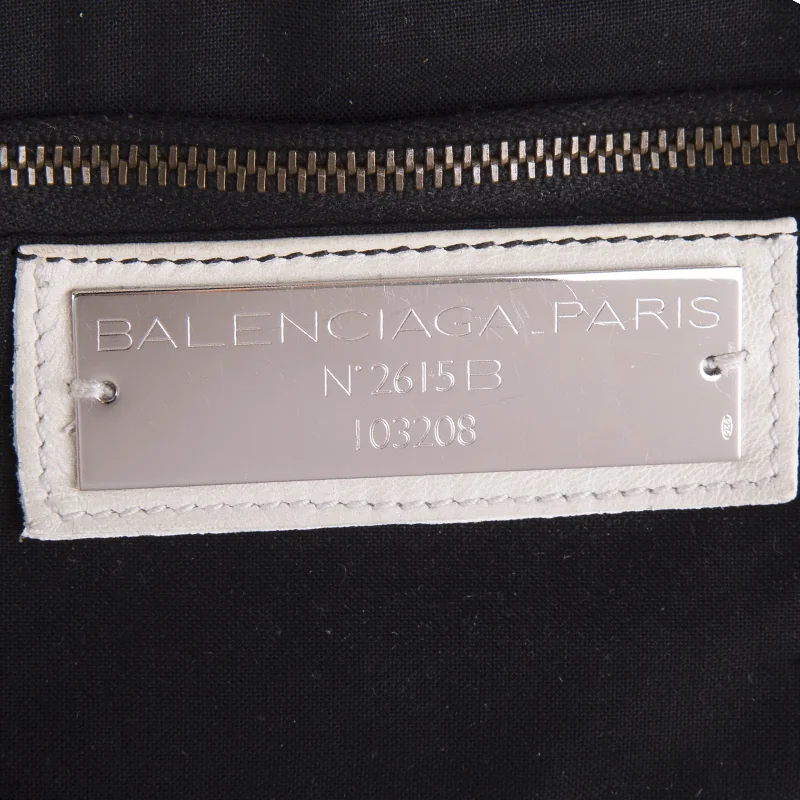
Now, the part that trips up a lot of buyers: Balenciaga does not use a serial number system the way [[[[Louis Vuitton](/buying-guides/best-white-designer-dresses-2025/)](/authentication/how-to-spot-a-fake-louis-vuitton-bag/)](/buying-guides/most-popular-louis-vuitton-bags-2026/)](/brands/louis-vuitton-neverfull-insider-retail-story/) or Chanel do. There’s no date code hidden in a hologram sticker or a printed number sequence you can look up. What you’ll find instead is a small leather tag stitched inside the bag, sometimes accompanied by a metal plate, bearing the brand name and, on many models, a reference number for the specific style and color rather than a unique serial per bag. If a seller tells you their bag has a “serial number” in the sense collectors expect from other houses, that claim itself deserves scrutiny—it suggests either confusion or, less charitably, an attempt to sound more authoritative than the brand’s actual practices support. What you should check is that the interior tag exists, is stitched neatly, uses the correct typeface, and that any reference number matches the style and colorway you’re being sold.
Where to Buy an Authentic Balenciaga Motorcycle Bag#
The safest purchase is always directly from Balenciaga boutiques or the brand’s official e-commerce site. After that, established multi-brand luxury retailers—Net-a-Porter, Mytheresa, Farfetch’s boutique-verified listings, and department stores with a direct wholesale relationship to the brand—are reliable for new-season pieces.
For pre-owned and vintage Motorcycle bags, which is where most authentication questions actually come up, stick to resale platforms that perform in-house authentication before listing: The RealReal, Vestiaire Collective (with its authentication guarantee), Fashionphile, and reputable consignment boutiques with a track record. These platforms aren’t infallible, but they have trained authenticators and a financial incentive to catch fakes before they hurt their reputation.
Red flags in listings, from experience reviewing hundreds of them: prices dramatically below market average for the model and condition; stock photography instead of individual images of the actual bag, including the interior tag; sellers unwilling to provide close-up photos of the zipper pull, stud base, and interior tag on request; vague or copy-pasted descriptions that avoid specifics like leather type or hardware color; and listings on general marketplaces (eBay, Facebook groups, Poshmark included) with no return window, which removes your only recourse if the bag turns out to be fake.
If you’re spending four figures or more on a pre-owned bag from a private seller, pay for independent authentication before finalizing—services like Entrupy, Real Authentication, or Authenticate First charge a modest fee relative to the purchase price and will save you from an expensive mistake. For resellers, a third-party authentication certificate also meaningfully increases buyer confidence and resale value, since it removes the ambiguity that scares off cautious buyers.
FAQ#
Does every authentic Balenciaga Motorcycle bag have a serial number? No. Balenciaga doesn’t use a unique serial number system like some other luxury houses. Instead, look for a neatly stitched interior leather tag with the correct logo and, often, a style/color reference number rather than a per-bag serial.
Can a fake Balenciaga have real Lampo zippers? Yes, occasionally. Some counterfeit producers source genuine Lampo zippers to make fakes harder to detect. A correct zipper supports authenticity but shouldn’t be your only check—verify leather feel, hardware weight, and stitching too.
Why does my “authentic” bag feel stiff instead of soft? It could be a fake, or it could be a genuine bag that hasn’t been broken in or has been stored stuffed for a long time. Check the collapse test on the leather alongside hardware and stitching before concluding either way.
Is buying a pre-owned Balenciaga Motorcycle bag a good investment? Classic colorways in excellent condition with verified authenticity hold value reasonably well, especially rare shades from early production years. Heavily worn bags, off-trend colors, or unauthenticated pieces depreciate significantly, so condition and proof of authenticity matter more than the model itself.
How much does professional authentication typically cost? Third-party services generally charge a small flat fee per item, far less than the price difference between a real and fake bag. For any purchase over a few hundred dollars from an unverified seller, it’s worth the cost.
Related Articles#
- How Pre-Owned Luxury Fashion Is Reshaping the Industry
- Designer Handbag Trends 2025: What’s Actually Worth Buying
- Replica vs Pre-Owned Bags: Which Is the Smarter Buy?
- 10 Best Designer Handbags Worth the Investment (2026)
- Best It Bags to Buy This Year: A Definitive Guide


Keyword index