Introduction: Why Hermès Handbags Command Top Dollar #
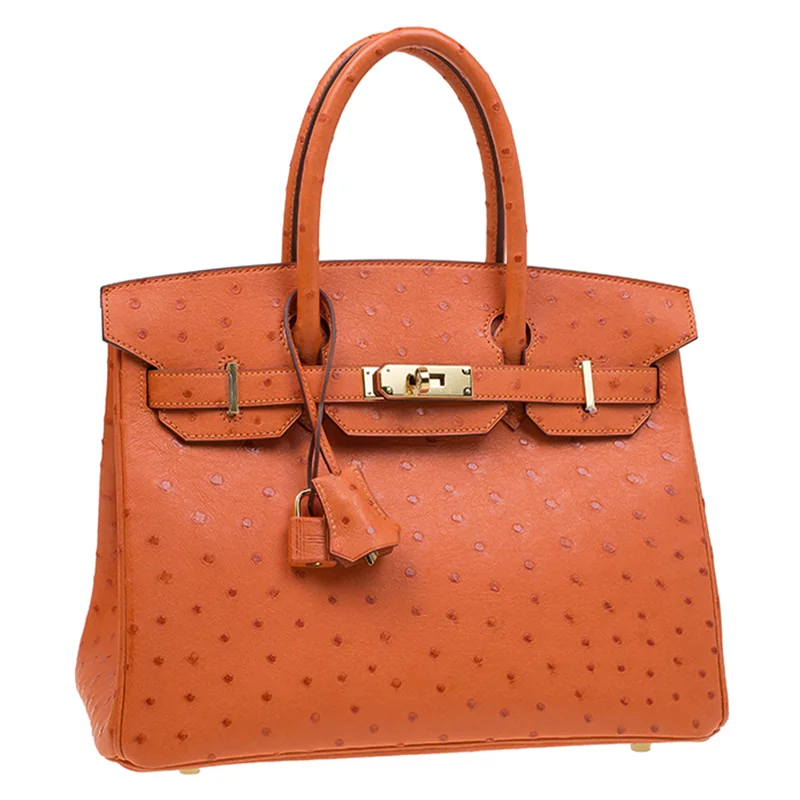
Hermès has spent nearly two centuries building a reputation that no marketing budget can buy. What started in 1837 as a Parisian harness workshop for horse tack turned, by the 1920s, into a house that applies the same saddle-stitching discipline to handbags that it once applied to bridles. That lineage matters more than it sounds: the leatherwork techniques used on a Birkin today are direct descendants of equestrian craft, and that continuity is a large part of why the brand can charge what it charges.
The other part is scarcity, and scarcity at Hermès is deliberate. Unlike Chanel or Louis Vuitton, which scale production to meet demand, Hermès caps output per artisan and per atelier. A single leather-goods craftsperson typically completes one bag start to finish, stitching by hand, and does not move to the next piece until it’s done. That production model is expensive to run and impossible to mass-produce, which is exactly the point — it protects the object’s rarity and, by extension, its price.
For buyers, this creates a market that behaves differently from most of luxury fashion. Hermès handbag prices aren’t just a reflection of materials and labor; they’re a reflection of a controlled supply chain that treats certain bags almost like an asset class. Understanding that dynamic — heritage, hand-craftsmanship, and manufactured scarcity — is the foundation for every pricing question that follows, whether you’re comparing leathers, sizes, or the resale market.
The Birkin Bag: Pricing and Origin Story #
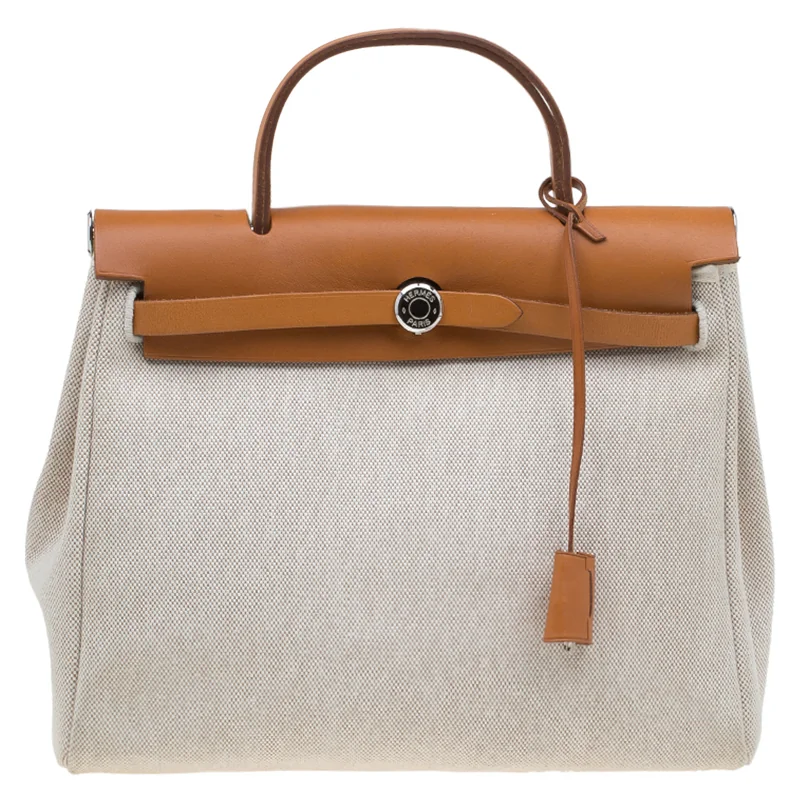
The Birkin’s origin story is well known in handbag circles, but it’s worth repeating because it explains the bag’s DNA. In the mid-1980s, actress and singer Jane Birkin found herself seated next to Hermès’ then-artistic director Jean-Louis Dumas on a flight, struggling with a straw bag that couldn’t hold her belongings. The conversation that followed became a sketch, reportedly drawn on an airsickness bag, and that sketch became the Birkin: a structured tote with a flap, a single handle, and a padlock closure borrowed from equestrian hardware.
Every Birkin is still made this way — one artisan, one bag, roughly 18 to 24 hours of hand-stitching depending on size and leather, sometimes stretching to 40-plus hours for more technical skins. That labor cost is baked into retail pricing.
As a working range for current retail pricing on standard leathers (Togo, Epsom, Clemence, Swift) at Hermès boutiques:
- Birkin 25: roughly $11,000–$12,500
- Birkin 30: roughly $12,000–$13,500
- Birkin 35: roughly $13,000–$14,500
Pricing shifts by leather (Epsom and Swift run slightly different from Togo and Clemence due to tanning and finishing processes), hardware finish (gold vs. palladium can carry a small premium either direction depending on the season), and Hermès’ periodic global price increases, which have landed annually or semi-annually in recent years. Treat these as directional ranges rather than fixed numbers — your local boutique price is the only one that matters on purchase day, and currency and VAT differences mean the same bag can cost noticeably more or less depending on where in the world you buy it.
Exotic Leather Birkins: Ostrich, Crocodile, and Beyond #
Move from calfskin into exotic skins and the pricing structure changes entirely. Ostrich and lizard sit at the entry point of the exotic tier, with porosus crocodile and niloticus crocodile commanding the highest prices. Expect exotic Birkins to start around $35,000 and climb well past $50,000 once you factor in matte versus shiny crocodile finish, precious hardware, and any diamond or gold embellishment.
A few things drive that premium beyond the skin itself:
- Sourcing and tanning: exotic skins require specialized, tightly regulated supply chains and tanning processes that are slower and more labor-intensive than calfskin.
- Matte crocodile (niloticus) generally outprices shiny crocodile (porosus) because the matte finish requires a more painstaking preparation process, even though shiny crocodile is often the rarer skin.
- Hardware upgrades: palladium and gold-plated hardware are standard exotic options, but 18k solid gold hardware, and diamond-set hardware, push a small number of bags into six-figure territory. These are the pieces that show up at auction commanding record prices.
- Artisan skill level: exotic skins are typically assigned to more senior craftspeople, since a mistake in matching scales or aligning the skin’s natural pattern can ruin the hide entirely.
If you’re shopping this tier, know that exotic Birkins are also subject to CITES documentation requirements when crossing certain borders, which matters for both authentication and resale later. It’s a real cost and paperwork burden, not a footnote — factor it into your decision if you plan to travel with the bag or resell internationally.
The Kelly Bag: How Pricing Compares to the Birkin #
The Kelly predates the Birkin by decades. It began life in the 1930s as a saddle bag design, then became a cultural fixture in the 1950s when Grace Kelly was photographed using it to shield a pregnancy from paparazzi — an image that stuck so firmly the bag was renamed after her.
Construction-wise, the Kelly is arguably more complex than the Birkin in some respects: it has a rigid frame, a top handle plus shoulder strap option, and a turn-lock closure that requires precise hardware alignment. Hand-crafting time runs around 18–20 hours for standard versions.
On price, the Kelly generally sits at or slightly below the Birkin in the same leather and size, though the gap has narrowed in recent years as Kelly demand has surged:
- Kelly 25 (Sellier or Retourne): roughly $10,000–$11,500
- Kelly 28/30: roughly $10,500–$12,500
- Kelly 35: roughly $11,500–$13,500
The Sellier construction (structured, more rigid) tends to command a bit more than the Retourne (softer, rounded) because it’s more technically demanding to build. Exotic Kelly bags follow the same logic as exotic Birkins, starting in the low $30,000s and climbing from there.
For readers specifically drawn to the Kelly: it’s currently the harder bag to secure at some boutiques precisely because demand has caught up to the Birkin’s, while supply hasn’t. That’s worth knowing before you assume the Kelly is the “easier” or “cheaper” option — in practice, the price and availability gap between the two has been shrinking.
What Drives the Price: Materials, Hardware, and Craftsmanship #
Four variables move an Hermès handbag’s price more than anything else:
Size. Larger bags use more leather and take longer to construct, so price scales up from 25 to 30 to 35cm, though not perfectly linearly — a 25cm bag in exotic skin can still cost more than a 35cm bag in calfskin.
Leather type. Togo (grained, structured, scratch-resistant) and Clemence (softer, slouchier grain) are the workhorse leathers and price closest together. Epsom (embossed, stiff, holds shape well, resists water) and Swift (smooth, lightweight, but more prone to scratching) sit in a similar band but can vary by a few hundred dollars depending on the piece. Exotic skins are their own tier entirely, as covered above.
Hardware finish. Gold (GHW) and palladium/silver (PHW) hardware are the two standard finishes and are typically priced the same at retail, though resale demand for one over the other can shift with trends — palladium has been the stronger resale performer in recent seasons in several markets, while gold remains a classic, safer long-term choice.
Hand-crafting time. This is the least visible factor to shoppers but the biggest cost driver internally. A single artisan trains for years before being allowed to work on a Birkin or Kelly independently, and the saddle-stitch technique (two needles, one thread, pulled through by hand) can’t be replicated by machine at the same strength or finish quality. You’re paying for skilled labor hours as much as you’re paying for the leather.
One honest note: none of this means every Hermès bag is “worth it” in a purely functional sense. A Birkin 35 is heavy, has no interior organization to speak of, and isn’t the most practical daily bag. The price reflects craftsmanship and scarcity, not necessarily day-to-day utility — go in knowing that trade-off.
Resale Value and Buying Smart: New vs Pre-Owned #
This is where Hermès genuinely separates itself from most of the luxury market. Birkins and Kellys in popular leathers, neutral colors (black, gold, etoupe), and standard hardware routinely resell at or above original retail price, particularly for sizes and colors that were hard to get in the first place. Data tracked by resale platforms and auction houses over the past decade shows classic Birkins appreciating anywhere from 10% to over 100% above original retail for discontinued colors or highly sought exotic pieces, though this isn’t universal — trend colors and less popular sizes can and do sell below retail.
New vs. pre-owned, practically speaking:
Buying new means going through Hermès’ waitlist and quota system, which doesn’t really work like a traditional waitlist. There’s no public sign-up sheet. Sales associates allocate Birkins and Kellys to clients based on purchase history with the boutique — spending on ready-to-wear, jewelry, or other leather goods over time, building a relationship with a specific SA, and being a consistent, low-drama client. It’s opaque by design, and no amount of “insider tips” guarantees a bag. Realistically increasing your odds means shopping regularly at one boutique, being flexible on color and leather, and being upfront with your SA about what you’re hoping for — chasing multiple boutiques with no history at any of them is rarely effective.
Buying pre-owned skips the wait entirely and lets you choose the exact color, leather, and hardware combination you want today, usually at a premium over retail for desirable combinations, or at a discount for less popular ones. The trade-off is authentication risk.
[[[[Authentication tips](/buying-guides/luxury-handbag-brands-worth-investing-in/)](/buying-guides/replica-vs-pre-owned-bags/)](/buying-guides/luxury-fashion-investment-pre-loved-guide/)](/buying-guides/hermes-retail-vs-resale/) for pre-owned Hermès:
- Check the blind stamp inside the bag (a letter-and-number code stamped into the leather) against known date-stamp charts — but treat this as one data point, not proof, since stamps can be forged.
- Examine the saddle-stitching: it should be slightly angled and consistent, never perfectly straight like a machine stitch, and thread tension should be even throughout.
- Verify hardware weight and engravings. Genuine Hermès hardware feels substantial and engravings are crisp, not shallow or blurry.
- Inspect the leather grain and smell — genuine Hermès leather has a distinct, high-quality tannery smell, and grain patterns (especially on Togo) should look organic, not stamped uniformly.
- Buy from reputable resellers who offer authentication guarantees and accept returns if a bag fails authentication, or use a third-party authentication service before finalizing a private sale.
- Be suspicious of prices significantly below market for the size, leather, and color combination — counterfeiters often price just low enough to feel like a deal without triggering obvious skepticism.
How Hermès compares to Chanel and Louis Vuitton on value retention: Chanel Classic Flaps have also appreciated over the past decade due to Chanel’s own repeated price increases, but Chanel’s resale market is more sensitive to hardware trends and size preferences shifting season to season. Louis Vuitton’s leather goods, by contrast, are produced at much higher volume, and while iconic styles like the Neverfull or Speedy hold value reasonably well, they don’t command the same resale premiums or waitlist scarcity that Birkins and Kellys do. If resale value and long-term price stability are the priority, Hermès has historically outperformed both, though “historically” is not a guarantee — resale markets can soften, and buying purely as an investment carries real risk.
Birkin vs Kelly: Price Comparison #
Side by side, in the same size and leather, expect the Kelly to run a few hundred to a couple thousand dollars below the Birkin at retail — though that gap has been narrowing. Here’s a rough comparison at retail for standard leathers:
| Size | Birkin (approx.) | Kelly (approx.) |
|---|---|---|
| 25cm | $11,000–$12,500 | $10,000–$11,500 |
| 30cm | $12,000–$13,500 | $10,500–$12,500 |
| 35cm | $13,000–$14,500 | $11,500–$13,500 |
On resale, the picture flips somewhat. Kelly bags, particularly the Sellier construction, have seen resale demand climb faster than Birkins in some markets over the past few years, partly because the Kelly was historically easier to obtain and is now catching up in desirability without a corresponding jump in supply. Birkins still tend to hold the edge in raw resale ceiling, especially in exotic skins, but the Kelly has closed the gap enough that it’s no longer accurate to call it the “budget” option relative to the Birkin.
Which one to choose comes down to use case more than price. The Birkin’s open-top, unstructured silhouette suits a more casual, everyday carry. The Kelly’s rigid frame and turn-lock closure feel more formal and structured, and many buyers find it the more versatile bag for work or evening use since it can be carried by the top handle or worn cross-body. Neither is objectively the “better investment” — both have strong resale track records when purchased in the right leather and color.
FAQ: Common Questions About Hermès Handbag Prices #
Why are Hermès bags so expensive compared to other luxury brands? Limited production per artisan, saddle-stitched hand-construction, tightly controlled leather sourcing, and deliberate scarcity all combine to keep supply low relative to demand — which is the core driver of price, more so than materials alone.
Does Hermès really have a waitlist? Not in the traditional sense. There’s no sign-up list at most boutiques. Allocation is based on your purchase history and relationship with a specific sales associate, built up over time through other purchases.
Can you just walk into an Hermès store and buy a Birkin? Occasionally, yes, particularly for less popular sizes, colors, or leathers, or at boutiques with lower foot traffic. Classic combinations in high demand (black Togo, gold hardware, 30cm) are rarely available off the shelf.
Do Hermès bags actually increase in value? Many do, particularly classic colors, popular sizes, and exotic skins, but it’s not guaranteed. Trend-driven colors and less common sizes can sell below original retail. Treat appreciation as a possible outcome, not a promise.
Is buying pre-owned Hermès riskier than buying new? It carries authentication risk that buying new doesn’t, but reputable resellers with authentication guarantees largely mitigate that risk, and pre-owned lets you skip the waitlist entirely.
How can I tell if a Birkin or Kelly is fake? Check the blind stamp, stitching quality, hardware weight and engraving, and leather grain, and when possible use a professional authentication service rather than relying on visual checks alone.
Are Kelly bags cheaper than Birkins? Generally yes, by a modest margin in the same size and leather, though the price and resale-value gap between the two has narrowed significantly in recent years.
What other Hermès bags are worth considering beyond the Birkin and Kelly? The Constance (structured, with the signature H clasp) is a strong alternative for those who find the Birkin and Kelly too formal or too hard to obtain, and it has its own devoted resale market. The Lindy offers a more casual, slouchy silhouette at a lower price point and is easier to purchase off the shelf. The Evelyne, with its perforated H cutout and crossbody strap, is one of the more accessible entry points into the brand, both in price and availability. The Picotin is a compact, casual bucket bag that’s become popular with younger buyers as a lower-commitment entry into Hermès leather goods. Each of these is worth considering if the Birkin and Kelly’s price or waitlist feel out of reach right now.
Related Articles #
- Chanel Handbag Prices: Iconic Styles & What They Cost
- How Pre-Owned Luxury Fashion Is Reshaping the Industry
- Popular Handbag Brands: Which One Is Right for You?
- Chanel Flap Bag Buying Guide: Sizes, Prices & Deals
- 5 Most Popular Chanel Bags You Need to Know
Related guides
- Online Bag Authentication: What Photos Can and Cannot Prove
- Private Bag Edit: Hermès Kelly Authentication Blog
- Hermès Date Codes & Stamps Explained: Full Guide
- Hermès Crocodile vs Alligator Bags: Buyer's Guide
- How to Buy an Authentic Luxury Bag from China Safely
- New vs Pre-Owned Luxury Bags: Which Route Is Right for You?
- Chanel Bag Guide: What to Know Before You Buy
- Luxury Bag Houses


Keyword index