Introduction: Why the Louis Vuitton Artsy Endures #
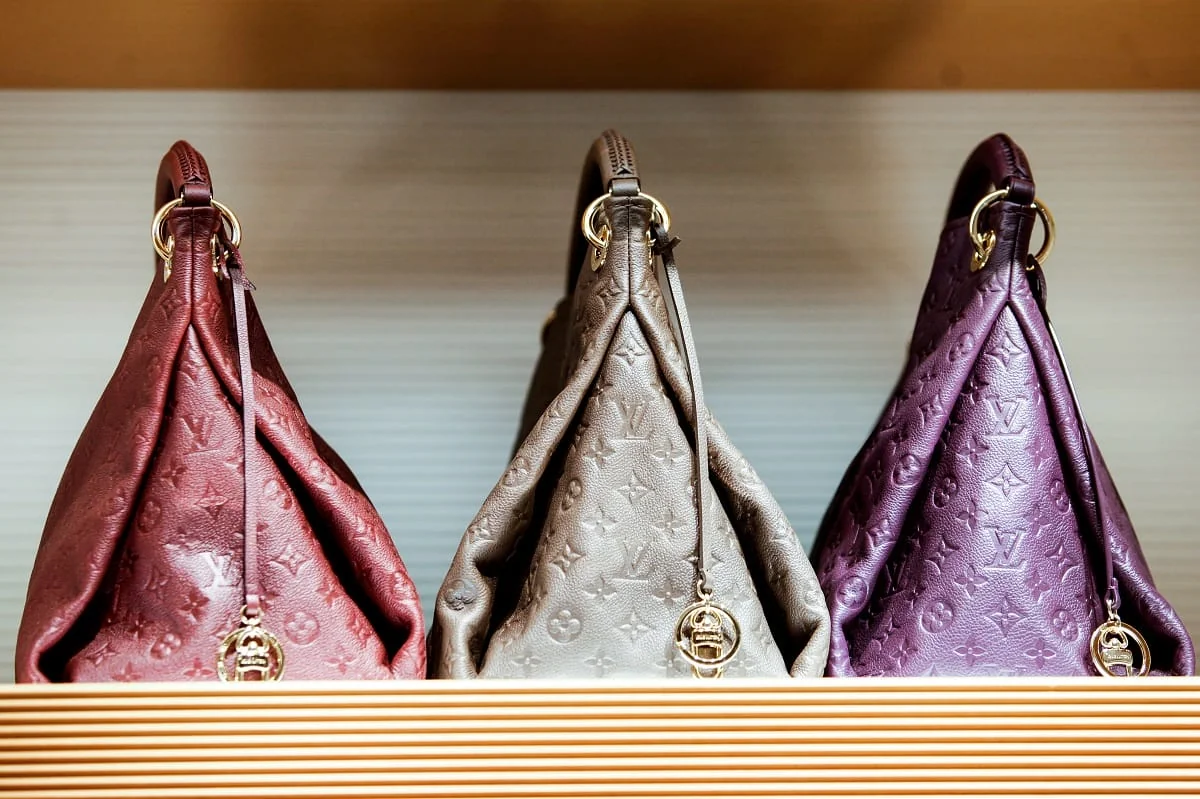
Every well-built handbag collection has a workhorse, the bag you reach for when a day demands more than it promises. Louis Vuitton has built its reputation on exactly that combination of everyday utility and unmistakable design, and few pieces in the house’s catalog do it as effortlessly as the Artsy.
It’s a hobo bag at its core, but it doesn’t slouch into shapelessness the way many soft-sided bags do. The Artsy holds a silhouette while still feeling relaxed on the shoulder, which is precisely why it built a loyal following through the 2010s and why it still turns up constantly in the resale market today. For anyone shopping secondhand Louis Vuitton, or trying to figure out whether a listing is the real thing, the Artsy is worth understanding in detail, not just at a glance.
The Artsy’s Design Heritage and Silhouette #
Louis Vuitton released the Artsy in 2010, at a moment when the boho-chic aesthetic was dominating both runways and street style. The bag reflected that mood directly: an oversized, softly structured hobo with a single shoulder handle and an open top, designed to feel thrown-on rather than fussed-over.
What sets the Artsy apart from a generic slouchy bag is its engineering. The base is wide and reinforced, giving the bag a footprint that stays put rather than folding in on itself. From that solid base, the sides are gathered into artful pleated folds that taper the body toward the top, creating a soft triangular profile. That pleating does double duty: it’s a design signature you can use to check authenticity, and it’s the mechanical reason the bag manages to look relaxed without ever looking sloppy.
The single handle sits close to the top opening, which lets the bag ride comfortably on the shoulder or in the crook of the arm while preserving that gentle slouch. It’s a deceptively simple piece of construction, but it’s the detail that makes the Artsy read as “effortless” rather than “oversized and shapeless,” which is the trap a lot of competitor hobo styles fall into.
Sizes and Materials: MM, GM, and Signature Canvases #
Louis Vuitton originally produced the Artsy in two sizes.
Artsy MM #
The MM is the size most commonly found today, both because it was the longer-running production size and because it strikes a more wearable scale for daily use. Expect roughly:
- Width: approximately 13-14 inches
- Height: approximately 9-10 inches
- Depth: approximately 6 inches
- Handle drop: long enough for a comfortable shoulder carry, roughly 7-8 inches
These figures are consistent with what’s typically listed across resale platforms and archived Louis Vuitton product sheets, but because the bag is discontinued, Louis Vuitton no longer publishes an official spec sheet. If a seller lists exact dimensions down to the millimeter, treat that as a nice-to-have rather than gospel, and rely on the item’s actual measurements over any printed number.
Artsy GM #
The GM was the larger, less common size, built for women who wanted genuine tote-level capacity in a hobo silhouette, think overnight essentials, a diaper bag substitute, or a laptop-plus-everything work bag. It runs a few inches larger in every dimension than the MM. Louis Vuitton discontinued the GM well before it retired the MM, which is part of why GM pieces are noticeably scarcer in the resale market now and tend to carry a premium when they do appear.
Materials #
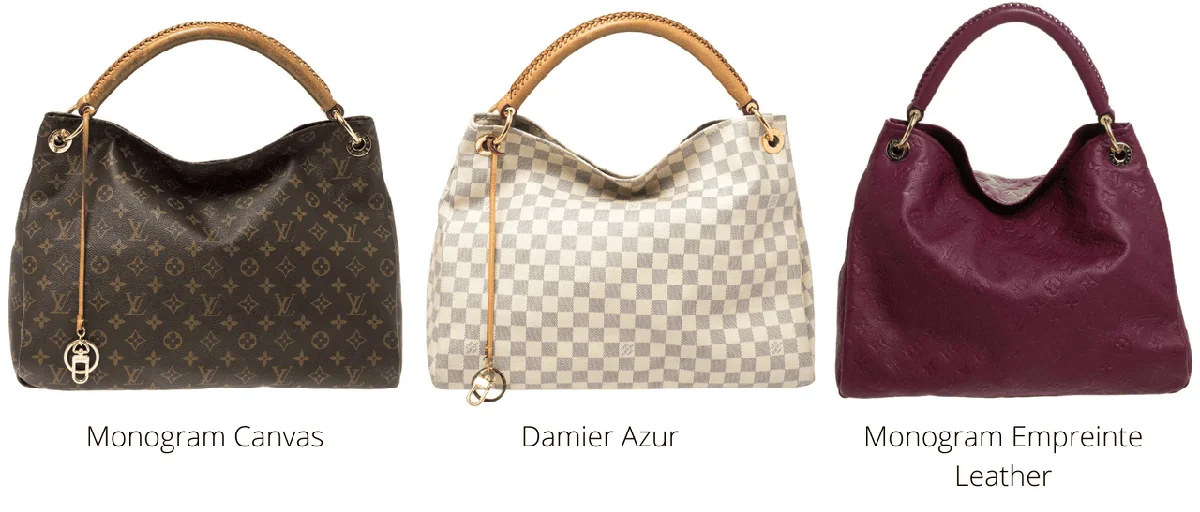
The Artsy was produced across three signature Louis Vuitton materials:
- Monogram Canvas – the classic LV coated canvas with the brown monogram pattern, the most widely produced and most commonly found version.
- Damier Azur – the checkerboard canvas in cream and blue tones, a lighter, warm-weather-leaning alternative.
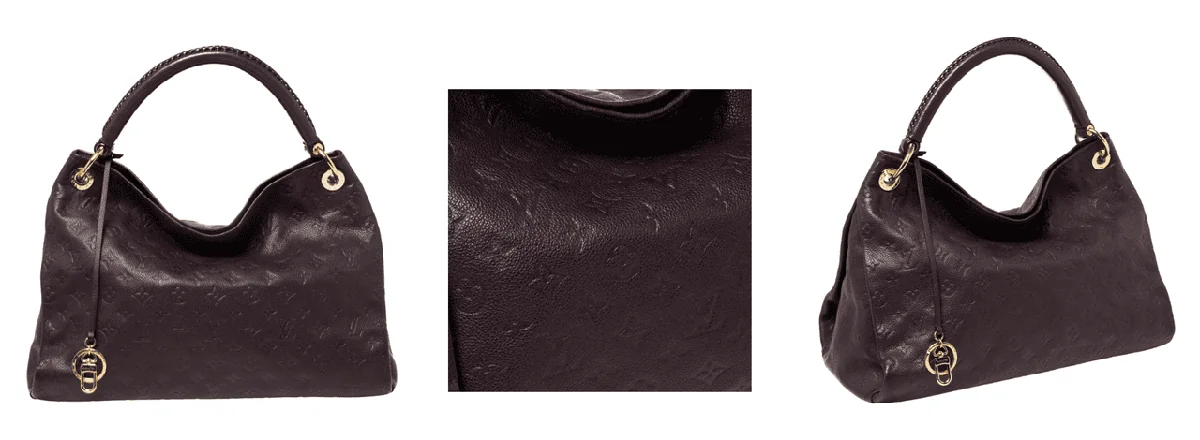
- Monogram Empreinte leather – a debossed calfskin where the monogram is pressed into the leather itself rather than printed, giving the bag a quieter, more premium finish and typically the highest retail price point of the three.
The two canvas versions lean into logomania in a way that’s still restrained thanks to the bag’s simple shape, while the Empreinte leather version trades visible branding for texture and hand-feel.
Craftsmanship and Hardware Details #
Pick up an authentic Artsy and the construction tells you a lot before you even open it. The base carries the weight of everything the bag holds, so Louis Vuitton reinforces it with dense stitching and four metal feet that lift the bottom off the ground and protect the material from wear.
The pleated side folds aren’t just decorative, they’re a structural solution to a design problem: how to make a wide base taper into a manageable top opening without the bag collapsing on itself. On a genuine bag, those pleats are even, symmetrical, and press into a clean triangular shape on both sides. Uneven or lopsided pleating is one of the first things that looks “off” on a poorly made replica.
The handle is hand-finished with cross-stitching, a detail that’s small but telling. Authentic cross-stitching is tight, even, and follows a consistent pattern along the entire handle. It should also feel substantial in the hand, not flimsy or hollow.
Inside, the bag is canvas-lined and organized with multiple slip pockets, a zip pocket, and a D-ring for attaching keys or a pouch. The key-bell charm is a nice functional touch, useful for anyone who’s ever dug to the bottom of a big bag looking for keys. Hardware throughout, zip pulls, the D-ring, eyelets, is gold-toned brass on most versions, and it should have weight and a warm, slightly matte gold color rather than a bright, thin-feeling plating.
How to Spot an Authentic Louis Vuitton Artsy #
Because the Artsy is discontinued and only available secondhand, authentication matters more here than it would with a current-season bag you could simply verify at a boutique. A few checkpoints:
Canvas pattern alignment. On Monogram Canvas and Damier Azur pieces, the pattern should align cleanly at every seam, especially where the side pleats meet the base. Authentic Louis Vuitton canvas is cut and matched deliberately; a logo cut awkwardly in half at a seam, or a pattern that looks randomly placed, is a strong red flag.
Canvas texture and sheen. Genuine coated canvas has a specific tactile quality, smooth but not plasticky, with a slight give. Counterfeit canvas often looks too shiny or feels stiff and rubbery, almost like vinyl.
Stitching consistency. Check the handle cross-stitching and the base stitching. Authentic stitching is even in length and spacing, in a warm tan or matching thread color, and never loose or fraying. Sloppy, uneven stitches are one of the most common tells on fakes.
Hardware stamping. Zippers and D-rings should carry a crisp “LOUIS VUITTON” stamp with clean, evenly spaced lettering. Blurry, off-center, or oddly spaced stamping is a common counterfeit shortcut.
Date code. Authentic Artsy bags carry a heat-stamped date code inside, typically on an interior tab or lining, formatted as two letters followed by four digits (for example, a format like SD1023). The letters correspond to the factory location and the numbers encode the production date. No date code, or a code that doesn’t match known Louis Vuitton formatting for the bag’s production era, should give you pause. Keep in mind date codes alone don’t guarantee authenticity, since counterfeiters copy them too, but a missing or malformed one is an easy disqualifier.
Weight and structure in hand. An authentic Artsy has heft, thanks to the reinforced base and quality hardware. Fakes often feel noticeably lighter or don’t hold the pleated silhouette once the bag is set down.
If you’re buying from a private seller or a marketplace without a rigorous authentication process, it’s worth paying for a third-party authentication service before you commit, especially at this price point.
Price, Value, and Resale Potential #
At original retail, pricing varied by size and material, and crept upward over the bag’s production run as Louis Vuitton implemented several across-the-board price increases:
- Monogram Canvas MM: generally landed in the $1,500-$1,900 range depending on the year of purchase
- Damier Azur MM: similarly positioned, typically slightly above standard Monogram Canvas
- Monogram Empreinte leather MM: the most expensive of the three, often $2,300-$3,000+ given the leather and finishing work
- GM sizes: priced meaningfully above their MM counterparts across all materials, reflecting both the larger materials footprint and, later, their increasing scarcity
Because the line is discontinued, every Artsy on the market now is secondhand, whether it’s described as “new,” “unworn,” or “vintage.” That matters for value: there’s a finite, shrinking supply, and no way for Louis Vuitton to release more.
Current Market Value and Resale Trends #
On the resale market, condition and material do most of the work in determining price:
- Monogram Canvas MM in good, gently used condition typically resells in the $900-$1,400 range. Canvas is durable but shows corner wear and patina on the vachetta leather trim over time, which affects pricing at the lower end.
- Damier Azur MM tends to sit in a similar band, sometimes slightly lower, since the light-colored canvas shows soiling more visibly and buyers discount accordingly.
- Monogram Empreinte leather MM commands the highest resale prices among MM sizes, often $1,400-$2,200, since the leather ages well and the style reads as more understated and versatile.
- GM sizes across all materials carry a scarcity premium, frequently $1,500-$2,500+ for well-kept pieces, simply because so few remain in circulation.
A few factors move these numbers meaningfully: original box and dust bag, a legible and matching date code, unaltered hardware, and vachetta leather trim that hasn’t darkened unevenly or cracked. Bags with honey-colored, evenly patinated vachetta actually tend to do better than bags with pristine, unworn vachetta, since buyers read even patina as a sign of authentic, well-cared-for use rather than damage.
As for investment potential: the Artsy isn’t chasing the same speculative territory as, say, a Hermès Birkin or Kelly, where waitlists and scarcity can push resale above retail. Realistically, expect the Artsy to hold 50-75% of its adjusted retail value in good condition, with Empreinte leather and GM pieces holding value better than standard canvas MM. It’s a solid, dependable secondhand buy rather than a speculative one, and that’s a fair trade for a bag this useful day to day.
FAQs About the Louis Vuitton Artsy Bag #
Is the Louis Vuitton Artsy still sold new? No. Louis Vuitton discontinued the GM size first, and the MM followed later, so every Artsy available today comes from the secondary market.
Which is bigger, the MM or GM? The GM. It runs several inches larger in width, height, and depth, giving it genuine tote-level capacity compared to the MM’s more manageable everyday scale.
Does the Artsy hold its shape over time? Reasonably well, thanks to the reinforced base and structural pleating, but like any soft-sided bag it will develop some natural slouch with regular use. That’s part of the design, not a flaw.
How do I clean or care for the canvas and leather? Avoid harsh chemical cleaners on coated canvas; a soft, slightly damp cloth handles most surface dirt. Vachetta leather trim should be kept dry and out of direct sun to avoid uneven darkening. Empreinte leather benefits from an occasional leather conditioner appropriate for pigmented leather, but test on an inconspicuous area first.
How does the Artsy compare to the [Louis Vuitton Neverfull](/buying-guides/louis-vuitton-neverfull-buying-guide/)? They serve different purposes. The Neverfull is a structured, open tote with side lacing that cinches the shape, ideal for a polished daytime look. The Artsy is softer, more casual, and single-handled, closer to a true hobo. If you want structure, go Neverfull; if you want slouch with a defined shape, the Artsy fits better.
How does it compare to hobo styles from other brands? Against something like a Gucci Soho hobo or a Chloé Marcie, the Artsy holds its shape more deliberately thanks to the reinforced base and pleating, where those competitors tend to lean softer and less structured. The tradeoff is that the Artsy is a bigger, bolder bag, so if you want a smaller, quieter hobo, those alternatives may suit better.
Is the Artsy a good investment? It’s a good buy for use and reasonable value retention, not a speculative investment. Expect steady, moderate resale value rather than appreciation, with Empreinte leather and GM pieces performing best.
What’s the easiest authentication red flag to check first? Canvas pattern alignment at the seams and the quality of the handle’s cross-stitching. Both are fast to check in photos and are consistently where counterfeits fall short.
Related Articles #
- Hermès Retail vs. Resale: Which Should You Choose?
- Louis Vuitton Saumur Bag Guide: History, Value & Tips
- Gucci Ophidia Shoulder Bag Review: Bag of the Week
- Louis Vuitton Alma Bag: The Ultimate Buying Guide
- Gucci Emily Bag Guide: Style, Materials & What to Know
Related guides
- Online Bag Authentication: What Photos Can and Cannot Prove
- Blue Crocodile Lady Dior Tote: Buying Guide
- Chanel Vintage Flap Bag Buying Guide: Navy Lambskin
- Louis Vuitton Palm Spring Backpack: Complete Buyer's Guide
- How to Buy an Authentic Luxury Bag from China Safely
- New vs Pre-Owned Luxury Bags: Which Route Is Right for You?
- Chanel Bag Guide: What to Know Before You Buy
- Luxury Bag Houses


Keyword index