Introduction #
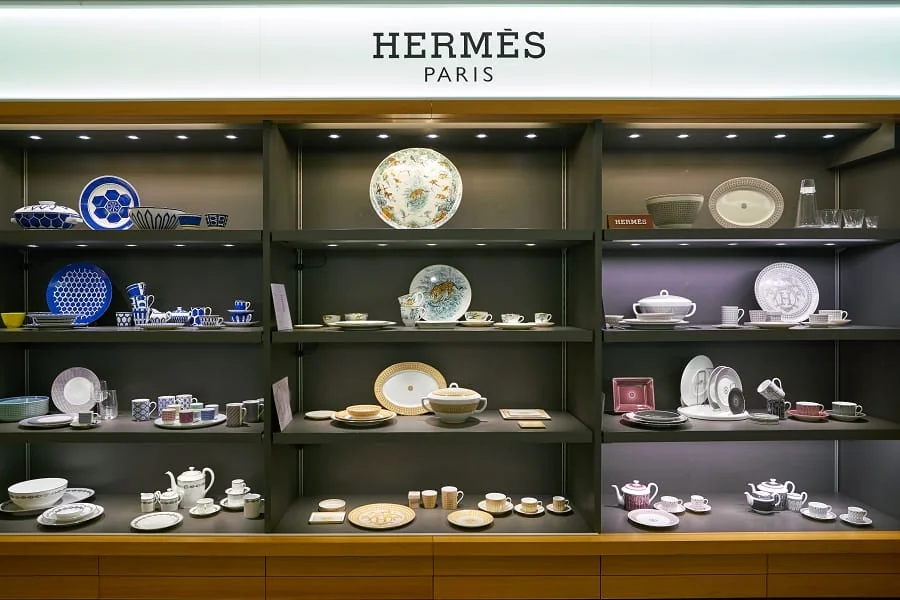
Most people meet Hermès through leather. Fewer meet it through porcelain, and that’s a shame, because the Hermès Home collection is where the maison’s design philosophy shows up in its purest form, no bag silhouette or hardware to distract from it. Plates, cups, teapots, and coasters carry the same obsession with proportion, material, and finish that goes into a Kelly or a Birkin, just rendered in Limoges porcelain instead of calfskin.
Mosaique au 24 sits at the top of that collection. It’s the pattern most collectors and gift-buyers ask for by name, and it’s also one of the more commonly faked tableware lines on the resale market, which makes it worth understanding properly before you spend real money on it. This guide walks through where the design came from, how the gold and platinum ranges differ, what a full piece list looks like, how the bag version fits in, and how to tell a genuine plate or teacup from a convincing copy.
From 24 Faubourg Saint-Honoré to the Mosaique au 24 Collection #
Hermès didn’t start as a lifestyle brand. Thierry Hermès opened his first workshop on rue Basse-du-Rempart in 1837, making harnesses for European nobility. The work was about function first: stitching that held under strain, leather that didn’t crack, hardware that didn’t fail. That engineering mindset never really left the company, even as it moved into silk, ready-to-wear, and eventually home goods.
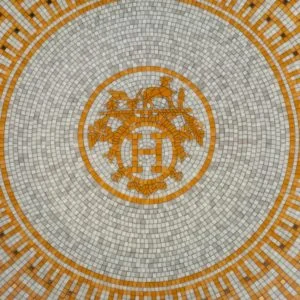
The address that matters for this particular collection is 24 Faubourg Saint-Honoré, the Paris store Charles-Émile Hermès moved the business into. Hermès still calls it the family home, and the store’s entrance floor has a mosaic pattern combining Greco-Roman geometry with Art Deco lines. That floor became a scarf design first, then a full tableware collection designed by Benoit-Pierre Emery, who translated the mosaic’s interlocking shapes into a repeating frieze that wraps around plate rims, cup bodies, and saucer edges.
What’s worth knowing as a buyer: this isn’t a seasonal print. Mosaique au 24 has been in continuous production as one of Hermès’ core tableware lines, alongside patterns like Chaine d’Ancre and Toucans. That longevity is part of why secondhand supply is healthy, but it also means Hermès has had decades to refine (and occasionally quietly adjust) the exact glaze tones and gilding methods, so pieces from different production years can look subtly different side by side. Don’t be alarmed if a plate bought new today reads slightly warmer or cooler than one from ten years ago.
Gold vs. Platinum: The Two Ranges Explained #
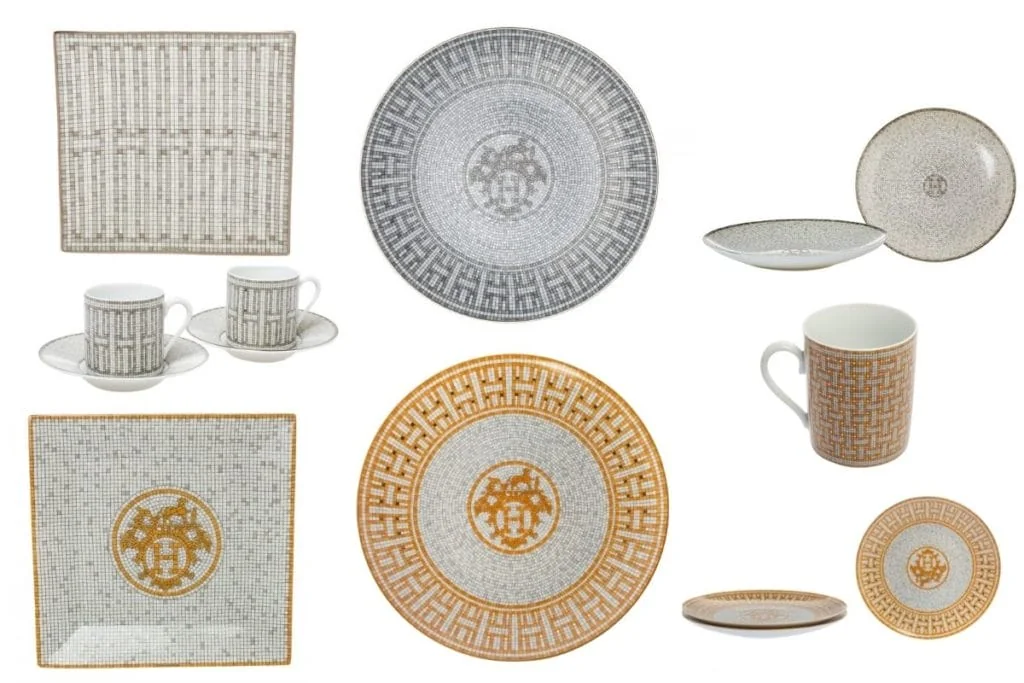
Hermès produces Mosaique au 24 in two color stories, and they read very differently on a table.
Mosaique au 24 Gold uses a cream or ivory porcelain base with the mosaic frieze rendered in gold and warm earth tones, rust, ochre, brown. It’s the range most associated with the collection historically, and it has a warmer, more traditional dining feel. On a set table, gold pieces sit comfortably with wood, brass, and linen in neutral tones.
Mosaique au 24 Platinum flips the palette. The base is a cooler white, and the frieze is executed in platinum with grey and black detailing instead of gold and browns. It reads more modern and more formal, closer to what you’d put on a table with silver flatware and glassware rather than brass.
A few practical differences worth knowing before you buy:
- Motif execution: the geometric frieze itself is the same design in both ranges, but the metal used (real gold versus platinum) changes how it catches light. Gold pieces glow warm under incandescent light; platinum pieces stay cool and slightly matte-bright even under the same lighting.
- Pairing flexibility: platinum mixes more easily with modern, minimalist tableware and other metallic accents (steel, chrome). Gold pairs better with warmer woods and vintage-style glassware.
- Resale demand: in our experience browsing resale listings, gold pieces tend to move faster and hold value slightly better, likely because it’s the more recognizable, longer-marketed of the two ranges. Platinum pieces, when in excellent condition, can actually be a better value buy secondhand because demand is a touch softer.
Neither range is objectively better made. Both use the same porcelain body and the same hand-applied metal detailing; it comes down to which color story fits your existing table settings.
The Tableware Edit: Plates, Cups, and Beyond #
The collection is broad enough that most buyers start with one or two pieces and build over time, which is exactly how Hermès designed it to be bought.
Plates and chargers: dinner plates, dessert plates, and bread plates are the entry point for most collectors. The mosaic frieze sits at the rim, leaving the center clean, so the pattern reads clearly without competing with food.
Bowls: cereal bowls, rice bowls, and small individual bowls follow the same rim treatment. These see more daily wear than plates, so check rim gilding closely on any secondhand bowl, it’s the first place gold wear shows.
Cups and saucers: tea cups, coffee cups (mocha-size), and their matching saucers are some of the most frequently gifted pieces, largely because they’re priced more accessibly than a full dinner set and photograph beautifully.
Teapots and coffee pots: larger hollowware pieces with more surface area for the frieze, and noticeably more expensive both new and secondhand because of the additional handwork on the spout, handle, and lid seams.
Coasters and ashtrays: smaller decorative pieces, popular with buyers who want the pattern on a desk or bar cart rather than a dining table.
Vases and decorative objects: less commonly seen secondhand, and priced accordingly higher when they do surface.
A honest note on new pricing: full boutique price lists for Hermès tableware aren’t published broadly, and prices vary by market and by which reseller or boutique you’re checking. As a general shape of the market rather than a fixed number: dessert plates and small cups sit at the lower end of the tableware range, dinner plates and bowls sit in the middle, and teapots and larger hollowware sit meaningfully higher. Secondhand, expect well-kept individual pieces to trade at roughly 30-60% below current retail, with full boxed sets and rare discontinued pieces sometimes holding value closer to retail or even above it if a set is complete and hard to find.
The Mosaique au 24 Bag: When Home Met Handbags #
Hermès occasionally lets a home pattern cross over into leather goods, and Mosaique au 24 got that treatment in the Pre-Fall 2018 collection. The bag borrows the mosaic’s geometric language directly into its hardware: the clasp is cut as a square rather than the rounded or oval closures more typical of Hermès bags, and that square is engraved with the same interlocking pattern from the Faubourg floor.
This matters for buyers coming from the handbag side of Hermès rather than the tableware side. It’s not a permanent-collection bag like a Kelly or Birkin, it was a limited seasonal release, which means supply is finite and mostly secondhand at this point. If you’re a Kelly or Birkin collector who likes the idea of a piece with a clearer design story attached to it, this bag is worth tracking on resale platforms, but be aware that because it was limited, counterfeits and “inspired by” pieces do circulate. Everything in the authentication section below applies to this bag specifically, with the square clasp being your single most reliable tell, genuine pieces have crisp, evenly cut engraving on that clasp; fakes tend to round the corners or blur the geometric detail.
How to Spot an Authentic Piece #
Tableware fraud is less talked about than bag fraud, but the risk is real, especially on marketplaces with photo-only listings. Here’s what we check before trusting a piece.
On porcelain (plates, cups, bowls, teapots):
- Backstamp: genuine Hermès porcelain is stamped on the underside with “HERMES PARIS” and typically the specific pattern name, along with a small maker’s mark from the manufacturer (Hermès has used established French porcelain houses for production). A missing, smudged, or incorrectly spelled stamp is an immediate red flag.
- Gilding application: authentic gold or platinum detailing is applied by hand and fired, giving it a slightly raised, tactile edge when you run a finger over the frieze. Printed or transferred fakes feel flat and perfectly smooth.
- Weight and glaze: genuine pieces have a dense, substantial weight for their size and a glaze with almost no visible bubbling or unevenness. Lightweight, thin porcelain with a glassy or slightly cloudy glaze is a common tell on counterfeit tableware.
- Pattern alignment: on genuine pieces, the geometric frieze lines up cleanly at any seams or repeats. Misaligned or slightly warped pattern repeats point to a lower-quality reproduction.
On the bag:
- Clasp engraving: as above, check for crisp, deep engraving on the square clasp, not a shallow or rounded stamp.
- Leather and stitching: standard Hermès benchmarks apply, saddle stitching should be even and slightly angled, edges should be burnished smooth, and the leather grain should match known genuine reference photos for the specific skin.
- Hardware weight: [[[[Hermès hardware](/brands/hermes-history-origin-story/)](/bag-care/hermes-leathers-guide/)](/authentication/how-to-spot-a-fake-hermes-bag-authentication-guide/)](/authentication/authentic-vs-fake-hermes-kelly-bag-how-to-tell/) has real heft. Light, hollow-feeling hardware on this bag is a strong sign of a fake.
- Provenance: buy from resellers who authenticate in-house or who provide detailed, well-lit photos of stamps, clasps, and interior markings. For a limited seasonal piece like this, a paper trail (original receipt, box, dust bag) adds real confidence, though its absence doesn’t automatically mean fake, just means you should look harder at the physical details.
If you’re buying secondhand tableware or the bag from a platform that doesn’t authenticate, ask the seller directly for close-up photos of the backstamp or clasp before paying. A legitimate seller won’t hesitate.
Collection Pieces and Colorways #
To make shopping easier, here’s a rough map of what’s typically available across both ranges, based on what regularly surfaces in boutiques and on the resale market:
- Dinner plates — Gold and Platinum
- Dessert plates — Gold and Platinum
- Bread/side plates — Gold and Platinum
- Cereal and rice bowls — Gold and Platinum
- Tea cups and saucers — Gold and Platinum
- Mocha/coffee cups and saucers — Gold and Platinum
- Teapots and coffee pots — Gold and Platinum, less frequently seen secondhand
- Coasters — Gold and Platinum
- Ashtrays / small trinket dishes — Gold and Platinum
- Vases — occasional, both ranges, rarer
- The Mosaique au 24 bag — released in select leathers and colorways for Pre-Fall 2018, discontinued as a running style, now resale-only
Boutiques carry current-production tableware pieces, though not every size is always in stock in every store, it’s worth calling ahead or checking with Hermès client services if you want a specific piece new. Discontinued or limited items, including most bag colorways and some older hollowware shapes, are resale-only at this point. When buying resale, sets with matching production-year markings (backstamps can shift slightly over time) tend to look more cohesive on a table than pieces mixed from different eras, so if you’re building a set rather than buying single accent pieces, try to source from one seller or one lot when possible.
FAQ #
Is Mosaique au 24 still in production? Yes, both the gold and platinum tableware ranges remain part of Hermès’ core home collection and are sold through Hermès boutiques and the Hermès website, subject to individual store stock. The bag version from Pre-Fall 2018 is discontinued and only available secondhand.
Which range is more valuable, gold or platinum? Gold pieces generally see slightly stronger resale demand and marginally better value retention, but platinum pieces in excellent condition can be a smarter buy precisely because demand is a little lower relative to supply.
Can I mix gold and platinum pieces on the same table? Design-wise you can, since the underlying mosaic motif is identical, but most collectors keep the ranges separate because the warm gold and cool platinum tones don’t blend cleanly together visually.
How do I clean and store the porcelain safely? Hand wash with a soft cloth and mild soap, avoid dishwashers and abrasive sponges since they wear down the gilding over time. Don’t microwave pieces with metallic detailing. Store with soft felt or paper separators between stacked plates to prevent rim scratching, and keep cups away from direct stacking pressure on their handles.
Is the Mosaique au 24 bag a good investment compared to a Kelly or Birkin? It’s a niche, design-forward piece rather than a core investment bag. Kelly and Birkin hold value more predictably because of sustained, broad demand; the Mosaique au 24 bag appeals to a smaller collector base interested in its specific design story, so treat it as a personal-taste purchase rather than a value play.
Where’s the safest place to buy secondhand? Platforms or resellers that authenticate items in-house and photograph backstamps, clasps, and interior markings clearly. For the bag especially, ask for close-up shots of the square clasp engraving before committing.
Related Articles #
- Hermès Retail vs. Resale: Which Should You Choose?
- Popular Handbag Brands: Which One Is Right for You?
- Kelly vs Birkin: Hermès Bags Compared
- Handbags Worth Investing In: Best Bags for Resale Value
- 5 Iconic Bags Named After Famous Women (Buying Guide)
Related guides
- Online Bag Authentication: What Photos Can and Cannot Prove
- Private Bag Edit: Hermès Kelly Authentication Blog
- Hermès Date Codes & Stamps Explained: Full Guide
- Hermès Crocodile vs Alligator Bags: Buyer's Guide
- How to Buy an Authentic Luxury Bag from China Safely
- New vs Pre-Owned Luxury Bags: Which Route Is Right for You?
- Chanel Bag Guide: What to Know Before You Buy
- Luxury Bag Houses


Keyword index