Introduction #
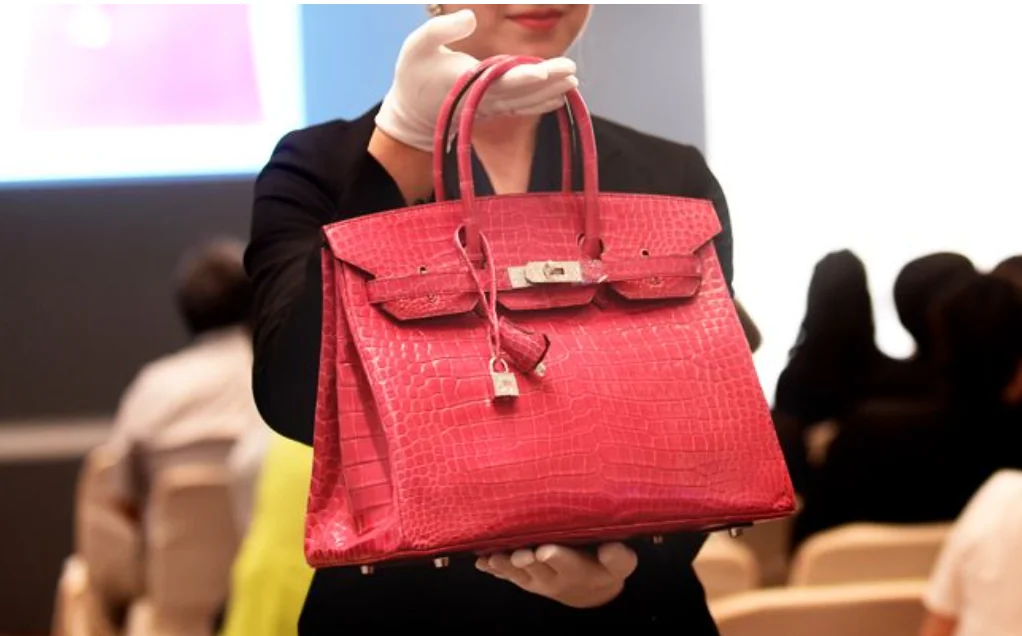
Hermès has cycled through more than 250 named leather colors since the house began producing bags in earnest, and at no point has color been treated as decoration layered on top of a “real” decision. For Hermès, color is the decision. A Birkin in Noir Togo and the same bag in Vert Anglais are, functionally, two different objects — different resale ceilings, different care routines, different odds of even finding one at retail.
That matters more once you’re buying at Hermès price points. A buyer choosing between Étoupe and a seasonal blue isn’t just picking a favorite — they’re setting a depreciation curve, a maintenance schedule, and in many cases, an authentication trail they’ll need to defend later on a resale platform. This guide walks through the color code system Hermès stamps into every bag, the major color families and what defines them, how the same code shifts appearance across leathers like Togo, Epsom, Swift and Chevre, and — because this is where most buyers actually get stuck — which colors tend to hold value and which quietly lose it. We’ll close with a straight buying framework, not a wish list.
How Does the Hermès Color Code System Work #
Every Hermès leather color is assigned a permanent alphanumeric code, and that code is physically stamped inside the bag — not printed on a hangtag, not written on a receipt. This is the detail that separates a confident identification from a guess.
The codes themselves are inconsistent in format for a simple historical reason: Hermès started with two-digit numeric codes (01, 06, 89) when the palette was small, and as the color range expanded into the hundreds, the house moved to letter-number combinations (2Z, Q5, 8F, Y9) to keep issuing new codes without reusing old ones. There’s no chronological logic to the numbering — 93 (Orange H) isn’t older or newer than 46 (Rouge H) just because the number is higher. The code is an identifier, not a timeline.
Where to Find the Stamp Without a Box or Card #
This is the question I get most often from buyers shopping resale without original packaging. The color code lives on a small leather tab stamped inside the bag, typically on the interior side seam near where the strap or handle attaches, close to the craftsman’s blind stamp and the date stamp (a letter inside a shape, indicating production year). On most Birkins and Kellys, you’ll find:
- A blind stamp (craftsman’s initials/number) — proves an artisan produced it, not authenticity by itself
- A date stamp — a letter enclosed in a geometric shape corresponding to the year of manufacture
- The color code — often a short alphanumeric sequence stamped directly onto the leather
The color code alone will not authenticate a bag — counterfeiters have gotten good at replicating stamp formatting. What it does is let you cross-reference the physical shade against Hermès’s official color charts (the printed reference cards used in boutiques and by trade authenticators) to confirm the color is even real and was produced in that leather. If a seller lists a bag as “Bleu Nuit” but the interior stamp reads a code that doesn’t match 2Z, that’s a red flag worth walking away from, not negotiating around.
Hermès Color Families: Neutrals, Reds, Blues, Whites & Metallics #
Rather than memorizing 250 individual names, it’s more useful to think in families, because family behavior is fairly predictable across resale, styling, and care.
Neutrals — the backbone of the collection #
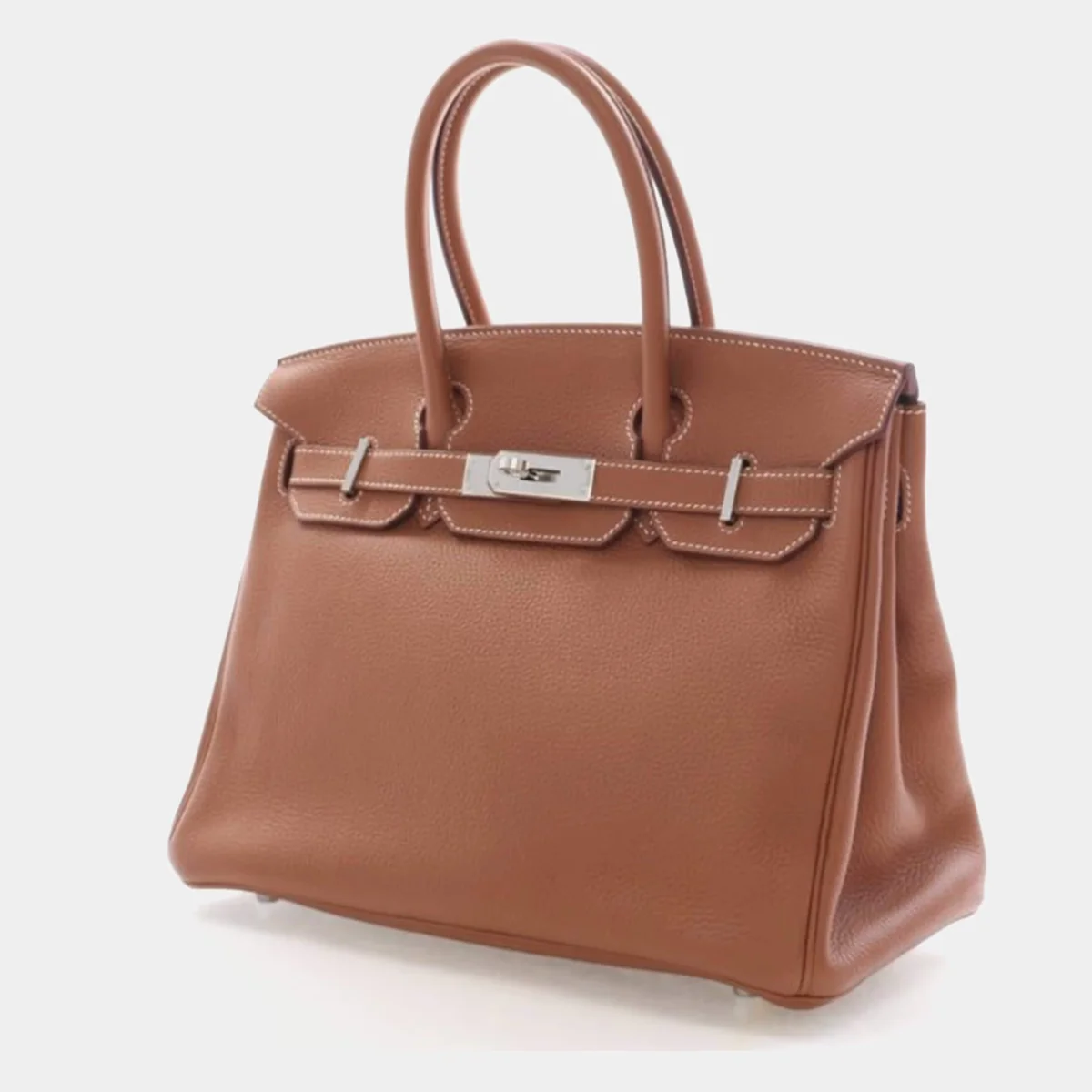
Gold (06, and later reissued under 37), Étoupe (18), and Noir (89) anchor this family. Gold is a warm, saddle-tan brown that was part of the original palette and remains one of the most requested colors in the resale market — it photographs well, hides everyday wear, and pairs with both silver and gold hardware. Étoupe, a taupe-grey, became a modern classic specifically because it splits the difference between neutral and directional, working in Togo and Epsom equally well. Noir is the default — safe, versatile, and the color most likely to be in stock, which is precisely why it commands the smallest resale premium of the three.
Reds — status colors with real variation #
Rouge H (46) is a deep, almost oxblood red with brown undertones, while Rouge Casaque (Q5) is a brighter, more saturated true red. These are not interchangeable, and buyers often assume “red is red” until they see both side by side. Rouge H reads more formal and pairs better with gold hardware; Rouge Casaque is the louder, younger choice.
Blues — Bleu Nuit and the broader family #
Bleu Nuit (2Z) is a near-navy that functions almost as a neutral alternative to black, which is exactly why it holds steadier [[[[resale value](/brands/celine-luggage-tote-guide-sizes-history-resale-value/)](/prices-and-value/luxury-price-hikes-2026-resale-impact/)](/buying-guides/luxury-resale-condition-grades-explained/)](/buying-guides/best-time-to-buy-a-luxury-handbag-1/) than more seasonal blues. Brighter or more saturated blues rotate through seasonally and tend to behave more like fashion colors than investments.
Whites — beautiful, and the hardest to own #
Craie (10) is a soft, slightly warm off-white, while Blanc (01) is a cleaner true white. Both have become genuinely scarce in boutiques over recent seasons, which sounds like good resale news — and partly is — but whites also show scuffing, ink transfer, and yellowing faster than any other family. More on that in the leather and care sections below.
Metallics — small production, high attention #
Doré (Y9), introduced for A/W 2024 in Chamkilight goatskin, represents Hermès’s more recent push into metallic finishes. These pieces are produced in limited runs and in a narrower set of leathers, which keeps them visually distinct but also limits how they age — metallic finishes are less forgiving of surface wear than matte leathers.
How New Colors Enter — and Leave — the Palette #
Hermès refreshes its color offering twice a year, for Spring/Summer and Autumn/Winter, typically introducing five to seven new shades per season. Some become permanent; most don’t. A color can run for a single season and then be “rested” indefinitely or retired outright, and this rotation isn’t incidental — it’s how Hermès manufactures scarcity. Every retired shade becomes, by definition, a smaller pool on the secondary market, which is part of why collectors track seasonal releases as closely as new bag styles.
The original core palette when Hermès handbags first launched was intentionally narrow: Noir (89), Rouge H (46), Étoupe (18), Gold (06), and Orange H (93). It later expanded to include Blanc (01), Étain (8F), Rouge Casaque (Q5), Craie (10), and Bleu Nuit (2Z) — the ten shades collectors generally refer to as the “classic core.”
2026 Seasonal Additions #
The Spring/Summer 2026 collection, released under the house theme “Venture Beyond,” added five new shades to the working palette, continuing directly from the A/W 2024 introductions — Doré (Y9) in metallic gold, Vert Peppermint, a light effervescent green, and Gris Platine, a cool silver-grey with a faint blue cast. As with every seasonal drop, expect boutique allocation to be tight on the new shades for the first several months; if a color is genuinely new, it will not be sitting on a shelf.
The Story Behind Hermès Orange (Code 93) #
Orange H wasn’t a design choice — it was a wartime accident that Hermès had the good sense not to correct. During World War II, material shortages forced the house to abandon its original cream-and-yellow packaging, and the only cardboard stock available at the time happened to be orange. The color turned out to be so distinctive on the street and in shop windows that Hermès kept it permanently, long after the shortage that created it had ended.
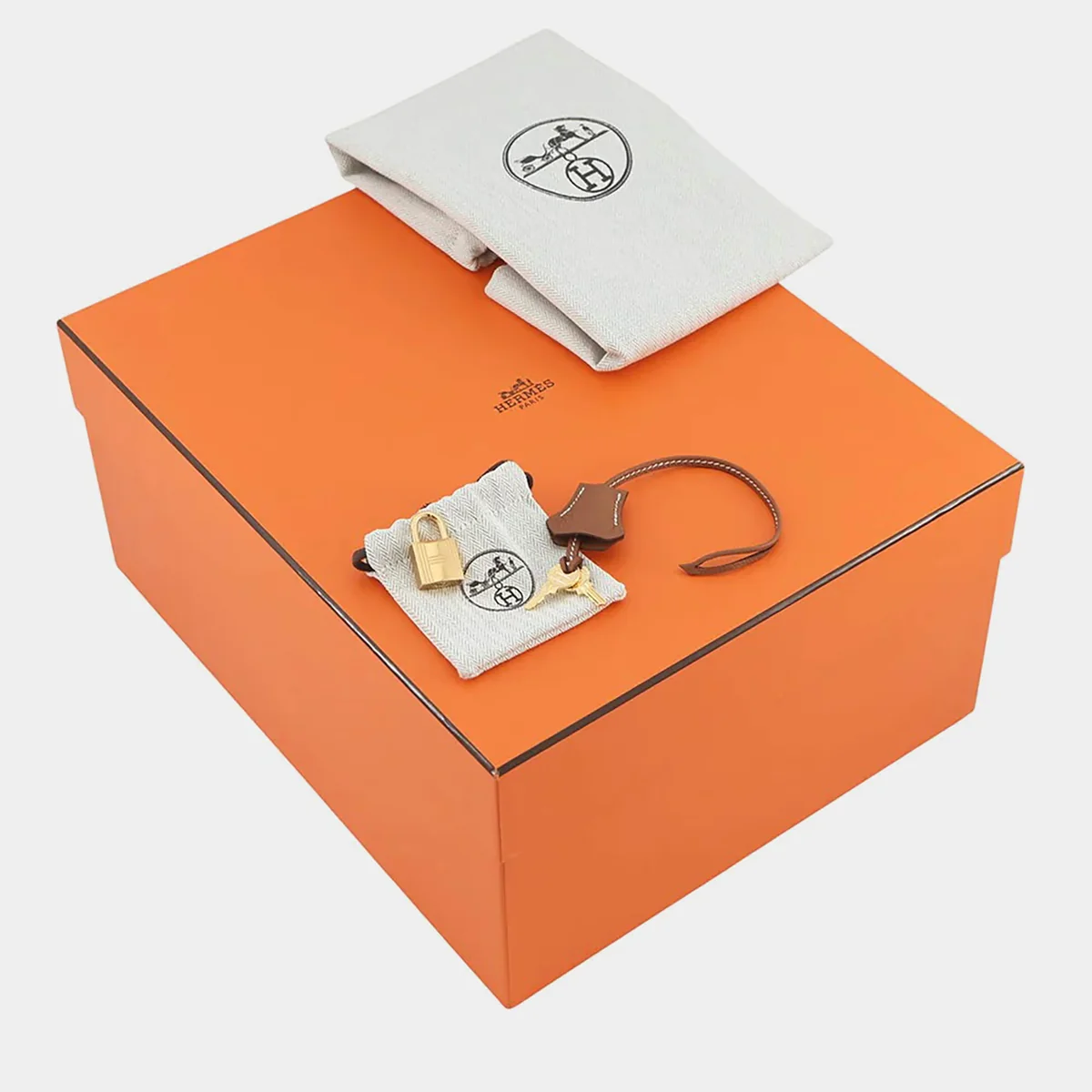
That accidental orange, code 93, is now arguably the single most recognizable proprietary color in luxury retail — more identifiable, in a lot of markets, than the logo itself. For collectors, the orange box tied with brown grosgrain ribbon carries real weight; a bag sold without its box loses a piece of provenance storytelling that some buyers will pay for and others genuinely won’t care about. Worth knowing either way when you’re pricing a resale listing.
How Leather Type Affects Hermès Color Appearance #
This is where a lot of first-time buyers get surprised, sometimes badly. The color code is fixed, but the leather it’s applied to is not a neutral canvas — grain, sheen, and dye absorption change how identically-coded leather reads in person.
- Togo has a pronounced natural grain and a matte finish. Colors on Togo tend to look slightly muted and more forgiving of light scratching, because the texture itself hides surface marks. Étoupe and Gold both read as warmer and softer on Togo than on smoother leathers.
- Epsom is embossed with a fine, more uniform grain and has a stiffer structure. Colors on Epsom appear crisper and slightly cooler, and the finish holds a cleaner edge — this is part of why Epsom is often recommended for structured colors like Bleu Nuit or Rouge H where you want definition rather than softness.
- Swift is smooth, lightweight, and glossier than Togo or Epsom. The same color code on Swift will look brighter and more saturated, since there’s no heavy grain to diffuse the light. Swift also shows scratches more readily — it’s the leather most likely to make a light color look pristine in photos and considerably more lived-in after six months of real use.
- Chèvre (goatskin) has a fine, slightly wrinkled texture and a subtle natural sheen. It tends to render darker colors — Noir, Rouge H — with more depth and takes color saturation well, which is part of why it’s frequently used for the metallic and richer seasonal shades.
Practical takeaway: never judge a color purely from a reference swatch or a photo of a different leather. If you’re deciding between Étoupe Togo and Étoupe Epsom, ask for photos of that exact leather-color combination, in daylight, not studio lighting.
Care and Colorfastness Differ by Shade, Not Just by Leather #
Lighter colors — Craie, Blanc, Gris Platine — show ink transfer from denim and dark clothing, yellowing from UV exposure, and edge staining far faster than darker neutrals. Smooth leathers like Swift and Box show scratches more visibly than grained leathers like Togo, regardless of color, but on light Swift the combination is worst-case: high visibility, low forgiveness. If you’re buying a white or pale bag to actually carry — not display — budget for more frequent professional cleaning and be realistic that resale condition will degrade faster than it would on a Gold or Étoupe equivalent.
Which Hermès Colors Hold the Best Resale Value #
Resale performance breaks down fairly consistently across dealer and consignment data, including listings tracked on platforms like Fashionphile and WGACA, and the pattern holds across Birkin, Kelly, and Constance:
Neutrals hold steadiest, but don’t always spike highest. Gold, Étoupe, and Noir sell fastest and closest to retail because demand is constant and cross-generational — they’re the safest resale bet precisely because they’re the least exciting choice. Noir in particular rarely trades far above retail because supply is relatively steady.
Discontinued and “rested” colors carry genuine scarcity premiums. Colors pulled from production — certain older blues, some retired greens and pinks — regularly resell above their original retail price once they’re several years gone, because the supply pool only shrinks from that point forward. This is the closest thing to a real investment angle in Hermès color strategy: buy a color you like that’s already being phased out, and time is working in your favor rather than against you.
Seasonal colors are a mixed bag, literally. Some seasonal shades become sleeper hits and get folded back into semi-permanent rotation with strong resale demand; most simply fade in desirability once the next season’s colors take the spotlight. Buying a seasonal color purely as a resale play is a weaker bet than buying a neutral or a color already confirmed as discontinued.
Whites underperform relative to their scarcity. Craie and Blanc are genuinely hard to find at retail right now, which should theoretically support high resale prices — and it does support strong first-sale prices on pristine, unused pieces. But because whites show wear so visibly, a large share of the secondary market supply is in condition that drags the price back down. The scarcity premium exists mainly on unworn or near-mint examples.
Orange H trades on brand identity, not investment logic. It’s iconic, it’s instantly recognizable, and it sells — but it’s a personal-style purchase more than a value play, since it’s never been particularly scarce.
If resale value is a real factor in your decision — not just a nice-to-have — the strongest combination is a discontinued or soon-to-be-retired shade in a durable, grained leather like Togo or Epsom, in excellent condition with the interior color stamp intact and legible.
FAQ: Hermès Colors, Codes & Value #
How do I find a bag’s color name if I don’t have the box or authentication card? Look for the small stamped leather tab inside the bag, usually near the strap attachment or side seam, which carries the alphanumeric color code alongside the craftsman’s blind stamp and date stamp. Cross-reference the code against an official Hermès color chart rather than relying on a seller’s description.
Can the same color code look different from bag to bag? Yes, and it’s not a red flag by itself. Leather type (Togo vs. Epsom vs. Swift vs. Chèvre) changes how a color reads due to grain and sheen, and dye lots can shift subtly year to year. Significant color drift plus a mismatched interior code, though, is worth investigating further.
Is Orange H rare? No — it’s the brand’s signature color and has been produced continuously since the packaging switch during WWII. It’s iconic, not scarce.
Which colors are hardest to authenticate from photos alone? Whites and pale neutrals (Craie, Blanc, Gris Platine) are the trickiest, because lighting and camera white balance shift them significantly. Always request the interior stamp photo before buying a light-colored bag based on listing images.
Do discontinued colors always sell for more? Not automatically — condition dominates. A discontinued color in worn, scratched leather can still sell below a pristine current-season neutral. Scarcity raises the ceiling; it doesn’t override condition.
Is a Doré or metallic bag a good investment? Metallics are newer, produced in smaller runs, and in narrower leather options, which supports demand — but they’re also less battle-tested on resale over time and more sensitive to surface wear. Treat them as a style purchase with upside potential, not a guaranteed appreciating asset.
Recommendations and Buying Advice #
If resale value is your priority, buy Gold, Étoupe, or Noir in Togo or Epsom — they sell fastest, hold value most predictably, and are the easiest to authenticate confidently because they’re the most photographed and referenced colors on the secondary market.
If you want upside potential and are comfortable with more research, target a color that has already been confirmed discontinued or “rested” rather than chasing the newest seasonal release — the scarcity premium builds after the fact, not during the hype cycle.
If you’re drawn to whites, pale neutrals, or metallics, buy them for how they make you feel carrying the bag, not for their resale math, and budget realistically for more frequent cleaning and more visible wear over time.
Before you buy anything pre-owned, get a clear photo of the interior color stamp and match it against an official Hermès color reference — not just the seller’s stated color name — and ask specifically which leather the bag is in, since the same code can look meaningfully different across Togo, Epsom, Swift, and Chèvre. That single verification step catches more misrepresented listings than any other check you can do without handling the bag in person.
Related Articles #
- Hermès Leathers Guide: Togo, Epsom, Exotic Skins Explained
- Hermès Investment Bags Worth Treasuring Forever
- 5 Iconic Bags Named After Famous Women (Buying Guide)
- Luxury Fashion Investment: Why Pre-Loved Pays Off
- 10 Luxury Handbag Brands Worth Investing In
Related guides
- Online Bag Authentication: What Photos Can and Cannot Prove
- Private Bag Edit: Hermès Kelly Authentication Blog
- Hermès Date Codes & Stamps Explained: Full Guide
- Hermès Crocodile vs Alligator Bags: Buyer's Guide
- How to Buy an Authentic Luxury Bag from China Safely
- New vs Pre-Owned Luxury Bags: Which Route Is Right for You?
- Chanel Bag Guide: What to Know Before You Buy
- Luxury Bag Houses


Keyword index