Introduction: Why the Dior 30 Montaigne Is This Week’s Must-Have #
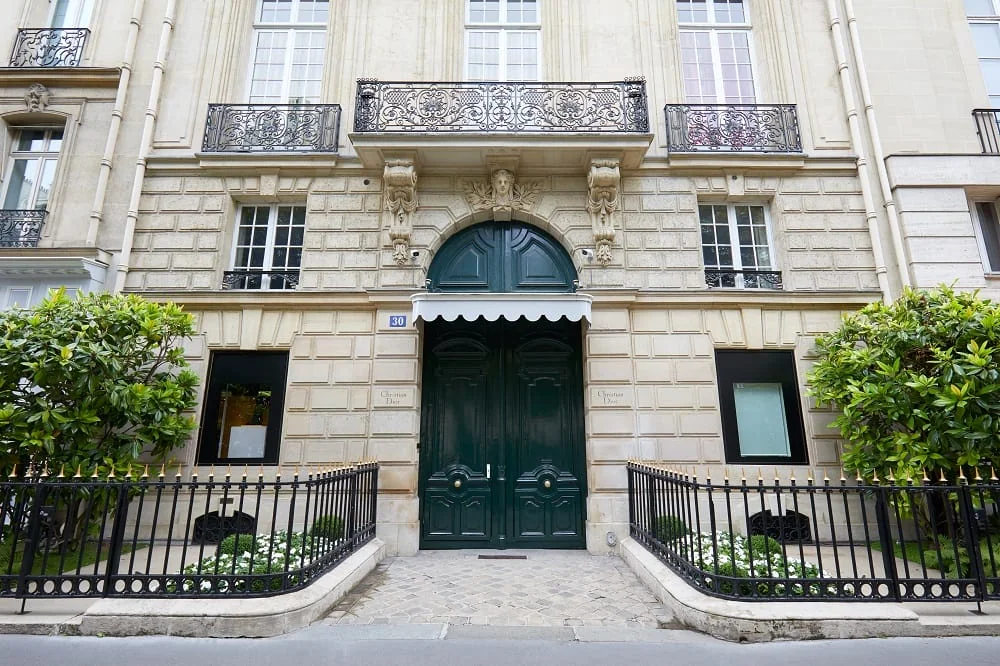
Every so often a handbag stops being just a handbag and turns into shorthand for a whole aesthetic. That’s what happened with the Dior 30 Montaigne. It shows up on editors’ arms at fashion week, on quiet-luxury mood boards, and increasingly in resale listings where buyers are hunting for the right size, leather, and price before the market catches up to demand.
For anyone shopping the [[[pre-owned luxury](/brands/lady-dior-bag-princess-diana-story/)](/buying-guides/replica-vs-pre-owned-bags/)](/buying-guides/luxury-handbag-trends-2024/) space, that moment matters. Rising demand means rising prices, more counterfeits in circulation, and more sellers listing bags with incomplete or misleading condition notes. If you’re considering a 30 Montaigne, whether new or pre-loved, you need more than admiration for the silhouette. You need to know what you’re paying for, what makes one authentic, and how it holds its value against Dior’s other icons. That’s what this guide covers.
The Heritage Behind the 30 Montaigne Name #
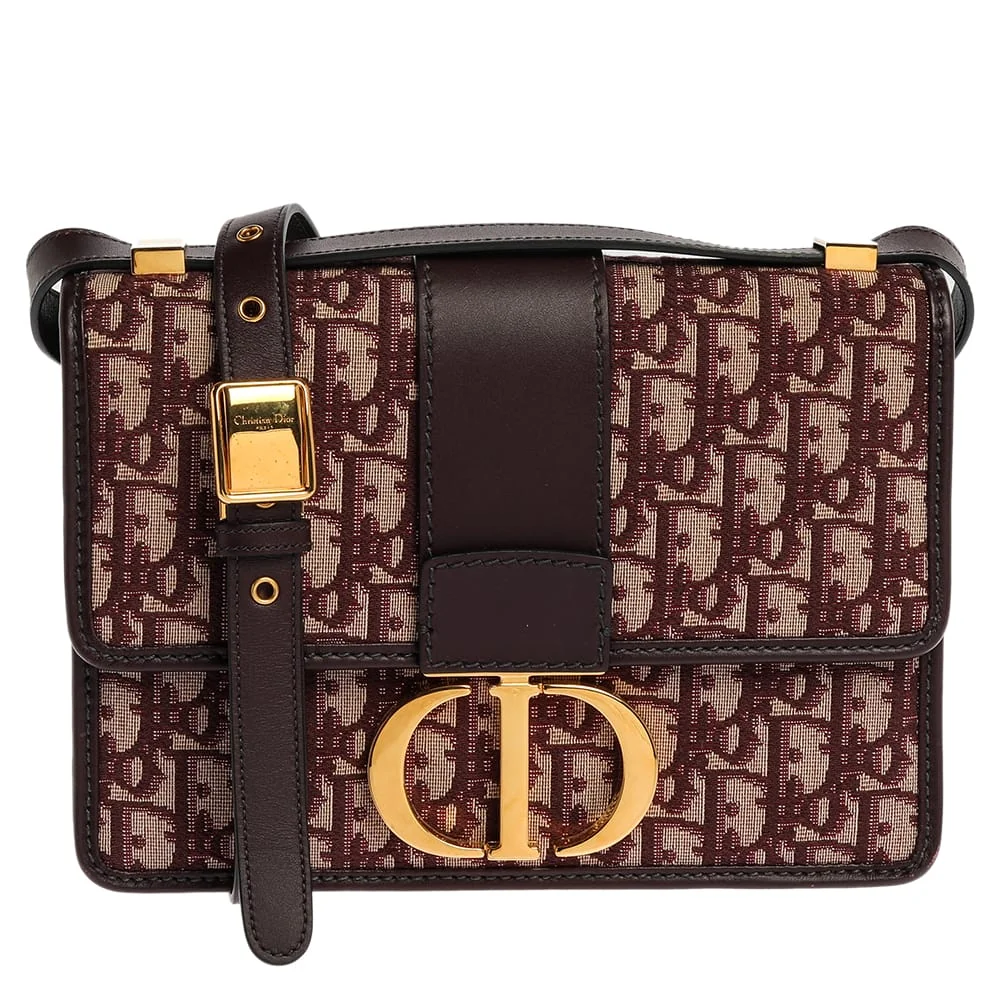
The bag takes its name literally from an address: 30 Avenue Montaigne, Paris, the site of Christian Dior’s original atelier and the building where the House was born in 1946. Naming a bag after the maison’s founding location is a deliberate move, one Dior has used before with pieces tied to its archives, but the 30 Montaigne leans into it more directly than most.
Maria Grazia Chiuri, Dior’s artistic director, introduced the bag in the Pre-Fall 2019 collection as part of a broader push to build a modern “It bag” that didn’t rely on the softer, more structured cannage quilting of the Lady Dior. Dior’s chairman Pietro Beccari has spoken about recognizing the bag’s potential from its first prototype, and the House backed that instinct with heavy marketing, including a Vogue-produced short film starring the Blue Oblique jacquard version.
What makes the heritage angle relevant to buyers, not just fashion historians, is that it explains design choices you’ll see later: the structured rectangular body, the CD hardware clasp, and the “30 MONTAIGNE” embossing on the back panel are all references back to the brand’s origin story rather than arbitrary styling.
Design Details: Silhouette, Materials, and the Blue Oblique Jacquard Edition #
Silhouette and construction #
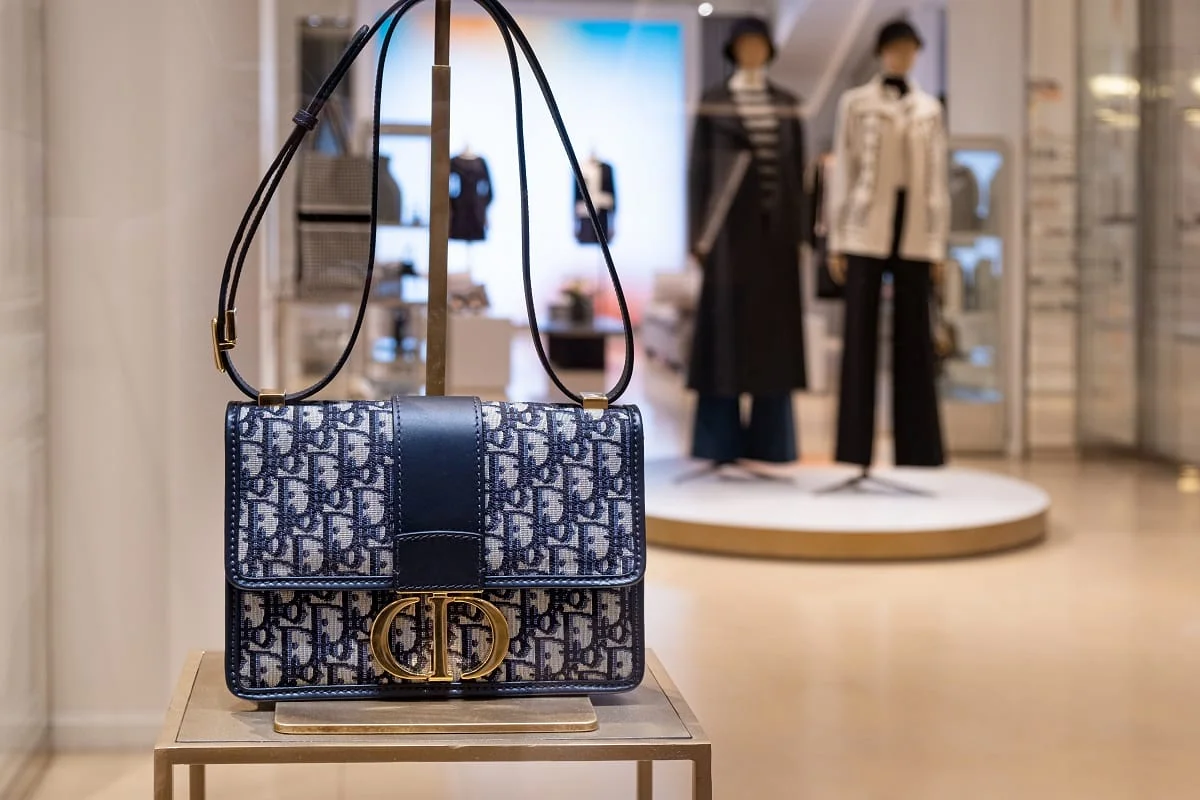
The 30 Montaigne breaks from the softer, curved lines of the Lady Dior in favor of a structured, boxy rectangle with a flat base. That shape is part of why it reads as more office-appropriate and less overtly “occasion bag” than its predecessors. The front flap is secured by a gold-toned or palladium-finish CD clasp, which isn’t purely decorative. It’s a functioning turn-lock that opens the main compartment.
Flip the bag around and you’ll find “30 MONTAIGNE” embossed into the leather on the back panel, with a slim slip pocket tucked beneath it, useful for a transit card or a folded note you want quick access to without opening the flap.
Materials and hardware #
Dior offers the 30 Montaigne across several leathers:
- Smooth calfskin, the most common and most affordable entry point
- Grained calfskin, slightly more casual and more resistant to scratching
- Patent calfskin for a glossier finish
- Blue and beige Oblique jacquard, a fabric treatment rather than a leather
- Exotic skins (python, crocodile) in limited runs, priced significantly higher
Hardware comes in gold-tone, palladium (silver-tone), and occasionally aged or antique-brass finishes depending on the season. The shoulder strap is detachable and interchangeable, a practical detail worth noting: remove it and the bag functions as a clutch, shorten it for a crossbody, or swap in a chain strap if your version came with one. Dior has released the bag with both a slim leather strap featuring a military-style “Christian Dior” buckle, and a broader leather or chain option.
The Blue Oblique jacquard edition #
The Oblique motif itself predates Chiuri. It was originally introduced under Marc Bohan and later revived as a signature print across multiple Dior product lines. On the 30 Montaigne, the jacquard is woven with the “Dior Oblique” text repeated across the surface, paired with the gold CD clasp. It’s the version most associated with the bag’s viral moment, largely thanks to Dior’s Vogue collaboration film, but it’s worth knowing that jacquard is more prone to surface wear and staining than calfskin, which matters if you’re buying with resale in mind.
Price and Resale Value: Is the Dior 30 Montaigne Worth the Investment #
Retail pricing on the 30 Montaigne varies by size and material, and Dior has adjusted prices upward across several collections in recent years, as most luxury houses have. As a general guide:
- Small smooth calfskin: roughly $3,900–$4,300 at retail
- Small Oblique jacquard: roughly $4,100–$4,500
- Medium/larger versions and chain-strap variants: typically $4,500–$5,500
- Exotic skins: can exceed $10,000 depending on the skin and finish
Treat these as directional rather than exact. Prices shift with currency, region, and Dior’s periodic increases, so always check current retail before assuming a resale listing is a “deal.”
On the resale market, the 30 Montaigne tends to hold value better than many mid-tier designer bags but not as strongly as Dior’s most established icons. In good condition with original hardware intact, expect resale prices in the 55–70% range of current retail for popular colorways and leathers. Rare colors, discontinued hardware finishes, or unworn condition with tags push toward the higher end. Jacquard pieces with visible fabric wear or edge fraying sell noticeably below calfskin equivalents in comparable condition, which is a useful data point if you’re choosing between finishes for investment purposes rather than pure styling preference.
The honest downside: because the bag launched relatively recently (2019), it hasn’t had decades to prove long-term value retention the way the Lady Dior has. Buyers treating it as a hard asset should moderate expectations accordingly.
Authenticity Check: Spotting a Genuine Dior 30 Montaigne #
Counterfeits of the 30 Montaigne have increased in step with its popularity, and the Oblique jacquard version in particular gets replicated often because the printed pattern is easier to fake convincingly than fine calfskin grain. A few checks worth running on any listing or in-person inspection:
- Stitching: Genuine Dior stitching is even, tight, and consistent in thread tension along every seam, including the base and strap attachment points. Loose threads, uneven spacing, or visible glue residue near seams are red flags.
- CD clasp: The clasp should have crisp, deep engraving on the CD letters with a clean finish, not a shallow or blurry stamp. It should also open and close with a firm, mechanical click, not a loose wobble.
- Embossing: The “30 MONTAIGNE” back-panel embossing should be evenly pressed and centered. Off-center or shallow embossing is common on fakes.
- Interior tag and date code: Authentic Dior bags carry an interior leather tag with “Christian Dior” and “Made in Italy” (or occasionally another country of origin depending on the line), along with a printed or stamped code. Font weight, spacing, and placement should match verified authentic references; sellers who can’t show a clear photo of this tag should raise suspicion.
- Jacquard alignment: On genuine Oblique jacquard pieces, the pattern is aligned symmetrically across the front flap and back panel. Misaligned or cut-off repeats are a common tell on counterfeits.
- Hardware weight and finish: Authentic hardware has real heft and a finish that resists tarnishing quickly. Lightweight, thin-feeling hardware with an uneven gold or silver tone is a common giveaway.
None of these checks are foolproof on their own, and high-quality counterfeits do exist. For any purchase above a few hundred dollars, especially on an open resale marketplace, a professional authentication service or in-house verification (as reputable resale platforms provide) is worth the cost relative to the risk.
Buying Guide: Choosing and Styling Your 30 Montaigne #
Start with how you’ll actually use the bag, not just which colorway you saw on Instagram. The small size handles daily essentials, phone, cardholder, keys, a compact, comfortably, but it won’t fit a tablet or a water bottle. If you need more room for work or travel days, look at the medium or chain-strap versions rather than forcing the small size to overperform.
On material: smooth calfskin is the safer long-term choice if resale flexibility matters, since it shows wear more gracefully and repairs more easily than jacquard fabric. If you’re buying for the design statement rather than resale optimization, the Oblique jacquard remains the most recognizable and most photographed version, but budget for more careful handling and storage.
Color-wise, black and navy calfskin are the most versatile and easiest to resell later. Beige and nude tones photograph beautifully but show soiling faster. If you want a piece that stands out, the Blue Oblique jacquard or a patent finish will do that, at some cost to everyday practicality.
Styling-wise, the detachable strap is the bag’s most useful feature. Remove it for evening as a clutch, use the slim leather strap for daytime crossbody wear, or swap in a chain strap if your version supports it. That flexibility is part of why the bag has stayed relevant across multiple seasons rather than reading as a single-trend purchase.
30 Montaigne vs. Lady Dior vs. Book Tote #
These three bags cover different needs, and buyers often assume they’re interchangeable when they aren’t.
Lady Dior is the House’s most historically significant bag, defined by its cannage quilting and Dior charms. It’s softer in structure, more overtly dressy, and generally commands the strongest resale value of the three because of its longer track record and deeper cultural association (it’s the bag Princess Diana carried, which anchors its status). It’s less practical for daily heavy use than the 30 Montaigne.
Book Tote is the workhorse of the lineup: canvas-based, large, unstructured, and built for capacity rather than formality. It’s the least “precious” of the three, which makes it more forgiving for daily wear but generally lower on the resale ladder relative to leather pieces, since canvas totes show wear faster and command less premium than structured leather bags.
30 Montaigne sits between them: more structured and dressier than the Book Tote, more practical and less ornate than the Lady Dior. If you want one bag that transitions from office to dinner without the softness of the Lady Dior or the bulk of the tote, the 30 Montaigne is the more versatile middle ground. If long-term value retention is the priority, the Lady Dior currently has the stronger track record; if daily-use capacity matters most, the Book Tote wins on function even if it trails on resale.
FAQ: Common Questions About the Dior 30 Montaigne Bag #
What sizes does the Dior 30 Montaigne come in? Dior has released it primarily as a small size (roughly 23 x 18 x 9 cm) alongside medium and chain-strap variants with slightly larger dimensions. Mini and box-style versions have also appeared in specific seasonal drops.
How much does the Dior 30 Montaigne cost pre-owned? Expect roughly 55–70% of current retail for good-condition pieces, with calfskin holding value better than jacquard. Rare colorways or hardware finishes can push higher.
Is the Blue Oblique jacquard version more prone to wear than calfskin? Yes. The woven jacquard shows surface wear, snags, and staining more readily than smooth or grained calfskin, which is worth factoring into both care routine and resale expectations.
Where should I buy a pre-owned 30 Montaigne safely? Stick to resale platforms with in-house authentication, clear return policies, and detailed photos of the interior tag, hardware stamps, and stitching. Avoid listings that only show exterior glamour shots.
How do I care for the leather and hardware? Store the bag stuffed to hold its shape, keep it away from direct sunlight and high humidity, and avoid contact with perfume or hand sanitizer, which can discolor leather. Clean hardware with a soft, dry cloth only; avoid household metal polishes.
Does the 30 Montaigne come with a detachable strap? Yes, the shoulder strap is removable and interchangeable, letting the bag function as a clutch, crossbody, or shoulder bag depending on strap choice.
Related Articles #
- 5 Most Popular Chanel Bags You Need to Know
- Popular Handbag Brands: Which One Is Right for You?
- 5 Iconic Bags Named After Famous Women (Buying Guide)
- 5 Rare Chanel Bags Every Collector Should Know
- Why the Chanel Crossbody Bag Never Goes Out of Style
Related guides
- Online Bag Authentication: What Photos Can and Cannot Prove
- Luxury Handbag Authentication Process Explained
- China TikTok Luxury Factory Claims: Fact vs Fiction
- Chanel 2.55 History, Details & How to Spot a Fake
- How to Buy an Authentic Luxury Bag from China Safely
- New vs Pre-Owned Luxury Bags: Which Route Is Right for You?
- Chanel Bag Guide: What to Know Before You Buy
- Luxury Bag Houses


Keyword index