Introduction: Why the Paddington Is Having a Moment Again #
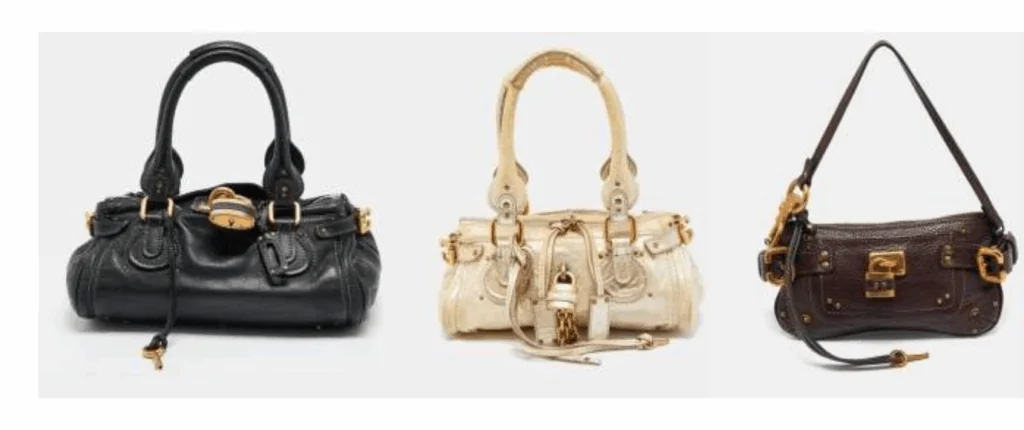
There’s a difference between a bag that trends and a bag that returns. The Chloé Paddington is doing the latter — and the distinction matters.
Over the past two years, the Paddington has moved steadily from vintage obscurity back into the hands of editors, buyers, and a new generation of collectors. It’s appearing on red carpets again, resurfacing on resale platforms at multiples of its pandemic-era lows, and anchoring conversations about what meaningful design looks like when the fashion cycle swings back toward character. This isn’t manufactured nostalgia. The timing is specific: as the minimalism of the 2010s feels increasingly thin in retrospect, and as quiet luxury reaches its saturation point, the appetite for bags with genuine personality has sharpened considerably.
Chloé’s decision to reissue the Paddington under current creative director Chemena Kamali accelerated the conversation, but it didn’t start it. The secondary market was already moving. Search interest was already climbing. The reissue simply confirmed what collectors had sensed: this bag has lasting design merit, not just sentimental value.
If you’re considering buying — whether new, vintage, or pre-owned — this is the moment to understand exactly what you’re getting, what it costs at each tier, and whether the investment holds up beyond the hype cycle.
The Design Story: Phoebe Philo and the Bag That Changed Everything #
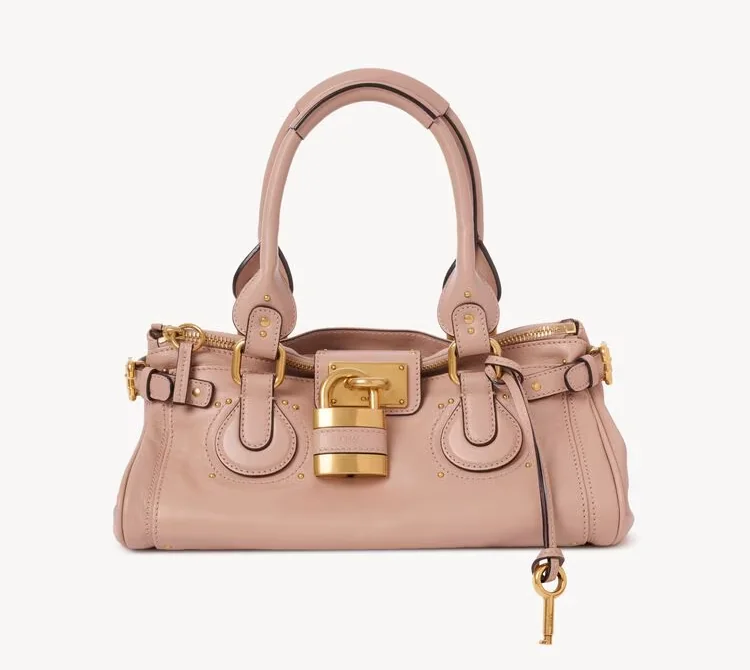
Phoebe Philo joined Chloé as creative director in 2001 and spent five years reshaping the house into something genuinely covetable. Her instincts were sharp: she understood that luxury didn’t need to announce itself through logos, but it did need to have presence. The Paddington, which debuted as part of the Autumn/Winter 2005 collection, was the fullest expression of that thinking.
The bag’s central element — an oversized brass padlock — was the move that defined everything. At the time, functional hardware as a design statement wasn’t the obvious choice. The lock wasn’t decorative in the conventional sense; it was almost confrontational in scale, deliberately weighted and graphic. It gave a soft, rounded bag an unexpected edge, and it transformed what could have been a straightforward tote into a piece with real visual authority.
What made Philo’s vision particularly prescient was what the Paddington wasn’t. It wasn’t stiff. It wasn’t precious. The distressed calfskin leather was designed to look better with use — to patina, to soften, to acquire the kind of worn-in quality that new money couldn’t buy. At a moment when luxury was often synonymous with preservation, the Paddington encouraged wear. That philosophy anticipates almost exactly what the current generation of luxury buyers prizes most.
The bag generated waiting lists before it arrived in stores. It retailed at launch for approximately £600–£800in the UK and around $1,100–$1,400 in the US — significant sums at the time, and the demand was extraordinary. Within a season, it was everywhere: in editorials, in paparazzi shots, in the hands of the women who defined mid-2000s style. The padlock became as recognisable a symbol as any house monogram. That kind of design clarity is rare, and it’s the main reason the bag has survived critical reassessment so well.
Y2K Reappraisal: What the Paddington Represents Culturally #
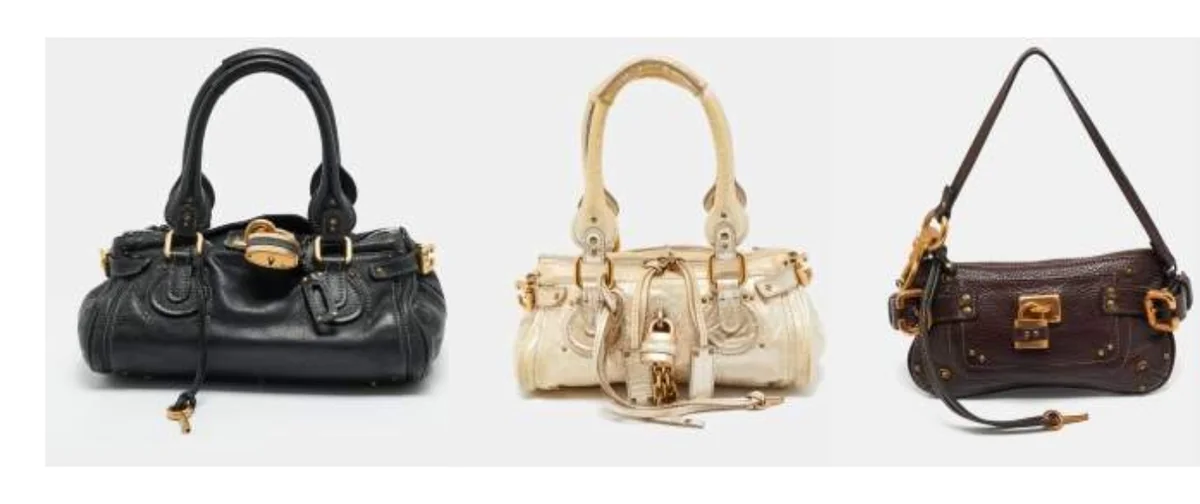
The Y2K revival has been running long enough now that it’s worth separating its lasting elements from its novelty. Early in the cycle, everything from the early 2000s got swept up together — low-rise denim, Von Dutch caps, rhinestone everything. That phase has passed. What remains is a more selective reappraisal: the pieces that held genuine design value are being pulled forward, and the rest is fading back into archive.
The Chloé Paddington falls firmly in the first category. It wasn’t a trend accessory when it launched — it was a genuinely considered design object that happened to arrive during a culturally fertile moment. The distinction matters because it determines whether the revival is substantive or cyclical. A bag that was only ever interesting as a trend reference will look dated again once the trend exhausts itself. A bag with real design merit looks relevant in multiple contexts.
For millennials, the Paddington carries specific emotional weight. It was the bag in the magazines, the piece that signalled a particular kind of aspirational identity — expressive, slightly undone, confident without being performative. For the Gen Z buyers now encountering it through archive culture and resale platforms, it offers something different: discovery. A bag with clear provenance, a story attached, and a silhouette that stands apart from the homogeneity of contemporary design.
The broader cultural context reinforces this. After a decade of stealth wealth signalling — where the goal was to look expensive without looking like you tried — there’s a visible hunger for bags that make a statement. The Paddington’s padlock does exactly that, but with enough design intelligence behind it that it reads as considered rather than obvious. It sits comfortably alongside the Fendi Baguette and the early Balenciaga City as a 2000s bag being taken seriously on design terms, not just nostalgia.
That said, cultural timing can flatter even flawed objects. The section below is where I give you the honest version.
Honest Assessment: The Paddington’s Strengths and Weaknesses #
I’ll start with what the Paddington does genuinely well, because the list is substantial — and then I’ll be direct about the drawbacks, because the most significant one is something any buyer needs to know before committing.
What works
The leather quality on original Paddingtons is exceptional. Chloé used a thick, supple calfskin that ages beautifully — original examples from 2005–2007, when cared for reasonably, have developed a patina that actually improves the bag’s character. This is not a bag that looks worse with time. For buyers considering vintage, that’s a meaningful argument.
The silhouette has proven durable. Rounded, slouchy, unpretentious — it doesn’t fight a contemporary wardrobe the way some2000s shapes do. The proportions are generous without being oversized by today’s standards. The top-handle design reads as current, and the lack of a prominent logo ages far better than the branded accessories of the same era.
The padlock hardware is genuinely satisfying. It opens with a key, it has weight and precision, and it gives the bag an unmistakable identity without looking like costume jewellery. The brass develops a warm patina over time that suits the distressed leather well.
What doesn’t
The weight is the honest dealbreaker for some buyers, and I’d be doing you a disservice not to lead with it. The padlock alone weighs approximately 200–250 grams. Combined with the bag’s leather construction, a loaded Paddington can reach close to a kilogram before you’ve put anything inside it. If you carry your bag on the crook of your arm all day, this matters. If you have any existing shoulder or neck concerns, it matters more. This isn’t a bag for light days.
The locking mechanism, while characterful, is impractical for urban daily use. Reaching into your bag quickly while navigating public transport or a crowded shop requires unlocking — which requires the key, which you will, at some point, lose or forget. This is an aesthetic trade-off the original designers made consciously, but it’s worth understanding in advance.
Colourway fading is also worth noting on vintage examples. The more saturated shades — certain greens, some of the deeper blues — can fade unevenly with sun exposure. Inspect thoroughly before buying.
The current reissue addresses the weight issue partially, with revised construction and proportions. The new version is lighter and the hardware has been refined. Whether it fully captures the original’s character is a matter of taste; it’s a considered modern interpretation, not a replica.
Who it suits
The Paddington works best for someone who wants a secondary bag — an evening or weekend option rather than a daily workhorse. It also suits anyone who genuinely appreciates design with a point of view and is willing to accept a practical trade-off for it. If you want a bag that disappears into your life, look elsewhere. If you want one that adds something to it, this is a strong candidate.
[[[[Buying Guide](/buying-guides/luxe-capsule-wardrobe-guide-2025/)](/buying-guides/best-valentines-day-jewelry-gifts/)](/buying-guides/best-luxury-clutches-2026-pre-owned-uae/)](/brands/kenzo-disney-jungle-book-collection/): New, Pre-Owned or Vintage — What to Know #
The three tiers
New (2024 Chloé reissue): Approximately $2,100–$2,600 USD / £1,850–£2,300 GBP, depending on size and colourway. Available through Chloé boutiques and chloe.com. The advantage here is condition certainty and current-season relevance. The trade-off is that the reissue is a revision, not a replica — proportions differ from the original and the leather has a slightly different hand.
Pre-owned (good to excellent condition): $400–$950 USD on platforms including Vestiaire Collective, The RealReal, and Fashionphile. This is the most value-rich tier for buyers who want the original version. Condition grading matters significantly — “good” can cover a wide range, so always request detailed photographs of the lock, the leather, interior lining, and hardware.
Vintage archive (exceptional or unworn condition): $700–$1,800+ USD, with rare colourways and limited editions exceeding $2,000. Original dust bags, box, and spare keys add value and should be requested where available. The price premium for pristine vintage examples has increased noticeably since 2023.
Authentication: what to check
The secondary market for the Paddington carries real risk, because the bag’s resurgence in popularity has increased the incentive for sellers to misrepresent condition or authenticity. Here is what to examine closely:
The padlock weight and quality. This is your primary tell. An authentic Paddington padlock is solid brass — noticeably heavy in hand, with clean engraving and a smooth lock mechanism. Counterfeit versions consistently use lighter alloy, and the difference is immediately apparent when you handle both. If buying remotely, ask the seller to describe the lock’s weight relative to the bag; anyone who has handled a genuine example knows it’s substantial.
Interior stamp and font. The interior should carry a Chloé stamp with consistent, clean typography. Irregular font weight, misspelling of the house name (more common than you’d expect in fakes), or an embossed stamp that appears soft or shifted are all red flags.
Stitching. Original Paddingtons have tight, even stitching throughout. Pay particular attention to the handle attachment points and the base corners, where wear is most likely to reveal construction quality or its absence.
Leather smell and texture. Authentic calfskin has a clean, faintly warm leather smell. Synthetic or low-quality leather alternatives often carry a chemical or plastic note, particularly when new. If you can inspect in person, this is immediately apparent.
Hardware engraving depth. The Chloé branding on the lock should be cleanly and deeply engraved. Shallow, scratchy, or slightly blurred engraving indicates either a fake or very significant wear.
Red flags to walk away from
A padlock that feels light or rattles. Interior lining that is peeling, synthetic-feeling, or incorrectly coloured. Sellers who cannot provide clear photographs of the interior stamp. Prices significantly below current market rates for stated condition — if it seems too good, it almost always is. Any description that mentions “inspired by” or lists the brand in quotation marks.
Where to buy with confidence
Vestiaire Collective and The RealReal both offer authentication services, though the rigour varies. Fashionphile has a strong reputation for 2000s archive pieces specifically. OneBay and Depop, without authentication support, the risk increases substantially — proceed only if you are confident in your own authentication ability or have access to expert verification.
Investment Value and Resale Potential #
The Paddington is not yet a mathematically reliable investment in the way a Hermès Birkin is — nothing is — but the directional signals are genuinely interesting for buyers thinking beyond personal use.
Pre-owned examples in excellent condition that were selling for $280–$420 USD in 2021 are regularly achieving $650–$950 in 2024–2025, depending on colourway. That’s meaningful appreciation in a relatively short window. The trigger is clear: the combination of Chemena Kamali’s reissue announcement, the broader Y2K reappraisal gaining editorial momentum, and social media-driven archive culture have all converged to lift secondary market prices simultaneously.
Where value concentrates
Colourway is the most significant driver of price differentiation within the Paddington category. The whiskey tan — the warm golden-brown that became the bag’s signature image in editorial coverage — commands the strongest premiums and is the most searched. Certain limited-production colours from the original run, including a deep forest green and a dusty rose from the 2006 collection, are now actively hunted by collectors and command prices well above standard examples.
Size also affects value. The original medium is the most recognisable and most desirable. The mini and large formats are less liquid on the secondary market, though they have their committed advocates.
The reissue effect
When a house reissues an archival piece, it tends to validate and elevate secondary market prices for originals — the Fendi Baguette reissue demonstrated this clearly, and the Paddington appears to be following a similar trajectory. The reissue draws attention to the original’s design credibility; buyers who can’t justify new retail pricing, or who specifically want the original construction, move to the secondary market and push prices upward.
Honest long-term outlook
The Paddington is unlikely to achieve Birkin-level value stability, but it also isn’t a speculative play that needs to exit quickly. For buyers who would genuinely use and enjoy the bag, the combination of acquisition cost and current resale trajectory makes pre-owned examples — particularly in rare colourways and excellent condition — defensible as considered purchases that hold value reasonably well. The caveat is that it remains dependent on continued cultural attention. If the broader Y2K reappraisal loses momentum, pricing pressure could ease. For now, the trajectory is upward.
Compared to other 2000s bags tracking similar trajectories: the Balenciaga City has followed a steeper recovery curve due to its broader styling versatility. The Dior Saddle’s reissue drove significant secondary market appreciation. The Paddington sits between the two — less universally wearable than the City, but with stronger cultural narrative and more distinctive design DNA than much of what’s being reappraised from the same period.
How to Style the Paddington Today Without Looking Costume #
The single most important rule: don’t dress the era. The Paddington in 2025 works when it reads as a design choice, not a theme. The moment you’re pairing it with low-rise jeans, a graphic baby tee, and chunky mules, you’ve built a mood board rather than an outfit.
What actually works
The Paddington’s distressed leather and warm hardware tones make it surprisingly sympathetic to contemporary tailoring. A pair of wide-leg trousers in camel or chalk, a clean-lined shirt, and loafers with the Paddington carried on the arm reads as considered and current, not referential. The bag adds visual weight and personality without fighting the outfit.
Tonal dressing is where the whiskey colourway earns its premium. Build an outfit in warm neutrals — cream, sand, camel, cognac — and the Paddington anchors it without effort. The brass hardware reads as jewellery at this scale, and you don’t need much else.
For evenings, the bag carries well against a simple column dress or a straight-cut blazer dress. The padlock hardware does enough work that the rest of the outfit can stay deliberately quiet.
What to avoid
Pairing with other obviously 2000s-coded pieces in the same look. One era reference at a time is the rule. Also avoid very structured or precious contemporary pieces — the Paddington has an inherent relaxedness to it that can look odd against extremely sleek, formal dressing. It belongs with ease, not rigidity.
If you’re buying vintage, consider the patina. A deeply worn whiskey Paddington has enormous character but demands an outfit that can meet that level of personality. Against very clean contemporary minimalism, heavily worn vintage can read as shabby rather than considered.
The reissue’s slightly more refined proportions make it easier to integrate with modern wardrobes without the styling work the original sometimes requires. If versatility is the priority, the new version has the edge on that front.
FAQ: Everything Readers Ask About the Chloé Paddington #
Is the Chloé Paddington bag still in production? Yes. Chloé reissued the Paddington under creative director Chemena Kamali. The new version is available through Chloé boutiques and the brand’s website. It’s a revised interpretation of the original rather than an exact replica — lighter construction, refined proportions — but recognisably the same bag. Original vintage examples from 2005–2008 are available on the secondary market and represent the closest experience to Phoebe Philo’s original design.
How much does a Chloé Paddington cost? New reissue retail pricing runs approximately $2,100–$2,600 USD depending on size and colourway. Pre-owned examples in good condition typically range from $400–$950, while pristine vintage archive examples — particularly in sought-after colourways — can reach $1,500–$2,000+. Prices on the secondary market have risen meaningfully since 2022in response to the revival.
Why is the Chloé Paddington so heavy? The padlock is the primary culprit. Made from solid brass, it weighs approximately 200–250 grams on its own — before the bag itself is factored in. Loaded with everyday essentials, the original Paddington can reach close to one kilogram. This was a deliberate design choice — the lock’s weight is part of its presence — but it’s a genuine practical trade-off. The reissue addresses this partially with revised hardware construction.
How can I tell if a Chloé Paddington is authentic? Key indicators: the padlock should feel solidly heavy in hand (counterfeits consistently use lighter alloy); interior stamping should be clean and precisely rendered; stitching should be tight and uniform throughout; leather should have a genuine hide smell rather than a synthetic or chemical note. The lock mechanism itself should operate smoothly with the original key. When buying remotely, request detailed photographs of these specific elements before committing.
What is the most valuable Chloé Paddington colourway? The whiskey tan is the most consistently sought-after and commands the strongest secondary market premiums. It’s the colourway most associated with the bag’s editorial image and has become the default reference for the Paddington aesthetic. Certain limited-edition colours from the original 2005–2007 production run — including specific greens and a pale rose — are actively collected and carry additional premiums. Standard black examples are more liquid but less commanding at the top of the market.
Is the Chloé Paddington a good investment? As a pure financial investment, there are more reliable options. As a considered purchase that holds value reasonably well and has demonstrated meaningful appreciation in recent years, yes — particularly for pre-owned examples in excellent condition and rare colourways. The Chemena Kamali reissue has added cultural legitimacy that tends to support secondary market values for originals. Treat it as a high-quality object you’ll genuinely use, with the potential to recover a reasonable portion of its cost on resale. Don’t treat it as a savings vehicle.
How does the Chloé Paddington fit? What are the different sizes? The original Paddington was produced in small, medium, and large formats. The medium — the version most commonly referenced in editorial coverage — measures approximately 35 cm wide and comfortably holds everyday essentials including a wallet, phone, keys, and small cosmetics bag. The large is more accommodating but amplifies the weight issue significantly. The small has charm but limited practicality for anything beyond a curated minimal carry. The reissue follows broadly similar proportioning.
Where is the best place to buy a pre-owned Chloé Paddington? Vestiaire Collective and The RealReal both carry consistent inventory with authentication services, making them the lowest-risk secondary market options. Fashionphile is worth checking specifically for 2000s archive pieces. For rarer colourways or archive examples, 1stDibs surfaces specialist seller inventory at the premium end of the market. Buying from private sellers without authentication support requires solid personal authentication knowledge and carries meaningfully higher risk — the Paddington’s revival has made misrepresented or fake examples more common than they were three years ago.
Related Articles #
- Hermès Birkin Prices 2025: Where to Buy for Less
- 10 Best Designer Handbags Worth the Investment (2026)
- Best Luxury Sneakers 2026: Complete Buying Guide
- Fendi Baguette Review: Still Worth It in 2024?
- Designer Handbag Trends 2025: What’s Actually Worth Buying


Keyword index