Introduction: The Bag That Started It All#
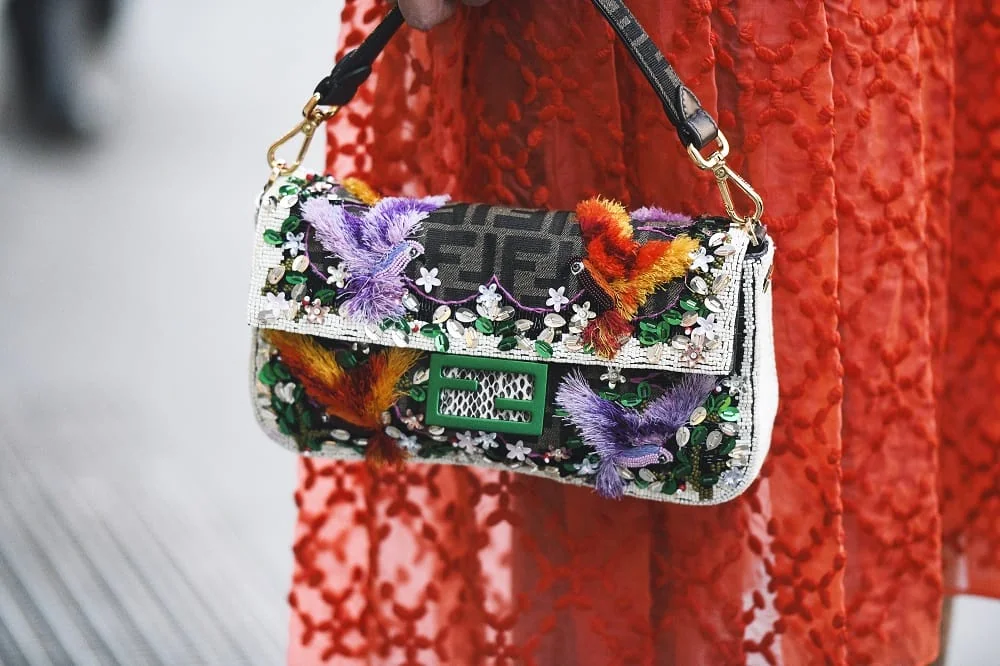
There is a short list of objects that genuinely changed the language of fashion — not just for a season, but permanently. The Fendi Baguette is on that list. It arrived in 1997 as something the luxury industry had never quite seen before: a bag so small it seemed almost defiant, so laden with personality it refused to be treated as a mere accessory. Carrie Bradshaw famously corrected a mugger who called it a bag. “It’s a Baguette,” she said. The line landed because it was true.
More than two decades later, that distinction still holds. The Fendi Baguette has outlasted the trends it spawned, survived the inevitable backlash that follows every cultural phenomenon, and emerged as one of the most legible signals in the handbag world: you know what you’re looking at, and so does everyone else. That kind of staying power is worth understanding, especially if you’re considering buying one — new or pre-owned — in 2024.
This is not a love letter to a bag. It’s an honest assessment of what the Baguette actually is, what it does well, where it falls short, which versions are worth your money, and whether it holds its value when you eventually want to sell. Consider it the research you wish you’d had before walking into a Fendi boutique.
The Birth of the Baguette: Fendi in 1997#
To understand the Baguette, you need to understand what luxury fashion looked like just before it arrived. The mid-1990s were the era of minimalism as gospel — clean lines, neutral palettes, structural austerity. Prada’s nylon bags were the aspirational object. Maximalism was considered naïve. In this climate, Silvia Venturini Fendi — creative director of accessories and menswear, and the third-generation steward of the Fendi family legacy — proposed a bag that was small, ornate, and aggressively decorative.
The house’s internal reaction was, by multiple accounts, skeptical. The proportions were considered too tight, the embellishments too theatrical, the whole concept too far from what the market was signaling it wanted. Silvia pushed forward anyway.
The Baguette debuted in 1997 as part of Fendi’s ready-to-wear collection. It was named for the French bread of the same shape — a long, narrow loaf carried tucked under the arm — which also described the bag’s intended carry position precisely. The FF clasp front and center, the single flat handle, the compact rectangular body: every design choice was deliberate, and every one of them contradicted prevailing wisdom.
What Silvia understood, and what the market would soon confirm, is that women were ready to carry something that made a point. The Baguette wasn’t trying to hold everything you owned. It was trying to say something about you. That distinction — between a functional bag and a fashion statement — was genuinely new in how explicitly it was embraced.
How Sex and the City Made the Baguette a Legend#
The Fendi Baguette had been gaining traction in the fashion press before Sex and the City aired, but it was the show — specifically its second season, which premiered in 1999 — that transformed a well-regarded fashion accessory into a genuine cultural object.
Carrie Bradshaw didn’t just wear Baguettes. She talked about them, coveted them, fought over them, was mugged for them. The bags appeared in over 40 episodes across the show’s run, in dozens of different iterations: beaded, sequined, velvet, embroidered, leather, canvas. The show’s wardrobe team understood something that advertising had failed to articulate — the Baguette wasn’t one bag, it was a platform, and each version told a slightly different story about the woman wearing it.
The commercial effect was immediate and staggering. Within a single year of the show’s peak exposure, Fendi had sold over 100,000 Baguettes. Waitlists formed at boutiques in New York, Paris, and Tokyo. Women who had never heard of Fendi before were calling stores to ask specifically for “the bag from Sex and the City.” In the pre-social-media era, that kind of organic word-of-mouth acceleration was almost impossible to manufacture — it simply happened, because the bag and the character wearing it were genuinely compelling together.
The broader significance is easy to underestimate now. Sex and the City didn’t just sell Baguettes; it established the concept of the “it bag” as a cultural category. Before Carrie Bradshaw, the idea that a specific handbag could achieve the kind of must-have status previously reserved for haute couture was not a standard marketing framework. After the show, every luxury house began engineering for that moment. The Baguette didn’t benefit from the “it bag” phenomenon — it created it.
What Makes the Baguette Genuinely Iconic#
Design longevity in fashion is earned through specificity, not versatility. The bags that last are the ones that commit to a point of view. The Fendi Baguette has never pretended to be everything — and that, paradoxically, is why it has remained relevant.
The silhouette. The Baguette’s body is structured enough to hold its shape but soft enough to avoid looking rigid or corporate. It sits comfortably in the crook of the arm without slipping, which is the functional premise the name promises. The proportions are deliberately tight — this is not a bag for your phone, keys, wallet, and everything else. One or two of those items, yes. All of them, unlikely. That constraint is not a flaw; it’s a position statement.
The hardware. The double-F clasp is one of the most immediately legible logo placements in luxury accessories. It registers from across a room without demanding attention in the way that oversized monogram prints can. Karl Lagerfeld designed the Fendi logo in 1965, and its placement on the Baguette’s front gives the bag its most distinctive visual beat.
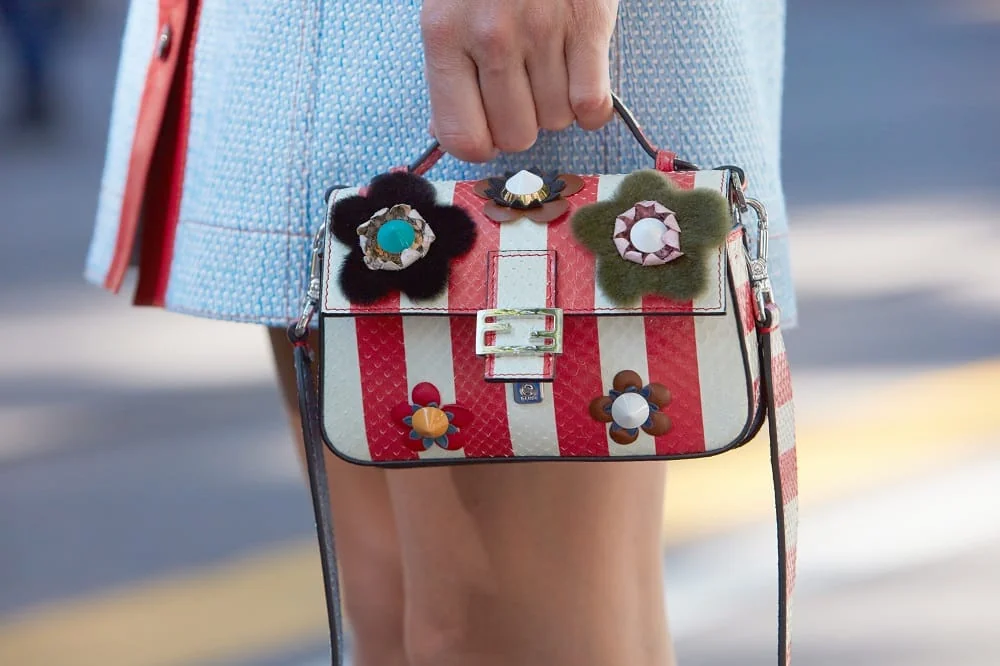
The versatility of identity. Here is what the Baguette does unusually well: it accepts any material, texture, or embellishment and still reads as itself. A plain black leather Baguette and a fully beaded evening Baguette are recognizably the same bag. That design robustness — the ability to change surface while maintaining identity — is rarer than it sounds and largely explains why the range of available styles is so enormous.
What it doesn’t do well. The Baguette is a small bag, and it is genuinely inconvenient as a primary everyday bag for anyone who carries much. The single flat handle gives limited wearing options — under-arm carry is elegant, but a long commute or a full day of errands will remind you of its limitations. The shoulder strap, when included, is not always long enough for comfortable cross-body wear on taller frames. The structured base also means it doesn’t expand, so what you see is what you get. If you need a bag to do serious organizational work, there are better choices. The Baguette is best understood as a bag you carry when you’ve already taken care of the practicalities — and there’s nothing wrong with that, as long as you go in knowing it.
Styles, Materials, and Notable Collaborations#
The breadth of the Fendi Baguette catalog is genuinely unusual. Fendi itself commissioned a book — The Baguette Book, published by Rizzoli — that documents250 individual Baguette models. That number is not hyperbole. Understanding the range helps both first-time buyers and collectors identify which corner of the market they’re looking at.
By material: The Baguette has been produced in virtually every material available to a luxury house. The most collectable options tend to include:
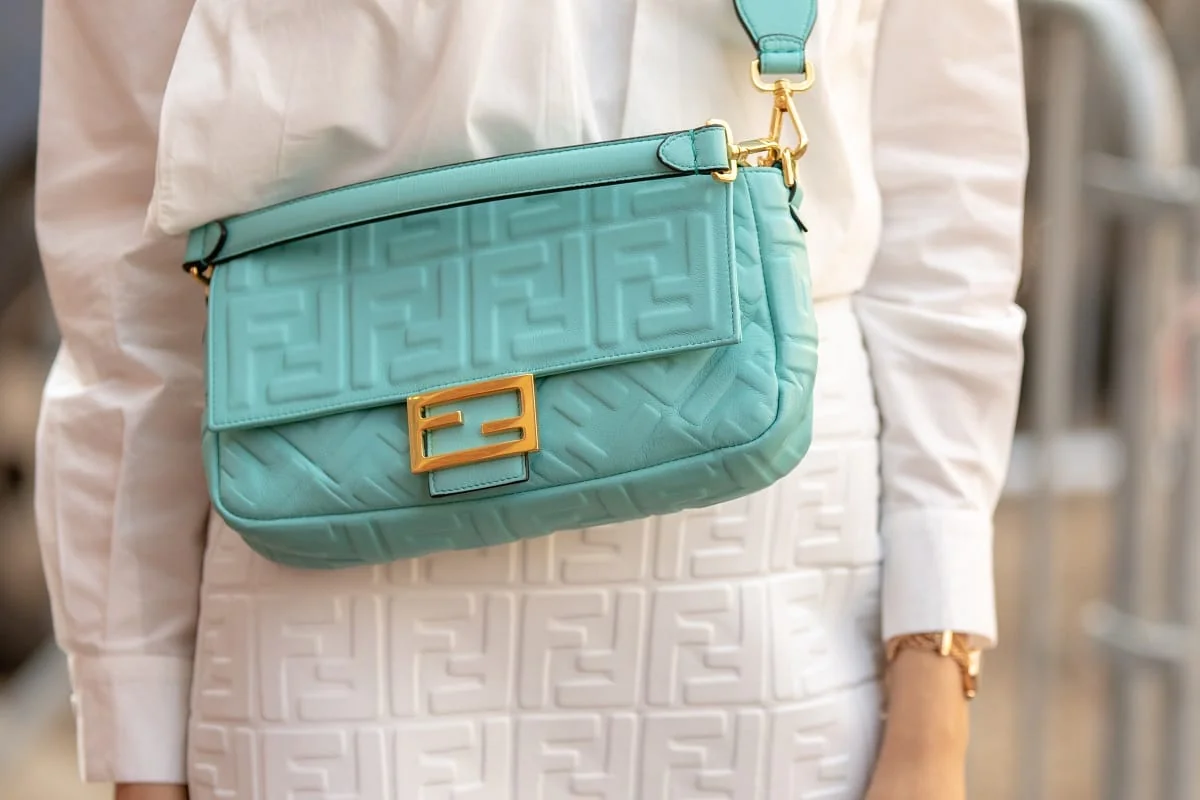
- FF Canvas (Zucca pattern): The signature [[monogram canvas](/buying-guides/most-popular-louis-vuitton-bags-2026/)](/brands/louis-vuitton-neverfull-insider-retail-story/) remains the most recognizable iteration — the inverted double-F pattern in warm tan and brown. It reads immediately as Fendi, and it’s among the most durable everyday options.
- Leather: Nappa leather Baguettes exist in an enormous range of colors and offer the cleanest aesthetic. Black and tan leather versions are the most versatile and the safest choices for longevity.
- Beaded and embroidered: These are the evening Baguettes — elaborate, heavily worked, closer to jewelry than everyday accessories. They appreciate well at auction when condition is pristine and the design is distinctive.
- Velvet: Seasonal and textural; beautiful in person, harder to maintain.
- Exotic skins: Crocodile and python versions exist and command significant premiums, but resale requires awareness of import/export restrictions that vary by country.
By size: The Baguette comes in nano, mini, regular, and large silhouettes. The nano and mini are primarily for evening and occasion use. The regular (the original proportion) remains the most classic choice. The large Baguette offers more practical capacity but loses some of the original bag’s studied elegance.
Notable collaborations: Several limited-edition collaborations have become collector targets. The Marc Jacobs x Fendi collaboration produced Baguettes with playful graphic treatments and remains highly sought in the secondhand market. The Tiffany & Co. x Fendi Baguette — released for the bag’s 25th anniversary in 2022, featuring the Tiffany blue palette and the iconic FF hardware in sterling silver — was a cultural event unto itself and immediately became one of the most discussed luxury accessories of that year. Earlier Baguettes designed in collaboration with Hiroshi Fujiwara and those produced during Fendi’s archive revival campaigns for the 20th and 25th anniversaries also carry collector premiums.
Is the Fendi Baguette a Good Investment?#
The honest answer is: it depends entirely on which Baguette you’re talking about.
The luxury resale market has matured significantly in the past decade, and the data on Baguette resale values is more nuanced than the bag’s cultural status might suggest. Here’s the reality:
Versions that hold value well:
The classic FF canvas Baguette in good to excellent condition consistently resells at 50–70% of its original retail price. That’s a real but not exceptional retention — comparable to other recognizable luxury monogram bags. Pristine, unworn canvas Baguettes with full provenance (original receipt, box, dustbag) perform closer to retail.
Limited-edition and collaboration pieces outperform regular retail in secondary markets when demand was high at launch. The Tiffany & Co. collaboration, anniversary editions, and Baguettes from named collaborators regularly sell above retail in the immediate post-release period. Over time, their value stabilizes at or slightly above original retail, depending on condition and documentation.
Fully beaded and embroidered Baguettes are harder to generalize. Condition is everything — a single damaged bead or loose thread can materially affect value. When condition is exceptional and the design is significant, they command strong premiums at specialist auction houses. When condition is average, they can struggle to find buyers at any price.
Honest caveats:
The Fendi Baguette is not the Hermès Birkin. It doesn’t appreciate the way a constrained-supply bag does, because Fendi produces it at commercial volume. Treating a standard Baguette as a financial investment is a mistake. Treating it as a bag that retains reasonable value while you enjoy it — and that you can sell for a fair return when you’re done — is realistic and defensible.
The pre-owned market for Baguettes is active and liquid on platforms like Vestiaire Collective, The RealReal, and specialist auction houses including Heritage and Sotheby’s for rarer pieces. That liquidity is itself a form of value: you can sell a Baguette in good condition without waiting months for a buyer, which is more than can be said for many luxury purchases.
For collectors specifically: focus on provenance, condition, and rarity. A Baguette from a documented collaboration, with original box and papers, in unworn condition, will always outperform the same bag bought used without documentation.
Buying Guide: Which Fendi Baguette Should You Get?#
For the everyday wearer:
If you want a Baguette you’ll carry regularly, the regular-sized FF canvas or nappa leather in a neutral colorway is the right starting point. The canvas holds up better than leather against daily friction and can be wiped clean. Black or camel leather is the alternative if you prefer a more understated look. Budget for the regular retail range (currently approximately $2,900–$3,800depending on material and region), or seek a pre-owned example in excellent condition with minimal wear on the hardware and intactstitching. Avoid any pre-owned canvas Baguette where the FF pattern shows cracking or flaking — that’s a near-impossible repair.
For occasion and evening:
A beaded or embroidered Baguette is a genuine luxury object and worth buying for the right wardrobe. Be realistic about how often you’ll carry it — if the answer is three or four times a year, buying pre-owned in excellent condition makes more financial sense than paying full retail. The evening Baguette category is where pre-owned offers the most value, because these bags often come from wardrobes where they were barely used.
For collectors:
Prioritize documentation over condition alone. A collaboration piece with its original receipt, box, dustbag, and authenticity card is worth meaningfully more than an identical bag without provenance. If buying at auction, understand the buyer’s premium. For pieces you’re buying specifically for appreciation potential, limit yourself to numbered or limited editions from major collaborations, and store in climate-controlled conditions with the original stuffing to maintain structure.
What to look for in pre-owned:
- FF hardware should be bright and free of deep scratches — light patina is expected and acceptable, deep gouging is not
- Stitching on the handle where it meets the body is the first point of wear; inspect carefully
- Canvas lining inside should be free of staining; interior corners are where wear accumulates
- The magnetic or turn-lock closure should function cleanly without resistance
- Any beading or embellishment should be fully intact — count is impossible, but running your hands over the surface will identify loose areas
Red flags to avoid:
Asymmetricstitching on the FF clasp area. Lining that smells of mold or damp. Hardware that looks dipped or unevenly colored (a sign of refinishing). Sellers unable to provide any original documentation on pieces claiming to be limited editions. Prices significantly below market rate — the Baguette is widely counterfeited, and anything priced at30% of market warrants professional authentication before purchase.
FAQ: Fendi Baguette Questions Answered#
What is the price of a Fendi Baguette new?
As of 2024, the Fendi Baguette retails at approximately $2,900–$3,800 for regular canvas or leather versions in the standard size. Exotic skin versions, limited editions, and collaboration pieces can range from $5,000 to well above $10,000. Prices vary by region and are subject to periodic adjustments, which Fendi — like most luxury houses — implements with little advance notice.
Is the Fendi Baguette worth buying pre-owned?
Yes, and for many buyers it’s the smarter choice. Pre-owned Baguettes in excellent condition are widely available through reputable resale platforms and typically price at 50–70% of retail for standard models. You can access discontinued colors, limited-edition versions no longer available in boutiques, and historically significant styles. The key is buying from authenticated sources and inspecting condition carefully before purchase.
How do I authenticate a Fendi Baguette?
Key authentication markers include: the FF hardware (should feel solid and weighted, with clean engraving); the interior serial number stamp (format varies by era); the stitching, which should be even and tight throughout; the quality of the lining; and the feel of the leather or canvas, which should be supple and consistent. Fendi has updated its authentication features over the years, so the specific markers differ by production period. For high-value purchases, use a professional authentication service — Entrupy, Real Authentication, or the authentication services offered by platforms like Vestiaire Collective — before committing to any significant sum.
How do you wear a Fendi Baguette?
The defining carry is under the arm, handle up, with the bag resting against your body — this is the posture the name literally describes. Many versions include a detachable shoulder strap for over-the-shoulder or cross-body carry, which adds practicality. The mini and nano versions work well as clutches for evening. The bag is not ergonomically designed for hand carry over long periods; the handle is flat and short by design.
How does the Fendi Baguette compare to other collectible bags?
The closest comparisons are the [Chanel Classic Flap](/buying-guides/vintage-chanel-finds-top-picks/) (stronger investment performance, more conservative aesthetic, higher price floor) and the Gucci Jackie (similar heritage appeal, lower price point, less liquid resale market). The Baguette sits in a distinct position: more expressive and trend-engaged than the Chanel, better documented and more consistently demanded than most other ’90s-revival pieces. It lacks the constrained supply dynamics of Hermès, which sets a ceiling on appreciation potential, but its cultural history is genuinely exceptional and its recognition value is among the highest in the category.
Does the Fendi Baguette fit a phone?
A standard smartphone fits in the regular Baguette, but just barely, and there’s limited room for much else alongside it. The mini and nano versions will not accommodate most current phones. If carrying your phone is a baseline requirement, the regular size is the minimum, and a shoulder strap becomes functionally important. This is not a bag that was designed around practicality, and the phone question is the most direct reminder of that.
Is the Fendi Baguette still in style in 2024?
It is, for reasons that have little to do with trend cycles and much to do with its established status. The Baguette has passed the point where it needs validation from current runways — it occupies the same cultural territory as the Chanel Flap or the LV Speedy, pieces that exist outside the trend calendar because they are themselves the reference point. That said, Fendi actively refreshes the line each season with new colorways, materials, and occasional collaborations, so there is always a current-season Baguette to point to for those who want newness within a familiar form.
Related Articles#
- Louis Vuitton Alma Bag: Complete Buyer’s Guide 2026
- Best Luxury Handbags for Winter: 10 Must-Have Picks
- 10 Best Designer Handbags Worth the Investment (2026)
- Designer Handbag Trends 2025: What’s Actually Worth Buying
- Best It Bags to Buy This Year: A Definitive Guide
Related guides
- Online Bag Authentication: What Photos Can and Cannot Prove
- Fake Goyard Bag Guide: How to Spot Real vs Fake (2026)
- How to Spot a Fake Chanel Flap Bag: Authentication Guide
- How to Spot a Fake Hermès Birkin: Expert Checklist
- How to Buy an Authentic Luxury Bag from China Safely
- New vs Pre-Owned Luxury Bags: Which Route Is Right for You?
- Chanel Bag Guide: What to Know Before You Buy
- Luxury Bag Houses


Keyword index