Introduction #
Bottega Veneta occupies a strange position in the luxury landscape: universally respected by people who know leather goods, and only recently discovered by everyone else. Unlike Louis Vuitton or Gucci, the house spent decades deliberately avoiding logos, splashy branding, and the kind of visual shorthand that makes a bag instantly recognizable on the street. That restraint is exactly why authentication and quality assessment for Bottega Veneta work differently than for monogram-driven brands — there’s no canvas pattern to check, no LV lock stamp to compare. You’re judging the leather itself.
The Cornely Tote is a useful lens for this. It’s not the brand’s most famous bag (that’s arguably the Cassette or the Jodie), but it shows the full range of what Bottega Veneta craftsmanship actually involves: the signature woven leather body, hand-applied embellishment, and construction details that separate a genuine piece from the flood of “inspired by” versions now circulating on resale platforms. This piece breaks down what’s actually happening in the leather, what to check before you buy, and how quality has shifted through recent creative director changes.
Bottega Veneta’s Place in the Luxury Hierarchy #
Bottega Veneta was founded in 1966 in Vicenza, in the Veneto region of Italy, by Michele Taddei and Renzo Zengiaro. The name translates roughly to “Venetian workshop,” and that word — workshop — is central to how the brand has always positioned itself. From the beginning, the house marketed craftsmanship over branding, a strategy summed up decades later in its own tagline: “When your own initials are enough.”
That philosophy is why Bottega Veneta reads as more exclusive than mainstream logo-driven houses, even without Hermès-level pricing or waitlists. There’s no external signifier of wealth on most of its bags — you either recognize the weave or you don’t. This has made it a favorite among buyers who want quality construction without a visible brand marker, and it’s also why counterfeiters have historically targeted it less aggressively than Louis Vuitton or Chanel. Faking a woven leather bag well is significantly harder than faking a canvas pattern.
The brand went through a rocky stretch in the 2000s and 2010s under various ownership and design changes, but leather quality and construction standards stayed largely consistent. That consistency is part of why resale buyers trust older Bottega Veneta pieces as much as current-season ones — a intrecciato bag from 2010 was made to roughly the same construction standard as one from last year, which isn’t true of most fast-fashion-adjacent luxury brands.
The Intrecciato Weave: Bottega Veneta’s Signature Technique #
Intrecciato — Italian for “interlaced” or “woven” — is Bottega Veneta’s defining technical achievement, and it’s the reason the brand’s leather goods carry a different kind of durability than smooth-leather bags from other houses.
The process involves cutting leather into narrow strips, then hand-weaving them over a mold or base, typically in a basket-weave pattern. Because the leather is interlaced rather than laid flat, the finished panel has structural give — it flexes with use instead of creasing or cracking along stress points the way a single flat hide does. This is a real functional advantage, not just an aesthetic one: woven construction distributes wear across dozens of individual leather strips instead of concentrating it in one panel.
It’s also labor-intensive in a way that’s hard to fake convincingly. A skilled artisan can take hours to weave a single bag panel, and the tension has to be even across the entire surface — too loose and the weave sags and shows the lining beneath; too tight and the leather strips crack at the folds. When you handle a genuine intrecciato piece, the weave should feel taut and uniform, with strips of consistent width and no visible glue or fraying at the edges. Cheaper reproductions almost always use thicker, stiffer strips woven more loosely, because matching Bottega Veneta’s strip width and tension by hand is expensive to replicate at scale.
Inside the Cornely Tote: Design and Material Details #
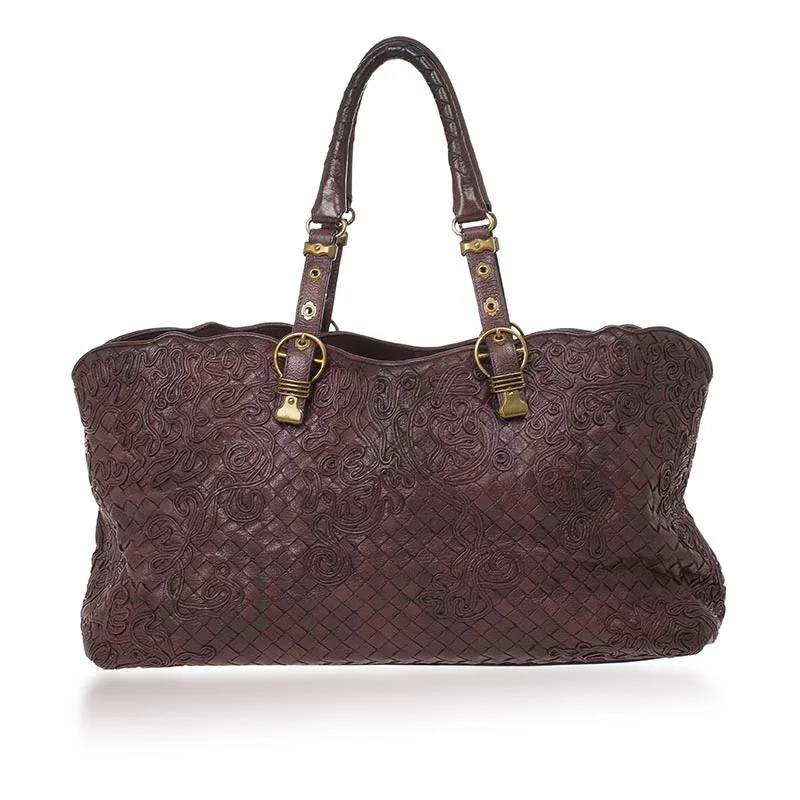
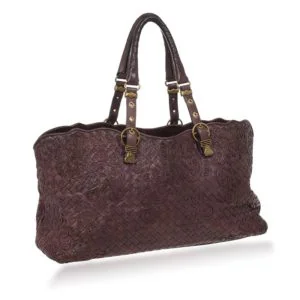
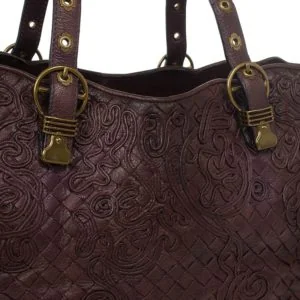
The Cornely Tote takes the intrecciato foundation and adds a second layer of hand-work: an appliquéd leather swirl overlay across the woven body, named for the Cornely embroidery machine traditionally used for this kind of raised, decorative stitching on leather goods.
That combination — a hand-woven base plus a hand-applied embellishment layer — is what makes this bag a good case study rather than a basic example. Structurally, you’re looking at:
- Body construction: full intrecciato weave in soft, supple leather (this example in a rich brown), which gives the bag its characteristic slouch and hand-feel rather than a stiff, structured silhouette.
- Overlay detailing: a swirled leather appliqué worked into the woven surface, adding dimension and a couture-adjacent finish that’s clearly assembled by hand — no two swirls sit identically.
- Handles: leather handles finished to match the body, stitched with the same attention to symmetry you’d expect on the rest of the bag — an area worth close inspection, since handle attachment points take the most physical stress over a bag’s lifetime.
- Hardware and corners: reinforced base corners and edge finishing that hold their shape without visible glue seepage or uneven trim.
None of this reads as flashy from a distance, which is very on-brand. Up close, it’s clear the tote isn’t “just” a woven bag — it’s a woven bag with an additional hand-applied design layer, which is a meaningfully higher production tier than a standard intrecciato tote.
Quality Markers: What to Look For on Hardware and Stitching #
This is the section that matters most if you’re buying secondhand or from a third-party seller, since Bottega Veneta’s minimal branding means you can’t rely on logo placement the way you would with a monogrammed bag.
Weave and leather #
- Strip width should be consistent across the entire bag. Genuine Bottega Veneta intrecciato uses narrow, evenly cut strips — wider, chunkier weaving is a common tell on reproductions.
- The leather should smell like leather, not like glue, plastic, or a chemical off-gassing. Woven construction has more surface area and adhesive contact points than a flat bag, so poor-quality fakes often smell noticeably stronger.
- Weave tension should be even. Sagging, loose sections, or visible lining peeking through the weave indicate lower-grade construction.
Hardware #
Bottega Veneta hardware is deliberately understated — often tonal, brushed, or leather-wrapped rather than shiny gold or silver logo plaques. Check for:
- Weight: genuine hardware has real heft. Lightweight, hollow-feeling zipper pulls or clasps are a red flag.
- Engravings: any stamped hardware should have crisp, evenly spaced lettering with no blurring or inconsistent depth.
- Attachment points: rivets and D-rings should sit flush with no glue residue or crooked placement.
Stitching #
- Stitch length should be uniform and tight, with no loose threads at stress points (handle bases, corners, zipper ends).
- On embellished pieces like the Cornely Tote, appliqué stitching should follow the swirl pattern cleanly without puckering the base leather underneath.
Interior and paperwork #
- Interior lining should be evenly applied with clean edges, and any interior stamp or leather tag should have consistent, properly spaced font.
- Ask sellers for the original receipt, care card, or authentication card where available, and cross-reference date codes if the specific line uses them — practices have varied by era, so this is worth confirming against current-season documentation rather than assuming a single universal code format.
If you’re buying through a marketplace rather than directly from Bottega Veneta or an authorized reseller, a third-party authentication service is worth the fee, especially on woven pieces where the construction is genuinely harder to fake but also harder for a non-expert to verify at a glance.
Bottega Veneta and Long-Term Value #
Bottega Veneta doesn’t retain value the way Hermès does — almost nothing does — but it holds up meaningfully better than mainstream logo brands, particularly on pieces with strong construction like heavily woven totes and structured top-handle bags.
A few honest observations from tracking resale behavior on the brand:
- Iconic silhouettes hold best. Bags tied to a recognizable design era (classic intrecciato hobos, Cassette bags, and detailed pieces like the Cornely Tote) tend to depreciate more slowly than seasonal or trend-driven styles.
- Condition matters more than with smooth leather. Because the weave shows wear differently — fraying at strip edges, flattening of the weave pattern — a well-cared-for intrecciato bag commands a real premium over a worn one, more so than the price gap you’d see on a comparably-worn smooth calfskin bag from another house.
- Creative director shifts move resale sentiment. Design transitions (covered below) noticeably affect which eras of Bottega Veneta bags are actively sought after by resale buyers versus treated as “past collection” pieces.
- It’s not an investment piece in the Hermès sense. Don’t buy Bottega Veneta expecting Birkin-level appreciation. Buy it because the construction quality genuinely supports years of use, and because well-kept pieces resell respectably rather than cratering in value like fast-turnover trend bags.
Quality Under Matthieu Blazy vs. the Daniel Lee Era #
Creative director changes at Bottega Veneta have had real, tangible effects on both design direction and perceived quality — and a lot of content online is still anchored to whichever era it was written in, which makes this genuinely confusing for buyers trying to figure out what they’re looking at.
Daniel Lee (2018–2021) modernized the brand’s silhouette language — pouch bags, chunky knot clutches, the Cassette — while keeping intrecciato construction as the technical backbone. His era leaned into thicker, more exaggerated weave patterns on some pieces alongside the traditional fine weave, which is part of why “which era is this bag from” matters when evaluating construction: the design changed, but the underlying craftsmanship standard stayed consistent with the brand’s manufacturing practices.
Matthieu Blazy (2021–2024) shifted focus toward material experimentation and technical craft storytelling — trompe-l’oeil leather, exaggerated hardware, and a deliberate return to showcasing artisanal technique as the design statement itself, not just the construction method. Under Blazy, the brand leaned harder into “look how this was made” as a selling point, which arguably raised the visible craftsmanship bar even further.
What this means for buyers today: Blazy left Bottega Veneta in 2024 to take over at Chanel, and Louise Trotter was appointed creative director, presenting her first collections starting in 2025. This is the transition most existing guides haven’t caught up to. Early signals suggest Trotter is maintaining the brand’s construction standards while adjusting the design vocabulary again — which matters for resale buyers, since bags from a departing creative director’s final seasons often see short-term resale softness before settling based on how iconic the silhouette turns out to be. If you’re buying for value retention rather than immediate wear, pieces with strong intrecciato construction and minimal trend-dependent detailing (like the Cornely Tote’s classic tote silhouette) tend to be safer than heavily era-specific statement pieces, regardless of which creative director’s name is attached.
Comparison: Bottega Veneta vs. Other [[[Luxury Handbag Brands](/brands/popular-handbag-brands/)](/buying-guides/luxury-handbag-brands-worth-investing-in/)](/buying-guides/best-designer-handbag-brands-2025/) #
| Brand | Signature Technique | Hardware Quality | Entry Price Range | Resale Retention | Ease of Authentication |
|---|---|---|---|---|---|
| Bottega Veneta | Hand-woven intrecciato leather | Understated, tonal, solid weight | $1,800–$5,500+ | Moderate-high on iconic styles | Harder — no logo shorthand, must assess weave/leather |
| Hermès | Saddle-stitching, single-artisan construction | Solid brass/palladium, often engraved | $6,000–$15,000+ (entry) | Very high, frequently appreciates | Moderate — strict blind stamps, date codes, stitching |
| Chanel | Quilted lambskin/caviar, chain hardware | Metal chain, CC turn-lock | $6,500–$10,000+ | High on classic flap styles | Moderate — hologram/serial cards vary by era |
| Louis Vuitton | Coated canvas monogram, some leather lines | Brass hardware, variable weight | $1,500–$4,500 | Moderate, stable on icons | Easier — date codes, canvas pattern well documented |
| Gucci | Mixed canvas/leather, logo hardware | Gold-tone, moderate weight | $1,200–$3,500 | Lower-moderate, trend-sensitive | Easier — logo and hardware widely referenced |
The takeaway: Bottega Veneta sits closer to Hermès and Chanel in construction rigor than to Louis Vuitton or Gucci, but its lack of overt branding makes authentication a genuinely different skill set — one based on materials literacy rather than logo-matching.
Care and Maintenance for Intrecciato and Embellished Leather #
Woven leather needs different handling than smooth leather, and embellished pieces like the Cornely Tote add another layer of care considerations.
- Avoid overstuffing. Intrecciato relies on consistent weave tension; overstuffing the bag stretches the weave unevenly and can permanently distort the pattern over time. Use a lightweight pillow or the brand’s stuffing rather than packing it full.
- Keep it away from moisture. Water exposure on woven leather is worse than on smooth leather because moisture gets trapped between the interlaced strips and can cause the leather to dry stiff or warp at the weave joints. Blot immediately and let it air dry away from direct heat if it does get wet.
- Condition sparingly. Use a leather conditioner formulated for soft, unfinished or lightly finished leathers (check with Bottega Veneta or a professional leather care service for era-specific recommendations), and test on an inconspicuous area first. Over-conditioning can darken the leather unevenly, which is more visible on woven surfaces.
- Store it stuffed and bagged, out of direct light. Prolonged light exposure fades leather unevenly across a woven surface faster than on a flat panel, since each strip catches light slightly differently.
- Handle embellished areas gently. On pieces like the Cornely Tote, avoid snagging the appliqué overlay on jewelry, zippers, or rough surfaces — the raised stitching sits slightly above the base leather and can catch and lift if handled carelessly.
- Rotate use. Bags with heavy hand-applied detailing hold up better with rotation rather than daily wear, since repeated flexing at the same points accelerates wear on both the weave and the overlay stitching.
FAQ #
Is Bottega Veneta considered a top-tier luxury brand? Yes, within the industry it’s regarded as one of the more exclusive houses precisely because of its emphasis on construction and material quality over visible branding. It’s not priced at Hermès levels, but its craftsmanship standards are frequently discussed alongside that tier.
What makes intrecciato leather different from regular woven leather goods? The strip width, weaving tension, and hand construction are specific to Bottega Veneta’s process, developed and refined since the brand’s founding. Reproductions can approximate the look but rarely match the tension consistency or strip uniformity of genuine construction.
How can I tell if a Bottega Veneta bag is authentic without professional authentication? Check weave consistency, hardware weight, stitch uniformity, and leather smell as a first pass. But given how much harder woven leather is to assess visually compared to logo-based brands, a paid third-party authentication service is genuinely worth it for any purchase over a few hundred dollars.
Does Bottega Veneta hold its value well on resale? Reasonably well on iconic, construction-forward styles, less so on trend-specific pieces. It doesn’t appreciate the way Hermès can, but well-maintained intrecciato bags depreciate slower than most mainstream logo-driven handbags.
Has quality changed under new creative directors? The design language shifts noticeably with each creative director, but the core intrecciato construction standard has stayed consistent through Daniel Lee, Matthieu Blazy, and now Louise Trotter’s tenure. What changes is silhouette trends and detailing emphasis, not the underlying leatherworking standard.
What’s the best way to maintain a woven leather bag long-term? Avoid overstuffing, keep it away from prolonged moisture and direct light, condition sparingly with an appropriate product, and rotate use rather than wearing one bag daily to reduce repeated stress on the same weave points.
Related Articles #
- How to Spot a Fake Bottega Veneta Bag: 6 Expert Tips
- 5 Bottega Veneta Bags Worth Knowing Before You Buy
- Handbag Trends 2024: The Bags You’ll Actually Wear
- Replica vs Pre-Owned Bags: Which Is the Smarter Buy?
- Bottega Veneta Stingray Lido Tote: The Rare 100-Piece Bag
Related guides
- Online Bag Authentication: What Photos Can and Cannot Prove
- Blue Crocodile Lady Dior Tote: Buying Guide
- Chanel Vintage Flap Bag Buying Guide: Navy Lambskin
- Louis Vuitton Palm Spring Backpack: Complete Buyer's Guide
- How to Buy an Authentic Luxury Bag from China Safely
- New vs Pre-Owned Luxury Bags: Which Route Is Right for You?
- Chanel Bag Guide: What to Know Before You Buy
- Luxury Bag Houses


Keyword index