Introduction: The Enduring Appeal of Ralph Lauren #
Ralph Lauren built an empire on restraint. While much of fashion chases seasonal noise, the house has spent five decades refining a handful of ideas: American heritage, English tailoring, and the quiet confidence of old money style. That philosophy shows up in everything from the polo shirt to the equestrian motifs stamped across its leather goods.
The handbags carry that same DNA, and none more so than the Ricky Bag. It’s the closest thing Ralph Lauren has to a Birkin or a Speedy — a structured, saddle-inspired silhouette that has stayed recognizable for two decades while the leathers, sizes, and hardware around it have quietly evolved. For buyers weighing a Ricky against other investment-grade bags, understanding why it earns that comparison starts with its backstory.
The Love Story Behind the Ricky Bag #
The Ricky takes its name from Ricky Anne Lauren, Ralph Lauren’s wife, whom he met in 1964. The design itself borrows its bones from the Cooper, a 19th-century English luggage case — hence the boxy, structured body and the top handle that reads more “traveling case” than “handbag.” Ralph Lauren wanted a piece that captured his wife’s understated elegance in a form that would outlast trends, and the first Ricky arrived roughly twenty years ago as a fully structured, hand-finished bag.
That construction is still the bag’s biggest selling point. Each Ricky is assembled with hand-stitched, hand-creased leather, a process that’s labor-intensive compared to machine-pressed alternatives from mass-market brands. It’s part of why the bag holds its shape for years rather than slouching, and why well-cared-for examples from a decade ago still look structurally sound today. If you’ve handled one in person, the weight and stiffness of the leather are immediately obvious — this isn’t a soft, floppy tote, and it never was meant to be one.
From Classic to Contemporary: The Ricky Bag’s Evolution #
The original Ricky stayed largely unchanged for its first decade, but Ralph Lauren has since built out a genuine size and material range rather than just tweaking colorways.
- Soft Ricky (2013): The first major reinvention, using pebbled or unstructured leather to soften the bag’s famously rigid frame. This version trades some of the architectural stiffness for everyday wearability, and it’s often the easier entry point for first-time buyers who find the original too structured for daily use.
- Mini Ricky: A scaled-down version aimed at evening use or as a second bag paired with a larger tote. It sacrifices interior capacity for a more casual, less formal presence.
- Giant Ricky: The oversized counterpart, closer to a weekender or work bag than a handbag. It’s the version most often used as a carry-on or laptop bag substitute.
- Ricky Bag With Light: The most recent iteration, which embeds interior lighting so the bag illuminates when opened. It’s a genuinely useful update rather than a gimmick — locating items in a dark, structured interior has always been the Ricky’s one practical drawback.
Ricky Bag Size Comparison #
| Size | Approx. Dimensions (W x H x D) | Best For | Typical Retail Range (New) |
|---|---|---|---|
| Mini | 8" x 6" x 3" | Evening, going-out bag | $1,200 – $1,800 |
| Original/Medium | 11" x 8.5" x 4.5" | Everyday carry, work | $1,800 – $2,800 |
| Large | 13" x 10" x 5" | Work, travel companion | $2,800 – $3,800 |
| Giant | 16"+ x 12"+ x 6"+ | Weekend/travel, laptop bag | $3,500 – $5,000+ |
Exotic leathers (crocodile, ostrich, alligator) push well past these figures regardless of size, sometimes into five figures.
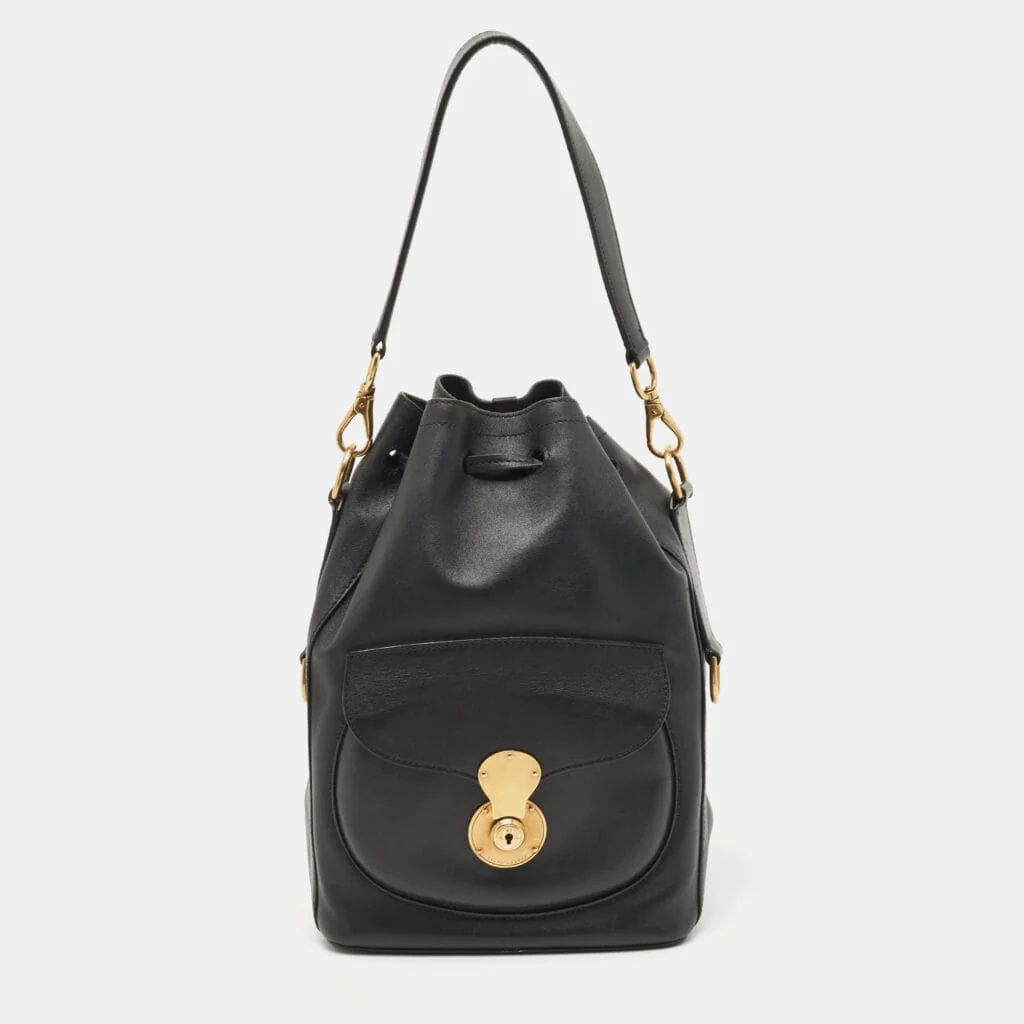
Spotlight: Ralph Lauren Black Ricky Drawstring Bucket Bag #
Among the many Ricky variants, the Black Ricky Drawstring Bucket Bag stands apart because it departs from the boxy signature silhouette while keeping the house’s construction standards intact. The soft, rounded bucket shape is a deliberate contrast to the structured original — proof that Ralph Lauren has been willing to bend the Ricky formula rather than freeze it in amber.
The leather body is cut and finished with the same precision the brand is known for, paired with gold-tone hardware that includes a branded lock closure on the front. That lock detail is a direct nod to the original Ricky’s equestrian-luggage heritage, even on a bag that otherwise looks nothing like the classic top-handle version. A detachable top strap adds real versatility here — worn short as a top-handle bag for daywear, or with the strap removed and the drawstring cinched loosely for a more relaxed, off-duty look.
It’s a smart bag to shop secondhand specifically because bucket-style Rickys see less counterfeiting activity than the classic silhouette, which tends to be the more heavily faked shape.
Why the Ricky Bag Is a Smart Addition to Your Collection #
Durability. The hand-stitched, hand-creased leather construction is built to be repaired and restructured rather than replaced. Corners and base edges wear first — inspect these areas closely on any pre-owned piece before buying.
Versatility. Between Mini, Original, and Giant sizing, plus structured and soft leather options, the Ricky line covers evening bags through travel totes without leaving the same design language. Few brands offer that range under one silhouette.
[[Resale value](/brands/celine-luggage-tote-guide-sizes-history-resale-value-1/)](/brands/celine-luggage-tote-guide-sizes-history-resale-value/). Ricky bags hold value meaningfully better than Ralph Lauren’s ready-to-wear, though they don’t appreciate the way a Birkin does. Expect resale prices to land at roughly 40-60% of original retail for bags in good condition, with exotic leathers and discontinued colors holding closer to 65-70%. Limited editions and early-production Rickys in rare leathers occasionally trade above retail, but this is the exception, not the rule.
Honest downside: the structured original is heavy and the interior is genuinely hard to navigate without a light-equipped model. It’s also not a bag you casually toss around — the rigid corners show wear if mishandled. Buyers wanting a low-maintenance everyday bag may prefer the Soft Ricky over the original.
This Week’s Spotlight: Why the Ricky Bag Endures #
What keeps the Ricky relevant isn’t nostalgia, it’s that Ralph Lauren never let the design go stagnant. A twenty-year-old silhouette that’s spawned soft, mini, giant, and illuminated versions — plus off-shoot shapes like the Bucket Bag — is doing more design work than most “it bags” attempt in their entire lifespan.
The Ricky has also had a longer celebrity run than most single-photo credits suggest. Beyond Emmy Rossum, the bag has appeared on Jennifer Garner, Katie Holmes, and Reese Witherspoon over the years — a roster that skews toward understated, off-duty styling rather than red-carpet flash. That’s consistent with how the bag actually functions: it photographs well precisely because it looks like something you’d carry to work, not something styled for a single event.
That combination — structural integrity, steady (if modest) resale performance, and a genuine design lineage — is why the Ricky keeps showing up in “buy once” recommendations rather than seasonal hauls.
FAQs About the Ralph Lauren Ricky Bag #
How do I spot a fake Ricky bag? Check the hardware first — genuine Ricky hardware has a substantial weight and clean, evenly applied gold or silver plating with no visible seams or rough edges. The interior stamp should read “RALPH LAUREN” in a clean, evenly spaced typeface with consistent letter depth; smudged or shallow stamping is a red flag. Stitching should be tight, even, and hand-finished — counterfeit Rickys often have visible glue residue along seams and uneven stitch spacing. The leather grain on authentic bags is also more textured and less glossy than most fakes, which tend to use a shinier, more uniform hide to disguise lower-quality material.
What’s the size difference between Mini, Original, and Giant? The Mini runs about 8 inches wide and works as an evening or secondary bag. The Original sits around 11 inches wide, sized for daily use. The Giant exceeds 16 inches and functions closer to a weekender or laptop bag. See the comparison table above for full dimensions and price context.
How much does a Ricky bag cost resale? Depending on size, leather, and condition, resale prices typically range from $700 for a well-loved Mini in standard leather up to $4,000+ for a Giant in exotic skin. Original retail-to-resale retention averages 40-60%.
How do I care for a Ricky bag? Store it upright with the interior lightly stuffed to preserve shape, keep it away from direct sunlight to prevent leather fading, and use a leather conditioner sparingly — the structured leathers used on the original Ricky don’t need frequent conditioning and over-treating can soften the shape you’re paying for.
Where should I buy a pre-owned Ricky bag? Stick to resale platforms that authenticate every listing and disclose leather type, hardware condition, and any repairs upfront. Given how much price varies by size and leather, always confirm exact dimensions against the comparison chart above rather than relying on listing titles alone.
Recommendations and Buying Advice #
If you’re buying your first Ricky, start with the Original size in smooth leather — it’s the most versatile for daily use and the easiest to resell later since it’s the most recognizable version of the bag. Buyers prioritizing comfort over structure should look at the Soft Ricky instead; it carries the same heritage details without the rigidity that makes the original a harder daily-wear bag for some.
Avoid buying based on photos alone. Ask sellers for close-up shots of the interior stamp, hardware edges, and base corners — these are the three areas where counterfeits and heavily worn authentic bags both reveal themselves. For resale value, structured leathers and exotic skins hold up better than the Soft Ricky’s pebbled leather, so factor that into your decision if long-term value retention matters as much as everyday comfort.
Finally, buy the size you’ll actually use. A Giant Ricky bought for its resale potential but left in a closet loses more value sitting unused than a smaller, well-worn Original that’s clearly been cared for and carried.
Related Articles #
- Ralph Lauren Ricky Bag: The Exotic-Leather Bag to Know
- Celine Triomphe Bag Guide: Sizes, Price & Real vs Fake
- Why the Chanel Crossbody Bag Never Goes Out of Style
- Fendi First Bag Guide: History, Design & Resale Value
- Exotic Skin Handbags: What You’re Really Paying For
Related guides
- Online Bag Authentication: What Photos Can and Cannot Prove
- Blue Crocodile Lady Dior Tote: Buying Guide
- Chanel Vintage Flap Bag Buying Guide: Navy Lambskin
- Louis Vuitton Palm Spring Backpack: Complete Buyer's Guide
- How to Buy an Authentic Luxury Bag from China Safely
- New vs Pre-Owned Luxury Bags: Which Route Is Right for You?
- Chanel Bag Guide: What to Know Before You Buy
- Luxury Bag Houses


Keyword index