Introduction #
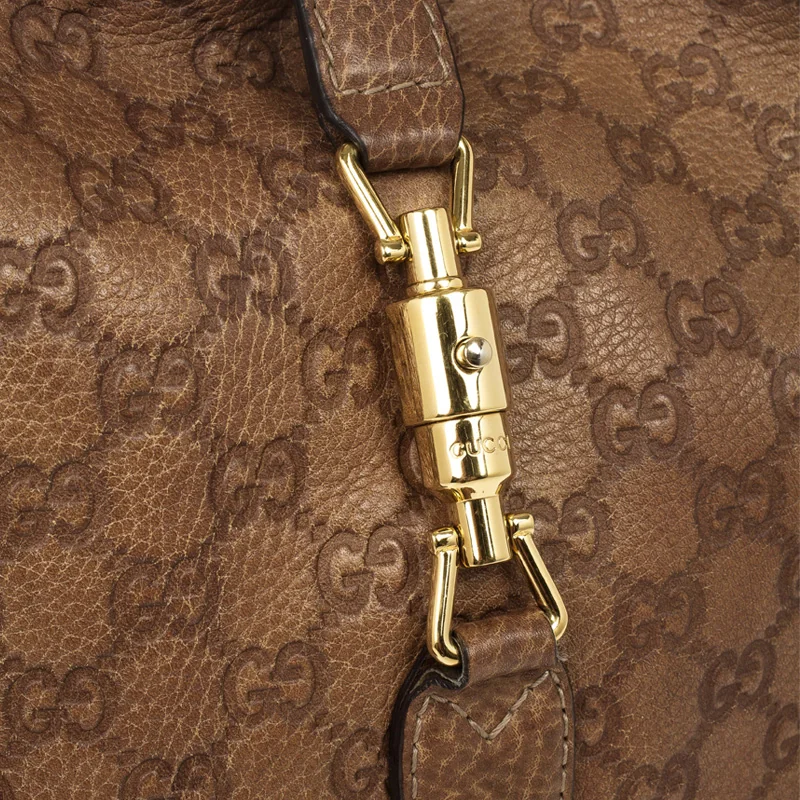
Every handbag collection has a piece that outlasts trends by ignoring them entirely. For Gucci, that’s the Jackie O hobo. Named after Jacqueline Kennedy Onassis, the silhouette has moved through six decades of fashion cycles — mod ’60s minimalism, ’90s logo mania, 2000s It-bag fever, and the current wave of archive-driven nostalgia — without ever losing its half-moon shape or piston lock closure.
What makes the Jackie O worth studying isn’t just its celebrity pedigree. It’s a genuine case study in how a house updates a legacy design without erasing what made it recognizable in the first place. The 2009 relaunch and the more recent Jackie 1961 revival both kept the bones of the original while adjusting proportions, hardware, and materials for a new generation of buyers — and that continuity is exactly why the bag holds value on the resale market and why counterfeiters bother copying it at all.
This guide walks through where the name came from, what actually changed in 2009, how the bag is built, and what to check before you buy one — new or pre-owned.
The Legacy Behind the Jackie O Name #
The design that became the Jackie O started life without her name attached to it. Gucci introduced a soft-structured hobo with a distinctive cylindrical clasp in the early 1960s, and it was one of several accessory styles the house produced during that period. Jacqueline Kennedy Onassis, then First Lady, was photographed carrying it repeatedly — often held up near her face as a shield from photographers. The press started calling it “the Jackie bag” simply because she was rarely seen without it.
Gucci didn’t rush to capitalize on the association. It was years later, and after her death in 1994, that the house formally renamed the style “Jackie O” as a tribute rather than a marketing stunt after the fact. That distinction matters to collectors: this wasn’t a celebrity collaboration or a paid endorsement in the modern influencer sense. It was an organic association that outlived the woman who created it, which is part of why the story still carries weight instead of feeling like a licensing gimmick.
The bag’s appeal to Kennedy Onassis also tracks with the design itself. The hobo shape is unstructured enough to soften with wear, the piston closure is functional rather than decorative, and the overall silhouette reads as understated rather than logo-forward — all traits consistent with her personal style, which favored quiet luxury over overt branding decades before that phrase existed.
The 2009 Redesign: What Changed #
By the late 2000s, the original Jackie O had drifted in and out of Gucci’s lineup, and the house brought it back as the “New Jackie” in 2009 with a handful of deliberate updates.
The most visible change was the piston lock itself. The new version used a larger, more substantial cylindrical hardware closure, finished in polished gold-tone or aged brass depending on the leather colorway. This wasn’t purely cosmetic — the earlier locks on vintage pieces were prone to loosening with age, and the redesigned mechanism improved durability while keeping the same twist-and-release action.
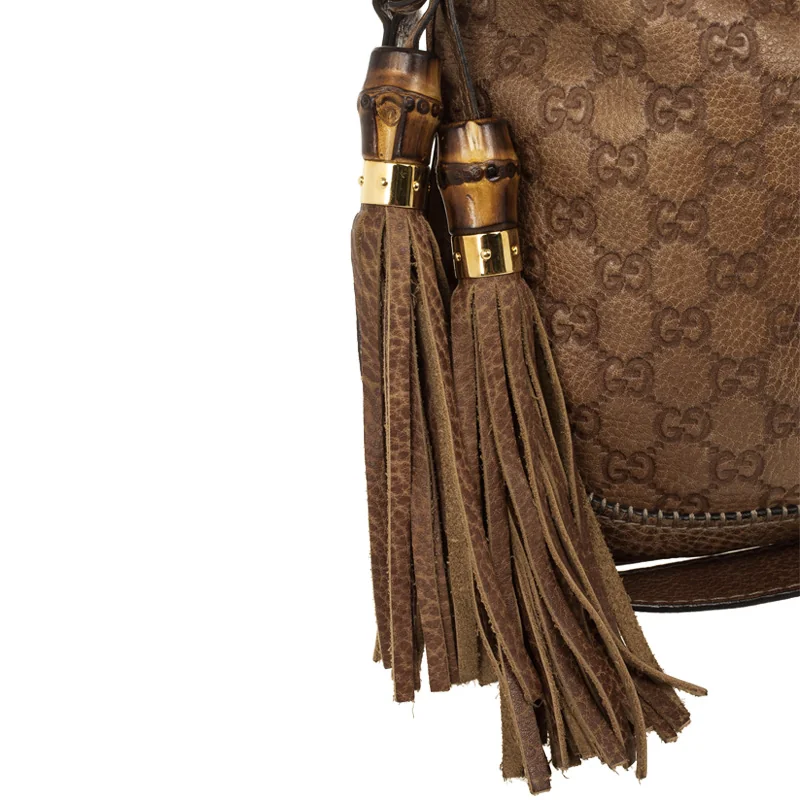
The second major addition was the bamboo tassel pull attached to the zipper or closure strap. Bamboo had already been a Gucci signature since the 1947 top-handle bag, and pairing it with the Jackie’s hardware tied two of the house’s most historically significant design languages together in one accessory. The tassel wasn’t just decorative flourish — it referenced Gucci’s post-war material shortages, when leather was scarce and bamboo became a practical (and eventually iconic) substitute for handle structures.
Proportions also shifted slightly. The 2009 version had a more rounded, fuller hobo body compared to the flatter, more crescent-shaped original, which made it more functional as an everyday bag rather than a strictly evening or occasion piece.
Craftsmanship and Materials #
The Jackie O’s construction reflects Gucci’s Florence-based leather goods tradition, and the house has been transparent about the process — its own “making of” documentation shows the bag moving through cutting, skiving, hand-stitching, and hardware assembly stages that are largely unchanged from decades past.
Material options across the New Jackie and later Jackie 1961 lines include:
- [GG Supreme canvas](/brands/gucci-small-dionysus-shoulder-bag-review-resale-guide/) (the coated monogram canvas) paired with leather trim, offering better resistance to daily wear and moisture than smooth leather
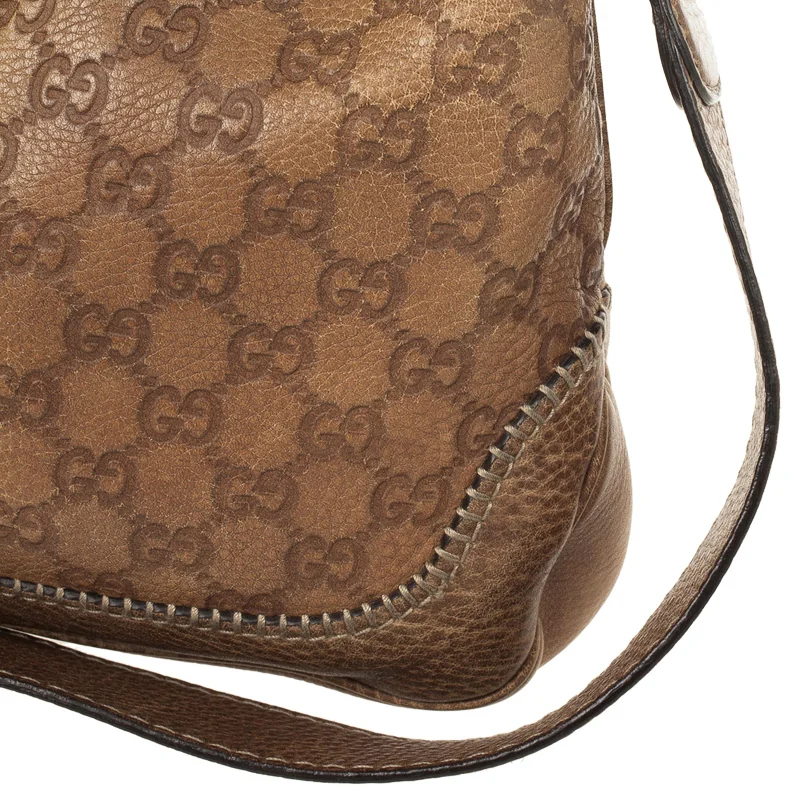
- Guccissima leather, an embossed calfskin carrying the interlocking-G pattern pressed directly into the hide rather than printed
- Smooth calfskin in solid colors, which shows the cleanest lines but is more prone to scuffing
- Suede, used on select seasonal releases, which looks striking but requires the most careful maintenance
- Occasional exotic skins (python, ostrich) in limited runs, priced significantly above the standard leather versions
Hand-stitched edges are a detail worth running your fingers over in person — Gucci’s stitch density and consistency is one of the more reliable tells between an authentic piece and a convincing fake, more on that below. The piston lock and bamboo tassel are separately fabricated components attached to the body, and on genuine pieces the bamboo shows real wood grain variation rather than a uniform printed texture.
What to Look for When Buying a Gucci Jackie O Hobo #
Buying pre-owned is where most Jackie O purchases happen today, since vintage and 2009-era pieces are far more common on the resale market than in Gucci’s current retail assortment. A few things I check every time before recommending a listing:
Hardware weight and finish. The piston lock should feel substantial, not hollow or light. Engraved “GUCCI” text on the hardware should be crisp and evenly spaced — shallow or uneven engraving is a common giveaway on counterfeits.
Interior stamping. Genuine bags carry a leather-stamped serial number inside, typically on an interior pocket or panel, along with a separate control card in older packaging. Fonts should be clean and uniformly spaced; smudged or crooked stamps are a red flag.
Stitch count and symmetry. Authentic Gucci stitching is tight and even along seams. Counterfeits often show inconsistent spacing or skipped stitches, especially around the piston lock attachment points.
Bamboo tassel detail. Check for real wood grain and a properly knotted leather cord attachment — printed or plastic-feeling “bamboo” is an immediate disqualifier.
Smell and grain. This sounds unscientific, but genuine leather has a distinct, non-chemical scent, and Guccissima embossing should feel pressed into the hide with visible depth, not stamped flat on the surface.
For resale purchases, buy through platforms that offer in-house authentication (Fashionphile, The RealReal, Rebag) or through Vestiaire Collective’s verification service rather than unmoderated marketplaces. If a price seems dramatically below comparable listings, treat that as a warning sign rather than a bargain — it usually is one.
A Brief History of the Jackie O Bag #
- Early 1960s — Gucci introduces the hobo silhouette with the signature piston lock closure; Jacqueline Kennedy is photographed carrying it and the press nicknames it “the Jackie bag.”
- 1990s — Following Kennedy Onassis’s death in 1994, Gucci formally renames the style “Jackie O” in tribute.
- 2009 — The “New Jackie” launches with an updated piston lock, bamboo tassel pull, and fuller hobo proportions.
- 2010s — The bag appears intermittently in Gucci’s collections, often in seasonal leathers and limited exotic skin editions.
- 2020 — Gucci revives the design as “Jackie 1961,” referencing the original launch year, with an expanded size range and a high-profile campaign reintroducing the silhouette to a new generation of buyers.
This kind of archive-driven relaunch has become standard practice across heritage houses, but the Jackie’s history gives it more built-in credibility than most — the design didn’t need a marketing story invented for it; the story was already there.
Sizes and Which One to Choose #
Sizing has varied across eras, but current and recent lineups (New Jackie and Jackie 1961) generally break down into:
- Mini/small crossbody — best as a going-out bag; fits a phone, cards, and lipstick, not much else
- Medium hobo/shoulder — the most practical everyday size, holds a compact wallet, sunglasses case, and small pouch
- Large shoulder/tote — closer to a work bag capacity, though the soft hobo structure means it can slouch under heavier daily loads
If you’re buying one bag to wear regularly, the medium is the safer choice — it keeps the silhouette’s signature slouch without collapsing under weight the way the large size can. The mini is better suited as a second or third bag for evenings rather than a daily workhorse, since the piston lock takes up proportionally more visual space on the smaller frame.
FAQ #
Is the Gucci Jackie O hobo still in production? Yes, in updated form. Gucci relaunched the design in 2020 as “Jackie 1961,” which is the version currently sold through Gucci boutiques and gucci.com. The earlier 2009 “New Jackie” is no longer in current production but is widely available pre-owned.
How much does a Gucci Jackie O hobo cost? New Jackie 1961 pieces typically start in the low thousands for the smallest crossbody sizes and increase from there depending on material and size, with exotic skin versions priced considerably higher. Pre-owned 2009-era New Jackie hobos generally trade in a wide range depending on condition, size, and material — check current listings on authenticated resale platforms rather than relying on a fixed number, since pricing shifts with demand.
Where should I buy one? For new pieces, Gucci boutiques or gucci.com directly. For vintage or 2009-era pieces, stick to resellers with in-house authentication such as Fashionphile, The RealReal, Rebag, or Vestiaire Collective’s verified listings.
How can I tell if a Jackie O bag is fake? Focus on hardware weight and engraving quality, interior serial number stamping, stitch consistency, and the bamboo tassel’s material. When in doubt, use a paid third-party authentication service before completing a private sale.
How do I care for a Jackie O hobo? Store it stuffed with tissue or a shaper to hold the hobo shape, keep it out of direct sunlight (coated canvas and pigmented leathers can crack or fade), avoid overloading it since the soft structure stretches under weight, and have leather conditioned professionally rather than using household products. Suede versions need a dedicated suede protector and should avoid moisture entirely.
Has the bag shown up in pop culture beyond Jackie Kennedy? The 2020 Jackie 1961 relaunch campaign featured a mix of actors and musicians reintroducing the bag to a modern audience, and it’s regularly spotted on stylists and collectors documenting archive Gucci pieces on social media — a second life driven as much by vintage-fashion interest as by the original Kennedy association.
Related Articles #
- Gucci Zumi Bag Guide: History, Design & Resale Value
- 5 Iconic Bags Named After Famous Women (Buying Guide)
- Fendi By The Way Bag Review: Style, Cost & Resale Value
- Louis Vuitton Saumur Bag Guide: History, Value & Tips
- Gucci Jackie 1961 Bag: Bag of the Week Guide
Related guides
- Online Bag Authentication: What Photos Can and Cannot Prove
- Blue Crocodile Lady Dior Tote: Buying Guide
- Chanel Vintage Flap Bag Buying Guide: Navy Lambskin
- Louis Vuitton Palm Spring Backpack: Complete Buyer's Guide
- How to Buy an Authentic Luxury Bag from China Safely
- New vs Pre-Owned Luxury Bags: Which Route Is Right for You?
- Chanel Bag Guide: What to Know Before You Buy
- Luxury Bag Houses


Keyword index