Introduction #
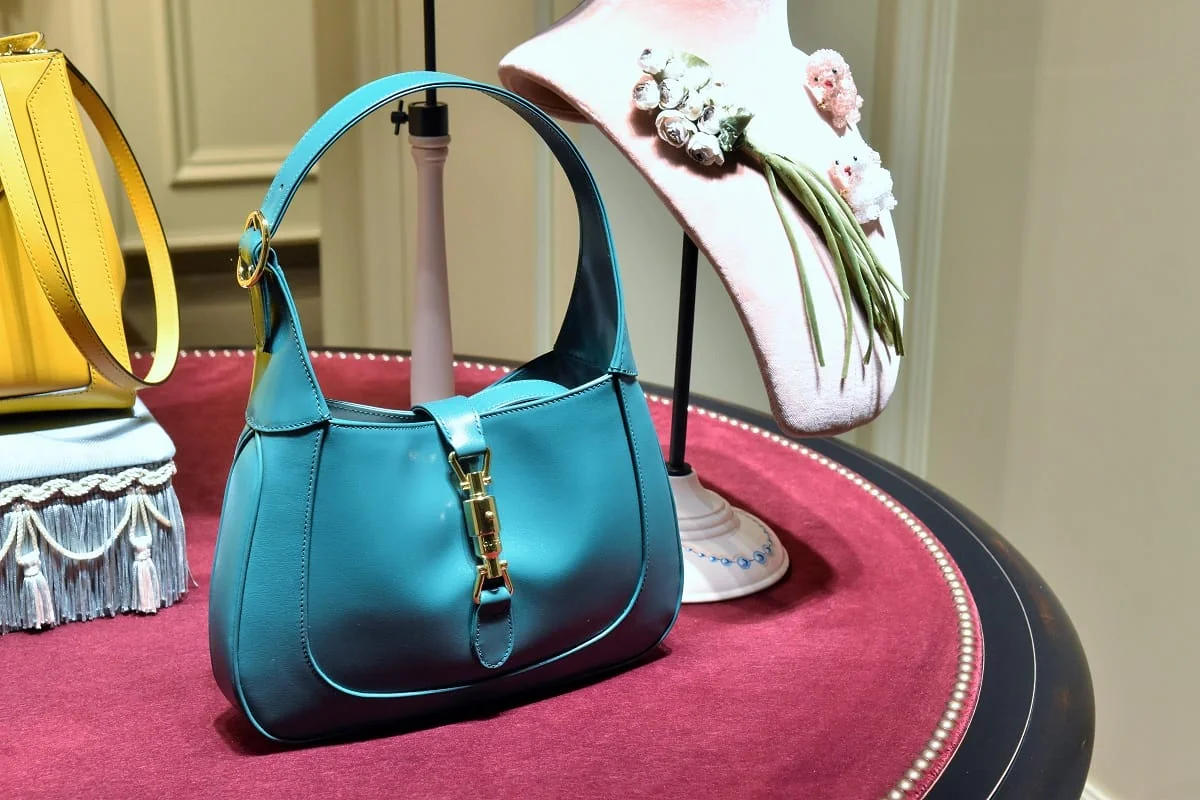
Every so often, a bag comes along that doesn’t just carry your essentials, it carries history. The Gucci Jackie 1961 is one of those pieces. For this week’s Bag of the Week feature, we’re putting the spotlight on a design that has quietly outlasted six decades of trend cycles, several creative directors, and at least three major fashion reinventions. Gucci has been in the handbag business for more than 70 years, and its enduring skill isn’t inventing something new every season, it’s knowing which archival codes are worth protecting. The Jackie 1961 is proof of that instinct. It’s also become one of the more searched, resold, and debated bags in the current Gucci lineup, which makes it worth a proper look at what you’re actually paying for, whether new or pre-owned.
Jackie: A Bag That Transcended Time and Trends #
The bag now known as the Jackie started life with a far less glamorous name: the Fifties Constance. It might have stayed a footnote in Gucci’s catalogue if Jacqueline Kennedy Onassis hadn’t been photographed carrying it, repeatedly, through the 1960s. The association stuck so firmly that the bag was eventually renamed after her. It wasn’t just a woman’s accessory either. Samuel Beckett and Peter Sellers were both known to carry the hobo-shaped original, which says something about how the silhouette read as genuinely unisex decades before that became a marketing term.
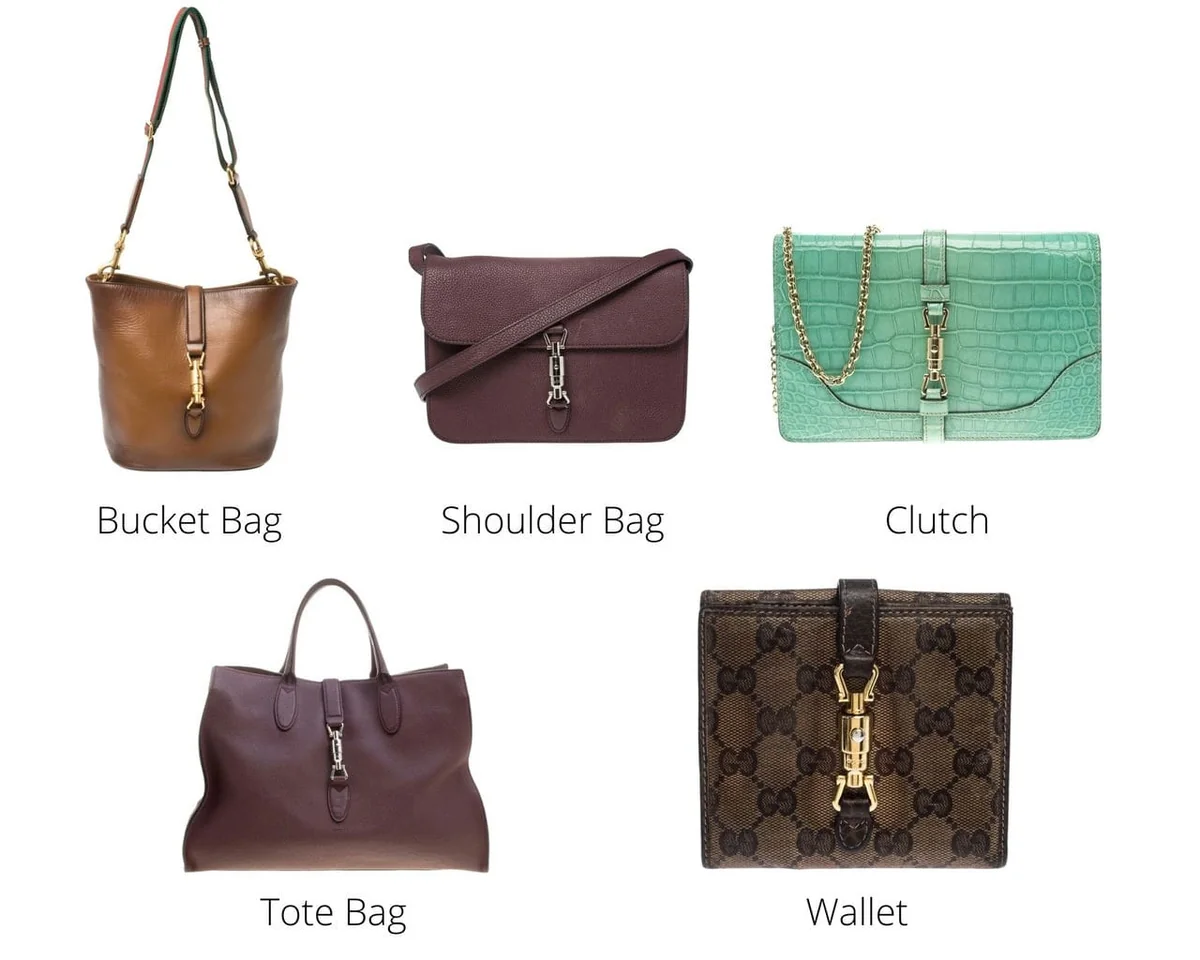
The design didn’t stay frozen. In 1999, Tom Ford revisited the Jackie with a sleeker, more streamlined piston lock, tuning the bag for the minimalist mood of the early 2000s. Roughly ten years after that, Frida Giannini, then at the creative helm, introduced the New Jackie: tasseled, finished with bamboo hardware, and pitched toward a more bohemian customer. Between these three eras, the Jackie name expanded into wallets, clutches, and bucket bags, which is fairly rare territory for a single handbag lineage. Most Gucci icons get one strong reinterpretation. The Jackie has had three, and each one reflects the design language of its decade rather than a costume-department nod to the past.
A Redux: The Gucci Jackie 1961 Shoulder Bag #
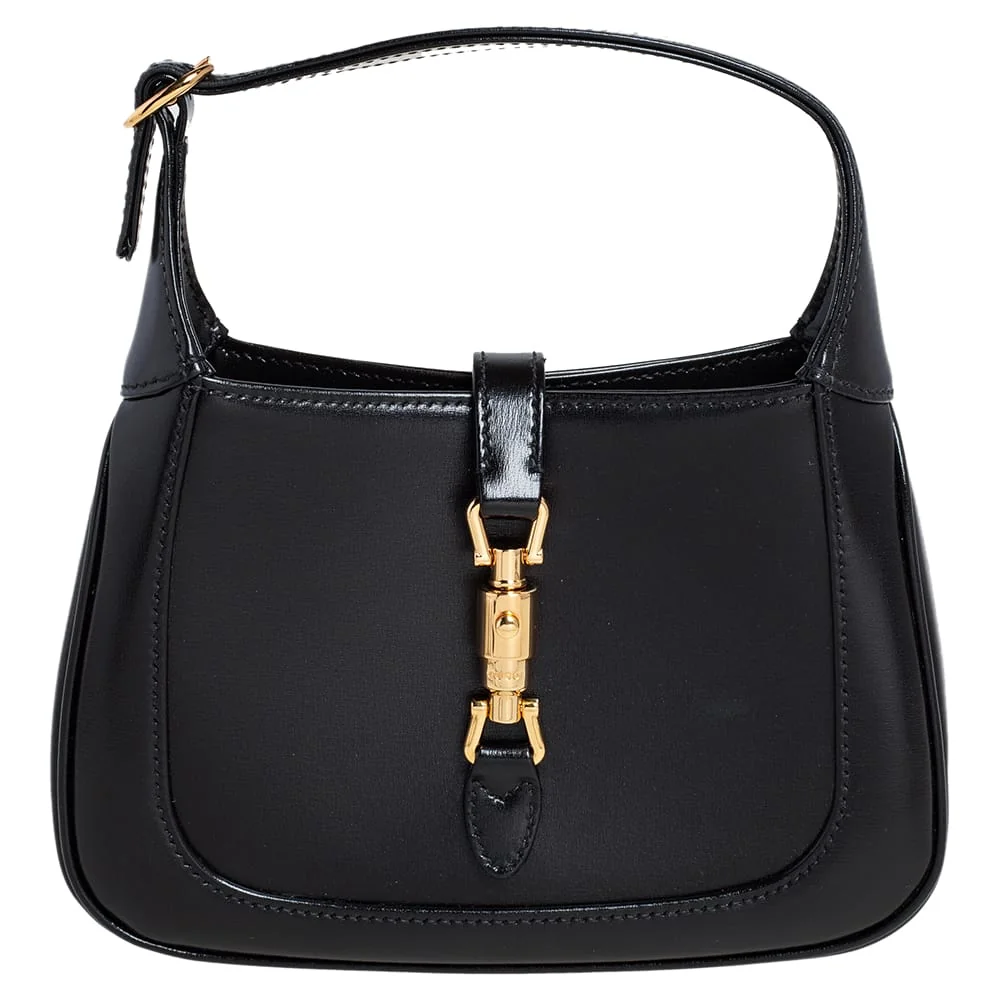
Alessandro Michele’s version, shown on the Autumn/Winter 2020 runway, is arguably the most confident reinterpretation the bag has had. Michele kept the two elements that make a Jackie recognizable at a glance, the single top handle and the piston lock, and rebuilt everything else around them. The body was simplified into cleaner lines with a crescent-shaped base, dropping the tassels and bamboo entirely in favor of something closer to the bag’s original austerity.
What’s notable is how deliberately gender-neutral the silhouette reads. Michele’s Gucci has leaned into androgynous styling across several bag lines, and the Jackie 1961 fits that thesis well, structured enough to look sharp on a blazer, slouchy enough to work with denim. That positioning wasn’t accidental marketing either. Harry Styles and Sienna Miller both carried the bag in Gucci’s The Beloved Show campaign, shown alongside the Horsebit 1955 shoulder bag, the GG Marmont, and the Dionysus, effectively placing the Jackie 1961 in the same tier as Gucci’s other flagship shapes. The bag currently comes in mini, small, and medium sizes, and across leather, GG canvas, and seasonal colorways ranging from neutral tones to deep jewel hues.
Design and Hardware Details #
The details are where the Jackie 1961 earns its keep, and where a buyer should look closely if they’re evaluating condition or authenticity.
The piston lock. This is the bag’s signature and its most vulnerable moving part. It should glide smoothly, snap into place with a clean click, and sit flush against the leather flap. A loose, wobbly, or sticky piston lock is one of the first things to check on a pre-owned bag, since it’s a mechanical part that wears with use.
Construction and materials. The bag is built with a curved, crescent-shaped base rather than a flat bottom, which gives it that soft, rounded profile. Leather versions are hand-finished with tight, even stitching and no visible glue seepage at the seams, a hallmark of Gucci’s Italian manufacturing. GG canvas versions pair the coated canvas body with leather trim, handle, and piping.
Hardware and hand feel. The gold-tone or aged-brass hardware should have real weight to it, not the light, hollow feel of a poorly cast fake. The single handle is adjustable, which lets the bag convert between a handheld and a shoulder carry, though it’s worth noting the strap drop is short by design, this is not meant to be a crossbody.
Interior. Most Jackie 1961 bags are lined in Alcantara, a suede-like microfiber that feels premium but does show wear, oil transfer, and pen marks more readily than a smooth fabric lining. On resale platforms, interior lining condition is one of the most common giveaways of heavy use.
Price and Value: Is the Gucci Jackie 1961 Worth It #
Retail pricing on the Jackie 1961 varies by size and material, but as a general range: the mini in leather typically starts a little under $2,000, the small runs into the low-to-mid $2,000s, and the medium and GG canvas variations can climb higher depending on the season and hardware finish. Gucci adjusts pricing periodically, so treat any figure as a snapshot rather than a fixed number, and always confirm current retail before comparing against a resale listing.
On the resale market, the Jackie 1961 holds value reasonably well, but not at the level of Gucci’s strongest performers. Leather versions in neutral colorways tend to retain more value than GG canvas, which is more susceptible to corner wear and coating peel, both of which visibly depress resale price. Realistically, a well-cared-for leather Jackie 1961 in excellent condition will resell in the range of 40-60% of original retail, with mini sizes generally holding value better than medium simply because demand for smaller bags has stayed high across the secondhand market.
What drives desirability here isn’t rarity, Gucci hasn’t limited production, it’s the combination of recognizable heritage and a shape that photographs well and wears easily. Buyers weighing new versus pre-owned should factor in that a pre-owned Jackie 1961 from a reputable, authenticated source often represents better value than retail, provided the piston lock, hardware, and lining are all in solid shape.
Buying Advice: How to Choose and Authenticate Your Jackie 1961 #
Choosing a size. The mini is best suited to buyers who carry light, phone, cards, lipstick, and not much else. The small strikes the most practical balance for daily use. The medium is the closest to an everyday workhorse but loses some of the sleek, minimal profile that made the 1961 redesign notable in the first place.
Choosing material and color. Leather in neutral tones (black, tan, cream) resells better and shows wear more gracefully than GG canvas. If you want a statement piece rather than a resale-conscious purchase, the canvas and seasonal color options lean more directly into current trend cycles.
Authentication checklist for pre-owned buying:
- Check the interior heat stamp or leather tag, Gucci’s date codes and QR-linked authenticity cards vary by production year, so cross-reference the format against the bag’s stated age.
- Inspect stitching density and alignment. Gucci’s stitch spacing is consistent and tight; uneven or overly large stitches are a red flag.
- Test the piston lock mechanism directly, don’t rely on photos alone if buying in person.
- Weigh the hardware in your hand. Authentic hardware has noticeable heft; lightweight, tinny hardware is a common counterfeit tell.
- Buy from platforms or sellers that offer in-house authentication and a return window. This matters more for the Jackie 1961 than for some other Gucci bags, since its clean, logo-free design makes it slightly easier to counterfeit convincingly at a glance.
How it compares to other Gucci icons. The Horsebit 1955 sits a notch above the Jackie 1961 in both retail price and resale retention, largely because of its more structural hardware and stronger brand recognition. The GG Marmont is more overtly logo-driven and tends to appeal to buyers who want instant brand visibility, whereas the Jackie 1961 is quieter and more versatile across formal and casual outfits. The Diana bag, reintroduced with its bamboo handles, competes more directly on nostalgia than on daily practicality. If you want the most understated, easiest-to-style option of the four, the Jackie 1961 is generally it, but if [[[[resale value](/buying-guides/best-time-to-buy-a-luxury-handbag-1/)](/prices-and-value/luxury-price-hikes-2026-resale-impact/)](/brands/celine-luggage-tote-guide-sizes-history-resale-value-1/)](/brands/celine-luggage-tote-guide-sizes-history-resale-value/) is your priority, the Horsebit 1955 currently has the edge.
Real-World Capacity and Everyday Use #
Spec sheets don’t tell you much about how a bag actually behaves once it’s loaded with your daily carry. The mini Jackie 1961 comfortably fits a phone, a slim card case, keys, and a lipstick, but it will not accommodate a standard wallet without some careful folding. The small size is the realistic daily-use choice: it holds a phone, wallet, sunglasses case, and a few loose items without looking overstuffed, though the crescent base means the bag can slouch when it’s underfilled, which is a styling quirk rather than a flaw. The medium extends to fit a compact tablet or a light cardigan, making it the closest to a work-appropriate size, though it does lose some of the sleek silhouette that defines the design.
One honest downside worth flagging: the short strap drop on the shoulder carry means the bag sits high and close to the body. It’s flattering, but it’s not built for hands-free, long-distance wear the way a crossbody would be.
Styling It Day to Day #
The Jackie 1961’s minimal, logo-free front makes it genuinely easy to pair across wardrobes. It works with tailored blazers and trousers for an office-adjacent look, sits comfortably against denim and knitwear for weekend wear, and, thanks to the design’s gender-neutral leanings, pairs equally well with more structured menswear silhouettes.
Caring for the Leather #
Leather Jackie 1961 bags benefit from a few basic habits: store it stuffed with tissue or a bag pillow to help the crescent base hold its shape, keep it away from direct sunlight to prevent fading at the seams, and clean the exterior with a dedicated leather cleaner rather than household products. The Alcantara interior should be spot-cleaned carefully, since it stains more easily than smooth leather. For GG canvas versions, wipe down the coated surface with a slightly damp cloth and avoid saturating the trim, since moisture exposure is one of the more common causes of value loss on canvas bags in the resale market.
FAQs About the Gucci Jackie 1961 Bag #
Why is it called the Jackie? The bag was originally released as the Fifties Constance but was renamed after Jacqueline Kennedy Onassis, who was frequently photographed carrying it throughout the 1960s.
What’s different about the 1961 version compared to earlier Jackie bags? The 1961 redesign, introduced by Alessandro Michele in 2020, simplified the silhouette with a crescent base and cleaner lines, dropping the tassels and bamboo hardware used in Frida Giannini’s earlier New Jackie interpretation.
How much does the Gucci Jackie 1961 cost? Retail pricing depends on size and material, with mini leather versions typically starting under $2,000 and larger or canvas versions priced higher. Always check current Gucci pricing directly, as figures shift with seasonal collections.
Does the Jackie 1961 hold its resale value? Reasonably well for leather versions in neutral colors, generally in the 40-60% of retail range for excellent condition. GG canvas versions tend to retain less value due to visible wear patterns on the coated fabric.
How do I know if a pre-owned Jackie 1961 is authentic? Check the interior heat stamp or date code, test the piston lock mechanism, examine stitching consistency, and buy through a platform or seller that offers in-house authentication.
What size should I buy? Mini for light, essentials-only carry; small for realistic daily use; medium if you need room for a tablet or extra layers, though it sacrifices some of the design’s sleeker proportions.
Related Articles #
- Gucci Marmont Bucket Bag: The Complete Buying Guide
- Gucci Zumi Bag Guide: History, Design & Resale Value
- Gucci Dionysus Bag Review: Is It Worth Buying Resale?
- Gucci Ophidia Shoulder Bag Review: Bag of the Week
- Gucci Sylvie Shoulder Bag Review: Grey Leather Spotlight
Related guides
- Online Bag Authentication: What Photos Can and Cannot Prove
- Chanel 2.55 History, Details & How to Spot a Fake
- Private Bag Edit: Hermès Kelly Authentication Blog
- Hermès Date Codes & Stamps Explained: Full Guide
- How to Buy an Authentic Luxury Bag from China Safely
- New vs Pre-Owned Luxury Bags: Which Route Is Right for You?
- Chanel Bag Guide: What to Know Before You Buy
- Luxury Bag Houses


Keyword index