Introduction: Gucci’s Zumi Bag and Alessandro Michele’s Vision #

Every handbag Alessandro Michele put his name to during his Gucci tenure carried a small piece of autobiography. The Zumi bag, introduced for Spring/Summer 2019, is one of the clearest examples of that instinct. Where earlier hits like the Marmont or Dionysus leaned on decoration, Zumi did something more restrained: it dug into Gucci’s own archive and pulled out two of the house’s oldest visual signatures, then fused them into something new.
That restraint is exactly why the bag earns a feature here. It’s a design built on [brand history](/brands/trussardi-brand-history/) rather than trend, which matters for anyone shopping resale, since pieces rooted in a maison’s actual codes tend to hold value and desirability longer than one-season novelty items. Zumi also sits at an interesting crossroads for buyers: it’s no longer part of Gucci’s current runway lineup, which makes it a “get it while you still can” proposition on the pre-owned market rather than a guaranteed reorder from the boutique.
The Muse Behind the Name: Zumi Rosow and the SS19 Runway #
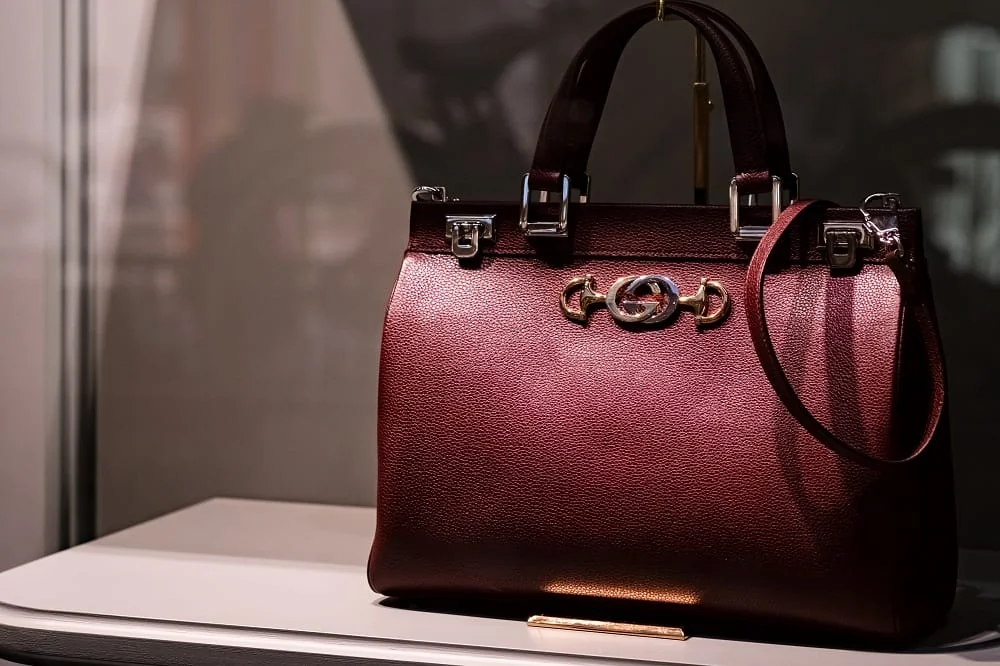
The bag takes its name from Zumi Rosow, a Los Angeles musician known for her saxophone work with the garage-punk band Black Lips and her contributions to the female-fronted group Crush. Michele has a habit of naming bags after women he finds genuinely interesting rather than after abstract concepts or geography, and Rosow fit that pattern: an artist with a specific, slightly rebellious identity rather than a conventional fashion muse.
She carried the debut top-handle version of the bag down the runway during Gucci’s SS19 show, staged at La Palace in Paris, a 17th-century theater that spent decades as one of the city’s defining discotheques. The setting wasn’t incidental. Michele built the entire collection around 1970s disco culture and Parisian nightlife, and showing the bag inside an actual former disco gave the design a lived context rather than a staged one. For a house often accused of romanticizing eras it never touched, presenting Zumi inside a real relic of that period added a layer of authenticity to the storytelling.
Design Details: Merging the Horsebit and Interlocking G #
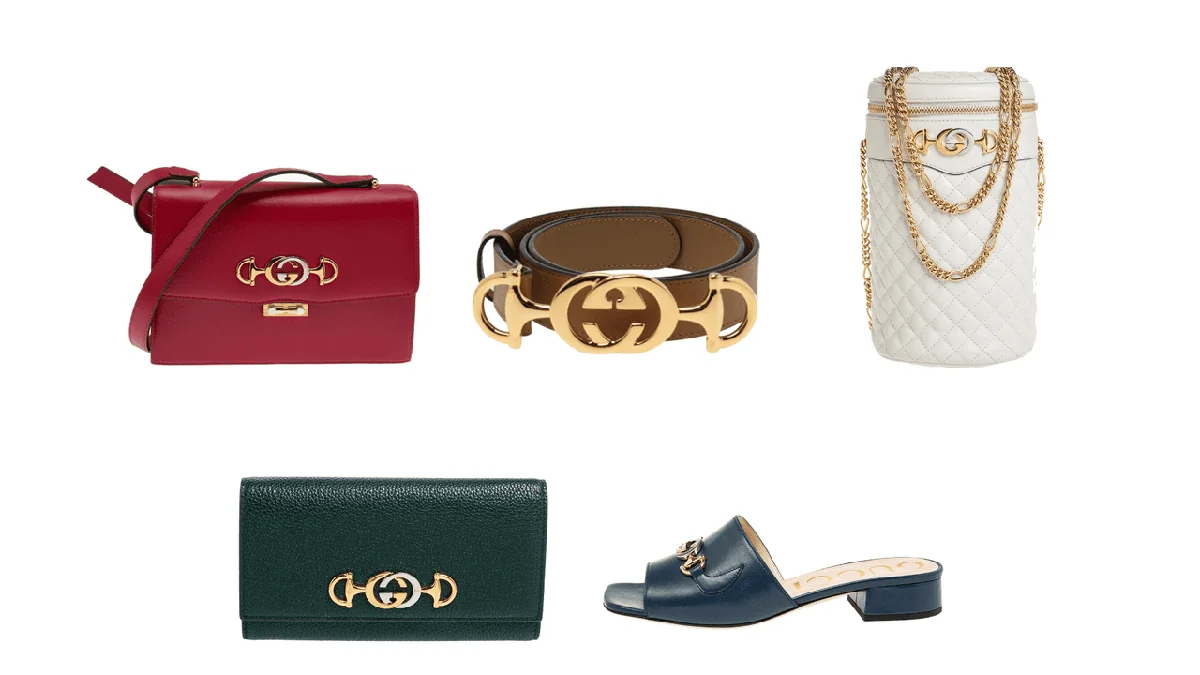
Strip away the hardware and Zumi is a fairly plain, ladylike silhouette: structured body, top handle, clean lines with almost no exterior branding. That plainness is the point. All of the design’s personality lives in a single hybrid emblem on the front flap, where Gucci’s Horsebit and its Interlocking G logo are merged into one mark, rendered in a mix of gold and silver-tone hardware rather than a single finish.
That two-tone treatment isn’t just for flourish. Gucci’s Horsebit dates back to 1953 and originally referenced the house’s equestrian roots, while the Interlocking G, adopted in the 1960s, has always signaled the brand name itself. Putting both marks into one piece of hardware is Gucci telling you, without a single word of branding elsewhere on the bag, “this references two different chapters of our own history.” The top closure uses a double-flip lock, which gives the bag a slightly formal, almost briefcase-like opening mechanism, distinct from the twist-lock or magnetic closures found on most other Gucci shoulder bags of the same era.
Sizes, Colors, and Style Variations #
Zumi launched primarily as a top-handle bag, then expanded into a small shoulder bag and a mini format with a longer crossbody strap. All three share the same hardware and general proportions but scale down for different use cases.
| Size | Approximate Dimensions (W x H x D) | Best Suited For |
|---|---|---|
| Mini | ~19 x 13 x 5 cm | Evening, crossbody, minimal essentials |
| Small (top handle) | ~24 x 16 x 10 cm | Daily use, structured hand-carry |
| Medium (top handle/shoulder) | ~29 x 19 x 12 cm | Work, larger daytime loads |
Materials spanned smooth calfskin leather in black, white, and deep burgundy, along with a suede iteration in dusty pink tones that softened the otherwise structured silhouette. Gucci also released the bag in its signature GG canvas with leather trim, which sits at a lower price point than the full-leather versions and reads more casual. Beyond bags, the Horsebit-and-G hybrid logo eventually migrated onto belts, loafers, and small leather goods, which is part of why the emblem still feels familiar even to shoppers who never bought the bag itself.
How to Style the Gucci Zumi Bag #
Because Zumi’s exterior is intentionally quiet, it works best as a structuring piece rather than a statement piece. The top-handle sizes pair naturally with tailoring: a blazer and trouser combination, a shirt dress, or a fitted midi skirt all let the bag’s clean geometry do its job without competing with anything else on the body.
The suede colorway in particular reads well against knitwear and heavier autumn fabrics, where the texture contrast keeps the look from feeling flat. For evening, the mini crossbody handles the transition from desk to dinner without requiring an outfit change, since the hardware carries enough polish to dress up jeans or a simple slip dress. Where Zumi struggles is with anything already maximalist. Michele’s other bags, like Dionysus with its tiger-head clasp, are built to be a focal point; Zumi is built to be the accessory that makes the rest of the outfit look considered, not the thing you’re supposed to notice first.
Authenticity Checkpoints for the Gucci Zumi Bag #
The hybrid Horsebit-and-G hardware is the single easiest tell on a Zumi bag, and also the most commonly botched detail on counterfeits. On an authentic piece, the two-tone finish is precise: gold and silver sections meet cleanly with no bleeding between metals, and the hardware has real weight to it rather than feeling like coated plastic. Counterfeits frequently render the whole clasp in a single tone or use a thin, lightweight metal that flexes under light pressure.
Check the double-flip lock mechanism itself. It should open and close with a firm, mechanical click, not a loose wobble. On the interior, look for a Gucci leather tag stamped with a serial or heat-stamped logo, consistent with the bag’s production period, plus even, tight stitching along the handle attachment points, an area that takes the most physical stress and is where corner-cutting on fakes shows up fastest. Leather grain should be consistent across panels; suede versions should have uniform nap without patchy or shiny worn spots that suggest a different, cheaper material underneath.
If you’re buying pre-owned or vintage, and you have doubts, it’s worth paying for a third-party authentication service before purchase, since Zumi’s now-discontinued status means Gucci boutique staff may not be able to verify it in-store the way they can with current collection pieces. Buying from a curated resale platform that offers its own authentication guarantee removes most of this risk upfront.
Zumi vs. Other Gucci Bags (Marmont, Dionysus, Soho) #
Shoppers comparing Zumi against Gucci’s other well-known lines are usually choosing between decoration and restraint. Marmont carries a large, matelassé-quilted chevron pattern with a prominent double-G plaque; it’s the most recognizable Gucci bag on the street right now and tends to hold [[resale value](/brands/celine-luggage-tote-guide-sizes-history-resale-value-1/)](/brands/celine-luggage-tote-guide-sizes-history-resale-value/) well precisely because of that visibility. Dionysus goes further with its tiger-head closure, an overtly maximalist piece that photographs distinctly and appeals to buyers who want a bag to read as a statement from across a room. Soho, an older line from the pre-Michele Frida Giannini era, is the most minimal of the group, using a simple leather tassel and light branding, and generally sits at a lower resale tier because it predates the current design language most buyers associate with modern Gucci.
| Bag | Design Language | Hardware Focus | Typical Resale Positioning |
|---|---|---|---|
| Zumi | Ladylike, archival | Horsebit + Interlocking G hybrid | Mid, niche appeal |
| GG Marmont | Bold quilted pattern | Double-G plaque | Strong, high recognition |
| Dionysus | Maximalist, ornate | Tiger-head clasp | Strong, statement piece |
| Soho | Minimalist | Small leather tassel | Lower, older design era |
Zumi lands in an interesting middle position: less instantly recognizable than Marmont or Dionysus, but that lower profile is exactly what makes it appealing to buyers who want a Gucci bag without wearing an obvious logo. It also means resale prices are generally more accessible than Marmont or Dionysus in comparable leather and condition, since demand runs narrower.
Final Thoughts on the Gucci Zumi Bag #
Zumi never became Gucci’s most photographed bag, and it’s no longer part of the brand’s current collection, but that’s part of its appeal now. It’s a design that rewards buyers who understand what they’re looking at: the merged Horsebit and Interlocking G isn’t decoration, it’s a condensed piece of Gucci history, and Michele’s choice to keep the rest of the bag understated makes that emblem do all the talking.
It suits someone who wants a structured, slightly formal Gucci piece for work and evening use without competing visually with the rest of an outfit, and who’s comfortable buying a discontinued style on the pre-owned market with appropriate authentication in hand. It’s a weaker fit for buyers chasing maximum brand recognition or resale liquidity, where Marmont and Dionysus remain the safer bets.
FAQ #
Is the Gucci Zumi bag still sold new? No. It’s discontinued from Gucci’s current collection, so new stock is typically only available through remaining retailer inventory or resale.
Does the Zumi bag hold its value on resale? It holds moderate value, generally trailing Marmont and Dionysus, since it has a smaller but loyal following rather than mass recognition.
What’s the difference between the leather and GG canvas versions? The canvas version uses Gucci’s signature GG print with leather trim and sits at a lower price point; the full leather and suede versions are priced higher and read as more formal.
Where’s the easiest place to check authenticity on a Zumi bag? The two-tone Horsebit-and-G hardware and the double-flip lock mechanism are the fastest tells, since counterfeits routinely get the metal finish or clasp action wrong.
Related Articles #
- Why the Chanel Crossbody Bag Never Goes Out of Style
- Gucci Dionysus Bag Review: Is It Worth Buying Resale?
- Saint Laurent Kate Bag Review: Style, Fit & Resale Value
- 5 Iconic Bags Named After Famous Women (Buying Guide)
- Gucci Horsebit vs Celine Triomphe: Full Comparison
Related guides
- Online Bag Authentication: What Photos Can and Cannot Prove
- Chanel 2.55 History, Details & How to Spot a Fake
- Private Bag Edit: Hermès Kelly Authentication Blog
- Hermès Date Codes & Stamps Explained: Full Guide
- How to Buy an Authentic Luxury Bag from China Safely
- New vs Pre-Owned Luxury Bags: Which Route Is Right for You?
- Chanel Bag Guide: What to Know Before You Buy
- Luxury Bag Houses


Keyword index