Introduction#
Louis Vuitton launched the Neverfull in 2007, and it has spent nearly two decades proving that a “simple” tote can still be a genuine design achievement. The name is the whole pitch: a bag built to never run out of room, no matter how many things you throw into it on a given day. That’s not marketing fluff — it’s an accurate description of what the bag does.
What’s kept the Neverfull relevant this long isn’t hype. It’s the fact that the silhouette solves a real problem. Most structured totes force you to choose between looking put-together and actually fitting your life inside the bag. The Neverfull doesn’t ask you to choose. The open top, the wide gusseted sides, and the soft, unstructured base mean it holds a laptop, a water bottle, a change of shoes, and whatever else you’ve accumulated by 3pm, without looking like it’s straining to do so.
It’s also become one of the more sensible entry points into the Louis Vuitton universe. If you’re deciding whether to buy new, buy pre-owned, or hold one for resale, this guide walks through the materials, the size differences, how the bag actually performs on the resale market, and where I think it earns its price tag — and where it doesn’t.
Signature Materials: Monogram, Damier, and Epi Leather#
The Neverfull is really a vehicle for Louis Vuitton’s house materials, and which one you choose changes the bag’s personality, its durability, and honestly, how much attention it draws. Here’s how the main options actually differ.
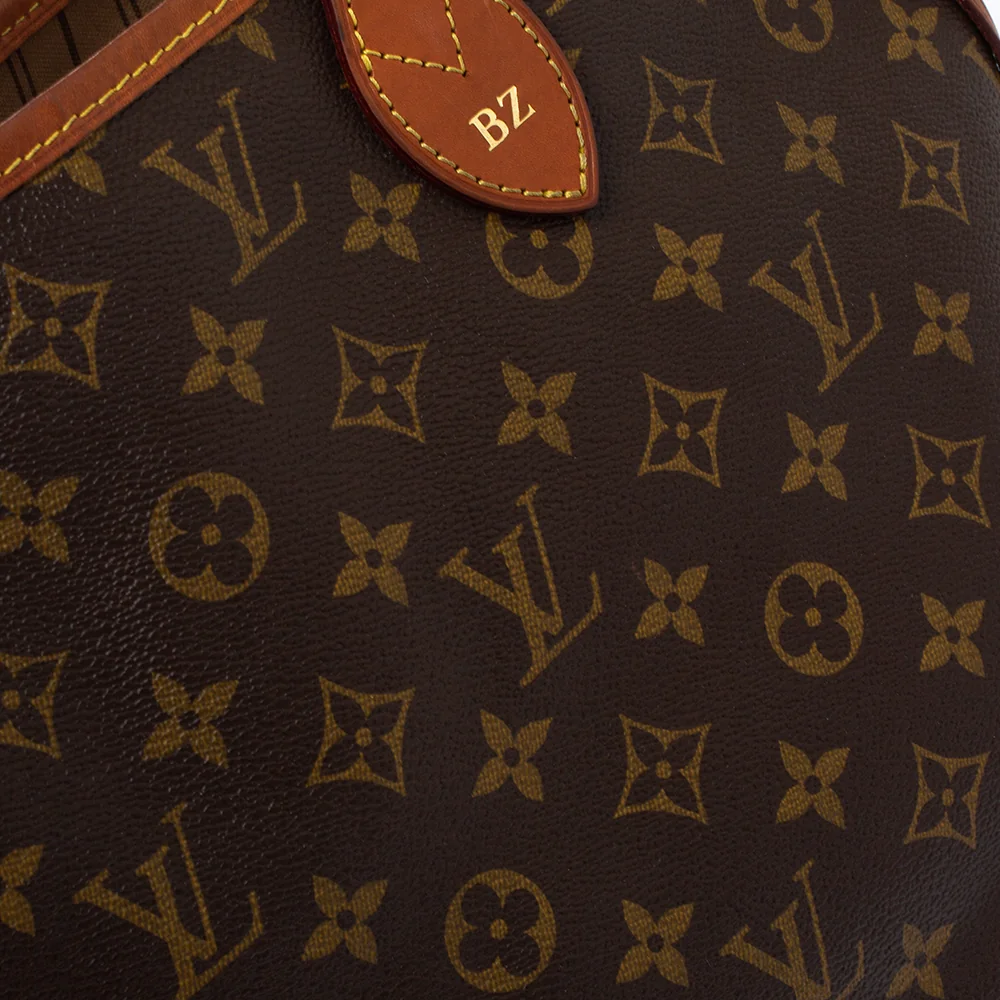
[[Monogram canvas](/authentication/how-to-spot-a-fake-louis-vuitton-bag/)](/buying-guides/most-popular-louis-vuitton-bags-2026/) is the one most people picture first, and it’s also the oldest pattern the house makes. Georges Vuitton introduced it in 1896, specifically to make his father’s designs harder to counterfeit. The LV initials, quatrefoils, and flowers borrowed heavily from Japanese and Victorian-era ornamentation, which is part of why the print has aged so gracefully rather than looking like a period piece. Functionally, it’s a vinyl-coated canvas — light, water-resistant, and far more scratch-tolerant than most people expect from a “canvas” bag. The trade-off: it’s the most widely recognized LV print in the world, which means it’s also the most counterfeited. If logo visibility isn’t your priority, that’s worth factoring in.
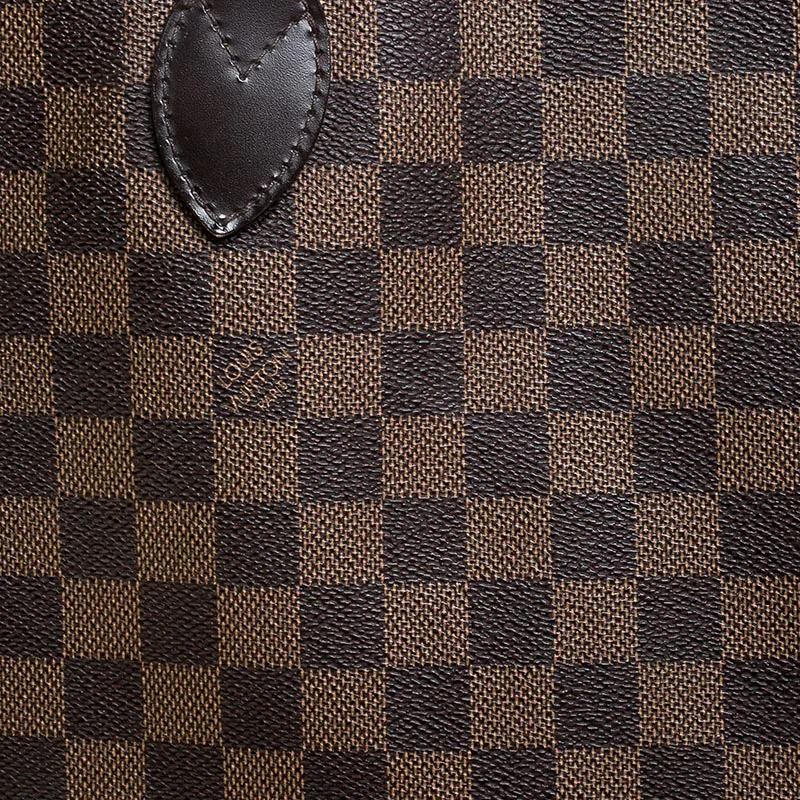
Damier canvas actually predates the Monogram, dating back to 1888. “Damier” is French for checkerboard, and the pattern served the same anti-counterfeiting purpose the Monogram would later serve. The Damier Ebene version, reintroduced in 1998, uses a black canvas base under a two-tone brown checkerboard with the “Louis Vuitton Paris” signature woven into select squares. It’s the quieter option — less immediately identifiable as LV to a casual observer, which a lot of buyers now prefer.
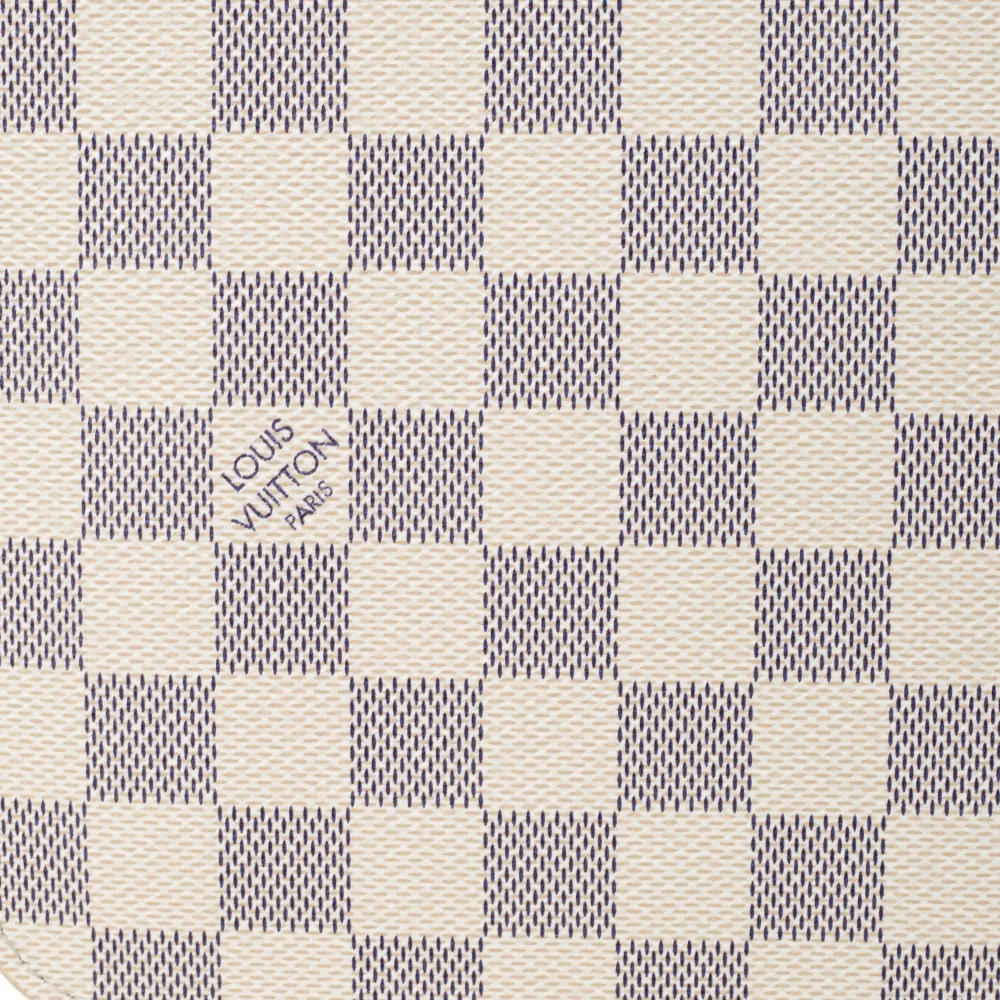
Damier Azur, launched in 2006, takes the same checkerboard construction and reworks it in blue and white, inspired by the French Riviera. It reads lighter and more seasonal, which also means it shows soil and grime faster than the Ebene — something to keep in mind if you’re using this as a daily, all-weather bag rather than a warm-weather piece.
Epi leather is the material to consider if you want the Neverfull to feel less casual. Introduced in 1985 but rooted in grained leather techniques the house used for custom travel trunks in the 1920s, Epi is scratch-resistant and genuinely weatherproof — it’s vegetable-dyed leather stamped with a textured ripple pattern, then finished in color. It’s stiffer and more structured than the canvas versions, which changes how the bag sits and slouches. Originally offered in a tight color range, Epi now comes in everything from classic neutrals to bright, glossy patent finishes.
One detail worth noting regardless of exterior: the striped interior lining is a direct nod to LV’s trunk-making heritage, originally beige and now offered in several colorways. It’s a small thing, but it’s one of those details that tells you the house didn’t treat this as a throwaway commercial bag.
Sizes and Practicality: Choosing the Right Neverfull#
The size you pick matters more with the Neverfull than with most totes, because the open-top, unstructured design means there’s no internal architecture forcing a shape — the bag genuinely expands to whatever you put in it.
PM (29 x 21 x 12 cm) is the smallest of the three and, in my experience, the size most likely to disappoint someone expecting a full-size everyday bag. It’s genuinely well-suited to errands, lunch dates, or as a going-out bag when you need to carry more than a clutch allows but don’t want bulk. Don’t buy this size expecting it to swallow a laptop comfortably — it won’t.
MM (31 x 28 x 14 cm) is the size most people should default to, and it’s the one Louis Vuitton itself seems to position as the “main” Neverfull. It’s roomy enough for a work day — tablet, wallet, makeup bag, a light jacket — without ballooning into an obviously oversized silhouette. If you’re only going to own one Neverfull, this is almost certainly it.
GM (39 x 32 x 19 cm) is the largest, and it’s a genuinely useful size for travel, weekend bags, or as a diaper bag — it has the depth and width to function as a carry-on companion. The downside is scale: at full capacity, the GM is heavy and can look oversized on smaller frames. It’s also the size most prone to that slouchy, shapeless look when underfilled, since there’s so much unstructured canvas or leather with nothing holding it up.
If you’re torn between MM and GM, go with how you actually carry things day to day rather than how much you could theoretically fit. An underfilled GM looks worse than a slightly-too-full MM.
Resale Value and Investment Potential#
This is where I’ll be direct: the Neverfull is not the strongest investment piece in the Louis Vuitton catalog, and I’d push back on anyone marketing it that way.
Compared to bags like the Capucines, the Twist, or hard-to-get exotic-skin pieces, the Neverfull doesn’t carry scarcity, and scarcity is what drives real appreciation in the resale market. Louis Vuitton produces the Neverfull in high volume across multiple materials and sizes, and it doesn’t sit on a waitlist or allocation list the way some of the house’s other bags do. High availability generally caps resale upside — it’s simple supply and demand.
That said, “not an investment piece” doesn’t mean “poor value.” The Neverfull holds value respectably compared to non-LV designer totes, largely because of brand strength and consistent demand rather than rarity. Monogram canvas versions tend to hold resale value slightly better than Damier, mainly because the print is more universally recognized and easier to authenticate at a glance, which matters to resale buyers. Epi leather pieces, especially in discontinued or limited colorways, can occasionally outperform canvas versions on the secondary market — but that’s a color and timing bet, not a guarantee tied to the bag itself.
Condition matters enormously here. Because the canvas versions use vachetta leather trim (the untreated cowhide handles and piping), that leather patinas and darkens with wear, and heavy patina or staining meaningfully drags down resale price. If you’re buying with resale in mind, factor in how you’ll store and use the bag, not just what you pay for it.
My honest take: buy the Neverfull because you want a genuinely useful, well-made tote from a house with real archival credibility — not because you expect it to appreciate. If investment value is your primary goal, your money is better placed elsewhere in the LV catalog.
Styling the Neverfull: Day to Night#
The Neverfull’s biggest styling strength is that it doesn’t try to look formal or casual — it just looks finished, which means it adapts to whatever you pair it with.
For daytime, I lean into the unstructured slouch rather than fighting it. Worn on the shoulder with jeans, a plain tee, and flats, the bag looks intentional rather than overloaded, even when it’s carrying a full day’s worth of stuff. The pochette accessoires that ships with many Neverfull sets (or is sold separately) is genuinely useful here — clipped to the handles, it adds a small pop of color or pattern without requiring a second bag.
For elevated daytime looks — office, brunch, travel days — I’d size down slightly in styling terms: carry it more structured, don’t overstuff it, and let the canvas or leather sit close to its intended shape. Epi leather earns its keep here; it reads more polished than canvas without needing a dressier outfit to justify it.
Night is the one place I’ll admit the Neverfull has real limits. It’s an open-top tote — there’s no closure beyond the drawstring, which means it’s not the bag for a dinner where security or discretion matters, and it doesn’t scale down to “evening bag” energy no matter how you style it. If you want it for evening use, pair it with tailored pieces (a blazer, a slip dress) so the bag’s casualness gets balanced out, but don’t expect it to disappear into a black-tie context. It’s not built for that, and I’d rather say so than pretend otherwise.
Buying Advice: What to Consider Before You Buy#
Pros:
- Genuinely functional capacity — it earns its name
- Wide range of materials and sizes to match different lifestyles and budgets
- Strong brand recognition, which helps at resale even if it doesn’t drive appreciation
- Durable materials, particularly the coated canvas options, that hold up to daily wear
- Easy to style across casual-to-elevated daytime looks
Cons:
- Open top with no zip closure — a real security and pickpocket consideration in crowded settings
- Vachetta leather trim requires care and will patina/darken, affecting resale condition
- High production volume limits long-term investment upside compared to rarer LV bags
- Unstructured shape can look shapeless when underfilled, especially in the GM size
- Monogram versions are the most heavily counterfeited bag in the LV lineup, which makes authentication more important, not less
If you’re buying new, purchase directly from Louis Vuitton boutiques or the official LV website — this is non-negotiable if you want warranty coverage and guaranteed authenticity. For pre-owned, stick to platforms and resellers with in-house authentication processes and clear return policies; the resale market for this specific bag has enough counterfeit volume that buying from unverified individual sellers is a real risk, not a theoretical one.
Before you buy, decide honestly which size and material match your actual daily habits rather than the version you’ve seen styled most on social media. The MM in Damier Ebene is the safest, most versatile starting point for most buyers; the PM in Monogram is better suited to occasional or evening-adjacent use; the GM only makes sense if you genuinely need travel-level capacity.
FAQ#
Is the [Louis Vuitton Neverfull](/brands/louis-vuitton-neverfull-insider-retail-story/) a good first designer bag? Yes, with a caveat. It’s durable, versatile, and easier to style than more structured LV bags, which makes it a sensible first purchase. Just go in knowing it’s a lifestyle bag, not an heirloom investment piece.
How can I tell if a Neverfull is authentic? Check the date code stamp inside the bag, the evenness and alignment of the canvas pattern at the seams, the stitching consistency (Louis Vuitton uses precise, tight stitching with no loose threads), and the hardware weight and engraving quality. When in doubt, use a professional authentication service — this is one bag where guessing based on photos alone is genuinely risky.
How much does a Louis Vuitton Neverfull cost? Pricing varies by size and material, with canvas versions generally priced lower than Epi leather, and GM priced above MM and PM. Louis Vuitton raises prices periodically across its collections, so I’d always confirm current pricing directly with the boutique or official site rather than relying on older listings.
Does the Neverfull hold its value on resale? It holds value reasonably well compared to other designer totes, mainly due to brand demand, but it’s not a strong appreciator compared to rarer Louis Vuitton bags. Condition, particularly the vachetta trim, has an outsized impact on resale price.
How do I care for the vachetta leather trim? Avoid direct sunlight for extended periods (it accelerates darkening unevenly), keep it away from moisture, and don’t apply oils or conditioners marketed for other leather types — vachetta is meant to patina naturally, and most “fixes” do more harm than good.
Which Neverfull size should I buy? The MM suits most people as an everyday bag. Go PM if you want something lighter and less voluminous for occasional use, and GM only if you need genuine travel or diaper-bag-level capacity.
Related Articles#
- Popular Handbag Brands: Which One Is Right for You?
- Louis Vuitton Bags Quiz: How Much Do You Really Know?
- Louis Vuitton Handbag Prices Guide 2024 | Speedy, Neverfull
- Louis Vuitton Alma Bag: The Ultimate Buying Guide
- Replica vs Pre-Owned Bags: Which Is the Smarter Buy?
Related guides
- Online Bag Authentication: What Photos Can and Cannot Prove
- Fake Goyard Bag Guide: How to Spot Real vs Fake (2026)
- How to Spot a Fake Chanel Flap Bag: Authentication Guide
- How to Spot a Fake Hermès Birkin: Expert Checklist
- How to Buy an Authentic Luxury Bag from China Safely
- New vs Pre-Owned Luxury Bags: Which Route Is Right for You?
- Chanel Bag Guide: What to Know Before You Buy
- Luxury Bag Houses


Keyword index