Introduction: A Farewell to Frida Giannini and Her Signature Bag #
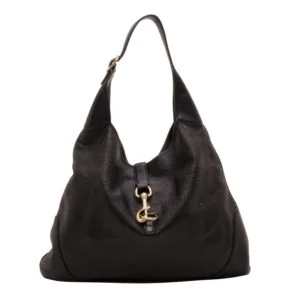
When Frida Giannini announced she was stepping down as Gucci’s creative director after a decade at the helm, the fashion press fixated on the runway shows and the successor speculation. Less discussed, but arguably more lasting, was the handbag she leaves behind as her clearest legacy: the Jackie.
Giannini’s decade at Gucci included the Flora print revival, the Museo Gucci in Florence, and the Chime for Change initiative she co-founded with Beyoncé. But it’s the 2009 relaunch of a bag first carried in the 1960s that keeps showing up on resale platforms, in authentication forums, and on the arms of buyers who weren’t even born when the original debuted. That staying power is the real story here, and it’s why the Jackie deserves a proper look at where it came from, what changed, and whether it holds up as something worth actually buying.
The Origins of the Jackie: Named After a First Lady #
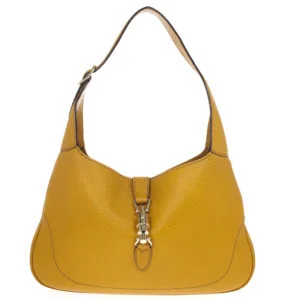
The bag didn’t launch with the name Jackie. Gucci introduced the silhouette in 1961 as a hobo-shaped bag defined by two features that still identify it today: a curved, crescent-moon body and a piston closure, a metal bar-and-loop lock that clicks shut instead of relying on a buckle or magnetic snap. It was practical, unstructured, and easy to sling over a shoulder or carry by the top handle.
The name came later, and it came from the street rather than the marketing department. Jackie Kennedy, and later Jackie Kennedy-Onassis, was photographed repeatedly carrying the bag through the 1960s and into the 1970s, often held up against her body or face to dodge paparazzi. The press started calling it “the Jackie bag” informally, and Gucci eventually made it official. That kind of organic naming is rare for a luxury house and it’s part of why the bag has real cultural weight rather than manufactured hype.
Gucci didn’t formally trademark and reissue the bag under the Jackie name until Tom Ford’s tenure in 2001, which is worth knowing if you’re shopping vintage: pieces from the 1960s through the 1990s exist, but they weren’t labeled “Jackie” at the time of sale.
The 2009 Reinvention Under Frida Giannini #
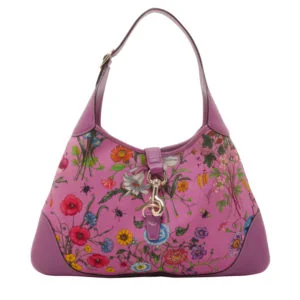
By 2009, Giannini had a clear read on what the brand needed: a piece that felt like heritage but wore like something new. She kept the crescent silhouette and the piston closure, but reworked the proportions to feel more structured and less slouchy than the ’60s original. The bag got a firmer base, a more defined top handle, and hardware finished in a way that read as modern rather than retro.
This version is what most people mean when they say “New Jackie” today, and it’s a genuinely different bag from the vintage original in terms of construction, even though the design language is recognizable. Giannini’s version was built to be a signature line rather than a one-off style, which meant expanding it across leathers, sizes, and price points in a way the original 1960s piece never was.
The Kate Moss Campaign and Rise to Icon Status #
Giannini’s redesign needed a face, and she picked Kate Moss. The campaign leaned into Moss’s off-duty, rock-and-roll credibility rather than red-carpet polish, and that choice mattered. It positioned the Jackie as a bag for people who wanted heritage without looking like they were trying too hard, which was a sharp contrast to the more logo-forward luxury bags dominating the mid-2000s.
The Moss campaign is the moment most collectors point to as the bag’s second life, but it wasn’t the only red-carpet or street-style push. Over the following years, the Jackie showed up on Vanessa Hudgens and Blake Lively in paparazzi shots, and later, once Alessandro Michele revived the design again as the Jackie 1961, it appeared in Gucci’s menswear campaigns carried by Harry Styles, a deliberate move to reposition the bag as gender-fluid rather than strictly a women’s accessory. Dakota Johnson, as a longtime Gucci ambassador, has also been photographed with the 1961 reissue at both events and off-duty. If you’re trying to date a photo you find online for research or comps, these campaign eras are a useful anchor.
Classic vs. Modern: How the Jackie Has Evolved #
Here’s where buyers get confused, and where it actually matters for authentication and pricing. There are three distinct generations, not two.
The original 1960s-1990s hobo has a softer, less structured body, a thinner shoulder strap threaded through the piston hardware, and simpler interior lining. Hardware tends to be lighter and the leather softer, since it wasn’t engineered to hold a rigid shape.
The 2009 “New Jackie” under Giannini firmed up the base and body, added a more substantial top handle, and introduced the bag in Guccissima embossed leather and GG canvas alongside smooth calfskin, plus limited runs in exotic skins and prints like the floral Bouvier edition. This is the version most commonly found in mid-range resale listings today.
The Jackie 1961, launched under Alessandro Michele in 2020, deliberately reversed course back toward the original silhouette. It’s softer and less boxy than the 2009 version, with a more pronounced crescent curve, and it reintroduced a bamboo-detailed strap option as a nod to Gucci’s archive. Hardware on the 1961 reissue is noticeably heavier and more finished than the vintage original, and interior branding is more standardized, which is actually a good authentication reference point since the leather and stamping are more consistent than on decades-old vintage pieces.
If you’re comparing two bags side by side, check the closure mechanism first. The piston lock shape, the thickness of the metal bar, and how flush it sits against the body all shifted slightly across eras, and mismatched hardware relative to the claimed production year is one of the fastest ways to flag a fake or a mismatched reissue.
Is the Gucci Jackie a Smart Investment? #
I’ll give the honest answer: it’s a good bag to buy for enjoyment, and a decent one to buy for value retention, but it’s not going to outperform a [[Hermès Kelly](/buying-guides/luxury-fashion-investment-pre-loved-guide/)](/buying-guides/iconic-bags-named-after-famous-women/) or Birkin as a resale asset, and nobody should buy it expecting that.
On the retail side, current Jackie 1961 bags run roughly $2,800 to $3,800 depending on size and leather, with exotic skins pushing well past that. On the resale market, well-kept Jackie 1961 pieces in popular sizes typically hold 55-70% of retail within the first couple of resale years, which is respectable for a non-Hermès leather bag but not exceptional.
The 2009 “New Jackie” pieces have softened in value since production largely wound down after Michele’s arrival; expect to see them in the $500 to $1,200 range depending on leather and condition, with canvas versions at the lower end and exotic or limited editions holding better. Genuine vintage 1960s-1990s pieces are the wild card: condition varies enormously, and a well-preserved example with intact hardware can sell for $600 to $1,500, but plenty are priced closer to $200-$400 because the leather and stitching have simply aged out.
The practical takeaway: buy the Jackie because you want to wear it, not because you’re expecting Birkin-level appreciation. If investment value is your primary goal, this isn’t the bag for that, and you should say so plainly to yourself before spending four figures.
Size Guide: Mini, Small, Medium, and Hobo Compared #
Sizing across the Jackie’s history isn’t standardized the way, say, a Kelly 25 vs 28 is, so measurements below are approximate and vary slightly by era and leather.
Mini Jackie: roughly 8-9 inches wide, best as a crossbody or evening piece. Fits a phone, cards, and lipstick, not much else. Popular in the 1961 reissue for people who want the silhouette without the bulk.
Small Jackie: around 10-11 inches wide, the most practical daily size for anyone who carries a wallet, sunglasses case, and small pouch. This is the size most commonly seen in the 2009 New Jackie line.
Medium Jackie: roughly 12-14 inches wide, closer to the original 1960s proportions, and the size Jackie Kennedy herself was most often photographed with. Good if you want a real everyday tote replacement.
Hobo Jackie: the largest and slouchiest version, generally 14+ inches, unstructured, and the closest in spirit to the very first Gucci hobo bags before the “Jackie” name existed. Better for casual, oversized-bag preferences than for a polished daily carry.
When buying pre-owned, always ask for exact width, height, and depth measurements rather than relying on the size name alone, since Gucci has adjusted dimensions slightly across production runs.
FAQ #
Is the Gucci Jackie the same as the “New Jackie”? No. “New Jackie” refers specifically to Frida Giannini’s 2009 redesign, which is more structured than the original 1960s hobo. The 2020 Jackie 1961 by Alessandro Michele is a third, separate version that returns closer to the original soft silhouette.
Why is it called the Jackie bag? It was informally named by the press after Jackie Kennedy-Onassis was repeatedly photographed carrying it in the 1960s and 1970s. Gucci officially adopted the name decades later, with the 2001 Tom Ford-era reissue.
What’s the fastest way to spot a fake Jackie? Start with the piston closure. On authentic bags, the metal bar sits flush and moves smoothly with a distinct click; on fakes it’s often loose, misaligned, or noticeably lightweight. Also check the interior stamping font, stitching consistency along the crescent seam, and whether the zipper brand (Lampo on older pieces, RiRi on more recent production) matches the claimed era.
Does the leather type affect resale value? Yes, significantly. Smooth calfskin and exotic skins hold value better than GG canvas or embossed Guccissima leather, which are more common and show wear faster.
Is the vintage 1960s-1990s Jackie worth buying over a modern reissue? Only if you’re specifically after archival pieces or a project bag you’re willing to have professionally restored. For everyday use, the structural integrity of the leather and hardware on decades-old bags is a real risk, and condition varies wildly seller to seller.
Should I buy a Jackie as an investment piece? Treat it as a design purchase, not a financial one. It holds value better than fast-fashion accessories but doesn’t appreciate like an Hermès Kelly or Birkin. Buy it because you want to carry it.
Related Articles #
- Gucci Jackie O Hobo: History, Design & Buying Guide
- The History Behind Gucci’s Iconic Flora Print
- Gucci Zumi Bag Guide: History, Design & Resale Value
- Gucci Bamboo Bag: History, Craft & Authentication Guide
- Gucci Ophidia Shoulder Bag Review: Bag of the Week
Related guides
- Online Bag Authentication: What Photos Can and Cannot Prove
- Blue Crocodile Lady Dior Tote: Buying Guide
- Chanel Vintage Flap Bag Buying Guide: Navy Lambskin
- Louis Vuitton Palm Spring Backpack: Complete Buyer's Guide
- How to Buy an Authentic Luxury Bag from China Safely
- New vs Pre-Owned Luxury Bags: Which Route Is Right for You?
- Chanel Bag Guide: What to Know Before You Buy
- Luxury Bag Houses


Keyword index