Introduction #
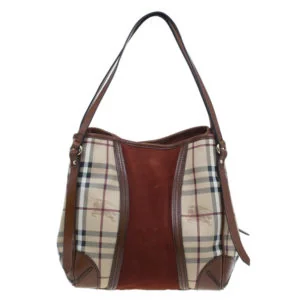
Burberry didn’t start out chasing trends. The house built its name on gabardine trench coats made for British Army officers slogging through WWI trenches, prioritizing function over flash. That utilitarian DNA is still there if you look closely, even on the pieces that now sell out on resale platforms within days of listing. Somewhere between the trenches and today’s arm candy, one design element turned a serious outerwear label into a status symbol recognized on sight: the check.
If you’ve spent any time browsing [[[[pre-owned designer bags](/buying-guides/designer-handbags-for-spring-buying-guide/)](/buying-guides/best-time-to-buy-a-luxury-handbag/)](/buying-guides/replica-vs-pre-owned-bags-smarter-buy/)](/buying-guides/replica-vs-pre-owned-bags/), you’ve seen it. The camel, black, red and white pattern shows up on totes, crossbodies and shoulder bags across every price tier Burberry offers. The Haymarket check bag line, specifically, has become the brand’s answer to the “everyday It-bag” — not as flashy as a logo-plastered monogram bag, not as buttoned-up as the trench, but instantly identifiable to anyone paying attention. This guide walks through where the check came from, how to tell a genuine piece from a convincing fake, and what to actually check (pun intended) before you buy one secondhand.
The Accidental Birth of Burberry’s Signature Check #
The Burberry check wasn’t a boardroom decision. In 1967, a visual merchandiser at Burberry’s Paris flagship was dressing a window display of the brand’s trench coats and thought the arrangement looked flat. Rather than restyle the coats entirely, the display team flipped up the hems, exposing the lining underneath — a black, red and camel check that had quietly been used as an interior lining fabric for years, mostly unseen by customers.
The reaction was immediate. Foot traffic stopped, sales spiked, and Burberry leadership noticed. The house began producing umbrellas in the same check, and those sold out too. From there it expanded to scarves, then luggage, then ready-to-wear accents. What had been a functional lining became the brand’s most valuable visual asset almost by accident — a reminder that some of fashion’s most enduring symbols weren’t designed to be logos at all.
That accidental origin matters for buyers today because it explains why the check appears in slightly different forms across decades. Color saturation, line thickness and background tone have all shifted subtly over the years, which is one reason authentication requires more than a glance at the pattern.
From Trench Coats to It-Bag: The Haymarket Collection #
Once the check proved it could sell coats and umbrellas, Burberry started asking what else it could sell. The answer, eventually, was bags — and the Haymarket line became the vehicle. Named after the London street near Burberry’s historic ties to the city, the Haymarket collection took the lining fabric and made it the main event: totes, shoulder bags, crossbodies and clutches built around the check as the primary material rather than a hidden accent.
The appeal is practical as much as aesthetic. A Haymarket bag reads as recognizably Burberry without requiring a full monogram treatment the way some competitor logo bags do. It pairs with a trench (obviously) but also works with denim, tailoring, or a plain sweater when you want one item to carry the outfit. That versatility is a big reason Haymarket pieces move steadily on the resale market — they’re not seasonal statement bags, they’re wardrobe workhorses, and buyers shopping pre-owned tend to prioritize exactly that kind of longevity over hardware size.
Spotlight: The Plum Canvas Haymarket Check Suede Shoulder Bag #
One version worth a closer look is the Burberry Plum Canvas Haymarket Check Suede Panel Small Shoulder Bag, currently listed at $615. The base is the expected Haymarket check canvas, but the panel detailing comes in a deep plum suede — a departure from the classic camel-and-black leather trims most people associate with the line.
The suede panel does a lot of work here. It softens what can otherwise be a fairly literal, logo-forward print and pulls the bag toward a 1970s silhouette that’s back in heavy rotation right now. It’s a smart pick if you already own a classic camel Haymarket piece and want a second one that doesn’t feel redundant, or if you want check styling without it reading as obviously “brand first.” The tradeoff, and it’s worth saying plainly: suede is a higher-maintenance material than coated canvas or leather trim. It marks easily, absorbs moisture, and needs more careful storage than the rest of the bag. That’s not a flaw, it’s a fact you should factor into the price before buying, especially secondhand where you can’t control the bag’s prior handling.
How to Authenticate a Genuine Burberry Check Bag #
Burberry’s check is one of the most counterfeited patterns in fashion, right up there with LV’s monogram and Gucci’s GG print, which means authentication isn’t optional when buying pre-owned. A few things I check every time, in order of how often they trip up fakes:
- Pattern alignment. On a genuine bag, the check lines up symmetrically at seams and panel joins. Counterfeits routinely mismatch the pattern where fabric pieces meet, especially at the base and side gussets. If the checks don’t line up cleanly, that’s a hard stop.
- Stitching quality. Authentic Burberry stitching is dense, even, and free of loose threads. Count stitches per inch if you’re unsure — sparse, uneven stitching is a common tell on lower-quality counterfeits.
- Hardware stamps. Zippers, clasps and D-rings should carry a clean, evenly weighted “BURBERRY” stamp with consistent letter spacing. Blurry, off-center, or inconsistently sized lettering is a red flag. Genuine hardware also has weight to it — cheap fakes often feel hollow or unusually light.
- Serial numbers and interior tags. Depending on the era, Burberry bags carry a serial or date code on an interior leather tag or stamped directly into the lining. The font should be crisp and the tag material should match the bag’s overall quality — flimsy, printed-looking tags are a warning sign.
- Color accuracy. The camel in an authentic check has a specific warm, slightly muted tone. Fakes often run the camel too orange or too yellow, and the black lines can look printed rather than woven into the fabric.
None of these checks alone is definitive — counterfeiters have gotten good at faking individual details. What matters is that everything agrees. A reputable resale platform that authenticates every listing before it goes live removes most of this risk for you, but it’s still worth knowing what you’re looking at, especially if you’re comparing a listing against photos from other sources.
Caring for Your Burberry Check Bag #
Canvas and suede need genuinely different care routines, and treating them the same is how bags lose resale value fast.
For the canvas check portions: keep the bag away from direct sunlight for long stretches, since UV exposure fades the check’s color contrast over time. Wipe spills immediately with a dry cloth — canvas resists moisture better than suede but isn’t waterproof, and letting liquid sit will stain. Avoid overstuffing the bag, which stresses seams where the check pattern is pieced together.
For suede panels, like the plum trim on the Haymarket shoulder bag above: use a suede brush regularly to lift dirt before it sets in, and treat the surface with a suede protector spray before first use, not after a stain appears. Keep it away from rain entirely if you can — water tide marks on suede are notoriously hard to fully remove even with professional cleaning. Store the bag with its dust bag stuffed lightly to hold shape, in a cool, dry space away from direct light.
One honest note: suede-trimmed pieces almost always show wear faster than their all-canvas or all-leather counterparts, and that shows up in resale pricing. If you’re buying with resale value in mind down the line, budget for a professional suede clean before you ever list it again.
Bag Thursday Spotlight: Styling the Haymarket Check in Real Life #
I default to the Haymarket check on days when I want an outfit to look finished without actually thinking too hard about it. With a plain camel or navy coat, it disappears into the outfit in a good way — nothing fights for attention. With denim and a white shirt, it becomes the single statement piece, which is exactly the job a resale-priced designer bag should do.
The plum suede version pairs particularly well with neutral fall tailoring — camel trousers, a cream turtleneck, black boots. The plum reads almost as a neutral itself once you see it next to the check, which is part of why the suede panel choice works better than it sounds on paper. I’d avoid pairing it with other heavily patterned pieces; the check is busy enough that it wants to be the loudest thing in the outfit, not one of several.
Practically speaking, a small Haymarket shoulder bag like this one holds a phone, cardholder, lipstick and keys comfortably, but not much beyond that. It’s a bag for days when you’re not carrying a laptop, which is worth knowing before you buy if you need an everyday work bag rather than a going-out or errands bag.
FAQs #
Is the Burberry check trademarked? Yes. Burberry registered the Haymarket check as a trademark and has actively pursued counterfeiters over the decades, which is part of why the print is so heavily copied and why authentication matters when buying secondhand.
What’s the difference between the Haymarket check and the “House check”? Burberry uses a few check variations. The classic camel, black, red and white pattern is the Haymarket check and appears most often on bags and accessories. The House check is a related design with slightly different proportions and is more common on scarves and lining fabric. They’re often confused, but authenticators look at line thickness and color placement to tell them apart.
Are Burberry check bags a good investment on the resale market? Classic camel Haymarket pieces tend to hold value well because the print itself never really goes out of production or out of style. Special material versions, like suede or exotic-trim editions, are more of a personal-style buy than a value play — they’re less standardized in the resale market, so pricing depends more on condition and rarity than on the base line.
How much should I expect to pay for a pre-owned Haymarket bag? Pricing varies widely by size, material, and condition, but pre-owned Haymarket shoulder bags and totes commonly land in the $400–$900 range on resale platforms, with special trims like suede panels pricing toward the higher end of that band.
Can I get a Burberry check bag professionally authenticated after I buy it? Yes, several third-party authentication services will review a bag post-purchase for a fee. It’s a reasonable step for peace of mind, but buying from a platform that authenticates before listing saves you that extra cost and wait.
Related Articles #
- Why the Chanel Crossbody Bag Never Goes Out of Style
- How to Spot a Fake Burberry Bag: Full Guide
- Designer Handbag Trends 2025: What’s Actually Worth Buying
- How to Buy & Authenticate Pre-Owned Louis Vuitton Bags
- 5 Iconic Bags Named After Famous Women (Buying Guide)
Related guides
- Online Bag Authentication: What Photos Can and Cannot Prove
- Blue Crocodile Lady Dior Tote: Buying Guide
- Chanel Vintage Flap Bag Buying Guide: Navy Lambskin
- Louis Vuitton Palm Spring Backpack: Complete Buyer's Guide
- How to Buy an Authentic Luxury Bag from China Safely
- New vs Pre-Owned Luxury Bags: Which Route Is Right for You?
- Chanel Bag Guide: What to Know Before You Buy
- Luxury Bag Houses


Keyword index