Introduction#
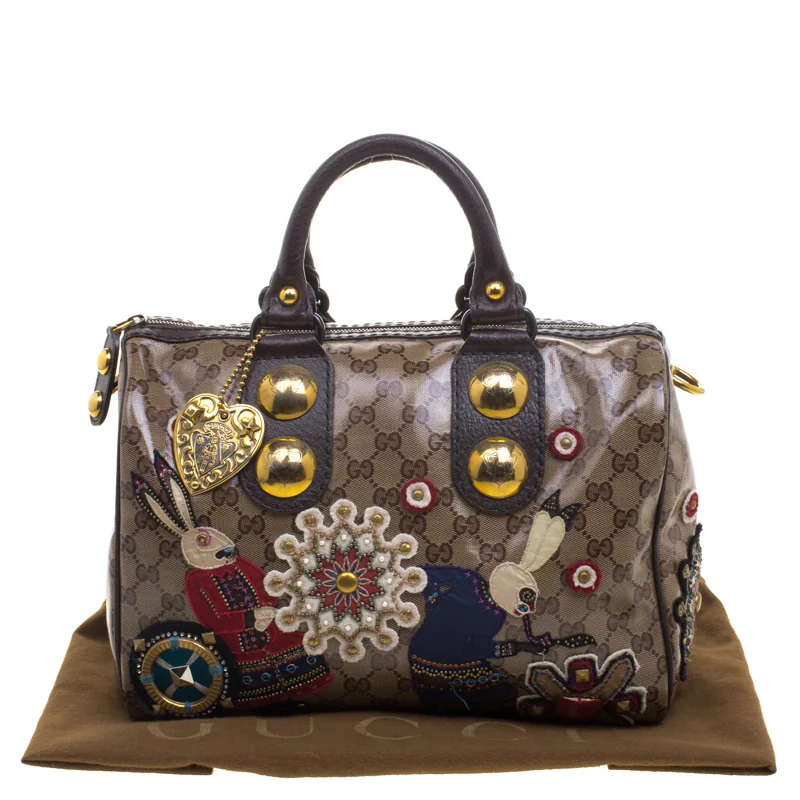
I’ve handled enough [Gucci](/buying-guides/gucci-bamboo-1947-bag-review/) bags — real and fake — to know that the days of spotting a knockoff from across the room are over. The counterfeit market has gotten genuinely good. Some of the “superfake” Gucci bags circulating right now nail the stitching, the hardware weight, even the serial number format, well enough to fool a casual buyer and, honestly, a few resale platforms that should know better.
That’s the real reason authentication skills matter before you buy: it’s no longer about catching an obviously cheap fake with crooked logos and shiny plastic zippers. It’s about knowing the specific, physical details that even a well-made counterfeit tends to get wrong — because no factory outside of Gucci’s own supply chain replicates every single one of them consistently.
This guide walks through how to spot a fake Gucci bag using the same checks I use myself: construction, labeling, materials, and the context around the sale. None of these checks is foolproof on its own. Together, they give you a real shot at telling authentic Gucci bag from convincing counterfeit before you hand over the money.
Stitching, Seams & Craftsmanship Details#
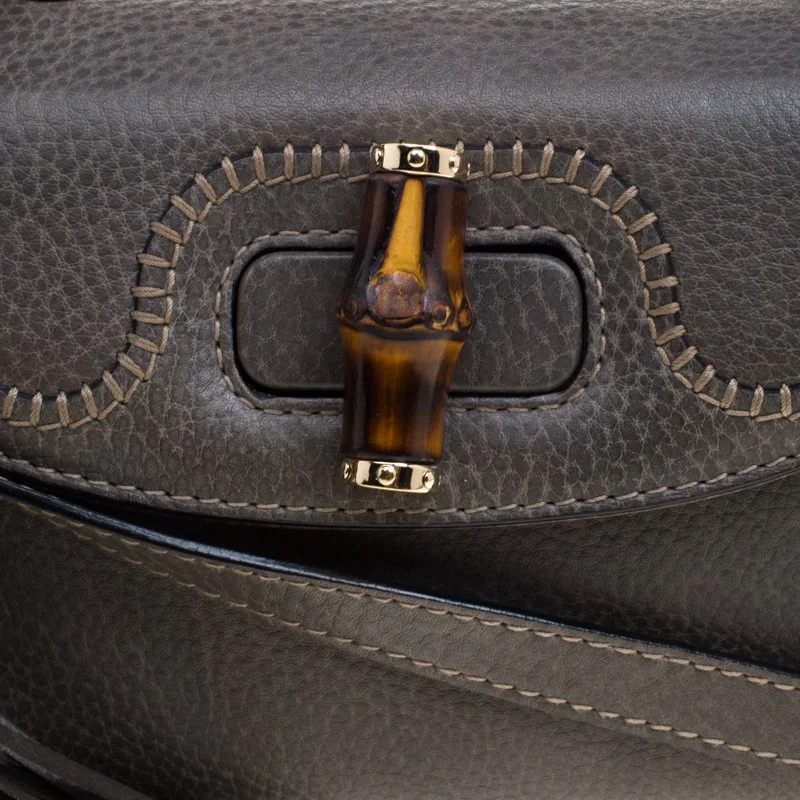
Start here, because construction quality is the hardest thing for counterfeiters to fake at scale — even the good ones.
Stitch count and evenness. Authentic Gucci bags are sewn with tight, uniform stitches, spaced evenly along every seam. Get a loupe or just your phone camera on macro and look closely: on a real bag, you won’t find a single skipped stitch, a wandering seam, or thread tension that changes halfway through a panel. Fakes — even decent ones — almost always show some inconsistency once you compare multiple seams on the same bag rather than just eyeballing one.
Seam alignment across logos. This is one of the most reliable checks I use. On an authentic bag, the GG canvas pattern or any lettering is matched perfectly across a seam — the design continues without interruption. On fakes, cutting patterns are cheaper to produce when panels aren’t pattern-matched, so you’ll often see a logo or letter get chopped off mid-character right at a seam. If the interlocking G’s don’t line up cleanly where two pieces of material meet, that’s a legitimate red flag.
Glue lines. Run your finger and your eye along the edges of leather panels, pockets, and hardware mounts. A genuine Gucci bag has clean, glue-free edges — any adhesive used is invisible once the piece is finished. Visible glue residue, tackiness, or a slightly discolored line along an edge is a shortcut fakes take that Gucci’s ateliers don’t.
Edge finishing. Painted or raw edges should be smooth and consistent in color, not chipped, uneven, or bleeding onto the leather surface. Sloppy edge paint is a low-effort counterfeit tell that even mid-tier fakes sometimes skip fixing.
Logo, Label & Serial Number Checks#
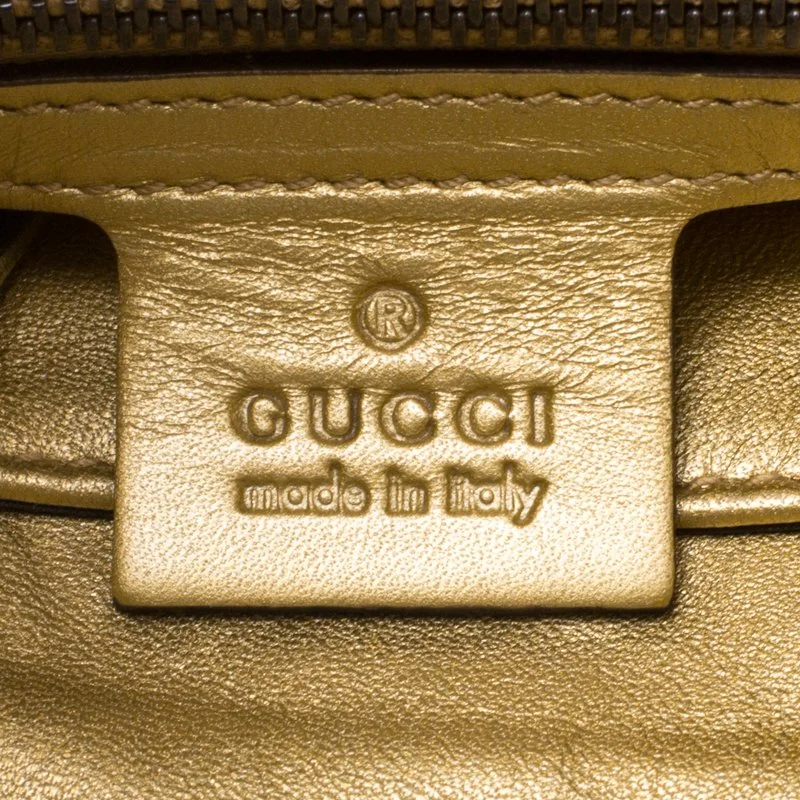
The interior label is where most buyers look first, and it’s exactly why counterfeiters have gotten better at faking it. Don’t rely on it alone, but do check it carefully.
The interior tag. Look for a leather (or fabric, depending on the era) tag stitched inside, reading “Gucci” and typically “Made in Italy.” Older bags have a rectangular leather tab with a heat-stamped serial number below the brand name — usually a five- or six-digit style number paired with a five- or six-digit material/color code, separated by a space (for example, something like 510306 231204). The digits should be small, evenly spaced, and cleanly stamped — not embossed unevenly, not spaced out like someone hand-typed them with gaps.
Newer authentication methods. Since around 2021, some current-season Gucci styles carry a QR code on the authenticity card or an embedded chip tied to Gucci’s participation in the Aura Blockchain Consortium, which lets you verify certain details digitally. This isn’t universal across every bag, so its absence on an older or vintage piece doesn’t mean much — but its presence, and whether it scans to something coherent, is a useful data point on newer bags.
Font and logo details. On the “Gucci” wordmark, the “U” is subtly bolder on the left stroke than the right — a quirk of the original typeface that a lot of counterfeiters flatten out into a uniform weight because it’s easier to reproduce. Also check for a copyright symbol (©) near the brand name on the label; its absence is a common counterfeit shortcut.
Where fakes succeed. I’ll be straight with you — high-tier counterfeits now replicate serial number formatting and even the font weight quirk fairly convincingly. If the bag you’re looking at gets every label detail right, that’s reassuring but not conclusive. Move on to materials and hardware before you relax.
Material, Hardware & Texture Clues#
This is where physical experience really pays off, because texture and weight are hard to describe but easy to feel once you’ve handled the real thing.
Leather texture. Gucci’s leather bags typically use a pebbled or grained napa leather with a soft, supple hand-feel — not stiff, not rubbery, and definitely not a fuzzy microsuede finish (a texture that shows up disproportionately often on fakes trying to mimic soft leather without the cost). GG canvas pieces should feel like a tightly woven coated canvas, not thin printed vinyl.
Hardware weight and finish. Pick up the bag by an empty handle and feel where the weight sits — quality metal hardware on an authentic Gucci bag feels substantial, not hollow or light. The finish should be even, without flaking, greenish tarnish forming within weeks, or a dull, grainy texture where it should be polished. Engraved logos on zipper pulls, clasps, or feet should be crisp and precisely cut, not shallow or blurred.
Zippers. Gucci commonly uses branded zipper components (Lampo or Riri are typical suppliers), and the pull should glide smoothly without snagging or requiring a wiggle to close. A gritty, sticky, or misaligned zipper track is a common tell on lower-tier fakes, though I’ll note the better replicas have started sourcing similar zipper hardware, so smooth action alone isn’t proof of authenticity.
Lining. Check the interior lining material and stitching around pockets. Gucci linings are typically a branded jacquard or suede-like microfiber with the brand name or GG pattern woven in — cheap satin lining with a printed (not woven) logo is a common downgrade in counterfeits.
Price, Packaging & Seller Red Flags#
Sometimes the fastest tell has nothing to do with the bag itself.
Price. If a “brand new” or “barely used” bag is priced at a fraction of retail with no reasonable explanation — no damage disclosed, no clearance event, no consignment markdown that matches typical resale depreciation — treat that as your first warning sign. Authentic Gucci bags hold value well enough that genuinely steep discounts (think 70-80% off retail on a current style) are rare outside of counterfeit territory.
Packaging. Authentic Gucci bags ship with a felt or cotton dust bag printed with the GG logo or “Gucci” in a clean, evenly weighted font, plus (for many styles) a branded box and authenticity card. A dust bag that feels like thin, scratchy polyester, has a smudged or off-center print, or is missing entirely in favor of a plastic bag is a real red flag — legitimate sellers, including reputable resale platforms, almost always preserve original packaging.
Seller trustworthiness. Look at how long the seller has operated, their return policy, and whether they offer any authentication guarantee. A private seller who refuses close-up photos of the interior tag, serial stamp, and hardware, or who pressures you to complete the sale off-platform, is not someone I’d trust with a four-figure purchase. Legitimate sellers, in my experience, want you to check the details — they have nothing to hide.
Where to Buy an Authentic Gucci Bag Safely#
The most reliable way to guarantee authenticity is to buy where the supply chain is controlled or independently verified.
- Gucci boutiques and Gucci.com — the safest option, full stop, since you’re buying directly from the brand.
- Authorized department stores (Nordstrom, Saks Fifth Avenue, Neiman Marcus, Bergdorf Goodman, and similar) that carry Gucci through official wholesale accounts, not third-party marketplace listings hosted on their sites.
- Vetted resale and consignment platforms with in-house authentication teams — The RealReal, Vestiaire Collective, Rebag, and Fashionphile are the names I trust most, because they physically inspect items before listing and typically stand behind that inspection with a guarantee.
- Independent authentication services — Entrupy, Real Authentication, and Authenticate First will authenticate a bag you already own or are considering buying from a private seller, usually within a day or two, for a modest fee. If a private-party deal is otherwise appealing, this is money well spent before you finalize it.
I’d avoid buying a Gucci bag over $500 from an unverified marketplace listing, social media seller, or auction site with no return window and no authentication backing, no matter how convincing the photos look. That’s exactly the environment where the best counterfeits circulate.
Quick Authentication Checklist#
- Stitching is even and tight across every seam, with no skipped threads
- Logos and lettering align perfectly across seams, never cut mid-character
- No visible glue lines or residue along leather edges
- Interior label reads correctly, with clean stamping and a copyright symbol
- Serial number digits are small, tightly spaced, and evenly stamped
- The “U” in “Gucci” is subtly bolder on the left stroke
- Leather feels supple and pebbled, not stiff, rubbery, or suede-like
- Hardware feels substantial, with crisp, precisely cut engravings
- Zipper glides smoothly and carries recognizable branded components
- Dust bag, box, and authenticity card match Gucci’s usual quality and printing
- Price and seller history are consistent with a legitimate sale
FAQ#
How can I tell if my Gucci bag is real just by looking at the serial number? The serial number is a good starting point but not proof on its own. Check that the digits are small, evenly stamped, and correctly formatted for the bag’s era — then confirm it against the other physical checks in this guide, since high-quality fakes can replicate serial formatting convincingly.
Do all Gucci bags have a serial number? Most do, typically on an interior leather tab, though the format and placement have changed over the decades. Some current-season styles pair this with a QR-code authenticity card rather than relying solely on a stamped number.
Can I authenticate a Gucci bag from photos alone? Sometimes, if the photos are detailed enough to show stitching, the interior label, hardware engravings, and zipper pulls up close. Independent services like Entrupy or Real Authentication can often authenticate remotely from a specific set of photos, which is worth using before buying from a private seller.
Is buying a pre-owned Gucci bag safe? Yes, as long as you buy from a platform with an in-house authentication process, like The RealReal, Vestiaire Collective, or Fashionphile. Pre-owned Gucci bags from unverified private sellers carry meaningfully more risk.
What’s the single biggest counterfeit tell people miss? Seam alignment across logos and lettering. It’s an easy check that most casual buyers skip, and it’s genuinely difficult for factories to replicate at scale because it requires precise pattern-cutting, not just good materials.
Related Articles#
- How to Spot a Fake Burberry Bag: Full Guide
- How to Spot a Fake Bottega Veneta Bag: 6 Expert Tips
- Replica vs Pre-Owned Bags: Which Is the Smarter Buy?
- How to Authenticate a Balenciaga Bag: Full Guide
- How to Spot a Fake Goyard Bag: Expert Guide
Related guides
- Online Bag Authentication: What Photos Can and Cannot Prove
- Fake Goyard Bag Guide: How to Spot Real vs Fake (2026)
- How to Spot a Fake Chanel Flap Bag: Authentication Guide
- How to Spot a Fake Hermès Birkin: Expert Checklist
- How to Buy an Authentic Luxury Bag from China Safely
- New vs Pre-Owned Luxury Bags: Which Route Is Right for You?
- Chanel Bag Guide: What to Know Before You Buy
- Luxury Bag Houses


Keyword index