Introduction: The Return of Fendi’s Pequin Print #
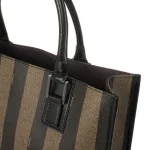
Vintage Fendi doesn’t get the spotlight as often as it should. Everyone’s chasing the Baguette or the Peekaboo, and meanwhile pieces like the Pequin Striped Shopper Tote sit quietly in resale listings, undervalued by buyers who don’t recognize what they’re looking at.
The pequin stripe (sometimes written “picquin” or referred to as ticking stripe) is a pattern with roots in French upholstery fabric, but Fendi ran with it during the label’s design evolution under Karl Lagerfeld, who joined the house as creative director in the mid-1960s and spent decades shaping its aesthetic before Silvia Venturini Fendi took the reins on leather goods. The striped canvas treatment became one of the quieter signatures of Fendi’s output through the 1980s, appearing on totes, garment bags, and travel pieces aimed at a client who wanted recognizable craftsmanship without a logo shouting it from across the room.
This particular tote is a good entry point if you’re trying to understand what “old Fendi” actually looked like before the brand leaned hard into the FF monogram and the Baguette silhouette. It’s structured, it’s brown-and-cream striped canvas with leather trim, and it was built to be used, not just carried.
Design Details and Craftsmanship #
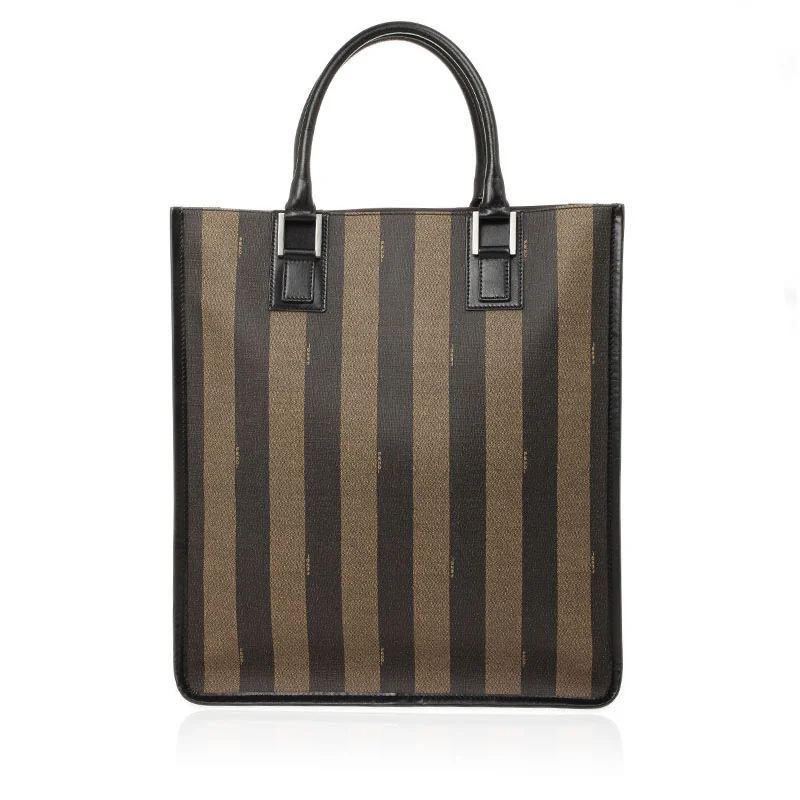
The body is a woven pequin stripe canvas, alternating cream and brown bands, paired with smooth brown leather trim along the top edge, base, and handle attachments. This combination was Fendi’s answer to the demand for a bag that could take daily abuse without looking precious. Canvas resists scuffing in ways leather doesn’t, while the leather trim gives structure to the seams and handles, the parts that take the most stress.
Construction details worth noting from close inspection:
- Handles: dual rolled leather handles, stitched rather than riveted at the base, sitting with enough drop for shoulder carry.
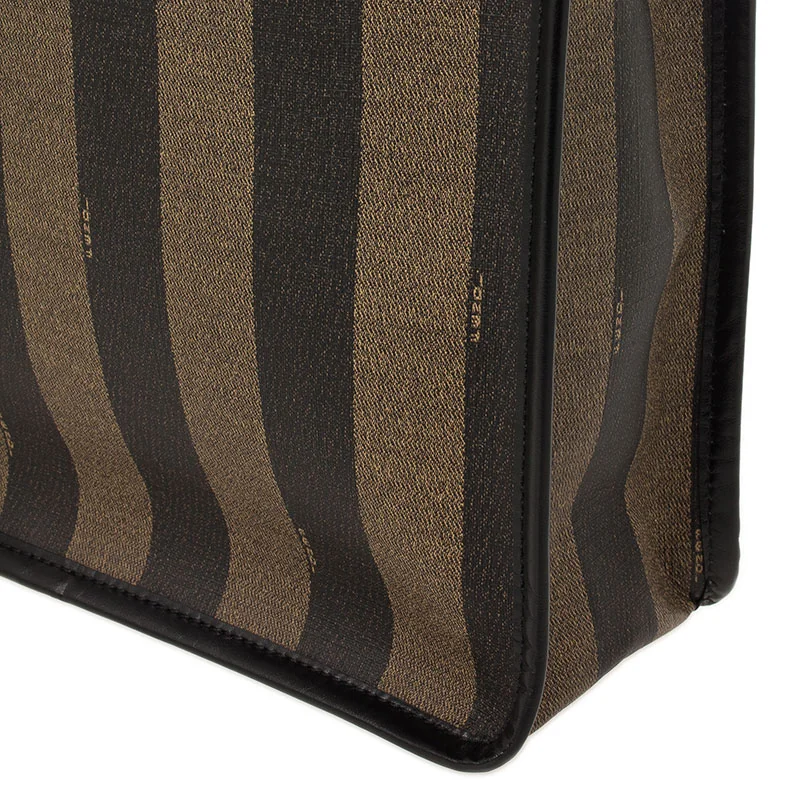
- Base corners: reinforced with leather at the bottom corners, a detail that matters because canvas totes without this reinforcement wear through at the base first.
- Fendi label: an interior or exterior leather tab stamped “FENDI,” typically in a serif or block font depending on production year. The clarity, depth, and placement of this stamp is one of the first things worth photographing before you buy.
- Hardware: minimal gold-tone hardware, consistent with the era’s preference for understated metal rather than large logo plaques.
- Stitching: even, tight stitch length along the trim edges. Fendi’s leather workshops didn’t skip stitches or leave loose thread tails, and that consistency is a good barometer of authenticity later on.
Caring for Pequin Canvas and Leather Trim #
Canvas-and-leather construction needs a different care routine than an all-leather bag. A few things I’d tell anyone who owns one:
- Keep it away from prolonged direct sun. The cream stripes yellow and the brown leather trim fades unevenly if left in a window or car dash.
- Spot-clean canvas with a barely damp cloth and mild soap; never saturate it, since canvas holds moisture and can develop water rings or mildew smell if it doesn’t dry fully.
- Condition the leather trim occasionally with a light leather balm, but keep it off the canvas itself.
- Store it stuffed (tissue paper or a pillow insert works) to keep the shape, and in a breathable dust bag, not plastic.
- Avoid leaving anything with dye transfer risk, like new dark denim, in direct contact with the cream stripes for long stretches.
Why This Tote Works for Everyday Life #
This is a shopper silhouette, which means an open or minimally structured top, roomy interior, and a shape built around actual daily capacity rather than a fashion-first silhouette. Bags in this category typically run in the range of 14 to 16 inches wide, 11 to 13 inches tall, with a base depth around 6 inches, comfortably fitting a laptop up to 13 inches, a water bottle, a folder of documents, and the usual daily carry without the sides bulging.
That capacity is the whole argument for this bag over something like a [[Fendi Baguette](/buying-guides/fendi-baguette-bags-buying-guide/)](/brands/fendi-x-tiffany-baguette-bag/) or a mini top-handle. You’re not editing down your bag contents to match the silhouette. It goes from a Saturday farmers market run to a Monday desk day without you needing to switch bags in between, which is the actual test of whether a “work bag” claim holds up.
Styling Tips for the Fendi Pequin Tote #
The stripe pattern reads as neutral rather than a print you need to build an outfit around, which is part of why it’s held up decades later.
- Weekend errands: straight-leg jeans, a white tee, sneakers, and this tote slung over the shoulder. The cream-and-brown stripe pairs easily with denim without competing for attention.
- Office days: tailored trousers or a midi skirt, a fitted blazer, and the tote worn on the forearm rather than the shoulder for a more polished line. The brown leather trim reads as intentional rather than casual once the rest of the outfit is dressed up.
- Travel days: it works as a structured carry-on companion, since the canvas body holds shape without adding much weight, unlike an all-leather tote of the same size.
- Color pairing: cream, camel, black, and olive all sit well next to the brown-and-cream stripe. Avoid busy prints elsewhere in the outfit since the bag itself is already doing pattern work.
Authenticity Checkpoints to Know Before You Buy #
Fendi from this era is a real counterfeiting target, partly because buyers assume vintage means “less scrutinized” and skip the diligence they’d apply to a current-season bag. A few checkpoints that actually matter:
- Label font and depth: the “FENDI” stamp should be crisp, evenly pressed, and centered on its tab. Shallow, blurry, or off-center stamping is a common tell on fakes.
- Stripe alignment: on a genuine bag, the pequin stripes align symmetrically at the side seams. Mismatched or randomly cut stripe placement suggests a rushed or non-authorized production run.
- Stitch count and consistency: count stitches per inch along a seam and compare across both sides of the bag. Authentic construction is consistent; counterfeits often show uneven spacing, especially at handle attachment points.
- Leather trim grain: it should be smooth, tight-grained leather, not a plasticky or overly matte finish. Run your fingers along the edge, real leather trim ages with a slight sheen where hands and straps make contact.
- Hardware weight and finish: gold-tone hardware from this period has heft. Lightweight, tinny-feeling hardware is a red flag.
- Smell test: genuine leather trim on a decades-old bag has a specific aged-leather smell, not a chemical or synthetic scent.
None of these checks alone is conclusive, which is exactly why professional authentication exists. Treat this list as a pre-screen, not a substitute for a third-party opinion on anything over a few hundred dollars.
Where to Find and Buy This Fendi Tote #
Fendi hasn’t reissued the Pequin Striped Shopper in current collections, so anything you find will be vintage or archive stock, generally sourced through consignment shops, estate sales, or curated resale platforms. That scarcity is actually part of the appeal for buyers looking for something recognizable but not oversaturated on Instagram.
On price: expect vintage Pequin totes in good condition to land in the low-to-mid four figures depending on wear, hardware condition, and canvas cleanliness, generally less than a comparable-capacity current Fendi tote in full leather, which routinely runs into the mid-to-high four figures new. That price gap is worth weighing seriously if you want the Fendi name and craftsmanship without new-bag pricing, provided you’re comfortable buying vintage and doing the authentication legwork.
Stick to platforms that offer in-house authentication, return policies, and detailed condition photography, including close-ups of the label, stitching, and base corners. Avoid listings with only stock-style photos and no interior shots. If a seller won’t provide additional photos of the label and stitching on request, that’s a reason to walk away, not a reason to assume the best.
Authenticity Checklist: Spotting a Real Fendi Pequin Tote #
A consolidated version to screenshot before you go shopping:
- Label stamp is crisp, centered, correctly spelled, and consistent with known Fendi font for the production era
- Pequin stripes align symmetrically at seams and corners
- Stitching is even, tight, with no loose threads or skipped stitches
- Leather trim has natural grain, not a plastic or vinyl feel
- Hardware has weight and a consistent gold-tone finish, no flaking
- Interior lining matches known Fendi materials for the period (often a canvas or twill lining, not a cheap synthetic)
- Base corners show reinforcement, not raw canvas edges
- Seller provides detailed, unedited photos of label, stitching, and interior on request
- Platform offers authentication guarantee or return window
Quick FAQ #
Does this bag come with a serial or date code? Many Fendi bags from this period don’t carry a formal serial number the way current-production bags do, so absence of one isn’t automatically a red flag. It does mean you’re relying more heavily on construction and label checks.
Is canvas Fendi worth buying compared to leather Fendi? Yes, for daily use. It’s lighter, more resistant to scuffing, and typically less expensive than an equivalent leather piece, though it’s more vulnerable to moisture and staining.
What’s the biggest risk with buying this bag secondhand? Undisclosed staining or fading on the canvas stripes. Leather scuffs can often be conditioned out; canvas discoloration usually can’t.
Real-World Wear Test: Canvas vs. Leather Fendi Totes #
Having handled both canvas-and-leather pieces like the Pequin tote and full-leather Fendi totes (think the Fendi Roma or Sunshine Shopper in smooth calfskin), the differences show up fast once you actually use them:
Weight: The Pequin canvas tote is noticeably lighter empty, which matters if you’re already carrying a laptop and a water bottle. Full-leather totes in a comparable size add real shoulder fatigue over a full day.
Durability under stress: Leather totes shrug off rain and spills better. Canvas needs more caution, a coffee spill on the cream stripe is a real problem in a way it isn’t on pebbled leather.
Aging pattern: Leather develops patina, scratches soften over time, and the bag often looks better at year five than year one. Canvas doesn’t patina the same way, it either stays clean or shows visible wear, with less of a “worn-in and better for it” look.
Structure retention: Full-leather totes with structured bases hold their shape longer without stuffing. The canvas shopper needs more consistent stuffing when not in use to avoid slouching.
Value retention on resale: Leather Fendi pieces in recognizable silhouettes (Peekaboo, Baguette) tend to hold resale value more predictably because they’re widely recognized and actively collected. The Pequin tote is a smaller market, which cuts both ways, less competition when buying, less certainty on future resale.
Bottom line from actual use: if your priority is a lightweight, everyday-tough bag that won’t stress you out about scuffs, the canvas Pequin tote wins. If you want a piece that improves with age and holds resale value more reliably, a full-leather Fendi tote is the safer long-term buy. Neither is objectively better, they’re built for different relationships with the bag.
Related Articles #
- Fendi By The Way Bag Review: Style, Cost & Resale Value
- Fendi First Bag Guide: History, Design & Resale Value
- Why the Chanel Crossbody Bag Never Goes Out of Style
- Céline Luggage Tote Guide: Sizes, History & Resale Value
- 5 Most Popular Chanel Bags You Need to Know
Related guides
- Online Bag Authentication: What Photos Can and Cannot Prove
- Blue Crocodile Lady Dior Tote: Buying Guide
- Chanel Vintage Flap Bag Buying Guide: Navy Lambskin
- Louis Vuitton Palm Spring Backpack: Complete Buyer's Guide
- How to Buy an Authentic Luxury Bag from China Safely
- New vs Pre-Owned Luxury Bags: Which Route Is Right for You?
- Chanel Bag Guide: What to Know Before You Buy
- Luxury Bag Houses


Keyword index