Introduction: Why Backpacks Are the New Luxury Staple #
A designer backpack used to signal one thing: you hadn’t graduated from your school satchel. That perception is gone. Houses that spent decades perfecting structured totes and top-handle bags have turned the same leather-cutting and hardware-engineering skill toward a shape built for hands-free days, and the result is a category that now sits comfortably next to the Kelly or the Birkin in a serious collection.
The shift makes sense once you look at how people actually move through a day. Commuting, travel, off-duty styling, even office dressing, all reward a bag that distributes weight across your shoulders instead of your wrist. Designers noticed, and the backpack stopped being an afterthought in their accessories line and became a flagship piece, complete with signature hardware, exotic leather options, and the kind of quilting and monogram detailing you’d expect from a top-handle icon.
This roundup pulls together seven backpacks worth a serious look, grouped by design language rather than brand alphabetically, so you can shop by the aesthetic and function you actually need. We’ll cover fit and finish, honest downsides, what each one costs on the resale market versus retail, and how to spot the authentication red flags that matter most before you buy secondhand.
Monogram Icons: Louis Vuitton and MCM #
[[[Monogram canvas](/buying-guides/louis-vuitton-neverfull-buying-guide/)](/authentication/how-to-spot-a-fake-neverfull-authentication-guide/)](/authentication/how-to-spot-a-fake-louis-vuitton-bag/) is the easiest way to telegraph brand recognition, and both Louis Vuitton and MCM built their identity around it decades before “logomania” became a trend cycle buzzword.
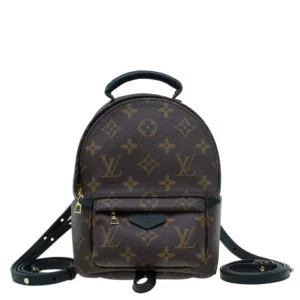
The Louis Vuitton Monogram Canvas Mini Palm Springs Backpack takes the house’s coated canvas, the same material used on the Speedy and Neverfull, and shrinks it into a compact, structured silhouette with drawstring closure and flat straps that adjust to wear as a backpack or crossbody. The coated canvas is genuinely low-maintenance: it resists water spotting and doesn’t scuff the way smooth leather does, which makes it a smart pick for daily transit. The trade-off is capacity. This is the “mini” for a reason, so it holds a phone, cardholder, and compact essentials, not a laptop or a change of clothes. Treat it as a styling piece rather than a workhorse.
The MCM Cognac Visetos Coated Canvas Diamond Stark Backpack plays a similar game with its Visetos monogram, a print MCM has used since the 1980s, but the diamond quilting on this Stark style gives it more dimension than a flat canvas surface. It runs larger than the LV Mini Palm Springs, with enough structure to carry a tablet and daily files, making it the more practical of the two if you need actual carrying capacity. MCM doesn’t carry the same resale premium as Louis Vuitton, which is good news for buyers: you get comparable coated-canvas durability and monogram recognition at a noticeably lower entry price.
Authentication check for both: examine the canvas print alignment at the seams (misaligned or blurry monogram repeats are a common counterfeit tell), and check the leather trim and pull tabs for consistent stitching. On Louis Vuitton pieces, a date code stamped inside the bag should match known factory code formats for the production era; on MCM, check the zipper pulls for correct branding weight and finish, since lightweight, hollow-feeling hardware is one of the most common giveaways on fakes.
Quilted Leather Luxury: Chanel and Dior #
If the monogram pair is about instant recognition, this pair is about tactile luxury. Quilted lambskin is genuinely one of the harder materials to fake convincingly at close range, which is part of why it commands the price it does.
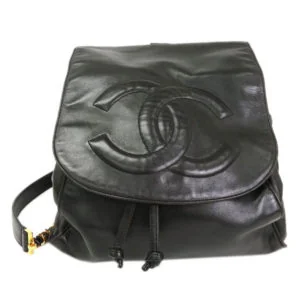
The Chanel Black Lambskin Leather Backpack uses the same diamond quilting and CC turn-lock hardware you’d find on a Classic Flap, just reshaped with adjustable straps and a drawstring top. Lambskin is soft and buttery to the touch, which is exactly why it’s also the most delicate leather on this list. It scratches and shows pressure marks more easily than caviar leather or coated canvas, so this isn’t the backpack you want if you’re tossing it into overhead bins or setting it on rough surfaces. It’s an elevated-errands and evening-out bag more than a daily commuter piece.
The Dior Black/Pink Lambskin Stardust Backpack takes a similar quilted lambskin base and adds a star-motif hardware detail and a two-tone colorway that reads more playful than Chanel’s classic black-on-black. Capacity on both is modest, closer to a large clutch than a tote, so expect room for a wallet, sunglasses case, and a light layering piece, not daily work essentials.
Care for both comes down to the same rules: store stuffed with tissue to hold shape, keep away from direct sunlight and moisture, and use a leather protectant spray sparingly rather than household leather conditioners, which can darken lambskin unevenly. For authentication, check the CC lock or star hardware weight and engraving depth, examine the quilting for even, symmetrical stitch spacing, and request the authenticity card and serial sticker on Chanel pieces from the era it was produced.
Statement and Edgy Designs: Alexander Wang and Fendi #
Not every backpack buyer wants understated. This pair is for readers who want the bag to do the talking.
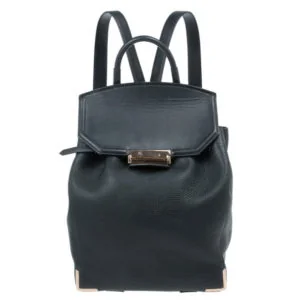
The Alexander Wang Black Prisma Skeletal Backpack leans into hardware as the main event, with a cage-like metal frame and stud detailing over a structured base. It’s a genuinely striking silhouette, but the exposed hardware means more care in daily use: metal edges can scuff against other bags in storage, and the studs are prone to snagging on fabric. It rewards being worn as a statement piece with simpler outfits rather than layered into a busy look.
The Fendi Black Nylon Monster Mohawk Backpack takes the house’s now-iconic Monster eyes motif and adds a mohawk-style fur trim along the top, over a lightweight nylon body. Nylon is the practical upside here: it’s lighter than leather, more resistant to weather, and easier to wipe clean, which makes it a better travel companion than either quilted leather option above. The fur trim is the maintenance consideration, since it can flatten or shed slightly with heavy use and needs to be kept dry.
Both bags sit at the fashion-forward end of the spectrum, meaning resale demand can be more cyclical than a Chanel flap or LV monogram piece. If resale value matters to your decision, factor in that novelty prints and embellished hardware tend to track trend cycles rather than holding steady long-term demand.
Craftsmanship Spotlight: Mulberry’s Cara Delevingne Backpack #
The Mulberry Oxblood Natural Leather Cara Delevingne Backpack deserves its own section because it represents a different value proposition than everything else on this list: British leather craftsmanship without the monogram or logo-forward branding.
This piece came out of Mulberry’s collaboration with model Cara Delevingne, and it shows in details that read more “designed by someone who actually carries bags” than “designed to be photographed.” The natural leather is vegetable-tanned and develops a patina over time, similar to how quality leather goods age at houses like Il Bisonte or The Row, which means the bag actually looks better with wear rather than simply showing damage. The oxblood colorway is a genuinely versatile neutral that pairs with both black and warm tones, and the structured base with drawstring-and-flap closure gives it real capacity for daily use, including a tablet and a change of shoes.
The honest downside is brand recognition. Mulberry doesn’t carry the same instant-status signal as Chanel or Louis Vuitton in most markets, so if resale value or brand recognition is your primary driver, this isn’t the pick. If you care more about leather quality and design pedigree per dollar, it’s arguably the best craftsmanship value on this entire list.
How to Choose the Right Designer Backpack #
Buying a designer backpack is a different decision than buying a designer tote, mostly because the shape adds engineering considerations that a flat leather bag doesn’t have.
Material. Coated canvas (Louis Vuitton, MCM) wins on durability and weather resistance but shows a distinct plastic-like sheen up close that some buyers find less luxurious. Lambskin (Chanel, Dior) wins on hand-feel and visual softness but demands the most careful handling. Nylon (Fendi) is the practical travel choice. Full-grain or vegetable-tanned leather (Mulberry) ages the best long-term but costs more to maintain against scratches early on.
Size and capacity. Be honest about what you’re actually carrying. Mini and small silhouettes, like the LV Palm Springs Mini or the Chanel and Dior lambskin styles, are built for essentials only and will not fit a laptop. If you need a 13-inch laptop sleeve or daily work files, look at the MCM Stark or Mulberry Cara Delevingne, both of which offer real structured capacity. Try the straps adjusted to your torso length before buying secondhand; backpack strap hardware is harder and more expensive to alter than a shoulder strap.
Hardware quality. Check weight, not just appearance. Genuine designer hardware, whether it’s a Chanel turn-lock, LV zipper pull, or Fendi Monster eye, has a noticeable heft and precise engraving. Lightweight, slightly loose, or oddly finished hardware is one of the most reliable tells on a counterfeit, and it applies just as much to backpacks as it does to a Kelly or a Birkin.
Authentication for secondhand purchases. Ask for close-up photos of interior stamps, date codes or serial numbers, and stitching at stress points like strap attachments, which take the most wear and reveal poor construction fastest. Buy from resellers who offer authentication guarantees and return policies, and be wary of prices that sit far below the going resale rate for that exact style and condition, since that gap is the single biggest red flag in the secondhand luxury market.
Designer Backpacks Compared: Price, Material, and Capacity #
| Backpack | Material | Best For / Capacity | Typical Resale Range | Everyday Practicality |
|---|---|---|---|---|
| LV Monogram Mini Palm Springs | Coated canvas | Essentials only (phone, cards) | Mid-range for LV, holds value well | High durability, low capacity |
| MCM Cognac Visetos Diamond Stark | Coated canvas | Daily use, fits tablet | Most accessible entry point on this list | High, good laptop-adjacent capacity |
| Chanel Lambskin Backpack | Quilted lambskin | Evening, light daily wear | Highest resale premium here | Delicate, needs careful handling |
| Dior Stardust Backpack | Quilted lambskin | Evening, statement daily wear | Strong resale, trend-sensitive colorway | Delicate, similar to Chanel |
| Alexander Wang Prisma Skeletal | Leather with metal hardware frame | Statement piece, light daily use | Lower resale demand, trend-cyclical | Moderate, hardware needs care |
| Fendi Monster Mohawk | Nylon with fur trim | Travel, casual daily wear | Trend-cyclical, novelty print dependent | High for nylon body, fur needs upkeep |
| Mulberry Cara Delevingne | Natural vegetable-tanned leather | Daily use, fits tablet + essentials | Best craftsmanship-per-dollar value | High, ages well with patina |
Prices vary meaningfully by condition, hardware color, and production year, so treat this as a directional comparison rather than fixed pricing. Always confirm current resale figures against the specific style and condition you’re evaluating.
Are Designer Backpacks Worth It? Resale and Longevity #
The honest answer is that it depends entirely on which category you’re buying into, and this is where backpacks diverge from top-handle icons in a way most buying guides gloss over.
Monogram canvas pieces from Louis Vuitton hold value the most predictably of anything on this list. The material doesn’t degrade the way leather does, the design has stayed in continuous production for decades, and demand is consistent across markets. MCM sits a tier below in resale strength but depreciates less sharply than you’d expect given its lower retail price, which makes it a reasonable buy-and-hold option if you’re priced out of LV.
Chanel and Dior lambskin backpacks hold surprisingly strong resale value given how delicate the material is, largely because both houses tightly control production and both brands carry status that outlasts trend cycles. The catch is condition sensitivity: a lambskin backpack with visible scuffing or color transfer loses value faster than a scuffed canvas piece would, so the “worth it” calculation depends heavily on how carefully you’re willing to store and handle it.
Alexander Wang and Fendi’s more novelty-driven pieces are the ones to buy for love of the design, not for resale math. Embellished, trend-specific styles depreciate faster once the design cycle moves on, similar to what happens with limited-run sneaker collaborations. If resale value matters to you, this is the category to buy only when the price already feels fair for years of personal use.
Mulberry’s Cara Delevingne backpack is the wildcard: strong craftsmanship and a leather that improves with age, but a brand name that doesn’t carry the same resale premium internationally. It’s the best pick if you’re buying for long-term personal use over investment value.
Frequently Asked Questions #
Do designer backpacks fit a 13-inch laptop? Only the larger structured styles do reliably. Mini and quilted-leather silhouettes on this list are sized for essentials, not tech. Check interior dimensions before assuming a laptop will fit, since designer sizing often runs smaller than the silhouette suggests in photos.
Which material is easiest to maintain? Coated canvas and nylon outperform lambskin and vegetable-tanned leather for day-to-day wear resistance. If you want low-maintenance daily use, prioritize the LV, MCM, or Fendi options over the Chanel or Dior lambskin pieces.
What’s the single biggest authentication red flag on a secondhand backpack? Hardware that feels light or looks slightly off in finish. It’s more reliable than logo placement or canvas print alone, since counterfeiters have gotten very good at replicating monogram patterns but still struggle to match genuine hardware weight and engraving depth.
Is it better to buy new or secondhand for resale value? Secondhand from a reputable, authenticated source typically offers better value retention because you’re not absorbing the immediate depreciation that happens the moment a new bag leaves the store. This applies most strongly to Louis Vuitton and Chanel, less so to trend-driven pieces like the Alexander Wang or Fendi styles here.
Related Articles #
- Popular Handbag Brands: Which One Is Right for You?
- 5 Most Popular Chanel Bags You Need to Know
- Which Chanel Bag to Buy? Style Guide by Body & Budget
- Louis Vuitton Twist Bag: Design, Style & Buying Guide
- Louis Vuitton Alma Bag: The Ultimate Buying Guide
Related guides
- Online Bag Authentication: What Photos Can and Cannot Prove
- Blue Crocodile Lady Dior Tote: Buying Guide
- Chanel Vintage Flap Bag Buying Guide: Navy Lambskin
- Louis Vuitton Palm Spring Backpack: Complete Buyer's Guide
- How to Buy an Authentic Luxury Bag from China Safely
- New vs Pre-Owned Luxury Bags: Which Route Is Right for You?
- Chanel Bag Guide: What to Know Before You Buy
- Luxury Bag Houses


Keyword index