Introduction #
Every so often a bag surfaces that reminds you [[[Chanel](/buying-guides/replica-vs-pre-owned-bags/)](/buying-guides/limited-edition-designer-bags-worth-collecting/)](/brands/unique-chanel-bags-rare-novelty-designs/) didn’t always play it safe with the Classic Flap formula. The Blizzard Jumbo Flap is one of those pieces. It’s a Fall 2010 limited edition that swapped the brand’s signature turnlock flap for a zip-top closure, dressed the whole thing in winter white, and finished it off with a hand-applied ink-splatter effect across the base. It never sat in regular rotation at boutiques, it wasn’t reissued, and more than a decade later it’s the kind of bag that shows up rarely enough on the resale market that most Chanel collectors have only seen it in photos.
That rarity is exactly why it’s worth a closer look. Limited editions like this sit in an odd spot for buyers: hard to authenticate because there’s so little reference material online, hard to price because comps are thin, and genuinely easy to mistake for a fake simply because it looks so different from the Chanel most people know. Here’s what actually makes the Blizzard Flap distinct, how to check one before you buy, and where it lands on the value spectrum compared to the flap styles Chanel still makes today.
The Story Behind the Blizzard Flap Design #
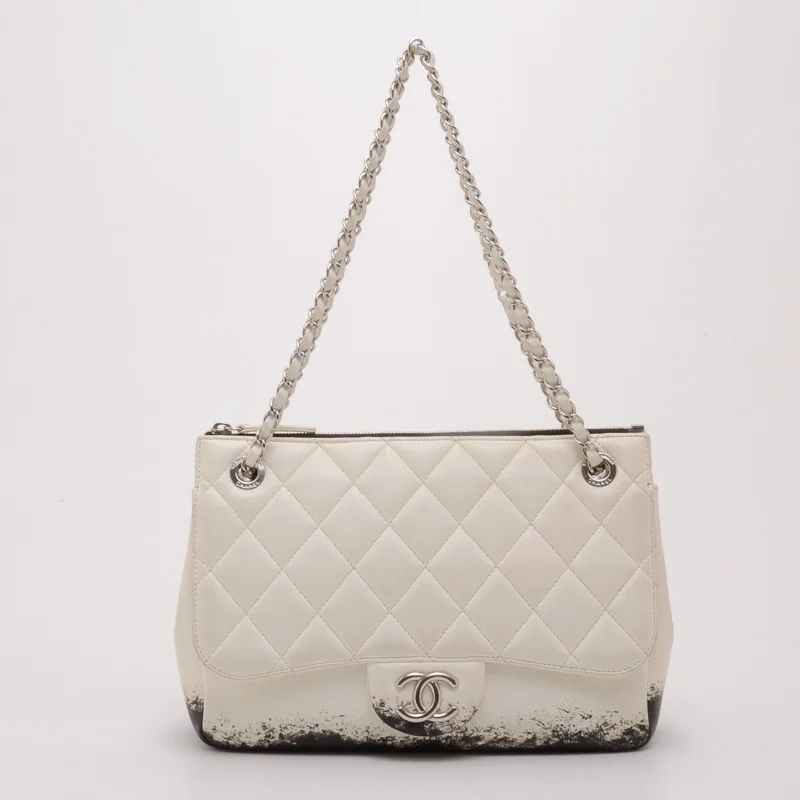
The Blizzard Flap belongs to Chanel’s Fall/Winter 2010 collection, released during the tail end of Karl Lagerfeld’s most experimental seasonal-bag period, when the house regularly reworked the Classic Flap silhouette into short-run capsule pieces rather than keeping it static. The Jumbo size body stayed familiar (quilted front panel, structured shell, chain-and-leather strap) but the top of the bag lost its flap-and-turnlock closure entirely in favor of a zipper. That’s a meaningful departure: the turnlock is arguably the most recognizable single detail on a Classic Flap, and removing it changes how the bag reads at a glance and how it functions day to day. A zip-top opens flat and fast, which is a genuine usability upgrade over reaching under a flap, though it does trade away the coin-purse-style front pocket that the flap conceals on standard Classic bags.
The “winter white” colorway was clearly the seasonal hook, timed to launch alongside Chanel’s snow-and-ski-adjacent Fall 2010 presentation themes. White caviar Chanel bags have always sold well because the leather’s pebbled grain hides scuffs better than smooth lambskin, and pairing that practicality with a genuinely wintry name and finish made the bag feel like a deliberate design statement rather than just another colorway drop.
Standout Details and Craftsmanship #
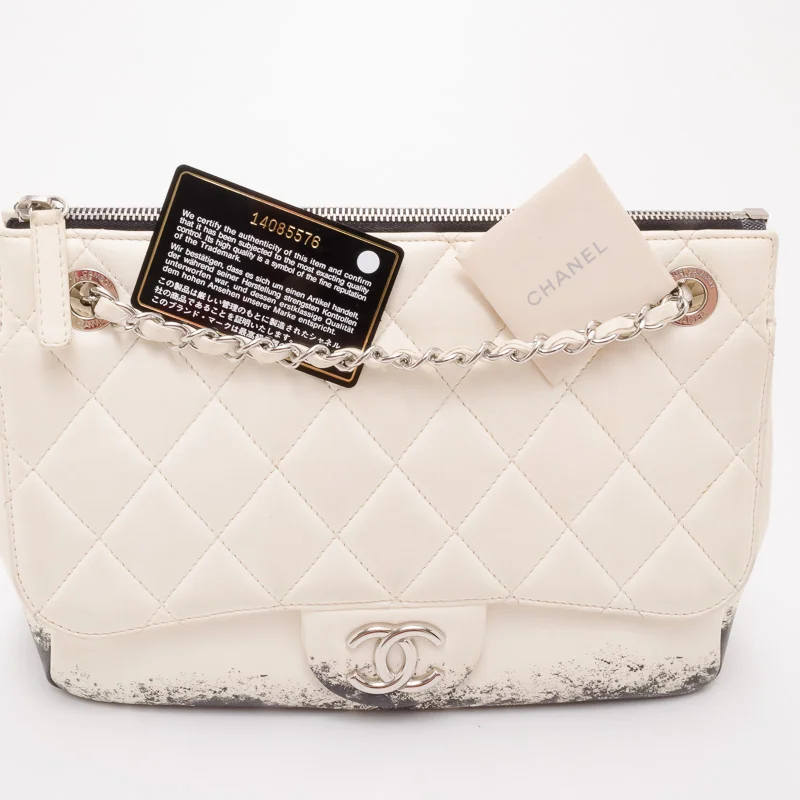
The detail that actually earns this bag its name is the inky splatter treatment across the base. Rather than a printed pattern, the finish reads as an intentionally irregular, spray-and-fleck effect layered onto the white leather, closer to a hand-finished technique than a factory print. No two splatter patterns are perfectly identical, which is common with this kind of hand-applied finish and is actually a helpful authentication signal (a counterfeit will often replicate a splatter pattern too symmetrically, or print it with a flat, repeating texture).
Beyond that base treatment, the bag keeps standard Jumbo Flap DNA: diamond quilting across the front and back panels, a woven leather-and-chain shoulder strap, and a CC hardware detail, here repurposed as a zipper pull rather than a turnlock. The zipper itself is worth inspecting closely, since Chanel’s hardware-grade zippers from this era run smoothly with minimal resistance and carry consistent branding on the pull tab, unlike the stiffer, scratchier zippers commonly found on replicas.
Spotting an Authentic Blizzard Flap: Key Details to Check #
Limited editions are disproportionately targeted by counterfeiters precisely because there’s less reference photography circulating, so buyers have fewer real bags to compare against. A few checks matter more here than on a standard Classic Flap:
- Serial sticker and authenticity card. Bags from this era carry a holographic serial number sticker inside the interior pocket, paired with a matching authenticity card. The sticker should sit flush, show a consistent hologram pattern under light, and match the number printed on the card exactly.
- Splatter placement and texture. Genuine splatter finishes have depth and slight raised texture where the ink sits on the leather. Flat, glossy, or perfectly symmetrical splatter patterns are a red flag.
- Quilting proportions. Jumbo Flaps have noticeably larger diamond quilting than Medium or Small sizes. If the quilting looks cramped or uneven relative to the bag’s overall size, treat that as a warning sign, not a quirk.
- Interior stamping. Look for a clean, evenly spaced “CHANEL Made in [country]” stamp. Font weight, letter spacing, and stamp depth are consistently precise on authentic bags and are one of the hardest details for counterfeiters to nail.
- Hardware weight and finish. The zipper pull, chain links, and any CC hardware should feel substantial, not light or hollow, with an even plating free of yellowing or flaking.
Because this exact style has so little documentation online compared to a Classic Flap or Boy bag, a professional authentication service is worth the fee before you commit, especially if you’re buying from a private seller rather than a vetted resale platform.
Rarity, Value, and Resale Potential #
Limited edition Chanel pieces tend to hold value differently than the brand’s core catalog. Classic Flaps and Boy bags see fairly predictable secondary-market pricing because there’s a constant stream of listings to benchmark against. A one-season piece like the Blizzard Flap doesn’t have that liquidity. Prices can swing more between listings simply because there aren’t enough recent sales to anchor a “market rate,” and condition matters even more since replacement parts or matching leather for repairs are effectively unavailable.
For context, a current-production Jumbo Classic Flap in caviar leather retails around $10,800 to $11,500 at Chanel boutiques as of 2024, and that figure has climbed steadily due to the brand’s well-documented pattern of annual price increases. Discontinued limited editions in strong condition often trade at a premium relative to their original retail price specifically because supply is fixed and demand is collector-driven rather than trend-driven. That said, this isn’t a bag you’ll find consistent auction comps for. Expect price variance from one listing to the next, and treat any seller who quotes a price with unusual confidence and no supporting documentation with some skepticism.
The honest downside: because it’s a discontinued zip-top design rather than the standard flap-and-turnlock silhouette, it will appeal to a narrower buyer pool than a Classic Flap. That’s good for uniqueness, less good if you ever need to resell quickly.
Buying Advice for Collectors #
Buy from resale platforms with in-house authentication and a documented return policy over private marketplace listings, even if the private listing looks cheaper. The savings rarely justify the risk on a piece this hard to verify visually. If you’re set on a private purchase, request close-up photos of the serial sticker, interior stamping, zipper hardware, and the splatter finish under natural light before any money changes hands, and pay through a platform that offers buyer protection.
On condition specifically: check corners for leather cracking (common on structured Jumbo shells after a decade), inspect the zipper for smooth operation without snagging, and look at the chain strap for tarnishing or stretching at the connection points. White caviar shows discoloration more visibly than darker colorways, so factor in a possible professional cleaning cost when comparing listings. A bag priced noticeably below comparable listings with vague or stock photography is the clearest signal to walk away.
Design Details: Materials, Hardware, and Craftsmanship #
The body is caviar leather, Chanel’s textured, cross-grained calfskin known for structure and scratch resistance, which is the standard choice for white Classic Flaps because it wears better than smooth lambskin. The “blizzard” finish is applied on top of that caviar base as a speckled ink treatment concentrated at the bottom of the bag, tapering off toward the sides.
Hardware on pieces from this collection typically appeared in gold-tone finish, consistent with Chanel’s 2010-era hardware standard, running through the chain strap, the zipper pull, and any CC branding on the front. Compared to a standard Jumbo Classic Flap, the biggest material distinction is the closure hardware itself: no turnlock, no lambskin coin pocket lining under the flap, and a heavier reliance on the zipper track as the bag’s main functional and visual anchor.
Set against the Boy bag, which uses a push-lock and boxier, less structured proportions, or the Reissue, which uses an aged Mademoiselle lock and intentionally distressed leather, the Blizzard Flap sits closer to the Classic Flap’s DNA overall but breaks from it in exactly one place: the closure. That single change is what makes it instantly identifiable to anyone who knows the line well, and it’s also why it photographs so differently from the bag most people picture when they hear “Chanel Flap.”
FAQ #
When was the Chanel Blizzard Flap released? It was part of Chanel’s Fall/Winter 2010 collection, sold as a limited edition and not reissued in later seasons.
What makes it different from a standard Jumbo Classic Flap? The flap-and-turnlock closure is replaced with a zip-top opening, and the base features a hand-applied ink-splatter finish over white caviar leather, rather than the smooth solid colorway typical of Classic Flaps.
Is the Blizzard Flap a good investment piece? It can hold or gain value due to its limited production, but resale liquidity is lower than a Classic Flap or Boy bag simply because fewer units exist and buyer demand is more niche and collector-driven.
How can I tell if a Blizzard Flap is authentic? Check the holographic serial sticker against the authenticity card, inspect the splatter finish for hand-applied texture rather than a flat print, confirm quilting proportions match Jumbo sizing, and verify interior stamping is crisp and evenly spaced. A professional authentication service is strongly recommended given how few reference photos exist online.
What size and capacity does it offer? It follows Jumbo Classic Flap proportions, roughly 30cm wide by 20cm tall by 10cm deep, comfortably fitting daily essentials, though the zip-top construction changes how items sit inside compared to a flap closure.
Does caviar leather hold up well on a white bag like this? Yes, caviar’s textured grain resists scuffing better than lambskin, though white leather will still show discoloration over time and may need occasional professional cleaning.
Related Articles #
- How to Spot a Fake Chanel Flap Bag: Authentication Guide
- Replica vs. Pre-Owned Bags: The Smarter Buy?
- 5 Rare, Unique Chanel Bags Worth Collecting Now
- Chanel Flap Bag Buying Guide: Sizes, Prices & Deals
- Chanel Royal Blue Boy Bag: Rare Pre-Owned Find
Related guides
- Online Bag Authentication: What Photos Can and Cannot Prove
- Blue Crocodile Lady Dior Tote: Buying Guide
- Chanel Vintage Flap Bag Buying Guide: Navy Lambskin
- Louis Vuitton Palm Spring Backpack: Complete Buyer's Guide
- How to Buy an Authentic Luxury Bag from China Safely
- New vs Pre-Owned Luxury Bags: Which Route Is Right for You?
- Chanel Bag Guide: What to Know Before You Buy
- Luxury Bag Houses


Keyword index