Introduction #
Burberry has spent over a century and a half building a design vocabulary that most houses only dream of: gabardine, the trench, the check. That heritage is exactly why the brand’s handbags tend to get overlooked in conversations dominated by Hermès, Chanel, and Dior. But Burberry’s leather goods deserve a closer look, especially the pieces that came out of Riccardo Tisci’s tenure, when the house was actively rewriting its own rules.
This week we’re putting the Burberry Lola bag under the microscope. It’s not the most famous bag in the Burberry lineup, and it doesn’t carry the six-figure waitlists of a Kelly or a Birkin, but it’s a genuinely well-made piece with a distinct point of view, and it’s become a smart entry point for buyers who want a recognizable luxury bag without competing for it. We’ll walk through where it came from, how it’s made, what to check before you buy one pre-owned, and how it stacks up against both its Burberry siblings and comparable bags from other houses.
The Story Behind the Burberry Lola Bag #
The Lola debuted in Riccardo Tisci’s Fall/Winter 2019 collection, his first full season as Burberry’s Chief Creative Officer after moving over from Givenchy. Tisci named the bag after “Lola,” the 1970 single by The Kinks, a song built around gender ambiguity and defiance. That reference point matters, because it tells you what Tisci was going for: something less prim than Burberry’s traditional image, aimed at a younger, more rebellious customer.
The FW19 campaign backed that idea up. Burberry cast Bella Hadid, Lourdes Leon, Ella Richards, and Jourdan Dunn, a lineup that skewed toward downtown edge rather than country-club polish. It was a deliberate repositioning, part of Tisci’s broader project to layer streetwear energy and gender-fluid styling onto the house’s Britishness. The Lola was one of the first bags to carry that message into hardware and stitching rather than just runway styling, which is part of why it still reads as distinct from the Burberry bags that came before or after it.
Design and Craftsmanship: What Sets the Lola Apart #
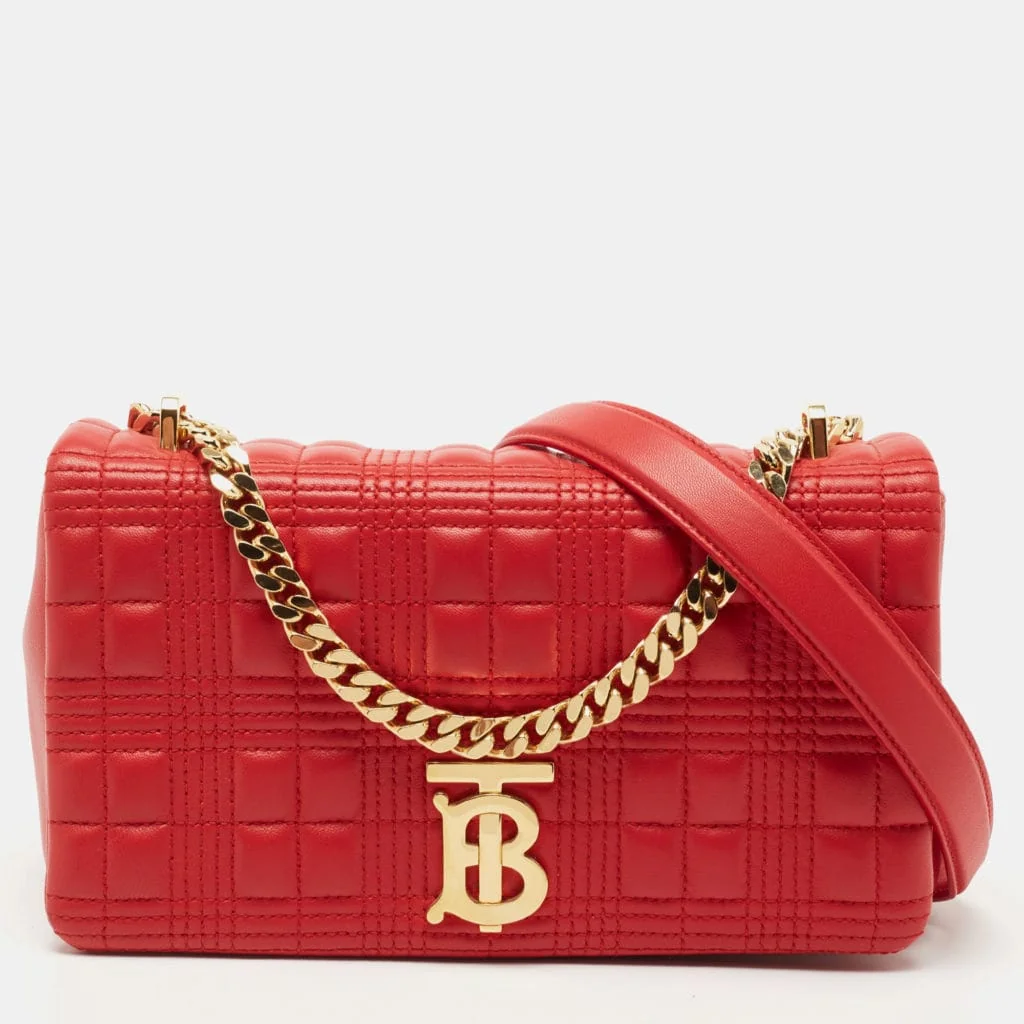
The Lola’s signature is its soft, padded silhouette. Where Burberry’s older bags leaned structured and boxy, the Lola is deliberately slouchy, built with an interior padding that gives it a pillowy, almost puffer-jacket quality. That softness is held together by monochrome top-stitching in a quilted or channeled pattern, which is the detail worth checking closely on any bag you’re considering, since it’s one of the hardest things for counterfeiters to replicate cleanly.
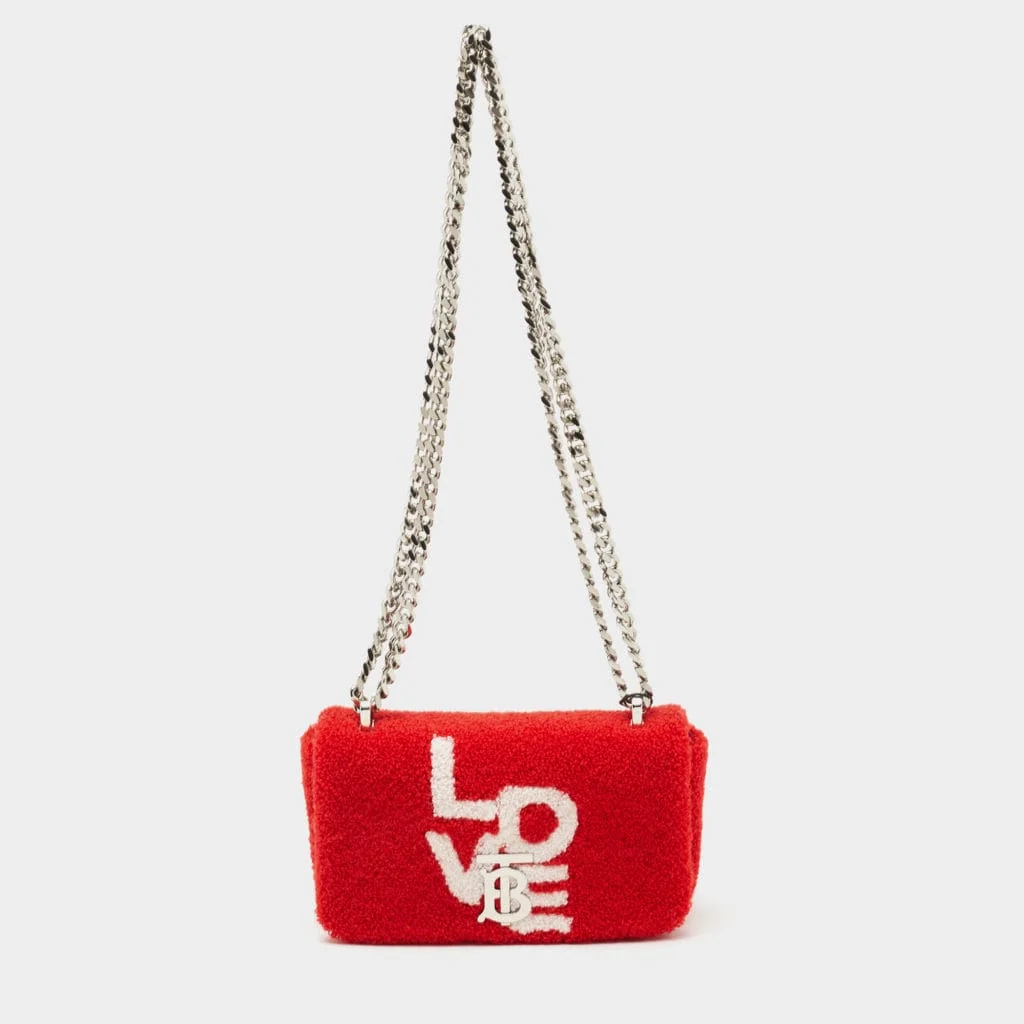
Materials vary by edition. You’ll find the Lola in smooth calfskin, quilted lambskin, technical nylon, and terry fabric versions like the Lola Love. Regardless of material, the front is marked with Burberry’s house codes, either the interlocking TB monogram or, in special editions, a graphic like the hand-lettered “LOVE” on the Lola Love bag. Hardware is a light gold or gunmetal finish depending on the colorway, usually a polished chain-link strap that can be worn shoulder-length or doubled for a crossbody drop.
Construction-wise, this is not a rigid, structured bag in the Kelly or Birkin sense. It’s closer in spirit to a [[[[Chanel classic flap](/buying-guides/vintage-chanel-finds-top-picks/)](/buying-guides/which-chanel-bag-to-buy/)](/buying-guides/classic-and-chic-handbags-style-icons/)](/buying-guides/chanel-flap-bag-buying-guide/) or a Saint Laurent Loulou: soft-structured, quilted, chain-strapped. That’s worth knowing going in, because if you’re expecting Hermès-level boxy rigidity, the Lola will feel like a completely different category of bag, which it is.
Sizes, Colors, and Styling the Lola Bag #
The Lola comes in a handful of sizes, generally categorized as mini, small, and medium, though Burberry has not always used consistent naming across seasons, so measurements matter more than the label on the listing.
- Mini: roughly 18-20cm wide, built for evenings and crossbody wear. Fits a phone, cards, lipstick, and not much else.
- Small: around 24-26cm wide, the most versatile size, comfortable as a daytime crossbody with room for a compact wallet, sunglasses, and keys.
- Medium: closer to 30cm wide, functions as a light everyday bag, though it’s still not built for heavy laptop-and-notebook carrying the way a tote would be.
Color and material options run wide: black and camel calfskin for a classic Burberry look, bold reds and quilted lambskin for statement pieces, and technical nylon or terry cloth versions like the Lola Love for a more casual, street-facing aesthetic. That range is actually the bag’s biggest styling advantage. A black calfskin small Lola works with tailored coats and office wear. A red terry Lola Love reads as playful and works better with denim and sneakers. It’s genuinely a different bag depending on material choice, which is unusual for a single silhouette.
For styling, the chain strap is the detail that does the most work. Worn long, it dresses down for errands or travel. Doubled up short, it reads dressier, closer to how you’d wear a Chanel flap for evening. That flexibility is one reason the Lola has held up better as a “one bag, many outfits” option than some flashier It-bags from the same era.
How to Spot an Authentic Burberry Lola Bag #
Because the Lola isn’t Burberry’s most heavily counterfeited bag, compared to something like the TB shoulder bag, the fakes that exist tend to be lower effort, which actually makes authentication a bit more manageable if you know where to look.
Start with the stitching. The Lola’s channel-quilted or monochrome top-stitching should be perfectly even, with consistent spacing and no puckering along the seams. Authentic units are stitched with tight, uniform tension; counterfeits almost always show wavering lines or inconsistent stitch length, especially around the corners where the panels meet.
Check the hardware next. Genuine Lola bags use weighted, cold-to-the-touch metal hardware with a clean, deep engraving on the Burberry branding, usually found on the D-rings, zipper pulls, or the interior stamp. Fakes tend to use lighter, hollow-feeling hardware with shallow or blurry engraving, and the gold tone often looks brassy rather than warm.
Look at the front motif. Whether it’s the TB monogram or a graphic like “LOVE,” the lettering should be crisp, evenly raised or embroidered, and centered. Off-register printing, uneven letter spacing, or a motif that looks glued rather than integrated into the material is a immediate red flag.
Inspect the interior. Authentic Burberry bags have a clean interior lining, usually in the house check or a solid tone matching the exterior, with a legible date/serial stamp and consistent font. Smell and feel the leather or fabric too; genuine calfskin and lambskin have a distinct softness and scent that coated synthetic fakes don’t replicate well.
If you’re buying pre-owned, ask for close-up photos of the stitching, hardware stamps, interior tag, and the base of the bag (which shows wear patterns that are hard to fake convincingly). Reputable resale platforms authenticate before listing, but a second look at these details never hurts, especially on a bag that doesn’t have the same level of public authentication documentation as a Birkin or Kelly.
Price and Resale Value: Is It Worth the Investment #
Retail pricing for the Lola varied by size and material, generally landing in the $1,300 to $2,200 range for the mini and small sizes in calfskin or lambskin, with special materials like exotic leather editions pricing higher. That put it solidly in the accessible-luxury bracket, well below Burberry’s higher-end pieces and far below anything from Hermès.
On the resale market, the Lola has depreciated the way most fashion-driven, single-season designs do. Expect to see pre-owned prices land somewhere between 40% and 60% of original retail, depending on condition, size, and whether the colorway is one of the more sought-after ones (black and camel calfskin tend to hold value better than the trend-driven terry or graphic editions). This is a meaningful gap from something like a Chanel classic flap or an Hermès bag, which routinely hold or exceed retail on resale.
The honest take: the Lola is not a value-appreciating asset, and buyers should not treat it like one. It’s a design-driven bag tied to a specific creative moment at Burberry, which means its resale value is more sentiment-based than investment-grade. Where it does perform well is as a cost-per-wear proposition. If you’re paying $500-$800 for a pre-owned Lola in good condition instead of $1,500+ retail, you’re getting a well-made, distinctive bag at a price where the depreciation risk is already priced in.
Burberry Lola vs. Other Burberry Bags #
Within Burberry’s own lineup, the Lola sits in a specific niche: soft-structured, chain-strapped, casual-to-dressy crossover.
Compared to the TB shoulder bag, which is more structured with a top handle and a boxier silhouette, the Lola is softer and more relaxed, better suited to everyday wear than to a polished, formal look. The TB reads more corporate; the Lola reads more downtown.
Compared to the Olympia bag, which leans into equestrian-inspired hardware and a more classic, structured shape, the Lola is again the softer, more casual option. The Olympia is closer to what people expect from “heritage Burberry”; the Lola is what Tisci-era Burberry looked like when it was trying to move away from that expectation.
Compared to the Banner tote or Pocket tote, the comparison isn’t really apples to apples. Those are functional, everyday carryalls meant for work and errands. The Lola is a going-out bag, sized and styled for crossbody wear rather than for carrying a laptop.
If you’re choosing between them, it comes down to how structured you want your bag to feel and how much of the “edgy Tisci era” aesthetic you want versus Burberry’s more classic house codes.
How the Burberry Lola Bag Holds Up: A Durability Review #
This is where buyers hesitate most, and it’s worth being direct about it. The Lola’s soft, padded construction is part of its appeal, but it’s also its main durability trade-off. Padded, quilted leather bags naturally show wear differently than structured, box-calf bags. Corners can soften and lose shape faster than a rigid Birkin or Kelly would, and the quilting can flatten with heavy daily use over a few years.
Leather and lambskin editions hold up better than the nylon or terry cloth versions. Lambskin in particular is soft and beautiful but more prone to scuffing and surface marks than a sturdier calfskin. If you’re buying pre-owned and durability matters more to you than trend appeal, prioritize a calfskin Lola over a lambskin or terry one, and expect to see some corner softening or minor surface wear on any unit that’s been carried regularly.
Hardware tends to hold up well; the chain strap and D-rings are solidly made and don’t show the same wear patterns as the body of the bag. The main failure point to check on a used Lola is the stitching at stress points, particularly where the strap attaches and along the base seam, since that’s where quilted bags typically show their age first.
Realistically, this is a bag built for regular use over three to five years of solid wear rather than a decades-long heirloom piece. That’s a fair trade for the price point, but it’s a different durability profile than what buyers coming from the Hermès or Chanel world might expect, and it’s worth setting that expectation before you buy.
FAQ #
Is the Burberry Lola bag discontinued? The Lola was introduced for FW19 and has appeared in several follow-up seasons and special editions, but it’s not part of Burberry’s current core lineup under Daniel Lee. Most units on the market now are pre-owned or final retail stock.
What’s the difference between the Lola and the Lola Love? The Lola Love is a variant featuring “LOVE” lettering across the front instead of the standard TB monogram, typically in bold materials like terry cloth, and was positioned as a more playful, gift-oriented edition rather than a core everyday bag.
Does the Lola bag come with authentication cards or certificates? Burberry generally doesn’t issue formal authenticity cards the way some houses do. Authentication relies on interior serial stamps, stitching quality, and hardware inspection, which is why buying from a platform that authenticates pre-owned bags matters.
Is the Lola a good first luxury bag? It’s a reasonable entry point if you want a recognizable house without the waitlists or price tag of Hermès or Chanel, but go in expecting fashion-forward depreciation rather than investment-grade resale value.
Related Articles #
- Why the Chanel Crossbody Bag Never Goes Out of Style
- 5 Iconic Bags Named After Famous Women (Buying Guide)
- Chanel 19 Bag Guide: History, Prices & Buying Tips
- Dior Granville Bag Review: Honest Take After Years
- Saint Laurent Kate Bag Review: Style, Fit & Resale Value
Related guides
- Online Bag Authentication: What Photos Can and Cannot Prove
- Inside a Million-Dollar Closet: Pre-Loved Hermès & More
- Meet Marwa Azzam Aldabbagh: Kelly Bag Authentication Expert
- Luxury Handbag Authentication Process Explained
- How to Buy an Authentic Luxury Bag from China Safely
- New vs Pre-Owned Luxury Bags: Which Route Is Right for You?
- Chanel Bag Guide: What to Know Before You Buy
- Luxury Bag Houses


Keyword index