Introduction #
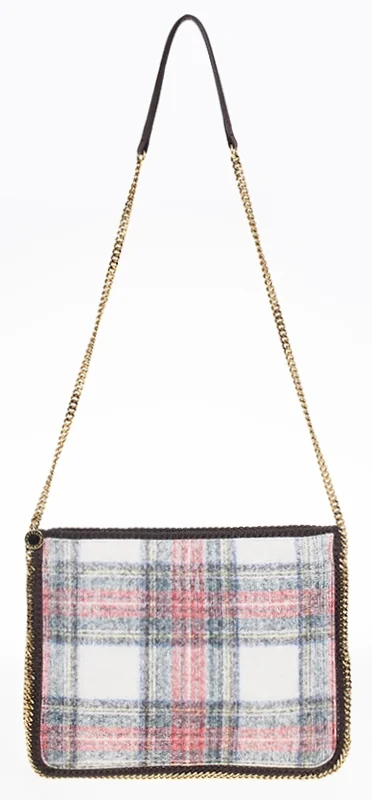
Every so often a bag comes along that asks a genuinely different question than “how much does it cost to look expensive.” The Falabella Tartan Cross-Body Bag, from Stella McCartney’s Winter 2014 collection, is one of those pieces. It carries no leather, no fur, and no exotic skins, yet it sits comfortably in the same resale conversations as bags built entirely from animal hide. That alone makes it worth a closer look for anyone shopping the pre-owned luxury market, where authentication habits are still catching up to a decade of vegan-leather innovation.
This week’s spotlight in our Brand Spotlight series is this Falabella in its tartan wool-check iteration, paired with gold-tone hardware and a lining made from recycled plastic bottles. We’re going to unpack the materials, the design history, and the practical side of buying one secondhand, because the authentication checkpoints for a cruelty-free bag are not the same as the ones you’d use on a calfskin Birkin.
Stella McCartney: A Pioneer of Cruelty-Free Luxury #
Stella McCartney launched her eponymous label in 2001 as a joint venture with Gucci Group, and from day one she refused to work with leather or fur. That wasn’t a marketing angle bolted on later; it was a founding condition of the business, reportedly influenced by her vegetarian upbringing. At the time, this made her something of an outlier in Paris and Milan showrooms, where leather goods were (and largely still are) the profit engine of a luxury house.
Two decades on, the position has aged well. McCartney has been vocal about the environmental cost of tanning leather, the water and chemical use involved, and the industry’s reliance on animal agriculture. Her house has pushed materials research further than most competitors, developing alternatives like Mylo (mushroom-based leather) and mass-balance viscose long before “sustainable fashion” became a retail buzzword. The brand doesn’t claim to be perfect on sustainability — cotton and synthetic textile production still carry an environmental footprint — but it has been unusually consistent in publishing its material choices and sourcing standards rather than relying on vague “eco” language.
That consistency is what gives the Falabella line its credibility. It’s not a one-off capsule; it’s the output of a design philosophy that has been in place since the brand’s first runway show.
Inside the Falabella Tartan Cross-Body Bag: Materials and Design #
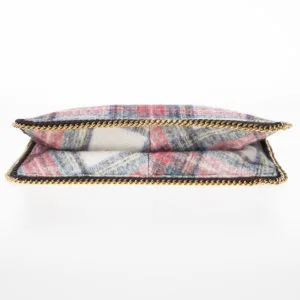
The Falabella Tartan Cross-Body is built on the same silhouette as the original Falabella tote and shoulder bag: a chain-and-faux-leather trim strap, a fold-over flap, and a boxy, structured body. What sets this particular version apart is the tartan wool-check exterior, a heavier textile than the smooth faux-leather Falabellas most people picture.
Construction details worth knowing:
- Exterior: wool-blend tartan check, woven rather than printed on most seasonal runs, giving it visible texture rather than a flat pattern
- Trim and strap: faux-leather edging with an interwoven chain, McCartney’s signature hardware treatment across the Falabella family
- Lining: made from recycled plastic bottles processed into a polyester textile, a detail the brand has used across multiple bag lines since the early 2010s
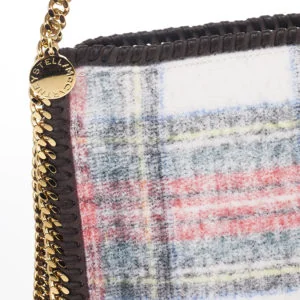
- Hardware: gold-tone metal, engraved with the Stella McCartney logo on the front clasp and often stamped inside on a fabric or vegan-material tag rather than a leather one
- Closure: front flap with a magnetic or clasp closure over the chain trim, single compartment interior
The tartan check itself has more texture and weight than the smoother nylon or shaggy-faux-fur Falabella variants, which changes how it wears. It holds shape better over time but is also more prone to snagging on rough surfaces than the smooth finishes.
Why Sustainable Materials Are Reshaping the Luxury Handbag Market #
The Falabella’s recycled-plastic lining isn’t a novelty anymore, it’s a preview of where the mid-to-high end handbag market has gone. Recycled polyester (rPET) lining, mushroom leather, grape-based leather, and cactus leather have all moved from niche startups into mainstream collections at houses like Gucci, Burberry, and even some Hermès accessory lines using recycled cotton canvas.
A few things worth knowing if you’re evaluating “eco” claims on a bag:
- rPET lining is genuinely recycled plastic (usually bottles or fishing nets) melted down and re-spun into polyester fiber. It performs similarly to virgin polyester in durability but reduces reliance on new petroleum extraction.
- Certifications to look for include Global Recycled Standard (GRS) for the recycled content claim, and OEKO-TEX for chemical safety in the finished textile. Stella McCartney publishes sourcing information in its annual sustainability reports, which is more transparency than most competitors offer.
- Vegan leather is not one material. PU (polyurethane) faux leather, PVC-based faux leather, and newer bio-based alternatives (mushroom, cactus, apple) all behave differently in terms of longevity, breathability, and how they age. Stella McCartney has used several of these over the years, so the specific bag matters more than the brand name alone.
The honest caveat: recycled and bio-based materials are a real improvement over virgin plastic and conventional leather tanning, but they aren’t a free pass on environmental impact. Synthetic textiles still shed microplastics in washing and eventually landfill, and “recycled” doesn’t mean infinitely recyclable. McCartney’s approach is a meaningful step forward, not a solved problem, and it’s worth treating the marketing that way.
Buying Advice: Choosing and Authenticating an Eco-Friendly Designer Bag #
Buying a Falabella new is straightforward: go through Stella McCartney’s own boutiques or authorized stockists (Net-a-Porter, Farfetch’s verified listings, Nordstrom). Pricing on the Falabella Tartan Cross-Body historically sat in the $900-$1,200 range at retail depending on size, which puts it below entry Chanel or Hermès canvas pieces but above most contemporary designer crossbodies.
The pre-owned market is where things get trickier, and where most authentication guides fall short because they’re written for leather goods.
What to check on a pre-owned Falabella:
- Hardware weight and engraving: genuine Falabella hardware is solid, not hollow-feeling, and the logo engraving on the front clasp should be crisp with even letter spacing. Shallow or uneven engraving is a common counterfeit tell.
- Chain construction: the interwoven chain-and-faux-leather trim should have the faux-leather strip laced evenly through every link. Gaps, twisted strips, or visibly glued sections point to a fake.
- Interior tag: authentic bags carry a fabric or non-leather material tag with a serial number, not a leather patch. If a “Stella McCartney” bag has a leather-stamped authenticity tag, that’s a contradiction worth flagging immediately, since the brand doesn’t use leather anywhere in construction.
- Lining texture: the recycled-polyester lining has a slightly coarser, more matte hand-feel than the shiny nylon linings often used in counterfeits. It should not feel like slick plastic.
- Weight of the bag empty: because there’s no leather, an authentic Falabella is noticeably lighter than a similarly sized leather crossbody. A suspiciously heavy “vegan” bag is a red flag.
- Stitching on the tartan seams: wool-check fabric frays if cut poorly. Genuine construction uses reinforced, tightly bound seams; loose threads along the flap edge suggest a lower-quality reproduction.
If you’re buying through a resale platform, ask for close-up photos of the interior tag, the clasp engraving, and the underside of the chain trim before committing. Reputable resellers (The RealReal, Vestiaire Collective’s authenticated tier, Rebag) will already have vetted these points, but it doesn’t hurt to verify yourself, especially since vegan-material fakes are less scrutinized by casual buyers than leather ones.
The Story Behind the Tartan Print #
Tartan re-entered high fashion hard in Winter 2014, showing up on runways from Burberry to Chanel, but almost exclusively on coats, skirts, and outerwear. Very few houses put it on a handbag, which is part of what made this Falabella variant stand out at the time rather than reading as another seasonal print refresh.
The choice also fit McCartney’s broader design language. Tartan carries a utilitarian, almost workwear association, at odds with the glossy, hardware-heavy bags dominating that era’s “It bag” conversation. Pairing it with the Falabella’s chain trim gave the bag a rougher, more textured edge than the smooth faux-leather versions, without going full costume with a Scottish-heritage look. For buyers who wanted texture and personality without a novelty print, it read as a wearable middle ground rather than a trend piece with a short shelf life.
Materials & Craftsmanship Breakdown #
Beyond the headline “vegan leather” claim, the Falabella Tartan’s construction rewards a closer look:
- Wool-check exterior: heavier and more structured than the brand’s smooth faux-leather Falabellas, which means it resists slouching but is more prone to pilling with heavy rubbing against rough fabrics like denim.
- Recycled-polyester lining: sourced from post-consumer plastic bottles, spun into a textile that’s durable against everyday wear but, like most polyester linings, can show pilling after a few years of daily use.
- Faux-leather trim: a polyurethane-based material that mimics the look of leather piping without animal content. It’s more resistant to water than the wool body but can crack over many years if stored folded rather than stuffed.
- Gold-tone hardware: plated rather than solid gold, as with virtually all designer hardware in this price range. Plating will wear thin at contact points (clasp, chain links) after years of regular use, which is normal and not a fault of the piece.
Care and durability notes, since this is where most product write-ups go quiet:
- Avoid soaking or heavy scrubbing on the wool-check exterior; spot-clean with a barely damp cloth and mild soap, then air dry away from direct heat.
- Store the bag stuffed with tissue or a shaper to keep the boxy silhouette and prevent the faux-leather trim from creasing.
- Keep it away from prolonged direct sunlight, which fades both the tartan dye and the gold-tone plating faster than indoor storage.
- Faux leather doesn’t “condition” the way real leather does; there’s no leather balm or conditioner to apply, and using one can actually damage the PU coating.
- Compared to a lambskin bag, this material is more forgiving of light rain but less forgiving of long-term flexing at the same crease point, so rotate how you fold or carry it if possible.
FAQ #
Is the Falabella Tartan Cross-Body actually leather-free? Yes. Stella McCartney has never used leather, fur, or exotic skins in any collection since the brand’s founding in 2001. Every material on this bag, including the faux-leather trim, is a non-animal alternative.
How does it compare to other Stella McCartney bags, like the Shaggy Deer Falabella? The Shaggy Deer version uses a faux-fur textured faux-leather, which reads softer and more casual. The Tartan version is structured and textile-based, closer in feel to a wool coat than a fur-trimmed bag. Both share the same chain-and-hardware silhouette, so the choice comes down to texture preference rather than construction quality.
How does it stack up against other [[[sustainable luxury](/buying-guides/best-luxury-casualwear-brands-effortless-style-2025/)](/buying-guides/pre-owned-luxury-fashion-world-environment-day/)](/brands/stella-mccartney-white-mini-falabella-tote/) brands, like Gabriela Hearst or Mulberry’s eco lines? Stella McCartney has a longer track record and more independently verified sourcing data than most competitors in this space, since sustainability has been a founding pillar rather than a recent addition. Mulberry and similar brands have introduced recycled and vegetable-tanned lines more recently, often on select capsule pieces rather than across the full catalog.
What’s the resale value like? Pre-owned Falabella bags in good condition typically resell for 40-55% of original retail, depending on condition, print rarity, and hardware wear. Tartan and other limited seasonal prints tend to hold value slightly better than the core smooth faux-leather colorways because they’re less commonly reissued.
What size should I buy? The cross-body comes in a compact size meant for essentials only (phone, cards, keys, small pouch). If you need to carry more, look at the Falabella tote or shoulder bag versions in the same print family rather than expecting the cross-body to stretch to fit.
Is it durable enough for daily use? Reasonably, yes, but with caveats. The wool exterior handles daily wear well but will show pilling faster than smooth faux-leather variants if it regularly rubs against rough fabric. The recycled-polyester lining and PU trim are durable but not indestructible, and the gold-tone hardware will show plating wear after several years of regular use, same as most designer hardware in this category.
Related Articles #
- Why the Chanel Crossbody Bag Never Goes Out of Style
- Stella McCartney Wild Cat Crossbody: Vegan Leather Bag
- Stella McCartney Falabella: Vegan Luxury Handbag Guide
- Gucci Ophidia Shoulder Bag Review: Bag of the Week
- Hermès Retail vs. Resale: Which Should You Choose?
Related guides
- Online Bag Authentication: What Photos Can and Cannot Prove
- Blue Crocodile Lady Dior Tote: Buying Guide
- Chanel Vintage Flap Bag Buying Guide: Navy Lambskin
- Louis Vuitton Palm Spring Backpack: Complete Buyer's Guide
- How to Buy an Authentic Luxury Bag from China Safely
- New vs Pre-Owned Luxury Bags: Which Route Is Right for You?
- Chanel Bag Guide: What to Know Before You Buy
- Luxury Bag Houses


Keyword index