The Women Who Built Luxury: Founders, Visionaries, and Leaders Shaping Global Fashion#
Founder Timeline: At a Glance#
| Year | Name | House / Role |
|---|---|---|
| 1889 | Jeanne Lanvin | Founded Lanvin (Paris) |
| 1910 | Gabrielle “Coco” Chanel | Founded Chanel (Paris) |
| 1912 | Madeleine Vionnet | Founded Vionnet (Paris) |
| 1927 | Elsa Schiaparelli | Founded Schiaparelli (Paris) |
| 1932 | Nina Ricci | Co-founded Nina Ricci (Paris) |
| 1942 | Germaine Krebs (“Madame Grès”) | Founded Grès (Paris) |
| 1952 | Gaby Aghion | Founded Chloé (Paris) |
| 1972 | Diane von Furstenberg | Founded DVF (New York) |
| 1978 | Miuccia Prada | Took leadership of Prada (Milan) |
| 1990 | Vera Wang | Founded Vera Wang (New York) |
| 2001 | Stella McCartney | Founded Stella McCartney (London) |
| 2004 | Tory Burch | Founded Tory Burch (New York) |
| 2008 | Phoebe Philo appointed CD | Céline (Paris) — transformative tenure begins |
| 2008 | Victoria Beckham | Founded Victoria Beckham (London) |
| 2016 | Maria Grazia Chiuri appointed CD | Dior (Paris) — first female creative director |
| 2017 | Clare Waight Keller appointed CD | Givenchy (Paris) — first female creative director |
Introduction: The Paradox at the Heart of Luxury Fashion#
Women account for roughly 85percent of all luxury fashion spending globally. They are, by every commercial measure, the industry’s primary stakeholders. And yet, for the better part of the twentieth century, the creative and commercial decisions that determined what those women wore — the silhouettes, the fabrics, the price points, the very idea of what “luxury” meant — were overwhelmingly made by men.
That paradox is not incidental to the story of luxury fashion. It is the story.
Which makes what a relatively small number of women achieved all the more remarkable. The founders, creative directors, and executives profiled here did not merely participate in luxury fashion; they repeatedly, fundamentally remade it. Coco Chanel abolished the corset. Madeleine Vionnet reinvented the relationship between cloth and the body. Phoebe Philo constructed a vision of modern femininity so specific and so commercially powerful that, six years after she left Céline, her work still commands a secondary-market premium. Francesca Bellettini took a storied but underperforming Parisian house and built it into a multi-billion-euro business.
This is not a list of “women who also did well.” These are the architects of an industry.
Understanding who they were, what they built, and — critically — when they built it is more than cultural education. For collectors and buyers operating in a resale market where brand equity is a real financial consideration, this history is working knowledge. A Céline tote bag purchased during Phoebe Philo’s tenure carries different investment logic than one produced after her departure in 2018. A Vionnet bias-cut gown, rare by definition, is valued partly because of what its maker’s closing in 1939 means for scarcity. Context is not decoration here — it is due diligence.
The Founding Mothers: Pioneers Who Built Iconic Maisons from Scratch#
The women who founded major luxury houses in the late nineteenth and early twentieth centuries were operating without a template. There was no “luxury brand playbook,” no private equity infrastructure, no concept of heritage marketing. What they had was a point of view sharp enough to cut through convention — and, in most cases, a commercial instinct that their male contemporaries consistently underestimated.
Jeanne Lanvin · Founded 1889
AT A GLANCE · LANVIN Founded: 1889 (Paris) By: Jeanne Lanvin Key Innovation: Robe de style; first house to offer coordinated mother-and-daughter dressing Current Relevance: Oldest surviving French couture house; vintage Lanvin is undervalued relative to peers — a collector’s opportunity
Jeanne Lanvin began as a milliner. It was the dresses she made for her daughter Marguerite that attracted the attention of clients who wanted the same for their own children — and then for themselves. What started as maternal creativity became the oldest surviving French couture house, a fact that bears repeating: Lanvin predates Chanel by two decades.
Her signature contribution was the robe de style — a wide-skirted, low-waisted silhouette that ran parallel to the flapper era’s tube dresses rather than following them. Where her contemporaries chased modernity, Lanvin pursued timelessness, and the distinction aged well. Her house also pioneered interior décor and menswear lines, making it among the first fashion businesses to pursue diversification as deliberate strategy.
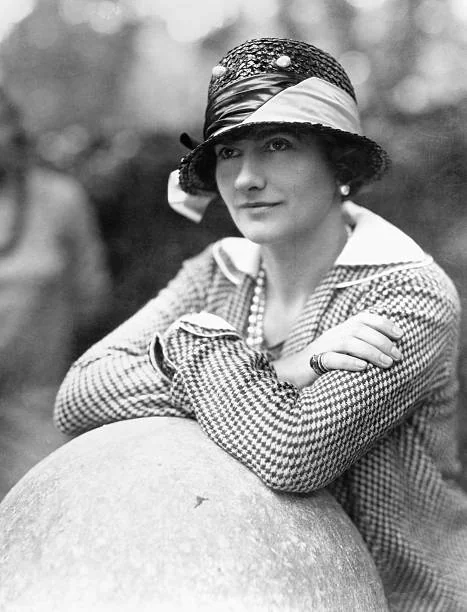
Gabrielle “Coco” Chanel · Founded 1910
AT A GLANCE · CHANEL Founded: 1910 (Paris) By: Gabrielle Bonheur “Coco” Chanel Key Innovation: Liberated women from corsets via jersey and tweed; codified “casual chic”; invented the modern luxury handbag category with the2.55 (1955) Current Relevance: The2.55 and Classic Flap remain among the strongest-appreciating luxury assets in resale; annual price increases since 2020 have accelerated this. [See our Chanel authentication guide →]
There is almost nothing left to say about Coco Chanel that hasn’t been said, which makes it more important than ever to say the complicated things clearly.
She was, without serious argument, the most influential fashion designer of the twentieth century — the only one on Time magazine’s list of the 100 most important people of that century. Her liberation of women from corsetry and her introduction of jersey fabrics, borrowed-from-menswear silhouettes, and the concept of the little black dress as a universal wardrobe foundation reshaped not just fashion but the physical experience of being a woman. The 2.55 quilted flap bag, created in February 1955, invented an entirely new category of luxury object: the status handbag as investment-grade artefact.
The partnership she struck with Pierre Wertheimer in 1924 to commercialise Chanel No. 5 — initially on unfavourable terms she spent decades trying to renegotiate — ultimately created the ownership structure that persists today: the Wertheimer family controls the house privately, explaining the brand’s strategic independence from conglomerate pressure and its ability to raise prices on its own schedule.
The complication that any honest account must address: during the German Occupation of Paris, Chanel lived at the Ritz, had a relationship with German officer Hans Günther von Dincklage, and was reportedly recruited by the Abwehr as agent F-7124. She was detained after the Liberation but not prosecuted — an outcome that has been attributed, among other explanations, to the intervention of Winston Churchill. These facts do not cancel her creative legacy. But they are part of who she was, and any biography that omits them is flattering marketing, not history.
“I don’t do fashion. I am fashion.” — Gabrielle Chanel
Madeleine Vionnet · Founded 1912
AT A GLANCE · VIONNET Founded: 1912 (Paris, closed 1939) By: Madeleine Vionnet Key Innovation: The bias cut — draping fabric on the diagonal to follow the body’s natural lines Current Relevance: Vintage pieces are museum-grade rarities; the house was revived under investment ownership but has never recaptured the founding vision. Original Vionnet is for serious collectors only.
Called “the architect of fashion” and “the queen of the bias cut,” Madeleine Vionnet understood the geometry of fabric before fashion had a technical vocabulary for it. By cutting cloth on the diagonal rather than the straight grain, she created garments that moved with the body in a way that was previously impossible — draped sculptures rather than constructed containers.
What is less often noted is her progressive employment practice: her atelier offered workers on-site childcare, a health clinic, and profit-sharing arrangements that were radical for the 1930s. She was also an aggressive anti-copyist, employing photographers to document every design and threatening legal action against counterfeiters — a stance that was decades ahead of the industry.
Elsa Schiaparelli · Founded 1927
AT A GLANCE · SCHIAPARELLI Founded: 1927 (Paris, originally closed 1954; revived 2012) By: Elsa Schiaparelli Key Innovation: Surrealism applied to couture; “Shocking” pink; collaboration as creative methodology (Dalí, Cocteau, Man Ray) Current Relevance: The revived house under Daniel Roseberry has found genuine critical traction; vintage original Schiaparelli is extremely rare and museum-territory.
Elsa Schiaparelli arrived in Paris as an outsider — Italian-born, intellectually formed in Rome and New York, fundamentally uninterested in the conventions she was supposed to observe. Her trompe l’oeil bow sweater in 1927 announced the philosophy immediately: fashion as visual joke, as conceptual statement, as surrealist object.
The lobster dress, designed with Salvador Dalí in 1937and worn by Wallis Simpson, became one of the most reproduced fashion images of the century. Schiaparelli invented Shocking pink — a colour she named for her signature perfume. She made hats shaped like shoes and jackets with skeleton ribs embroidered onto them. Her rivalry with Chanel was personal and fierce (Chanel allegedly called her “that Italian woman who makes clothes”), and the contrast between them illuminates something essential about luxury fashion’s range: Chanel invented modern practicality; Schiaparelli invented modern fantasy.
Madame Grès · Founded 1942
AT A GLANCE · GRÈS Founded: 1942 (Paris, as Grès; previously Alix,1934) By: Germaine Emilie Krebs Key Innovation: Sculptural pleating in silk jersey — each pleat hand-stitched, creating draped forms closer to Greek classical sculpture than to fashion construction Current Relevance: Extremely rare in resale; the house closed definitively in 1988. Authentic pieces require expert provenance verification.
Germaine Krebs trained as a sculptor and never really stopped working in that register. Under the name Madame Grès, she created gowns that were essentially wearable architectural forms — columns of silk jersey pleated with a precision that owed more to the Parthenon friezes than to any fashion tradition. She showed no interest in following trends and considerable interest in outlasting them.
Her gowns from the 1950s through1980s still appear in major museum costume collections. They are the kind of objects that make luxury buyers understand the difference between something made and something built.
Gaby Aghion & Chloé · Founded 1952
AT A GLANCE · CHLOÉ Founded: 1952 (Paris) By: Gabrielle “Gaby” Aghion Key Innovation: Invented the concept of luxury prêt-à-porter before the category had a name — ready-to-wear with the materials and finish quality of couture Current Relevance: The house has had multiple creative directoreras that significantly affect resale value; Karl Lagerfeld’s early tenure, Stella McCartney’s period (1997–2001), and Phoebe Philo’s brief time (2001–2006) are collector touchstones. [See our Chloé [[[buying guide](/buying-guides/luxe-capsule-wardrobe-guide-2025/)](/buying-guides/best-valentines-day-jewelry-gifts/)](/buying-guides/best-luxury-clutches-2026-pre-owned-uae/) →]
Egyptian-born, Paris-adopted Gaby Aghion identified a gap in the market in 1952 that the couture establishment considered either impossible or improper: luxury clothing made in quantities larger than one, priced for women who were not duchesses, but made with the kind of craftsmanship that the maison system reserved for its private clients. She called her philosophy “luxury off the peg.” The industry would eventually call it prêt-à-porter.
Aghion brought in Karl Lagerfeld in 1966, initiating one of the most influential creative partnerships in ready-to-wear history. She had the commercial instinct and the founding vision; he had the prolific, provocative output. The house she created became a laboratory for the careers of multiple designers — including, decades later, Stella McCartney and Phoebe Philo.
Modern Founder-Designers: Building New Luxury on Their Own Terms#
The women who launched independent luxury houses from the1990s onward inherited a radically different infrastructure: global supply chains, digital media, and — crucially — a consumer culture that had become sophisticated about sustainability, ethics, and authenticity in ways their predecessors could not have anticipated. They also inherited the financial reality that building a genuinely independent luxury house without conglomerate backing is one of the hardest commercial propositions in fashion.
Stella McCartney · Founded 2001
AT A GLANCE · STELLA McCARTNEY Founded: 2001 (London) By: Stella McCartney Key Innovation: First major luxury house to build sustainability into its founding DNA — no leather, no fur, ever; pioneered recycled materials in luxury fabrication Current Relevance: Growing resale demand, particularly for tailoring and bags; the brand’s sustainability credentials increasingly relevant to younger luxury collectors. LVMH investment stake (2019) raises questions about long-term independence.
When Stella McCartney launched her eponymous house in 2001 — initially in a joint venture with Gucci Group, now majority-owned independently with an LVMH stake — the luxury fashion establishment was broadly sceptical. The no-leather, no-fur policy was considered commercially quixotic. Two decades later, those principles look like competitive differentiation in a market where luxury buyers under40 increasingly factor ethics into purchase decisions.
McCartney’s achievement is not merely the policy itself but the proof that luxury craftsmanship and ethical sourcing are not mutually exclusive — a claim the industry had resisted for most of its history.
Diane von Furstenberg · Founded 1972
AT A GLANCE · DVF Founded: 1972 (New York) By: Diane von Furstenberg Key Innovation: The wrap dress (1974) — a single silhouette built on the idea that fashion should confer confidence, not complexity; later as CFDA chair, DVF became a powerful institutional voice for American fashion Current Relevance: Vintage 1970s wrap dresses have strong collector appeal; the brand has had commercial ups and downs but the founding garment’s cultural resonance is durable.
“I didn’t know what I wanted to do, but I always knew the woman I wanted to become.” — Diane von Furstenberg
Diane von Furstenberg’s wrap dress arrived in 1974 with a deceptively simple proposition: a dress a woman could put on in thirty seconds and feel ready for anything. Within two years she had sold five million of them. What looks like commercial luck in retrospect was actually the product of a founder who understood her consumer viscerally — who was, in the most literal sense, designing for herself.
Tory Burch · Founded 2004
Tory Burch launched her New York label in 2004 on a deliberately counterintuitive premise: accessible luxury, or what she described as “affordable luxury” at a time when the luxury industry was moving in the opposite direction. The Reva ballet flat became one of the defining fashion objects of the mid-2000s — aspirational, recognisably branded, and priced below the threshold of the traditional luxury houses.
Beyond the product, Burch has built a parallel legacy through the Tory Burch Foundation, which has extended over $100 million in small-business loans to female entrepreneurs. It is a significant institutional commitment that distinguishes her model from founder-as-figurehead arrangements common elsewhere.
Victoria Beckham · Founded 2008
Victoria Beckham’s fashion house is the case study that the industry initially dismissed and has since been forced to take seriously. Launched in 2008 amid considerable cynicism about celebrity fashion vanity projects, the brand has achieved genuine critical respect — consistent placement at London Fashion Week, real editorial attention from critics who have no patience for celebrity indulgence.
The honest note: the business has faced structural challenges. The company has reported significant losses in multiple years, and ongoing restructuring raises questions about long-term sustainability. The critical credibility is real; the commercial model is still proving itself.
Transformative Creative Directors: Women Who Reinvented Houses They Did Not Found#
The distinction between founder, creative director, and executive is not academic — it materially affects how we read a brand’s DNA and, for collectors, how we assess what a particular era of production is actually worth. A creative director inherits an existing house and either extends its founding vision, pivots away from it, or — in the most consequential cases — reinvents it so completely that their tenure becomes the reference point against which everything else is measured.
Miuccia Prada at Prada · Leadership from 1978
AT A GLANCE · PRADA (MIUCCIA ERA) Role: Took leadership 1978 (with business partner and later husband Patrizio Bertelli); not a traditional creative director appointment but a founder-level transformation of an existing house Key Innovation: “Ugly chic” — the deliberate deployment of intellectually challenging, anti-beautiful aesthetics as luxury proposition; created Miu Miu 1993 Current Relevance: Prada nylon bags from the late 1990s–2000s have experienced significant resale appreciation; understanding the Miuccia-era intellectual positioning is essential to assessing Prada’s long-term brand equity. [See our Prada authentication guide →]
Miuccia Prada holds a doctorate in political science and studied mime. She took over a failing family leather goods business in Milan in 1978 alongside Patrizio Bertelli — she as creative force, he as commercial engine — and proceeded to transform it into one of the most intellectually provocative luxury brands in the world.
Her genius was to make difficulty desirable. Ugly fabrics, awkward proportions, challenging colours that required explanation — Miuccia understood that luxury’s highest register is not prettiness but exclusivity of mind. The Prada consumer wasn’t just buying quality; they were buying a worldview.
She also created Miu Miu in 1993 as a distinct creative laboratory: younger, more playful, explicitly her own. The two brands coexist in ways that illuminate each other — Prada as thesis, Miu Miu as commentary.
“What is fashion? It’s a game. It’s everything. It’s philosophy.” — Miuccia Prada
Phoebe Philo at Céline · 2008–2018
AT A GLANCE · CÉLINE (PHILO ERA) Tenure: 2008–2018 Key Innovation: Minimalism with emotional intelligence — rigorous, anti-decorative luxury that spoke directly to professional women who found maximalism exhausting Critical Authentication Note: Bags and clothing produced during Philo’s tenure carry the accent — “Céline.” LVMH removed the accent in 2018 when rebranding under Hedi Slimane. The spelling change is a genuine authentication marker for secondary-market buyers. [See our Céline authentication guide →] Current Relevance: Philo-era pieces consistently command premiums in resale — the Luggage tote, the Belt bag, the Trapeze. The “Philophile” collector market is a real, documented phenomenon.
Phoebe Philo’s decade at Céline was, by the assessment of virtually everyone who covers the luxury market seriously, the most influential creative director tenure of the twenty-first century so far. What she built was not just a visual language but a value system: rigorous, intelligent, emphatically female but never decoratively feminine.
The clothes she designed for Céline — stiff gabardine coats, architectural bags, wide-leg trousers in muted, confident colours — became the uniform of a certain kind of powerful woman and the aspiration of many others. The “Philophile” designation was not a marketing invention but an organic cultural category, coined by the press to describe women who tracked her work with the dedication of collectors.
Her departure in December 2017 (with her final show in 2018) and the subsequent arrival of Hedi Slimane fundamentally reoriented the house — younger, tighter, more overtly sexy. LVMH simultaneously dropped the accent from “Céline.” For secondary-market collectors, this creates a clear before/after line that affects both authenticity verification and investment logic. Philo-era pieces have appreciated substantially since her departure. Her return with her own label “Phoebe Philo” in 2023 — a direct-to-consumer brand — was met with the kind of attention normally reserved for major luxury launches.
Maria Grazia Chiuri at Dior · 2016–present
AT A GLANCE · DIOR (CHIURI ERA) Role: Creative Director from 2016 — first woman to hold the role in Dior’s 70-year history Key Innovation: Feminist cultural positioning woven into the commercial heart of the house; revival of the Saddle bag as a cultural and commercial phenomenon Current Relevance: The Saddle bag revival
Related Articles#
- 10 Best Designer Handbags Worth the Investment (2026)
- Designer Handbag Trends 2025: What’s Actually Worth Buying
- Y2K Fashion 2026: 15 Iconic Pre-Owned Luxury Looks
- Best It Bags to Buy This Year: A Definitive Guide
- How Pre-Owned Luxury Fashion Is Reshaping the Industry


Keyword index