Introduction: The Bucket Bag That Became a Legend #
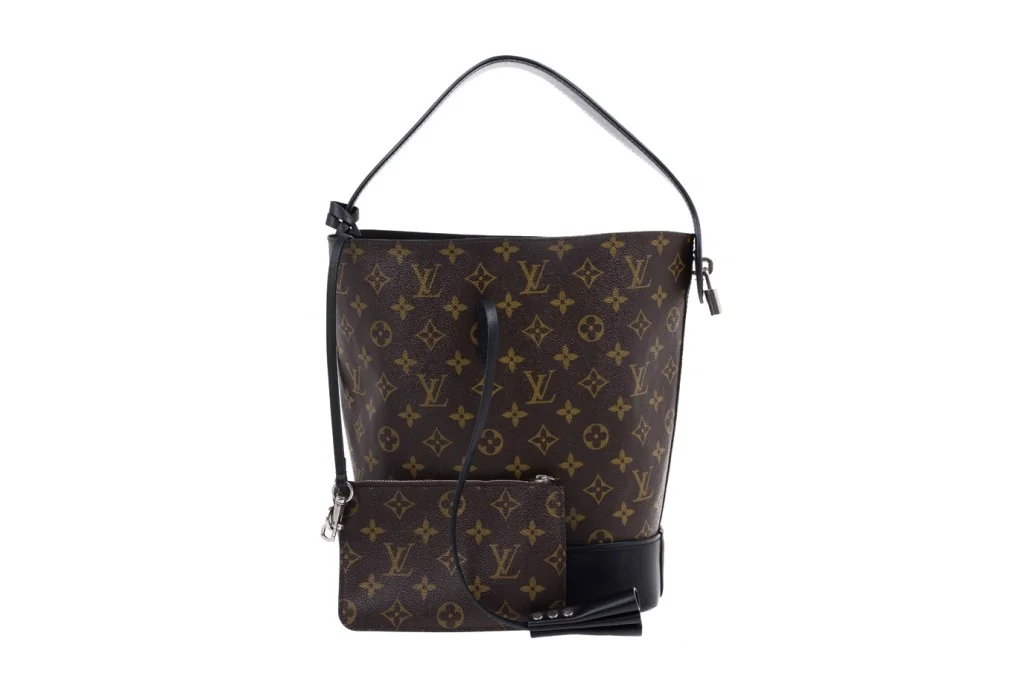
Most handbags earn their status through scarcity or hype cycles. The Louis Vuitton Noé earned it through work. Long before it became a red carpet fixture and an editor’s daily carry, it was a piece of equipment, built to solve a problem for people who had nothing to do with fashion. That origin is part of why the bag has aged so well: it wasn’t designed to be desirable, it was designed to function, and function tends to outlast trend.
Nine decades on, the Noé sits in an odd but enviable position. It’s old enough to be a heritage piece, flexible enough to have been reinterpreted by nearly every creative director who’s touched the house, and simple enough in silhouette that it still reads as modern next to bags released last season. Understanding how it got there tells you a lot about what actually makes a design “iconic” versus just old.
From Champagne Carrier to Fashion Staple: The Origin Story #
The Noé’s backstory has nothing to do with runways. Louis Vuitton introduced the bag in 1932 at the request of champagne producers, who needed something practical to transport bottles without breaking them. The wide, rounded base and tapering, cinched top weren’t stylistic choices, they were structural ones: a shape that could hold five bottles upright, cushioned by the leather’s give, with a drawstring closure that kept everything secure during transport.
That utilitarian brief is exactly why the silhouette has proven so durable. The bucket shape distributes weight low and wide, which makes it comfortable to carry loaded, and the open-top, drawstring construction means it swallows bulk without needing internal structure. Compare that to a rigid-framed bag, which is often engineered around a specific capacity and falls apart, literally and visually, once you overload it. The Noé was built to be overloaded from day one.
Its migration from cellar to street happened gradually rather than through a single relaunch moment. As Louis Vuitton expanded from trunks and specialty goods into ready-to-wear accessories through the twentieth century, the Noé was already sitting in the catalogue as a proven shape, one that needed styling rather than reengineering to read as a fashion object. By the time the house started leaning into it as a signature bag, the hard part, designing a shape that worked, had already been solved fifty years earlier.
Marc Jacobs’ Farewell: The NN14 and the SS14 Campaign #
Marc Jacobs spent sixteen years as Louis Vuitton’s creative director, and when he exited, he didn’t reach for a brand-new bag to make his statement. He went back to the Noé. The NN14, part of his final SS14 collection, was built as a tribute to the bag that had quietly outlasted every trend he’d overseen at the house, a fitting way to close a run defined by taking heritage codes and giving them fresh cultural relevance.
The SS14 campaign, shot by Steven Meisel, backed that tribute with serious cultural weight. Six women fronted it, each photographed with a different reading of the bag: Gisele Bündchen carried an understated, sophisticated NN14 in black supple Cuir Nuance calfskin. Sofia Coppola, Jacobs’ longtime friend and collaborator, appeared in the campaign as a personal nod as much as a commercial one. Fan Bingbing modeled a far louder version, the Stephen Sprouse graffiti design embroidered in shimmering black sequins over a midnight blue Monogram jacquard base. Catherine Deneuve, Caroline de Maigret, and Edie Campbell rounded out the cast, spanning decades of screen presence and street-style credibility in a single campaign.
Casting matters here as much as the bag does. Putting a director, an actress, a supermodel, and cultural fixtures like Deneuve and de Maigret side by side wasn’t just star power for its own sake, it was a deliberate signal that the Noé wasn’t a single-demographic bag. It could be quiet on one woman and maximalist on another, and both read as correct. That kind of range is rare, and it’s a big part of why the silhouette has stayed relevant well past the campaign that reintroduced it.
Design Details: Materials, Craftsmanship, and Signature Touches #
Strip away the campaign gloss and the Noé’s staying power comes down to a handful of consistent design choices, the same ones worth knowing if you’re evaluating a bag in person or trying to gauge whether a listing looks right.
The base silhouette rarely changes: a rounded, wide bottom, a body that tapers inward toward the opening, and a drawstring closure gathered through leather loops. That taper isn’t cosmetic. It’s what keeps the bag from gaping open when it’s half full, and it’s one of the first things to check on a real Noé versus a rough copy, since the proportions are easy to get slightly wrong if you’re not working from the original pattern.
Material treatment is where the house has had the most room to experiment while keeping the shape constant. The classic [Monogram canvas](/buying-guides/louis-vuitton-neverfull-buying-guide/) is the version most people picture, but the SS14 tribute leaned into more elevated options: Cuir Nuance calfskin, which has a soft hand and a tonal gradient effect that reads as understated luxury rather than logo-driven, and the Stephen Sprouse graffiti treatment, where sequins are embroidered directly onto Monogram jacquard rather than printed, giving it visible texture and weight rather than flat shine.
The tassels deserve their own mention. On an authentic Noé, the leather tassels finishing the drawstring are hand-pleated, which means the folds have slight irregularity and a defined, structured fan shape rather than a machine-uniform pleat. It’s a small detail, but it’s the kind of hand-finishing touch that’s genuinely hard to fake convincingly, which makes it one of the more reliable things to inspect closely if authenticity is a concern, alongside stitching consistency around the base seam and the drawstring hardware itself.
Street Style and Editor Endorsement #
Campaigns build a bag’s reputation, but daily wear is what actually tests it, and the Noé has held up under that test in a way a lot of “it” bags don’t. Vogue’s Fashion Director Sarah Harris has been photographed carrying the Monogram version regularly, styled with a coloured calfskin trim that softens the logo canvas into something that reads more editorial than logo-forward.
That’s a useful case study in what makes the Noé work outside a photoshoot. Harris isn’t styling it as a statement piece, she’s using it as a daily-carry bag that happens to look considered. The drawstring top means it doesn’t demand a specific outfit register the way a structured top-handle does, and the rounded shape sits comfortably whether it’s worn crossbody, shoulder, or handheld. That flexibility, more than any single celebrity endorsement, is what’s kept the Noé in rotation among people who buy bags to use them, not just to be photographed with them.
Where to Shop the Look Today #
If the Noé’s history has you considering one, the honest advice is to slow down before buying, because this is one of the more commonly counterfeited bucket shapes on the resale market, partly because the drawstring silhouette is easier to approximate at a glance than a structured bag with visible hardware.
Buying new through Louis Vuitton directly removes the authentication question entirely, but if you’re shopping pre-owned or vintage, which is common for this bag given decades of production, a few checks matter more than others: the hand-pleated tassel fold quality, the evenness of the Monogram or Damier pattern alignment across the seam where the canvas panels meet, the drawstring hardware finish, and the interior date stamp format, which has changed over the decades and should be consistent with the bag’s claimed production era. A reputable authenticator or a platform with in-house verification is worth the fee on a bag at this price point, since visual inspection from photos alone misses a lot of what separates a well-made replica from the real thing.
Quick FAQ #
Is the Noé still in production? Louis Vuitton has kept versions of the Noé in rotation across collections since its reintroduction, though specific materials and sizes shift by season, so availability varies.
Is the drawstring closure secure enough for daily use? It’s secure against the bag opening accidentally, but it’s not a bag for anyone who wants quick, one-handed access. That trade-off is worth weighing if you’re deciding between this and a zip-top bucket bag.
Does the Monogram canvas version patina or wear differently than leather versions? Coated canvas resists surface wear better than calfskin but the [vachetta leather](/buying-guides/how-to-buy-authenticate-preowned-louis-vuitton-bags/) trim and drawstring will darken with handling over time, which is expected and part of the bag’s character rather than a flaw.
The Noé’s Place in Bucket Bag History #
It’s worth being precise about the Noé’s role in the broader bucket bag category, because it’s often credited as “the” original bucket bag, and that’s not quite accurate. Drawstring, rounded-base bags existed as a functional category before 1932. What the Noé did was formalize the shape inside a luxury house’s permanent lineup and give it a name and a provenance story that outlasted the utilitarian bags that inspired it.
That distinction matters for how the category developed afterward. Once a major house proved a bucket bag could be both functional and fashion-relevant, the shape became a template other designers returned to repeatedly, each adding their own closure mechanism, proportion, or hardware signature. The Noé’s specific contribution to that lineage is the drawstring-and-tassel finish and the wide, soft taper, details that show up, in modified form, across bucket bags from other houses released decades later. In that sense, the Noé functions less like a single product and more like a reference point the rest of the category has been responding to, whether or not each subsequent design credits it directly.
From Monogram to Modern Materials: Design Evolution #
Tracking the Noé decade by decade shows a pattern: the silhouette barely moves, but the materials and finishing do all the evolving.
1930s–1950s. The original Noé, introduced in 1932, built specifically around the champagne-carrying brief. Monogram canvas construction, drawstring closure, minimal hardware, functional rather than fashion-first.
1970s–1990s. As Louis Vuitton’s ready-to-wear and accessories business expanded, the Noé moved from a specialty item into the broader handbag catalogue. This period is largely about consistency and canvas variations, including Damier, rather than major structural change.
1997–2013 (Marc Jacobs era, early-to-mid). With Jacobs’ arrival as creative director in 1997, the house began treating heritage shapes like the Noé as canvases for collaboration and reinvention rather than fixed archive pieces, setting up the material experimentation that would define the following decade.
2013–2014. The NN14, launched as part of Jacobs’ final SS14 collection, marks the most significant reinterpretation of the bag’s materials to date: Cuir Nuance calfskin with tonal gradients, and the Stephen Sprouse graffiti collaboration rendered in sequin embroidery on midnight blue Monogram jacquard, a marked departure from plain coated canvas.
Post-2014. Since Jacobs’ departure, the Noé has continued to appear in rotating seasonal materials and trim colors under subsequent creative direction, with the coloured calfskin trim detail, the version favored by editors like Sarah Harris, becoming one of the more recognizable modern variants.
The throughline across nine decades is restraint. Louis Vuitton has changed what the Noé is made of far more often than it’s changed what the Noé actually is. That’s a deliberate strategy, not an accident, and it’s the clearest evidence that the original 1932 proportions got something structurally right the first time.
Related Articles #
- Louis Vuitton After Marc Jacobs: What Comes Next?
- Alexander McQueen Curve Bag: Price, Style & Resale Guide
- YSL Tribute Sandals: Why This Iconic Style Still Reigns
- 5 Iconic Bags Named After Famous Women (Buying Guide)
- 4 Reasons Bally Bags Are Worth Buying: A Buying Guide
Related guides
- Online Bag Authentication: What Photos Can and Cannot Prove
- Blue Crocodile Lady Dior Tote: Buying Guide
- Chanel Vintage Flap Bag Buying Guide: Navy Lambskin
- Louis Vuitton Palm Spring Backpack: Complete Buyer's Guide
- How to Buy an Authentic Luxury Bag from China Safely
- New vs Pre-Owned Luxury Bags: Which Route Is Right for You?
- Chanel Bag Guide: What to Know Before You Buy
- Luxury Bag Houses


Keyword index