Introduction: The Bag That Turned Fashion Into Playtime #
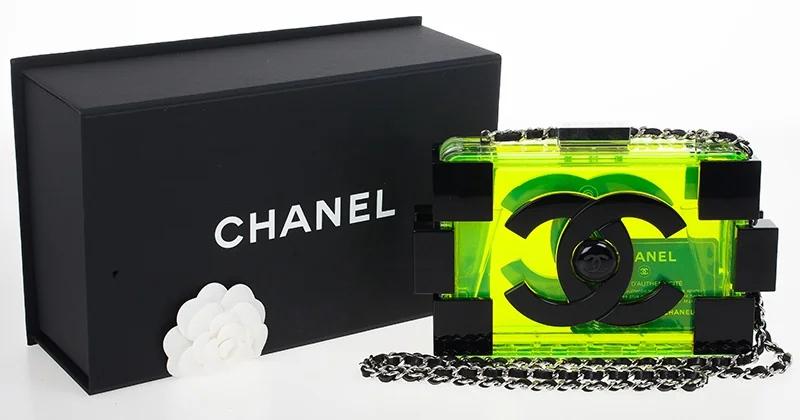
Every so often a runway piece stops being an accessory and becomes a cultural marker. The Chanel Lego Clutch is one of those pieces. It arrived during Karl Lagerfeld’s Spring/Summer 2013 show, staged in a recreated Central Park, at a moment when Chanel was leaning hard into nostalgia and irreverence rather than quiet restraint. Amid tweed picnic blankets and oversized sunglasses, a stack of neon plexiglass blocks shaped like a child’s building bricks walked down the runway as a clutch, and the fashion world did not know whether to laugh or reach for a paddle at auction.
It did both. The clutch became one of the most talked-about bags of that season, not because it followed Chanel’s classic quilted-leather playbook, but because it deliberately broke from it. For a house built on the 2.55 and the Classic Flap, releasing a $9,450 acrylic block toy was a statement: Chanel could be playful and still be exclusive. That tension between novelty and luxury is exactly why the Lego Clutch still commands attention, and real money, on the resale market more than a decade later. This guide walks through where it came from, how to tell a genuine one from a convincing fake, what it is worth today, and what to check before you buy or sell one.
Design Story: From Central Park Runway to Plexiglass Icon #
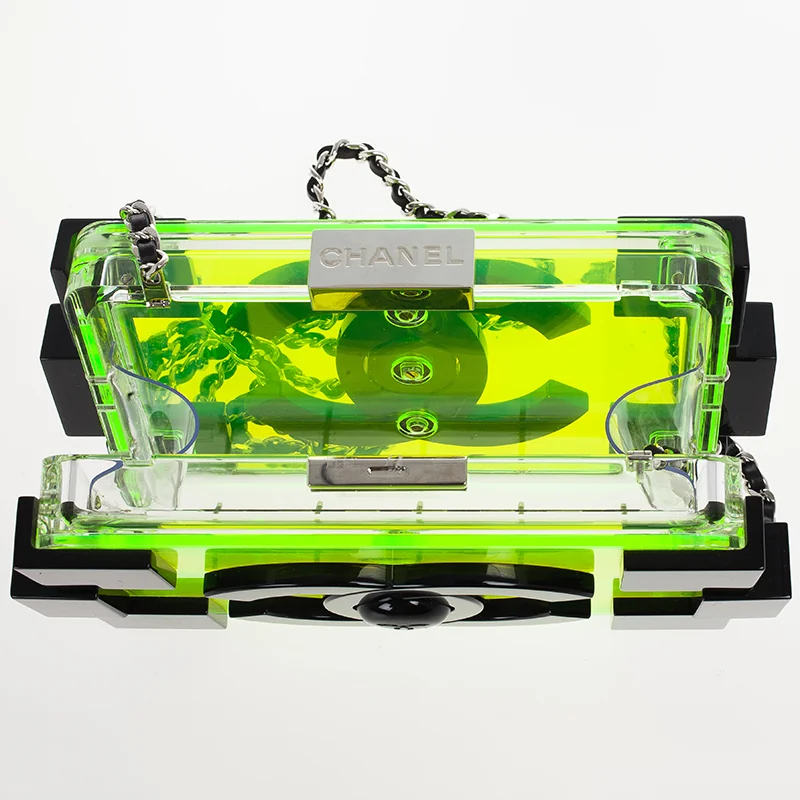
Lagerfeld’s SS13 concept was childhood, reimagined through Chanel’s material vocabulary. Instead of leather and canvas, the collection used vinyl, acrylic, and plexiglass to give familiar silhouettes a toy-like gloss. The Lego Clutch was the clearest expression of that idea: solid, colored acrylic panels stacked and fused into a rectangular block, finished with a metal frame, a CC turnlock closure, and in most versions a slim chain or wrist strap so it could double as a shoulder piece.
Construction and materials #
There is no leather on this bag in the traditional sense. The body is cast or laminated acrylic, cut into color-blocked sections that mimic the studded top of a Lego brick, then set into a lacquered metal frame that houses the hinge and closure hardware. That construction is part of what makes the piece collectible and also what makes it fragile in ways a lambskin flap bag simply isn’t. Acrylic scratches, yellows with UV exposure, and can crack under pressure or temperature swings, which is a meaningful consideration for anyone thinking about carrying it rather than displaying it.
Colorways #
The original 2013 release came in a handful of high-contrast combinations, most famously fluorescent green paired with pink, and orange paired with pink, with the CC turnlock in polished gold or silver depending on the piece. When Chanel reissued the style for its 2014 collection, additional color pairings appeared, including cooler tones like blue and purple alongside the original neons. Because production runs were limited and never standardized like a core handbag line, exact color availability varies by piece, and certain combinations, particularly the original 2013 green and orange versions, tend to be more sought after by collectors than the 2014 reissue colors.
Celebrity Endorsement and Cultural Impact #
The Lego Clutch did what Chanel needed it to do almost immediately: it moved from runway curiosity to red carpet fixture within a single season. Lily Allen, Rita Ora, and Hailee Steinfeld were among the early adopters photographed carrying it, and that visibility mattered. This wasn’t a bag styled quietly into a street-style shot; it was bright, unmistakable, and built for a camera flash.
That kind of endorsement does two things for a novelty piece like this. It confirms desirability in the short term, which is why the clutch sold out within roughly two months of release, and it builds long-term recognition that keeps resale interest alive well after the trend cycle that produced it has passed. Compare that to most seasonal novelty items, which lose visibility the moment the next collection drops. The Lego Clutch kept surfacing in celebrity press for years after its debut, which is a large part of why it still reads as an “It-bag” rather than a dated fashion moment.
Rarity, Reissues and [Resale Value](/buying-guides/best-time-to-buy-a-luxury-handbag-1/) #
Two production windows exist: the original SS13 release and the 2014 reissue. Chanel has never published exact production figures for either, which is typical for novelty and runway-driven pieces rather than core collection bags. What is verifiable is behavior in the market: the clutch sold out quickly on first release, demand justified a second run the following year, and it has continued to trade steadily on the resale and vintage market ever since, rather than disappearing the way most single-season novelty items do.
What it sells for now #
Original retail was $9,450. On today’s resale market, well-kept examples typically trade in the range of $3,000 to $6,000, with rarer colorways, unworn condition, and complete packaging (box, authenticity card, dust pouch) pushing toward the top of that range or above it. Heavily worn pieces with visible scratching, yellowing, or hardware wear sell noticeably lower. Unlike a Kelly or a Birkin, this is not a bag with a documented, steadily appreciating resale curve; it behaves more like a collectible object, where price is driven by condition and color rarity rather than steady across-the-board appreciation. Treat it as a desirability purchase first and a speculative investment second.
Authenticating Your Chanel Lego Clutch #
Because the Lego Clutch has no leather, stitching, or lining to inspect in the way a Flap bag does, authentication focuses almost entirely on hardware, material quality, and construction precision. Counterfeits of this piece exist, and they are often easier to produce convincingly than a fake Classic Flap because there’s less craftsmanship detail to fake.
What to check #
- Acrylic clarity and weight. Genuine panels are cast from high-grade acrylic with even color saturation and real weight in hand. Counterfeits often use lighter, cheaper plastic that feels hollow or has visible mold lines and air bubbles that shouldn’t be there on a new piece.
- CC turnlock engraving. The Chanel logo on the clasp should be crisp, evenly weighted, and centered, with no soft edges or uneven spacing between the two Cs. Blurry or asymmetric engraving is a common tell on fakes.
- Hinge and frame fit. The metal frame housing the panels should sit flush against the acrylic with no visible glue, gaps, or misaligned seams. On authentic pieces, the hinge opens and closes with resistance and snaps shut cleanly; loose or wobbly hinges suggest a replica.
- Serial sticker and authenticity card. Pieces from this era carry Chanel’s hologram serial sticker inside, along with a matching authenticity card. The serial number on the sticker should match the card exactly. Missing, mismatched, or oddly placed stickers are a red flag.
- Color saturation consistency. Authentic color-blocked panels have sharp, clean transitions between colors. Faded, muddy, or bleeding color boundaries usually indicate lower-grade materials.
If you’re buying a high-value piece like this without in-person inspection, get close-up photos of the turnlock engraving, the interior serial sticker, and the frame seams before committing, or use a third-party authentication service that specializes in hardware-driven pieces.
Buying Advice: What to Check Before You Purchase #
Beyond authenticity, this is a bag where condition does most of the work in determining value, since acrylic doesn’t age the way leather does; it doesn’t patina, it just wears.
Pre-purchase checklist #
- Surface condition. Inspect for fine scratches, which are common and mostly cosmetic, versus deeper gouges or cracks, which affect both structural integrity and resale value significantly.
- Yellowing or discoloration. Older acrylic pieces, especially lighter colorways, can yellow with prolonged light exposure. Ask for photos taken in natural daylight, not just under warm indoor lighting that can mask this.
- Hardware function. Confirm the turnlock opens and closes smoothly and the hinge isn’t loose. Hardware repairs on this style are difficult and not something Chanel routinely services.
- Completeness. Original box, authenticity card, and dust bag add real resale value and are worth prioritizing, since this piece is as much a collector’s object as a functional clutch.
- Provenance and price benchmarking. Cross-check the asking price against recent completed sales on reputable resale platforms (The RealReal, Vestiaire Collective, 1stDibs, or specialist [vintage Chanel](/buying-guides/vintage-chanel-finds-top-picks/) dealers) rather than active listing prices, which tend to run high.
- Where to buy. Stick to platforms with in-house or third-party authentication guarantees. Because this bag is easier to counterfeit convincingly than a leather Chanel piece, buying from an unverified private seller carries more risk than usual.
How Rare Is It? Production Numbers and Collectibility #
Chanel has never disclosed official production numbers for the Lego Clutch, and that’s worth stating plainly rather than inventing a figure for the sake of a headline stat. What we can say with confidence, based on runway documentation and resale market tracking, is that the SS13 release was a limited runway capsule rather than a mainline product, it sold out within about two months of release, and the 2014 reissue was itself a second limited run rather than an ongoing addition to Chanel’s permanent lineup. It has never returned to production since.
That combination, a short original run, a single limited reissue, and no ongoing production, is what separates genuine rarity from marketing language. In practical terms, it means supply on the resale market is fixed and will only shrink as pieces get damaged or held permanently by collectors. It does not mean every example is scarce in the same way: 2013 originals in the greener, more saturated neon tones are generally considered rarer and more desirable than 2014 reissue colorways, which affects pricing more than most buyers expect going in.
Comparing the Lego Clutch to Chanel’s Other Novelty Icons #
Chanel has released playful, headline-grabbing pieces before and since the Lego Clutch, and the comparison helps calibrate expectations for value retention.
- Chanel Bowling Bag (2000s): More wearable day-to-day, made in traditional leather and canvas, so it holds value more predictably but generates less collector excitement.
- Chanel Surfboard Clutch (SS19): Similar novelty-first logic, oversized and impractical by design, with resale values that have stayed relatively niche compared to the Lego Clutch’s broader recognition.
- Chanel VIP Gas Mask Clutch (Fall 2009): Shock-value runway piece that never achieved the same red-carpet adoption, so despite its rarity, it trades at lower and more unpredictable prices.
- Chanel Coco Splash Bag (SS14): Playful, colorful, and closer in spirit to the Lego Clutch, but made in more conventional materials, which makes it more durable but less visually singular.
The Lego Clutch sits at the top of this group commercially because it combined genuine novelty with strong celebrity visibility and a hard material that ages differently (and, for collectors, more interestingly) than leather.
Styling and Occasions for the Lego Clutch #
This is not a bag built for daily rotation, and treating it that way is the fastest way to devalue one. It works best as a statement piece for evening events, gallery openings, cocktail parties, or fashion-adjacent occasions where a bold silhouette is the point rather than a liability. Pair it against simple, monochrome outfits so the color-blocked acrylic does the visual work rather than competing with a busy print. Because it’s rigid and boxy, it sits well as a clutch tucked under the arm or worn on its short chain for a few hours rather than carried for long stretches; the acrylic edges are less forgiving against the body than a soft leather clutch.
Care and Storage for Plexiglass Bags #
Acrylic behaves nothing like leather, and most damage to these pieces comes from owners treating it like a normal handbag material.
- Avoid direct sunlight and heat. UV exposure yellows acrylic over time, and heat (car interiors, radiators, direct sun through a window) can warp or stress the material.
- Store flat or upright without pressure. Don’t stack other bags or objects on top of it; acrylic doesn’t flex, it cracks.
- Clean with a microfiber cloth only. Avoid alcohol-based cleaners or ammonia glass cleaners, which can cloud or craze acrylic surfaces. A slightly damp, soft cloth followed by a dry one is usually sufficient.
- Watch for temperature swings. Moving the bag quickly between cold and warm environments can stress the acrylic-to-metal bond at the frame, leading to hairline cracks over time.
- Keep it in its original dust bag and box when not in use, away from direct light, which also helps preserve resale value.
FAQ: Chanel Lego Clutch Questions Answered #
Is the Chanel Lego Clutch a good investment? It holds value better than most novelty accessories because of its cultural recognition and fixed, limited supply, but it doesn’t appreciate as reliably as core leather styles like the Kelly-adjacent Chanel Flap bags. Think collectible desirability rather than guaranteed return.
How much is a Chanel Lego Clutch worth today? Most examples resell between roughly $3,000 and $6,000 depending on condition, colorway, and completeness of packaging, against an original retail price of $9,450.
How can I tell if a Lego Clutch is authentic? Focus on the CC turnlock engraving quality, the acrylic’s clarity and weight, clean frame-to-panel seams with no visible glue, and a matching serial sticker and authenticity card inside.
Are 2013 originals more valuable than the 2014 reissue? Generally yes. Original 2013 colorways, particularly the neon green and pink combinations from the runway release, tend to command higher prices than 2014 reissue colors due to earlier release status and stronger association with the original runway moment.
Can I actually use this bag, or is it display-only? It can be carried, but sparingly. Acrylic scratches and cracks more easily than leather, so most owners treat it as an occasional statement piece rather than a bag for regular use.
Related Articles #
- 5 Rare Chanel Bags Every Collector Should Know
- 5 Rare, Unique Chanel Bags Worth Collecting Now
- Why the Chanel Crossbody Bag Never Goes Out of Style
- Replica vs Pre-Owned Bags: Which Is the Smarter Buy?
- 5 Luxury Handbag Accessories Every Collector Should Know
Related guides
- Online Bag Authentication: What Photos Can and Cannot Prove
- Blue Crocodile Lady Dior Tote: Buying Guide
- Chanel Vintage Flap Bag Buying Guide: Navy Lambskin
- Louis Vuitton Palm Spring Backpack: Complete Buyer's Guide
- How to Buy an Authentic Luxury Bag from China Safely
- New vs Pre-Owned Luxury Bags: Which Route Is Right for You?
- Chanel Bag Guide: What to Know Before You Buy
- Luxury Bag Houses

Keyword index