Introduction: A Trailblazing Woman in Fashion #
Fashion’s history reads like a long roster of men in tailored suits calling the shots from the ateliers. Carolina Herrera built a house that stood apart from that pattern, and she did it in her forties, with no formal design training and no apprenticeship under a famous name. That’s part of what makes the Carolina Herrera brand worth studying: it wasn’t built on rules borrowed from someone else’s playbook.
What she brought instead was a clear point of view. Herrera’s clothes are polished without being stiff, glamorous without shouting about it. A crisp white shirt, a ballgown skirt, a waist cinched just enough to matter — these became her vocabulary, and they still define the label decades later. For anyone shopping the resale market for CH pieces, understanding that vocabulary is the first step toward telling a genuine piece from a convincing knockoff.
From Caracas to Couture: The Carolina Herrera Story #
Carolina Herrera was born María Carolina Josefina Pacanins Niño in Caracas, Venezuela, in 1939, into a family with deep social and diplomatic ties. She grew up around European fashion rather than studying it academically — family trips to Paris as a teenager put her ringside at couture shows, including Balenciaga’s, at a time when most girls her age were nowhere near a runway. That early exposure shaped her eye long before she ever picked up a sketchpad professionally.
For most of her early adult life, Herrera wasn’t a designer at all. She moved through Caracas and New York society, appeared regularly on international best-dressed lists, and was known more as a tastemaker than a maker of clothes. The turning point came through Diana Vreeland, the formidable former Vogue editor, who reportedly encouraged Herrera to stop admiring fashion from the front row and start producing it herself.
She took the advice seriously. In 1980, Herrera founded her fashion house in New York, and in 1981 she presented her first collection. It was a notable debut for someone with no formal atelier background, and it set the tone that would carry the brand for the next four decades: American ease layered with European polish.
The label grew steadily through the following decades, eventually expanding into a fragrance business, accessories, and bridal. In 2004, the company launched CH Carolina Herrera, a diffusion line built to bring the house’s aesthetic to a broader, younger, more accessible audience through ready-to-wear, denim, and accessories for men, women, and kids — a deliberate move to widen the customer base without touching the mainline’s positioning.
Signature Design Codes: Stripes, Bows, and Volume #
What separates a real Carolina Herrera piece from something merely inspired by it usually comes down to a handful of recurring motifs, used with more discipline than most designers manage.
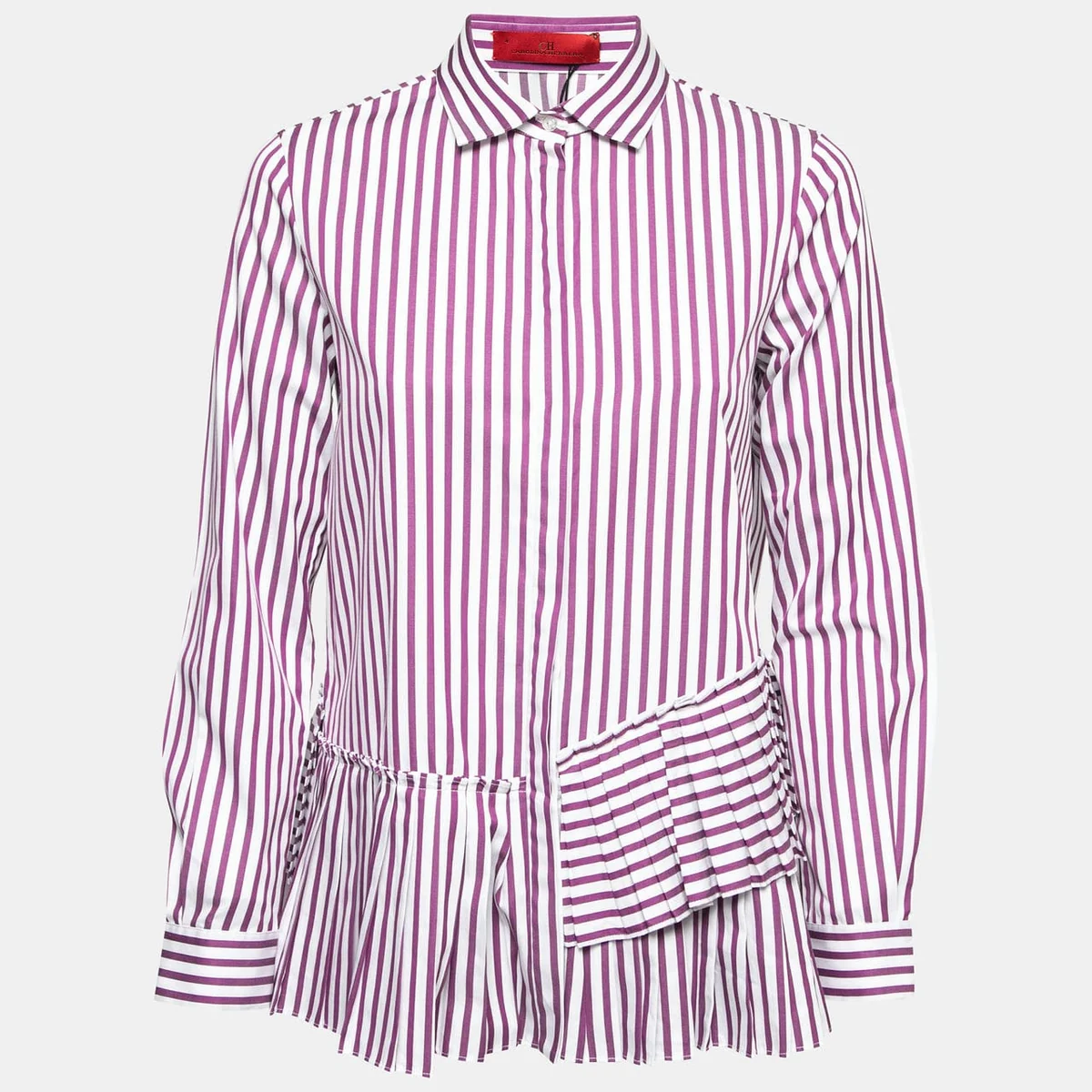
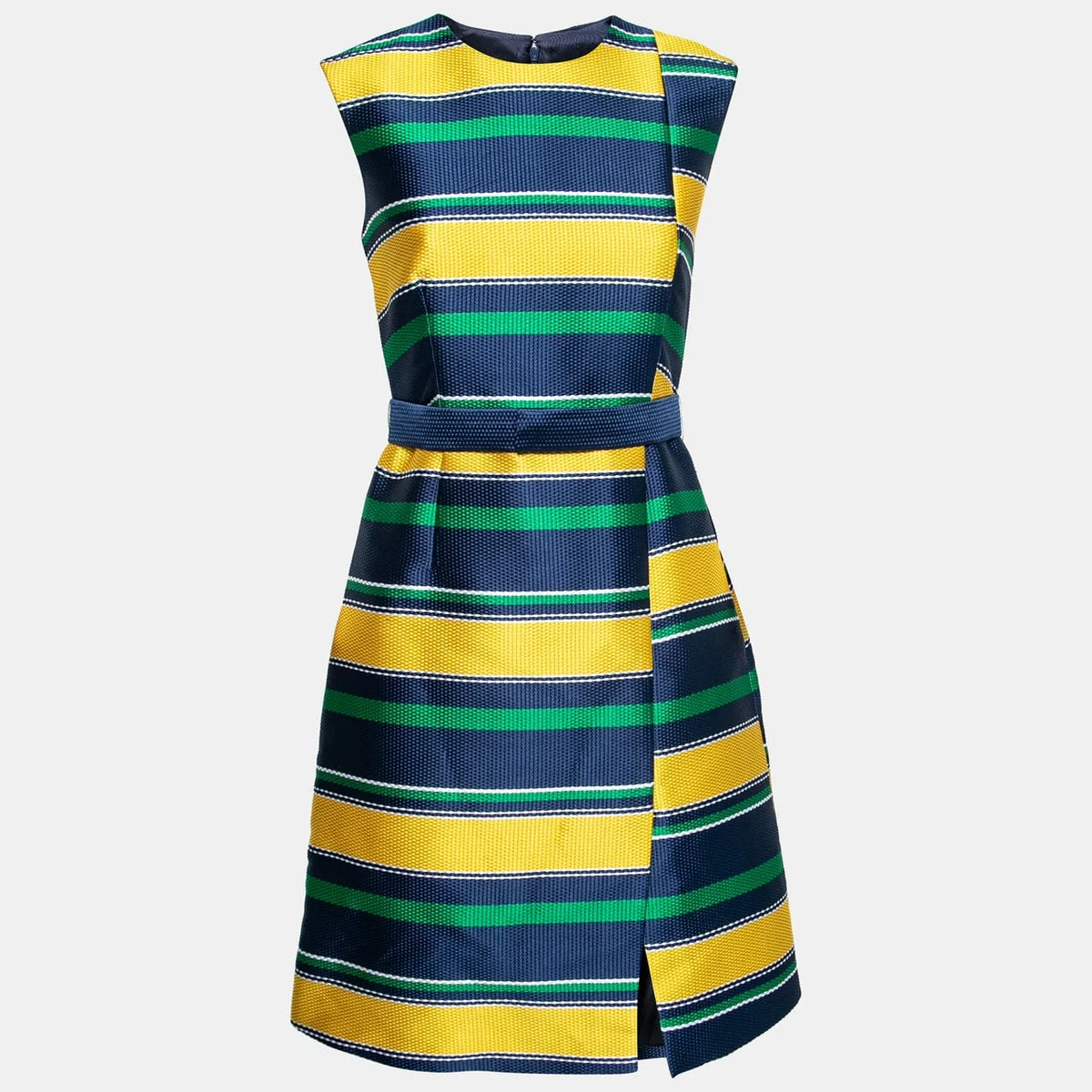
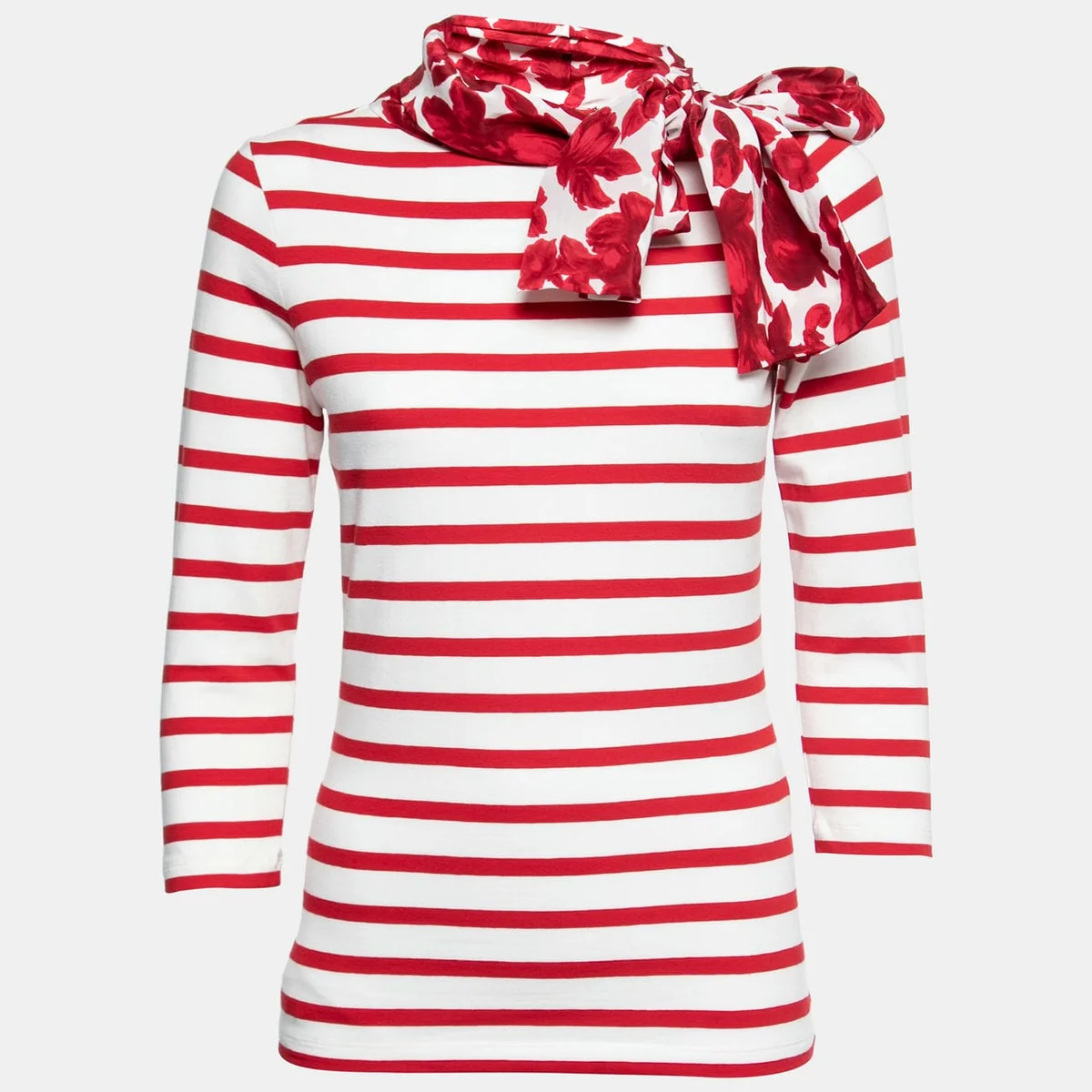
Stripes show up constantly, but rarely as a throwaway pattern. Herrera’s studio treats them almost architecturally — vertical stripes on a pleated shirt, horizontal bands on a belted dress, stripes used to sculpt rather than decorate. It’s a simple device handled with unusual precision.
The oversized bow is arguably the house’s most quoted signature. On a blouse collar, a shoulder bag, or a waistband, the bow reads as playful on the surface but is almost always engineered into the garment’s structure rather than glued on as an afterthought. That structural intent is one of the easiest tells when comparing an authentic piece to a cheap reproduction — on the real thing, the bow holds its shape.
Cinched waists and voluminous skirts round out the identity. Herrera’s silhouette has always leaned on contrast: fitted through the body, full through the skirt, tailored on top and romantic below. It’s a formula, but it’s a formula executed with enough consistency that it now functions as a brand signature in its own right, much the same way certain hardware shapes function as identifiers for other heritage houses.
The Wes Gordon Era: Honoring Legacy, Adding a New Voice #
Wes Gordon took over as creative director in 2018, a background that included stints at Tom Ford and Oscar de la Renta before launching his own label. Handing the house to an American designer with couture-level technical training was a logical move for a brand built on that same East Coast-meets-Europe sensibility.
Gordon’s tenure hasn’t been about reinvention so much as recalibration. He’s kept the stripes, the bows, the capes, and the cinched waists firmly in the collections, but has loosened proportions and modernized fabrication for a customer who dresses differently than Herrera’s original clientele did in the 1980s. The fall-winter 2023 show was a clear example: billowy skirts, bold color, structured bows, and stripes all appeared, but styled with a lighter, more youthful hand than the house’s earlier decades.
For buyers researching pieces on the resale market, this matters practically. Gordon-era pieces and Herrera-era pieces can look similar at a glance but differ in cut, labeling, and fabric weight — details worth checking before assuming a piece’s production date based on style alone.
Beyond Ready-to-Wear: Bags, Accessories, and Fragrance #
Handbags and accessories have never been an afterthought at Carolina Herrera. The house’s bag designs lean into the same codes as the clothing — structured top-handle silhouettes, quilted leather, and bow hardware or bow-shaped closures that show up across shoulder bags and clutches. Leather quality and hardware finishing on mainline accessories tend to sit closer to [[[[contemporary luxury](/buying-guides/military-chic-trend-how-to-wear/)](/brands/victoria-beckham-clothing-buying-guide/)](/brands/saint-laurent-loulou-bag-review/)](/brands/top-tory-burch-handbags/) than fast fashion, which is exactly why counterfeits of the more recognizable bow bags circulate on secondary markets.
Fragrance has been an even bigger business driver. Herrera launched her first perfume in 1988 through a licensing partnership with Puig, the Spanish beauty conglomerate that still manages the brand’s fragrance and beauty division. 212 followed in 1997 with a minimalist bottle that became a genuine bestseller through the late ’90s and 2000s. But the biggest commercial hit came in 2016 with Good Girl, instantly recognizable by its stiletto-shaped bottle, followed by the men’s companion scent Bad Boy in 2019. These fragrances are often the first, most affordable entry point into the brand for new customers, and they remain some of the most searched CH products on resale and discount platforms.
Buying Carolina Herrera Pre-Loved: What to Look For #
Shopping secondhand CH pieces rewards a bit of homework, mainly because the brand runs two distinct product tiers that get confused constantly.
Mainline Carolina Herrera (the runway collections designed under Wes Gordon) uses higher-grade materials, tighter construction, and typically carries a noticeably higher resale value. CH Carolina Herrera, the diffusion line launched in 2004, is mass-produced, more casual, and priced to be accessible — think logo canvas totes and everyday leather goods rather than couture-level pieces. Neither is “fake,” but conflating the two when assessing value or authenticity is a common mistake among first-time buyers.
A few practical checkpoints when evaluating a pre-owned piece:
- Hardware weight and engraving. Genuine CH hardware, including bow closures, feels substantial and carries clean, evenly spaced engraving. Counterfeit hardware often feels light or has blurry, inconsistent lettering.
- Stitching consistency. Authentic bags and garments show even, tight stitching with no loose threads around bow details or seams — a frequent weak point on replicas.
- Labeling and country of origin. Mainline pieces are generally produced in Europe; diffusion-line CH pieces are often produced elsewhere. A mismatch between the label’s claimed origin and the piece’s construction quality is a red flag worth investigating further.
- Leather grain and lining. Mainline leather goods use finer, more consistent grain leather with clean interior lining stitched (not glued) into place.
- Price benchmarking. If a “mainline” bow bag is priced like a diffusion-line item, treat that gap as a warning sign rather than a bargain.
None of these checks are foolproof on their own, and even experienced resellers occasionally get caught out by well-made fakes. When in doubt, buying through platforms with in-house authentication teams is the safer route over marketplace listings with no verification process.
Brand Timeline: Key Milestones (1981–Present) #
- 1939 — Carolina Herrera born in Caracas, Venezuela.
- 1980 — Founds her fashion house in New York.
- 1981 — Presents her debut ready-to-wear collection, encouraged by Diana Vreeland.
- 1988 — Launches her first fragrance in partnership with Puig, establishing the brand’s beauty division.
- 1997 — 212 fragrance launches and becomes a long-running bestseller.
- 2004 — CH Carolina Herrera diffusion line debuts, expanding into accessible ready-to-wear and accessories.
- 2016 — Good Girl fragrance launches, becoming one of the brand’s biggest commercial successes.
- 2018 — Wes Gordon appointed creative director, taking over mainline design.
- 2019 — Bad Boy, the men’s companion fragrance to Good Girl, launches.
- 2023 — Fall-Winter collection under Gordon reaffirms founding codes: stripes, bows, capes, and volume.
FAQs About Carolina Herrera #
Is Carolina Herrera still involved in her brand? She stepped back from day-to-day design duties when Wes Gordon took over as creative director in 2018, but she remains closely associated with the house as its founder and a public figure for the brand.
What’s the difference between Carolina Herrera and CH Carolina Herrera? Carolina Herrera is the mainline runway label, designed under Wes Gordon, using higher-end materials and European production. CH Carolina Herrera is a separate diffusion line launched in 2004 offering more casual, accessibly priced ready-to-wear and accessories for men, women, and kids.
Which First Ladies have worn Carolina Herrera? The house has dressed multiple U.S. First Ladies over the decades for high-profile events, part of why the brand carries a strong association with East Coast political and social style beyond the runway.
What’s Carolina Herrera’s most famous fragrance? Good Girl, launched in 2016, is widely considered the brand’s signature modern scent and its best-known bottle design.
Are Carolina Herrera bags a good investment on the resale market? Mainline pieces with structural bow hardware and quilted leather tend to hold value better than diffusion-line accessories. As with any pre-owned luxury purchase, authentication matters more than the price tag alone.
Related Articles #
- Top Handbags Winter 2016: 10 Designer Bags Worth Buying
- Kate Spade History: From Handbag Dream to Luxury Brand
- Saint Laurent Kate Bag Review: Style, Fit & Resale Value
- Trussardi Brand History: Italy’s Underrated Leather House
- 4 Reasons Bally Bags Are Worth Buying: A Buying Guide
Related guides
- Online Bag Authentication: What Photos Can and Cannot Prove
- Inside a Million-Dollar Closet: Pre-Loved Hermès & More
- Meet Marwa Azzam Aldabbagh: Kelly Bag Authentication Expert
- Luxury Handbag Authentication Process Explained
- How to Buy an Authentic Luxury Bag from China Safely
- New vs Pre-Owned Luxury Bags: Which Route Is Right for You?
- Chanel Bag Guide: What to Know Before You Buy
- Luxury Bag Houses


Keyword index